
If you are vegetarian, the thing you need to know about Wuhan is not where to find food. It is that Chinese vegetarian cooking excludes onions and garlic.
Not meat. Onions and garlic.
This is not a regional quirk, it is the rule that has run Chinese monastic kitchens for centuries, and it collides head-on with what a Western vegetarian orders without thinking. Garlic appears in most savoury Chinese cooking. So does spring onion. So does leek. A dish described as 素 can absolutely contain all three.
There is a second, unrelated problem on top of that one, and it is the reason this post exists. Let me take them in order.
What 素食 actually excludes
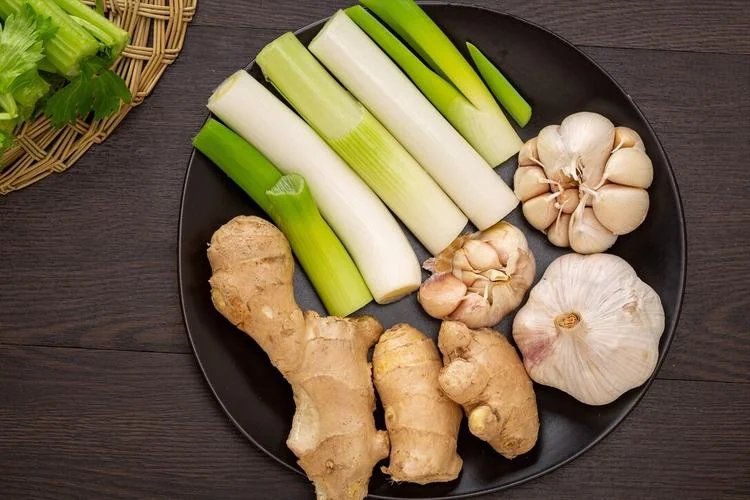
The list is called 五辛, the five pungents, and in some texts it is called 五荤, the five pungent meats, which tells you how old and how odd the category is.
The five are garlic, small garlic, scallion, chives or Chinese leek, and onion. Some lists substitute mustard for one of them. They are excluded on grounds of temperament rather than anatomy, with the classical texts arguing that pungent foods stir up anger and distraction. The 楞严经 is the one usually cited.
So this is not “no meat, no fish.” It is a rule about flavour intensity that happens to remove three of the four things a Western vegetarian considers invisible.
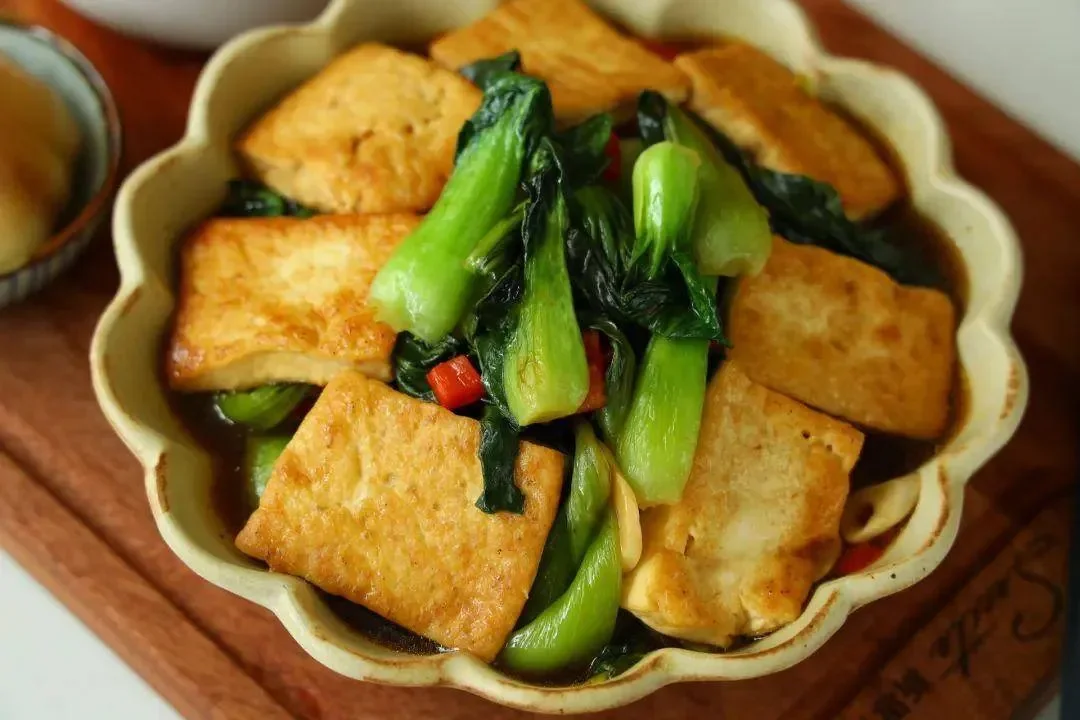
Here is where it bites. 葱 covers every allium in common use, which means spring onion, spring garlic, garlic chives and leek all fall under it at most temples. 蒜 is garlic and appears in stir fries constantly. A supposedly vegetarian dish described as 香菇菜心 or 蒜蓉菜苗 contains garlic.
There is also a separate concept that English speakers routinely confuse with vegetarianism: 持斋, keeping a fast, which traditionally means not eating after noon at all. Fruit and snacks included. That is a different practice and it is stricter in one way and looser in another.
There is no single Chinese word for your diet
Chinese does not have one word for “vegetarian”. It has a tier system, and which tier someone is on changes what they will eat at a temple canteen.
The tiers, in ascending strictness:
| Tier | Meaning |
|---|---|
| 锅边素 | Eats at the edge. Often lacto, sometimes with egg. The least strict |
| 蛋奶素 | Lacto-ovo. Eats eggs and dairy, no meat or fish |
| 纯素 | Vegan. No animal products at all |
Above those sits strict Buddhist practice, which as well as excluding meat, fish, egg, dairy, honey and alcohol, also drops the five pungents.
Honey is the one Western vegetarians get wrong. It is animal product and it appears in Chinese cooking and in drinks far more casually than in the West. Temple dessert is a common place it turns up.
The practical consequence is that a Chinese temple canteen serving 斋饭 is not reliably vegan, and not reliably even lacto. It depends entirely on how strictly that temple keeps the rules. I would not assume either way and I would ask.
What a temple canteen actually is
This is the part worth knowing, because it is a real Wuhan institution rather than a workaround.
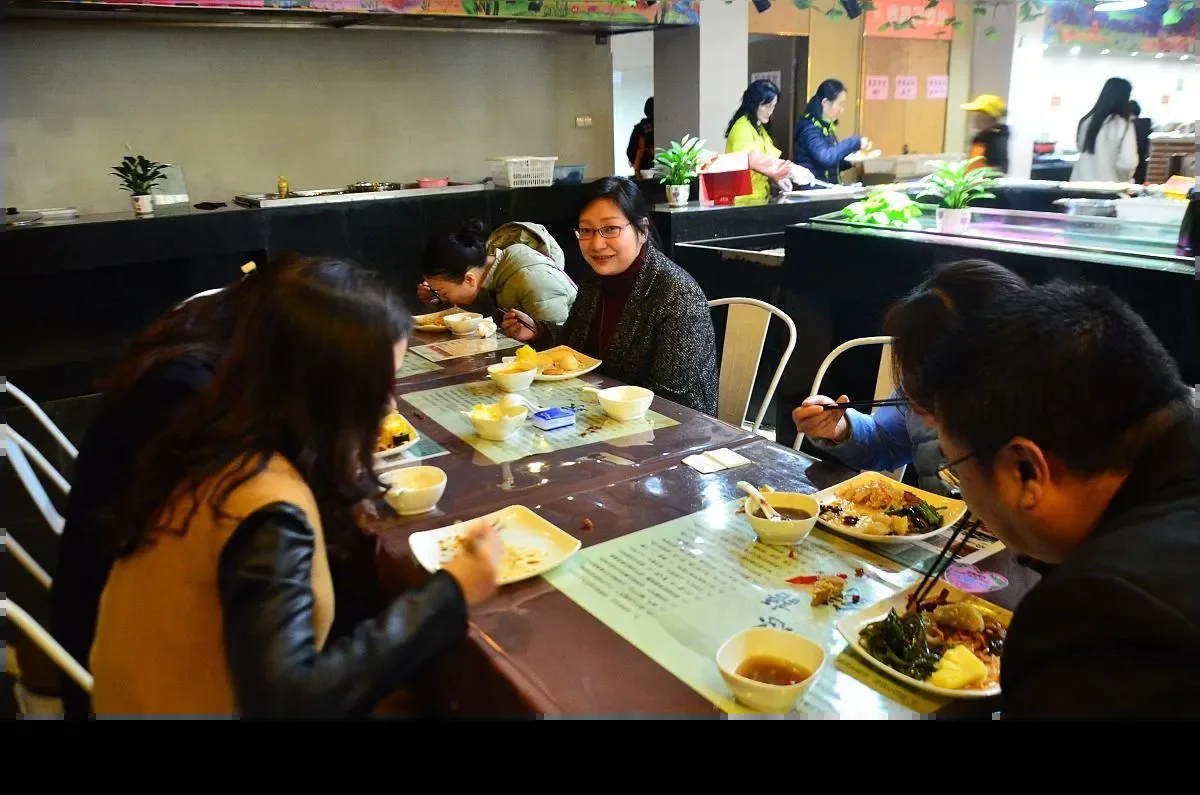
Temples in Wuhan and across China have historically operated vegetarian restaurants next to the gate, and they are not fringe. They were often the only vegetarian food available to non-vegetarians in the city before dedicated vegetarian restaurants existed, and in Wuhan they are still sitting there.
归元寺 is the case I can document, and I have covered the temple itself in my guide to Wuhan’s temples. The vegetarian canteen beside it has a history going back around two hundred years, with the current operation opening to the public in the 1990s. It is large, it is established, and it is not a novelty.
What you actually eat there is 斋菜, and the defining feature is 仿荤, the imitation of meat. The tradition is to build something that reads as pork or chicken using mushrooms, tofu, wheat gluten or bean curd skin. Five-colour shredded vegetable soup is one of the dishes that comes up repeatedly in lists of what to order. If you have been eating tofu as a substitute for chicken for a decade, this is that idea at its most elaborate.
It is worth being clear about what 仿荤 is not. It is not novelty meat, and it is not an attempt to pretend nothing died. It is a two-thousand-year-old technique for making a limited set of ingredients stretch across an entire cuisine, and it produces food that is about texture and savouriness rather than imitation. A dish built from gluten can genuinely taste like a slow braise, because that is what the technique is for.
That also means the tier question becomes practical rather than theoretical. If a dish is built to imitate meat, whether it is acceptable to you depends on the tier and the kitchen, not on the label.
Prices sit above a street meal. Reviews of the Guiyuan canteen put it around 50 to 60 yuan a head, which is a sit-down lunch rather than a bowl of noodles. The temple canteen at 15 yuan that I mention in my three day itinerary is the small one by the river, and it is a different and much cheaper thing.
There is also a budget version of this that has almost nothing to do with religion. Temple kitchens have long served a cheap simple meal to lay people alongside the monks, and in several cities that is the cheapest sit-down hot food you can find. In Wuhan that association is strong enough that the temple canteen shows up on restaurant listings as a cheap local option rather than only as a religious one.
The other problem, which Western vegetarianism has in Wuhan
Everything above is about Chinese vegetarians. If you are a Western vegetarian who wants a normal Chinese meal without the temple framing, the difficulty runs the other direction, and it is about things hiding in savoury cooking.
猪油, lard, is the one that catches people, because Chinese vegetarian cooking uses it routinely in stir fries and a dish described as vegetable will not mention it on the menu.
蚝油, oyster sauce, and 鱼露, fish sauce, are seasoning pastes that go into otherwise vegetable-looking dishes by default.
鸡汤 and 鸡汤底, chicken stock, is the base for a lot of soup and for a lot of noodle broth. Ordering 汤面 with no mention of meat does not mean the broth was vegetarian.
蛋, egg, appears in pastry, in sauces and as a binder, and a 面 soup ordered plain may have a raw egg dropped into it, which is the standard way it arrives.
The lesson from my halal guide applies directly here and is worth repeating: in Chinese cooking, absence of a meat word does not mean absence of a meat product. There you had the additional problem of there being no certification to check against. Here you do not, because any restaurant will tell you what is in a dish if you ask, and most will do it without being suspicious.
How to order, phrased for a foreign speaker
纯素 is the word for vegan. 蛋奶素 is lacto-ovo. 斋 or 斋饭 means temple food and tells you nothing about the tier.
不要葱蒜 means no onion and no garlic, and it is the phrase that solves the five pungents problem in a sentence.
不要肉,不要汤底 gets the meat and the stock out, which is the phrase that solves the hidden-stock problem.
For the pork fat, ask whether the vegetable is cooked in 猪油 or 菜籽油, rapeseed oil. Rapeseed is what you want.
Two more that save an argument. 不要味精 gets MSG out, which matters for some vegetarians and is worth adding when the kitchen is Buddhist and cooking without it is easy. And 不要蜜 gets honey out, which is the one animal product people in China do not think of as animal and therefore do not avoid unprompted.
What I would skip
Skip assuming a temple canteen is vegan because it says 素食. It may be lacto, it may include honey, and it will certainly involve the alliums unless you ask.
Skip trusting an English menu that says “vegetarian”. There is no standard translation for the tiers, and a translator will map 素 to “vegetarian” and drop the rest of it.
Skip planning a vegetarian week in Wuhan around temple food alone. It is genuinely good, it is genuinely traditional, and it is a lunch rather than a full food city.
And skip the idea that asking about ingredients is rude or unusual. It is not. Chinese restaurants expect the question and a surprising number of them will answer it precisely.
The Honest Summary
Eating vegetarian in Wuhan means dealing with two separate obstacles rather than one. If you are a Chinese Buddhist vegetarian, the obstacle is that the cuisine in front of you is not yours, because it excludes onion, garlic and chives, which is a restriction Western vegetarians never apply.
If you are a Western vegetarian in Chinese restaurants, the obstacle is that meat hides in the cooking rather than in the name, and the four words worth learning are 猪油, 蚝油, 鸡汤底 and 蛋.
The genuine answer to the first one is 归元寺, whose vegetarian canteen has been beside the temple for about two hundred years and does the 仿荤 imitation-meat tradition properly. 纯素 and 不要葱蒜 get you a long way at any Buddhist canteen.
The genuine answer to the second one is to ask, because unlike the halal question I wrote about, nobody is hiding anything here and the answer is one sentence away.