
The Night That Taught Me
My second year in Wuhan, a拐子 invited me to dinner. The restaurant was loud — the kind of loud where you hear your own table louder than the ones next to it. My拐子 friend ordered Moutai for the table, which should have been my first warning. Moutai at a casual dinner means something serious is about to happen.
Eight people around a round table. Glasses were poured. My拐子 friend stood, raised his glass, said something in Wuhanhua that I didn’t fully catch, and drained the entire glass in one motion. Then he inverted it above his head to show nothing remained. Everyone at the table watched me.
“Ganbei!” someone said.
I lifted my glass, took a polite sip, and set it down. The table went quiet for half a second. A woman across from me whispered something to the man beside me. I didn’t need a translator to understand: the foreigner doesn’t know the rules.
That night I learned three things: ganbei doesn’t mean cheers, Moutai is serious, and my拐by friend would spend the rest of the evening politely re-explaining Wuhan drinking etiquette to me between rounds of beer and increasingly slurred baijiu.
I’ve been to hundreds of Wuhan dinners since. The rules still aren’t written down, but they exist, and breaking them has social consequences. This article is what I wish someone had told me before that second-year dinner.
What Baijiu Actually Is
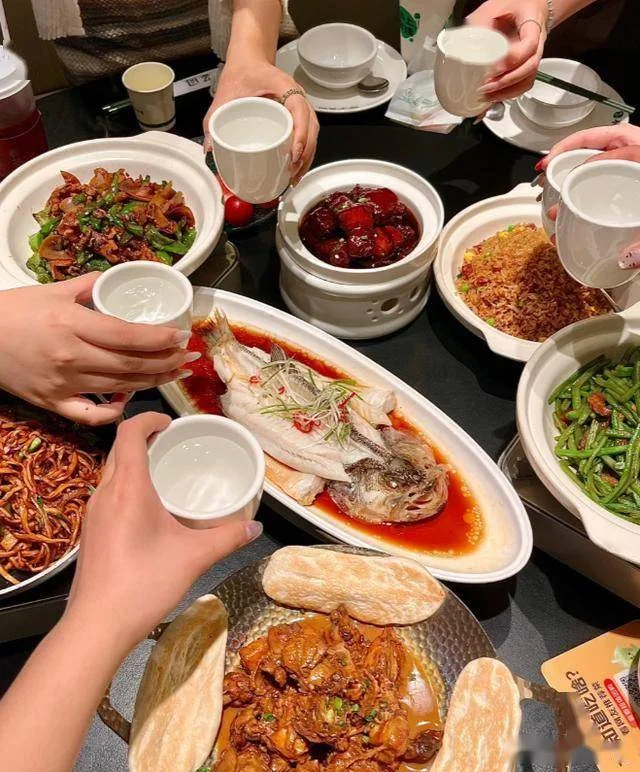
If you’ve never had baijiu, imagine someone distilled a barn fire and put it in a bottle. That’s unfair — good baijiu is complex, aromatic, and not unpleasant once your palate adjusts. But the first sip of baijiu is a universal experience: burning, medicinal, and faintly solvent-adjacent. Almost everyone hates it the first time.
Baijiu is China’s national spirit, but it’s not really a spirit in the Western sense. Western spirits (whiskey, vodka, gin) are usually 40% alcohol by volume. Baijiu typically runs 45-60%, with some local brands pushing higher. It’s made from sorghum, rice, or wheat, and the production process involves solid-state fermentation in pits or jars that can be decades old.
In Wuhan, the domestic brands matter less than the brand recognition. Moutai is the prestige play — the bottle on the table that signals you’re serious. Wuliangye runs second. Locally, people drink brands like 白云边 (Baiyunbian) or 稻花香 (Daohuagiang), which are good quality without the Moutai price tag. At a casual dinner with friends, someone brings a ¥200 bottle. A business dinner calls for ¥1000+. A dinner where the host is asking for something costs whatever Moutai is going for this week, which is a lot.
The beer in the same setting — 青岛, 雪花, local craft — is for after the baijiu, for the people who are done with the serious drinking, or for the designated driver of the evening. Beer is the chaser. Baijiu is the event.
The Architecture of a Drinking Table
Wuhan drinking dinners have a shape, and the shape determines almost everything else.
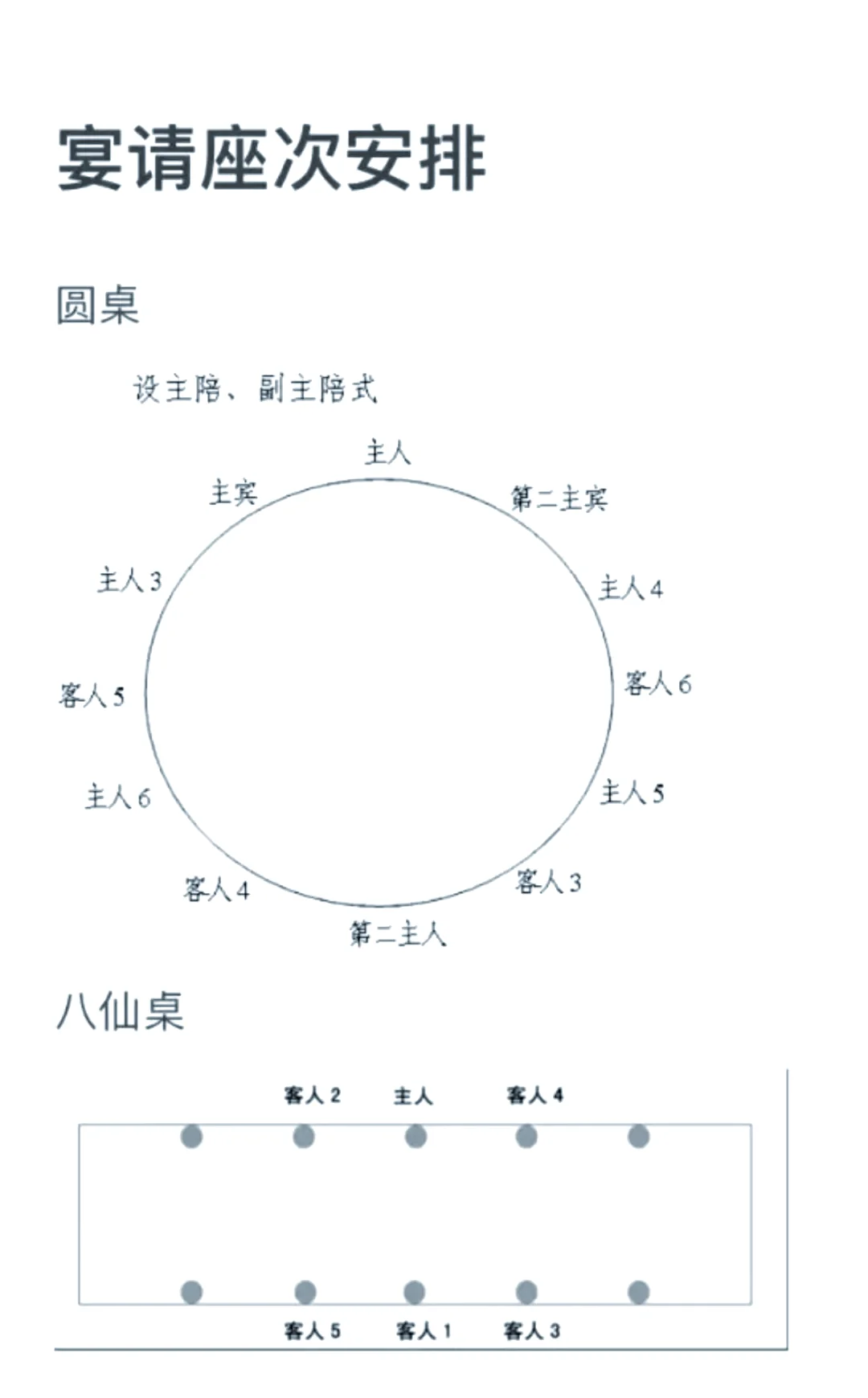
The table is round. This isn’t aesthetic — it’s practical. Everyone can see everyone, and the rotating toasting works better in a circle. The chairs are assigned by status, not by preference.
Facing the door is the host. The 主陪 (zhupan) sits with their back to the room, facing the entrance. This is the person who organized the dinner, who will pay, who holds the social authority of the evening. The host pours the first round, proposes the first toast, sets the tone.
To the host’s right is the guest of honor. The 主宾 (zhubin) is the person the dinner is for — the visiting foreigner, the business contact, the old friend from out of town. This seat gets the most toasts, the most attention, and the most pressure to drink.
To the host’s left is the secondary host. The 副陪 (fupan) assists — pours drinks, keeps the conversation moving, steps in when the guest of honor needs a break. A good 副陪 skillfully deflects toasts and keeps the evening from becoming a hazing.
The remaining seats fill in by social proximity. Friends of the host toward the far side, strangers or junior people toward the middle. You’ll figure out where you stand by who pours for whom and who toasts first.
If there’s a foreigner at the table, the seating is negotiated. Are you the guest of honor? You get the 主宾 seat and the full treatment. Are you a friend of a friend? You sit in the middle and the pressure is lighter. Either way, someone will assign you a seat. Don’t pick your own.
The Toast, Decoded
The ganbei is the central ritual of Wuhan drinking culture, and the foreigners who misunderstand it are the ones who end up on their face by the end of the night.
Ganbei (干杯) literally means “dry cup.” When someone says ganbei and drinks, you are expected to drink. When someone says ganbei and kills the glass — drains it completely — you are expected to do the same.
This is where foreigners get into trouble. In Western drinking culture, “cheers” is a social gesture that involves sipping. In Wuhan, ganbei is a commitment. Saying ganbei then sipping is like shaking someone’s hand with two fingers — technically contact, but everyone notices the insult.
The variations:
“我干了,你随意” — “I’m drinking it all, you drink as you wish.” This is the gracious version. The person who says this is killing their glass and giving you permission to sip. If you sip every time someone offers this, you’ll underdrink the room by a factor of three and people will notice. The correct response is to kill your glass too, at least the first few times, or to at least drink a respectful amount.
“走一个” — roughly “do one.” Informal ganbei. Someone makes eye contact with you, raises their glass, says “走一个,” and drinks. You do the same. This is the social lubricant of a friends’ dinner and it happens constantly.
The group toast. The host stands, the room quiets — or tries to — and the host says something. The something can be a welcome (“欢迎来武汉”), a friendship toast (“拐子情谊”), or a business compliment (“合作愉快”). Then everyone drinks. The group toast happens three to five times per dinner and is the only time everyone drinks simultaneously.
敬酒 (jingjiu). This is the serial toasting that constitutes the main event. Each person at the table toasts the guest of honor individually. The guest of honor, in return, must toast each person individually at some point in the evening. With eight tables of ten people, this can mean sixty-plus individual toasts over two hours. The 副陪 exists to reduce this number.
The key insight: the toast is not about the alcohol. It’s about the relationship. The person killing their glass in front of you is making a public statement about how much they value your presence. Reciprocating the kill is your acknowledgment. Sipping when they killed reads as: I didn’t take you seriously.
Three Glasses, Three Signals
Wuhan drinking culture recognizes three levels of commitment encoded in the glass.
The full glass (满杯, manbei). The most respectful offering. Someone fills your glass to the top and drinks it down, then does the same for themselves. A full glass means total commitment to the relationship — the business deal, the friendship, the apology. If a Wuhan host pours you a full glass and kills it, you are expected to do the same. If you can’t, you explain before the first sip, not after.
The three-sip glass (三分满, sanfen man). For people who can’t drink fully — the elderly, the sick-designated, the recovering alcoholic. Someone pours a glass roughly a third full and drinks it over the course of three sips. This is a socially accepted way to participate without committing to the full burn.
The “I respect you but I’ll die” sip. You raise your glass to your lips, a small amount disappears, and you set it down. This is the default for a group toast, for people who are already past their limit, or for situations where everyone understands the game and nobody’s keeping score. At a friends’ dinner, this is standard. At a business dinner, it’s permission you need to earn.
The glass you’re given signals the expectations. If someone pours you a full glass early in the evening and kills theirs: you’re in for a long night. If they pour a moderate amount and say “随意” — “ease up” — you’re safe to pace yourself.

Who Drinks, Who Doesn’t, and Who Pays
Wuhan drinking culture has an internal logic that rewards drinkers and accommodates non-drinkers, but the math is clear: this is a culture that values the willingness to drink.
The host drinks the most, because the host sets the pace. A host who’s pacing at one ganbei per ten minutes will carry a room who can follow. A host who’s at one ganbei per five minutes will put half the table under. The best hosts calibrate to their weakest guest, which is where most of the social intelligence lives.
The guest of honor drinks the second most, because that’s the point. If I’m hosting you, I want you to have the full experience, and the full experience requires participation. Refusing the first toast isn’t fatal — politely declining with a reason (“I have a medical condition,” “I’m taking medication”) goes over better than a flat no. But the guest who totally refuses to drink at a Wuhan dinner is sending a message, whether they intend to or not: I’m not participating in your culture.
The person who doesn’t drink at all — and there’s always one — has two socially acceptable ways to handle it: claim a medical reason (酒量不行, “my drinking capacity isn’t good,” or 身体原因, “health reason”) and offer toasts with tea, or be designated as the night’s helper who pours, clears, and arranges the bill so others can focus on drinking. The helper role is respected. The person who simply sits there and refuses everything is viewed as missing the point.
The bill always goes to the host, or to whoever initiated the dinner. In eighteen years, I’ve only seen someone other than the host fight for the bill twice, and both times it was a performance — the host always paid. If you’re the guest, don’t fight for the bill. The social cost outweighs the monetary cost.
The Foreigner’s Most Common Mistake
I’ve watched dozens of foreigners encounter Wuhan drinking culture. The most common mistake is almost always the same: trying to keep up on the first round.
A Wuhan drinking dinner has a curve. The first twenty minutes are cautious — everyone’s sipping, sizing each other up, establishing pace. The middle hour is the main event, with the most toasts and the most ganbei. The last thirty minutes are wind-down — the heavy drinkers switch to beer, the light drinkers switch to tea, and the conversation gets philosophical.
The foreigner who matches the ganbei rate in the first twenty minutes arrives at the middle hour already drunk. The Wuhanese pace themselves by feel and by experience. Your job is to do the same, and to understand that the evening is longer than you think.
The second common mistake: explaining your alcohol tolerance in biological terms. “I’m ALDH2 deficient!” is a conversation-stopper for the first sentence and a punchline for the rest of the night. Just say “我酒量不行” — my drinking capacity isn’t good — and move on. Nobody’s analytically verifying your enzyme levels.
The third mistake: proposing a toast to the host too early. The host proposes first; you respond. Jumping the hierarchy is a status misread that everyone notices.
How Wuhan Differs from the Rest of China
Every Chinese city has drinking culture, but Wuhan’s has specific features that locals will defend.
Wuhan drinking is faster. In Beijing, a dinner can stretch four hours with moderate drinking. In Wuhan, two hours is standard and the pace is faster. The toasts come closer together, the ganbei happen more frequently, and the window between ‘polite’ and ‘drunk’ is shorter.
Wuhan drinking is louder. Argue at the table. Defend positions you don’t actually hold. Disagree about politics, football, childhood memories. The loudness I wrote about doesn’t pause for dinner — it amplifies. A quiet Wuhan dinner is a bad one.
The 拐子 code extends to drinking. If someone calls you 拐子 across a table, the next toast between you is always a full kill. 拐子 don’t half-ass toasts. If someone refills your glass without asking, that’s 拐子 behavior again — they’re taking care of you whether you wanted more or not.
Wuhan — and all of Hubei — claims to drink harder than average. Whether this is demographically true is debatable, but the cultural commitment to the claim is absolute. The locals will bet you that they outdrink Beijing, outdrink Guangzhou, outdrink coastal cities where beer dominates. Do not take the bet. You’ll lose.
After the Baijiu
A Wuhan drinking dinner doesn’t end cleanly. It ends with an implicit agreement among everyone at the table.
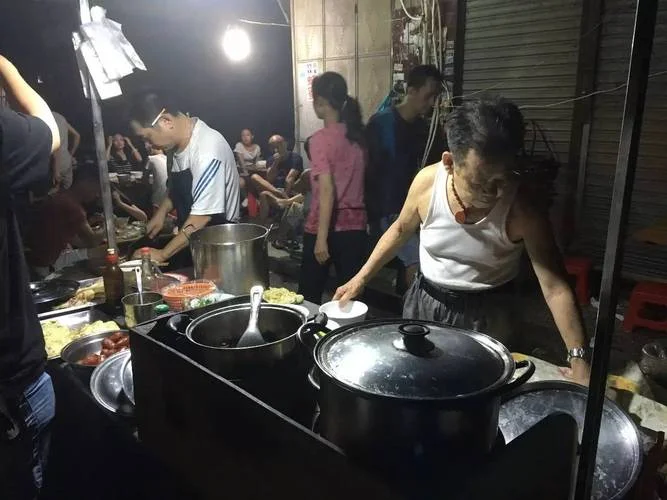
The die-hards — usually three or four people — will suggest a second location. It could be a late-night hotpot restaurant (still open, serving drunk diners at 10 PM), a KTV for singing, or a street-food stall for congee and fried noodles to absorb the alcohol. Accept the invitation at least once; it’s where the most honest conversation of the night happens.
The rest head home. Taxis are cheap, rideshare apps take you directly to your compound, and nobody in Wuhan drives themselves home from a drinking dinner. The designated driver concept doesn’t exist here — it’s just understood that if you drink, you don’t drive.
The next morning: congee, tea, and business. If someone hosted you for dinner, the next day check-in text or WeChat message is appropriate. A simple “昨晚喝多了,谢谢拐子” — I drank too much last night, thanks — does the social repair work and confirms that the evening mattered.
And if you’re the foreigner who handled the night well — killed the key toasts, kept composure, didn’t cause a scene — you’ve earned something that took me years to understand. Not tolerance. Respect. In a culture where drinking is a test of character, having foreign character proved in their arena is worth more than any business card.
Got a Wuhan drinking story that tops mine? Email me. I once saw a man apologize to a table by draining a full glass of Moutai, then proposing a second glass to apologize for being unable to drink the second glass. He was a guest for life.
Related:
- Wuhan People: A Foreigner’s Guide — the拐子 code that extends to the table
- Wuhan Food Beyond Breakfast — what you’ll be eating while drinking
- Wuhan Night Markets — the second location after dinner
- Wuhan Ferry: Crossing the Yangtze the Slow Way — the quiet evening you won’t have after baijiu
- Chinese Directness vs. Western Niceness: What Visitors to Wuhan Find Impossible to Understand