
Twenty cents, twenty minutes
I was on the ferry last Tuesday. Not because I needed to cross the river. I was already on the Wuchang side, where I wanted to be. I took the ferry to Hankou, walked off, and took it back to Wuchang. Round trip: 3 yuan. Time spent: 40 minutes. Purpose: none.
I do this sometimes, for no reason I could defend. The ferry from Wuhan Port in Hankou to Wuchang costs 1.5 yuan. That’s 20 US cents. It takes 20 minutes. It crosses the Yangtze River (all 1.2 kilometers of it) and gives you a view of the city that no bridge, no metro, no skyscraper observation deck can match. You’re on the water. Between two skylines, below the bridges, above the current. For 20 cents.
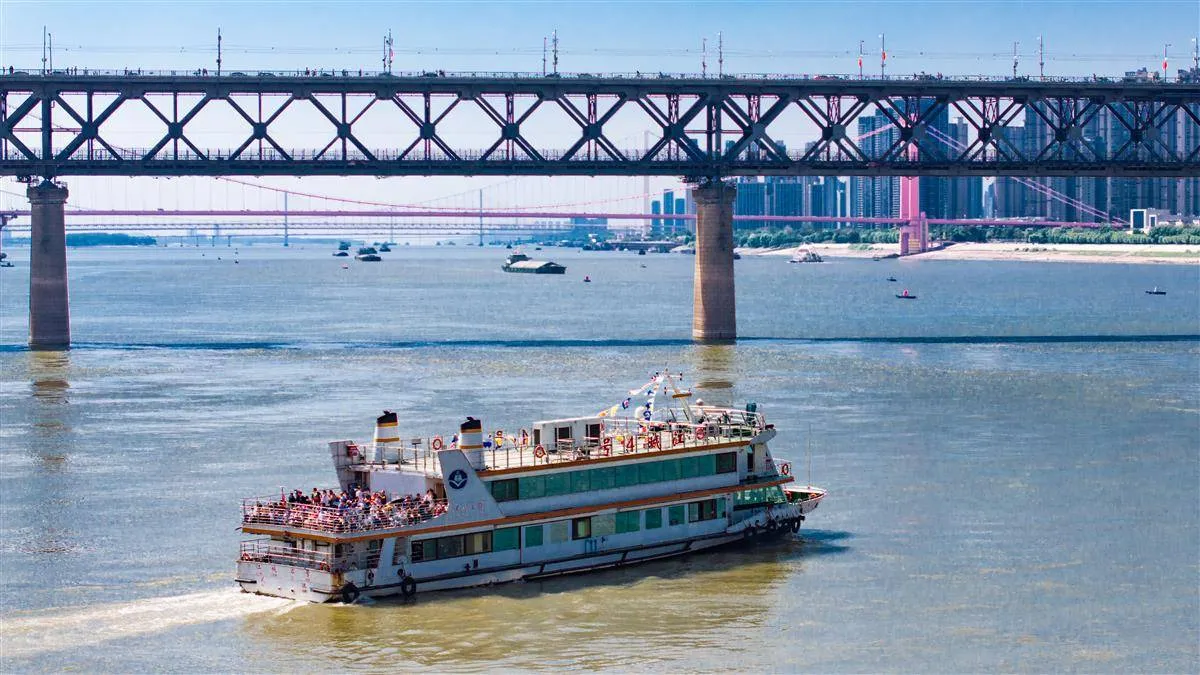
The 1.5-yuan ferry crossing the Yangtze: 20 minutes on the river for 20 US cents.
Wuhan has 12 metro lines, 11 bridges across the two rivers, and a traffic system that moves 11 million people daily. The metro crosses the Yangtze in 4 minutes, air-conditioned and underground. The bridge crosses it in 8 minutes by car. Nobody needs the ferry. It carries a fraction of the passengers it carried 30 years ago. The Wuhan Public Transport Group subsidizes it at a loss.
But it still runs. Every 20 minutes, from 6:00 AM to 8:00 PM, a flat-bottomed ferry boat pushes off from the Hankou dock, crosses the Yangtze, and lands at the Wuchang terminal. And people still ride it. I’ll tell you who they are, but first you need to understand what the ferry replaced.
Before the bridge, the ferry was everything
I wrote about how the Yangtze defines Wuhan. The river splits the city into three towns: Hankou, Wuchang, and Hanyang. Before 1957, when the first Yangtze bridge was completed, the only way between those towns was by ferry. (I wrote about the full history of those bridges here.)
The ferries ran constantly. Every 15 minutes during the day, more during rush hour. They carried everyone: workers, students, merchants, soldiers. The boats were smaller then, wooden-hulled, diesel-powered, packed to the rails. In summer, when the Yangtze flooded and the current ran fast, the ferries struggled. Some days they couldn’t run at all. The three towns became islands. You could see Wuchang from Hankou (right there, across the water) and you couldn’t get there.
The 1957 bridge changed the city overnight. For the first time, you could walk from Hankou to Wuchang. The ferries didn’t stop, but their passengers dropped. More bridges followed: the Second Yangtze Bridge in 1995, the Baishazhou Bridge in 2000, the Erqi Yangtze Bridge in 2011. Each one took more riders from the ferry. The metro tunnels did the rest. By the time Line 2 crossed under the Yangtze in 2012, the ferry was a relic.
Who rides it now
The ferry I took last Tuesday had about 40 passengers. Here’s who they were:
The old people. A dozen retirees, mostly women, carrying the nylon shopping bags that Chinese grandmothers use for groceries. They take the ferry from Wuchang to Hankou to shop at the markets near the Bund: the produce there is cheaper and fresher than in their neighborhood. Then they take it back. For them, the ferry is practical. The metro costs 2 yuan more and involves escalators, long walks underground, and stairs. The ferry docks are at street level. You walk on, you sit down, you walk off.
The motorcyclists. The ferry is the only way to get a scooter or motorcycle across the river without riding it over a bridge in traffic. A handful of delivery drivers use the ferry regularly. They park their bikes on the open deck at the front of the boat, next to the cargo hatch, and smoke for 20 minutes. The metro doesn’t allow motorcycles, and the bridges are stressful on two wheels. The ferry is the calm option.
The tourists. Usually foreigners, usually lost. They find the ferry because it’s listed in Lonely Planet or some travel blog. They board with cameras and confused expressions, take photos of the bridges, and get off at the other side without knowing where they are. I saw a German couple last month who rode the ferry to Wuchang, walked 200 meters in the wrong direction, and rode it back to Hankou.
Me. And people like me, locals who take the ferry because we feel like it. Because it’s cheap, it’s on the river, and 20 minutes on a boat beats 4 minutes in a tunnel. We’re the smallest group. Most locals under 40 have never taken the ferry. Some don’t know it still exists.
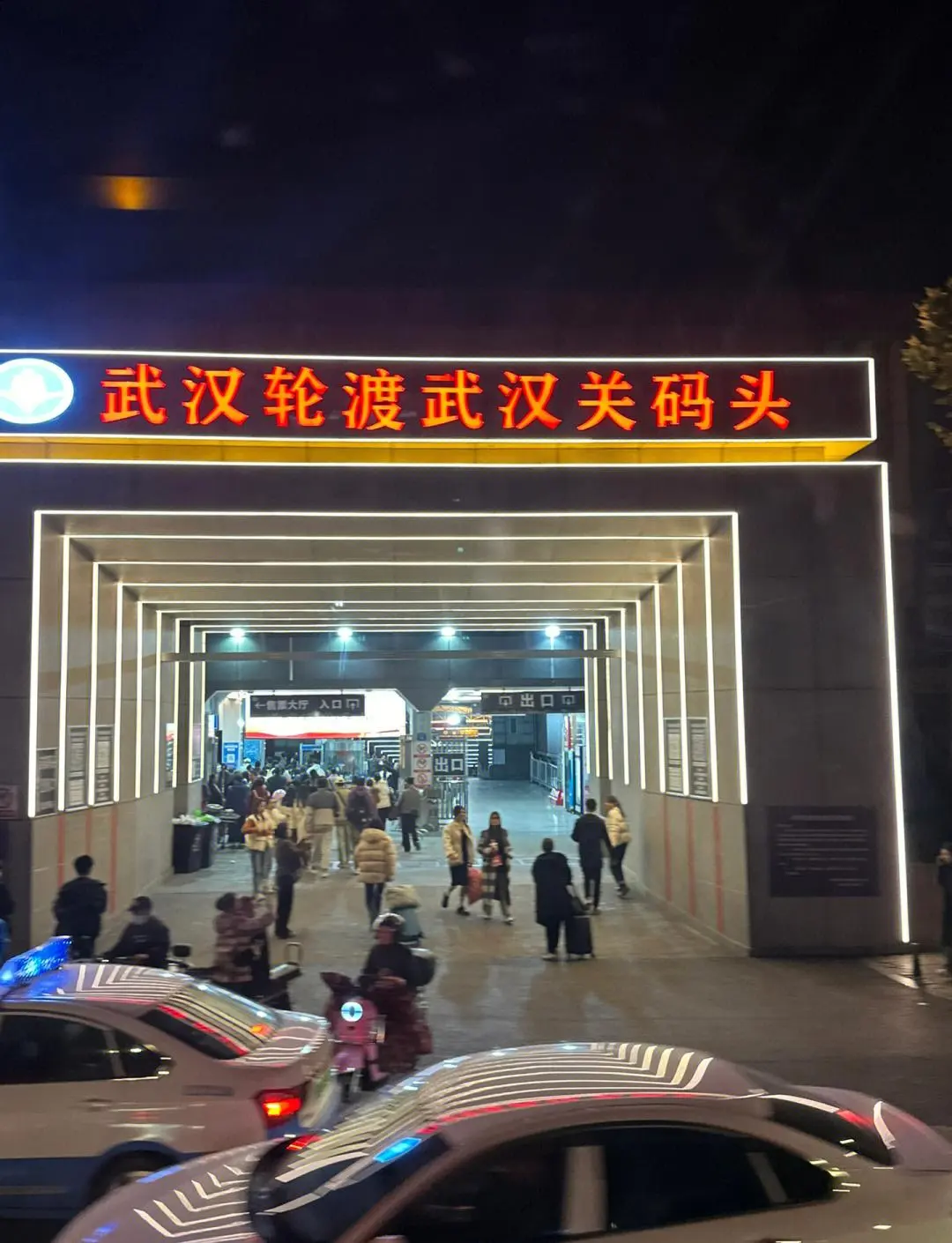
Plastic seats, diesel fumes, and a woman who sells instant noodles. The ferry hasn’t changed in 30 years.
The boat
The ferry boat itself is worth describing, because it’s not what you’d expect.
It’s flat-bottomed, about 30 meters long, with an enclosed cabin in the middle and open decks at both ends. The cabin has plastic seats: the flip-up kind you see on old Chinese buses, bolted to the floor in rows. The seats face forward, but “forward” changes when the boat reaches the other side and reverses direction. There’s no air conditioning. In summer, the cabin is an oven. People sit outside on the cargo hatch instead, in the wind, in the sun.
The engine is diesel, loud enough that conversation requires raised voices. The floor vibrates. The windows are small, scratched, and not very clean. There’s a small kiosk selling drinks and instant noodles, run by a woman who’s been on the ferry longer than I’ve been in Wuhan, and she doesn’t sell much. Mostly she reads.
The boat doesn’t go fast. It crosses at an angle, pushing upstream against the current so that the actual path is a straight line from dock to dock. The crossing takes 20 minutes. In fog, it takes longer. In flood season, when the current runs hard, it takes 30. The captain has been doing this route for years. He doesn’t use GPS. He reads the water.
What you see
The view from the ferry is the reason to take it. Here’s what you get in 20 minutes that you can’t get anywhere else:
The two skylines. As the boat leaves Hankou, you look back at the Hankou riverfront: the colonial buildings of the Bund, the Jianghan Customs clock tower, the modern skyscrapers behind them. As you approach Wuchang, you see its skyline growing: the Yellow Crane Tower on the hill, the university buildings, the residential towers. You see both sides of the city at once, from the middle. No bridge gives you this, and no building does either. Only the water does.
The bridges. From the ferry, you pass under the Wuhan Yangtze River Bridge (1957) and you can see the Second Yangtze Bridge (1995) upstream. The 1957 bridge from below is a wall of steel trusses, riveted, heavy, industrial. It looks like what it is: a Soviet-engineered structure built to move trains and tanks across a river. From the water, you understand the scale of it: 1.6 kilometers of steel, 70 years old, still carrying traffic.
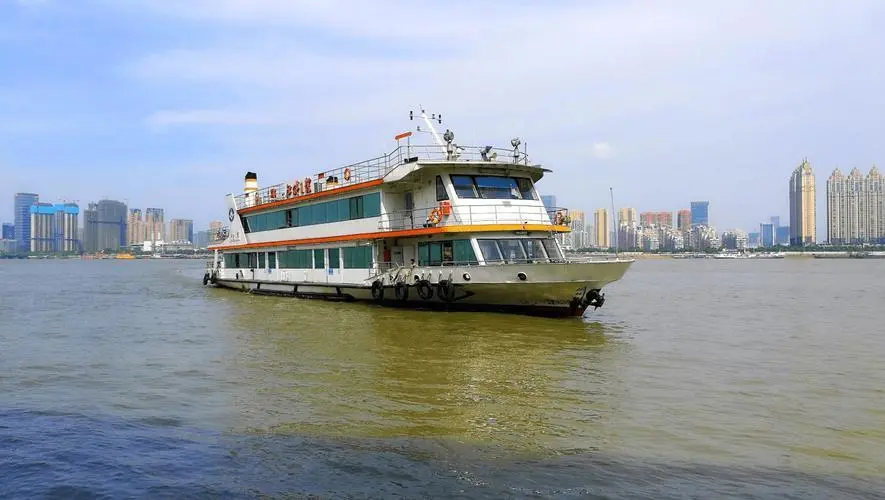
From the water, you see both skylines at once. No bridge gives you this.
The river traffic. Cargo ships pass in both directions. Sand barges, coal boats, container ships heading downstream to Shanghai. Small fishing boats drift near the banks. The Yangtze is a working river, and from the ferry you’re in the traffic lane, at water level, watching it work.
The light. If you time it right (the 6:40 PM departure from Hankou, in summer), you cross during sunset. The Yangtze turns gold and the city lights flicker on. The bridges glow. It’s the same view you get from walking the bridge at sunset, but from below instead of above. The reflection on the water doubles everything. 1.5 yuan for this. I’ve spent more on water.
How to take it
| Item | Details |
|---|---|
| Route | Wuhan Port (武汉关码头), Hankou ↔ Wuchang |
| Cost | 1.5 yuan (WeChat Pay or cash) |
| Schedule | Every 20 min, 6:00 AM-8:00 PM |
| Duration | 20 min (30 min in flood season) |
| Boarding | Street-level, no stairs, bikes and motorcycles allowed |
| Best time | Sunset (6:40 PM departure from Hankou, summer) |
| Metro access | Line 2/6 Jianghan Road Station, walk 10 min south to the port |
Finding the port: The Hankou ferry port is at the eastern end of the Bund, near the Jianghan Customs building. Walk south from Jianghan Road along the riverfront and you’ll see it. It’s not well-marked. Look for a metal ramp going down to the water and a ticket booth that looks like it hasn’t been renovated since 1995.
Paying: Scan the QR code at the ticket booth with WeChat Pay, or hand over 1.5 yuan in cash. They’ll give you a paper ticket that nobody checks. Walk down the ramp. Wait for the boat, then walk on when it docks. Sit anywhere.
Getting off: The Wuchang terminal is at the foot of the riverbank near Simenkou (司门口). From there, it’s a 15-minute walk to Hubu Alley food street, or a 10-minute walk to the Yellow Crane Tower area. Most tourists get off and wander into Wuchang’s old district, which is the right thing to do.
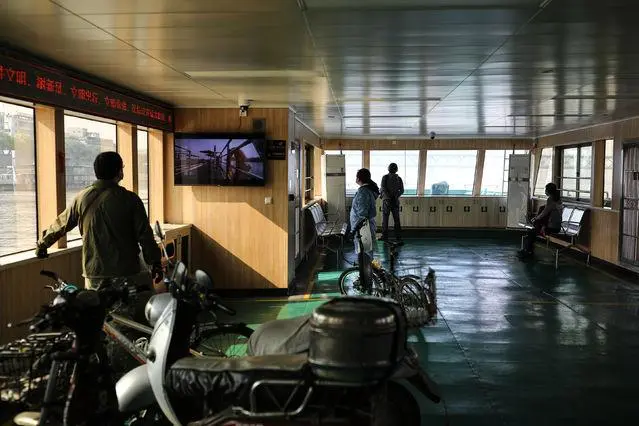
The ticket booth looks like it hasn’t been renovated since 1995. Walk down the ramp, wait for the boat.
Why it matters
The ferry is not the fastest way across the river. It’s not the most convenient. It doesn’t have air conditioning, the seats are uncomfortable, and the bathroom is something I won’t describe.
But it’s the only way to be on the Yangtze in Wuhan. Not above it, not under it, not beside it. On it. Feeling the current push the boat sideways. Smelling the river: mud, diesel, fish, whatever the wind brings. Watching the water change color as the light shifts. Seeing the city from the middle, where the river has always been.
Before the bridges, before the metro, before the city had a single name, the ferry was how Wuhan worked. Three towns, one river, and boats going back and forth. Everything else was built on top of that. The ferry is the original transit system, still running, still 1.5 yuan, still 20 minutes. In a city that’s demolished and rebuilt itself every decade, that’s something.
The ferry is one way to experience Wuhan’s river. For more: the Yangtze’s role in shaping the city, walking the bridge at sunset, and why Wuhan is three towns.
Related:
-
The River Is the City: Wuhan’s Yangtze Culture: the broader story of the river
-
Walking the Yangtze: Wuhan’s Bridge at Night: the other way to cross, on foot above
-
Two Rivers, Three Towns: why the river divides Wuhan
-
Getting Around Wuhan: Transportation Guide: all transit options compared
-
Hankou’s Bund: The European Quarter: what you’ll see leaving the Hankou dock
-
Yellow Crane Tower: Beyond the Poem: what you’ll see arriving in Wuchang
-
3 Days in Wuhan: A Local’s Itinerary: where the ferry fits in a visit
-
Best Time to Visit Wuhan: when the sunset crossing is best