
A piece of Europe on the Yangtze
Most foreigners who visit Wuhan don’t know that a chunk of the city was literally European for 80 years. I didn’t fully understand it myself. I got it only after walking through Hankou’s old streets and noticing the buildings didn’t look Chinese.
They’re not. They’re Victorian, Art Deco, neoclassical: built by British merchants, French Jesuits, German traders, and Russian tea companies between 1861 and 1943. This was the Hankou Concession, and its architecture is still standing, tucked between high-rises and noodle shops.
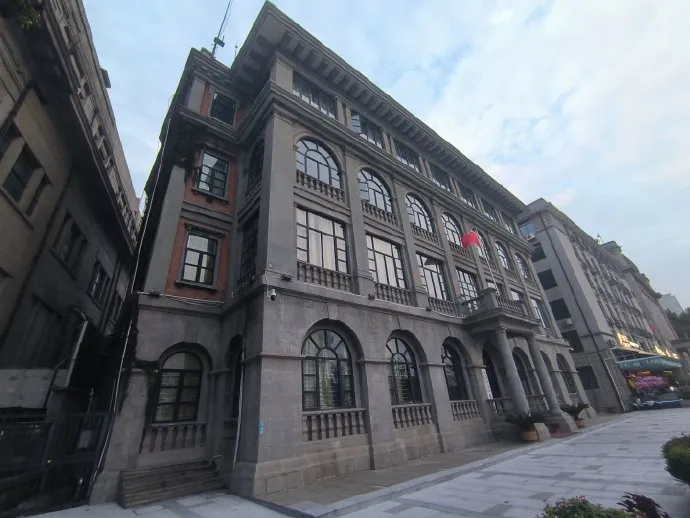
The Hankou Bund (a row of European concession buildings along the Yangtze, built between 1861 and 1943).
I’ve walked through this area hundreds of times. It never stops being strange. One minute you’re at a street stall eating hot dry noodles for 7 yuan. The next you’re standing in front of a 1900s German bank with Doric columns and iron lamp posts.
How Hankou became international
In 1858, the Treaty of Tianjin forced the Qing government to open Hankou to foreign trade. By 1861, the British had staked out their concession along the Yangtze. The French, Germans, Russians, and Japanese followed, each carving out their own slice of riverfront.
Why here? Hankou was one of the four largest cities in China at the time, and the Yangtze made it a trade powerhouse. Tea from the interior, silk from the east, porcelain from the south. Everything passed through Hankou. The foreigners wanted a piece of it.
By 1900, Hankou’s foreign quarter had its own police forces, post offices, schools, and race tracks. The Bund (江滩) is the riverfront promenade. It was lined with trading houses, banks, and consulates. It was the closest thing to a European city you could find in inland China.
The concessions ended during World War II. The buildings stayed.
What you’ll see today
The former customs house (江汉关)
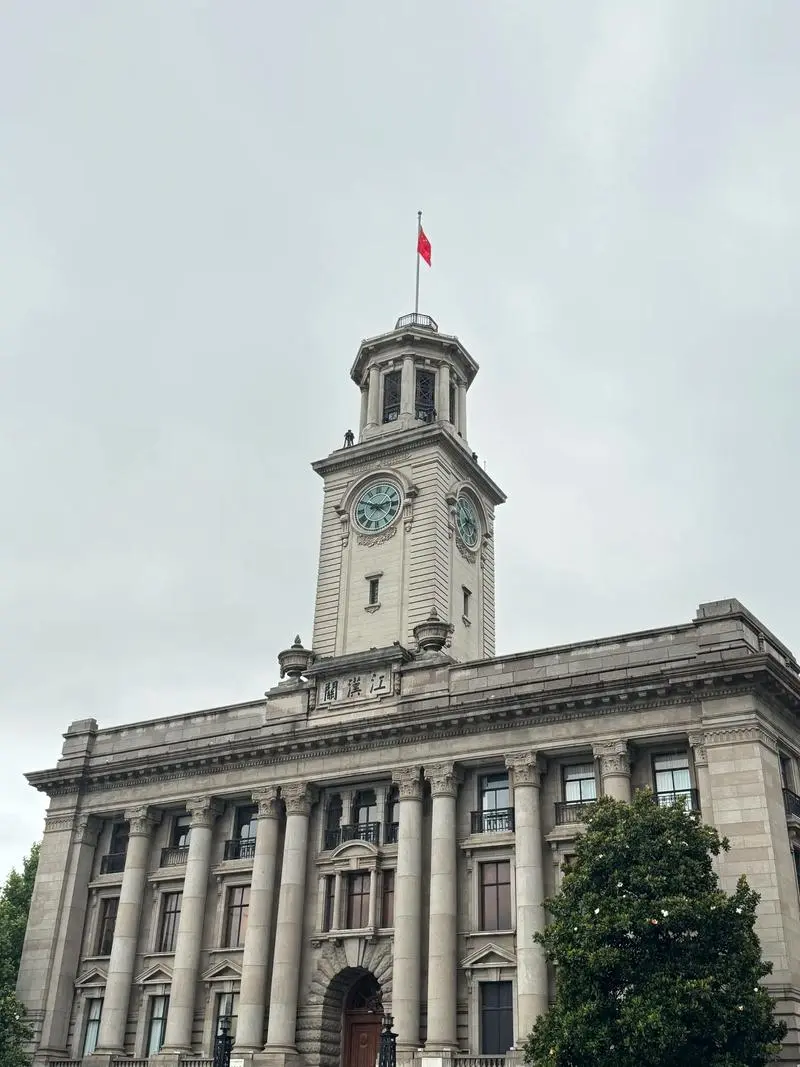
The Jianghan Customs House (江汉关), built in 1924. The clock still chimes every hour.
The Jianghan Custom House is the most iconic building on the Bund. Built in 1924 in neoclassical style with a clock tower, it was the center of foreign trade administration. The clock still chimes. Standing at the intersection of Yanjiang Avenue and Jianghan Road, it’s the gateway to the old concession area.
Today it houses the Wuhan Museum of Modern Architecture. It is worth a 30-minute visit if you want to see old blueprints and photographs of what the riverfront looked like 100 years ago.
The consulate buildings
Several former consulates survive, scattered along the back streets behind the Bund:
-
The British Consulate (now a government office) on Tianjin Road: red brick, white trim, unmistakably British.
-
The French Consulate on Dongting Street: a two-story white building with a wrought-iron balcony. The French also built a Catholic church nearby, still active.
-
The German Consulate on Poyang Street: the most architecturally striking, with a steeply pitched roof and half-timbering that looks transplanted from Bavaria.
Most of these buildings are offices now, not museums. You can’t always go inside, but the exteriors are the point. Walk slowly and look up.
Hankou Railway Station (old station)
Not to be confused with the modern Wuhan Railway Station, the old Hankou Station (大智门火车站) is a French-designed building from 1903. It hasn’t been a working station since 1991, but the facade is perfectly preserved: a grand yellow-and-white structure that looks like it belongs in provincial France.
The Bund promenade
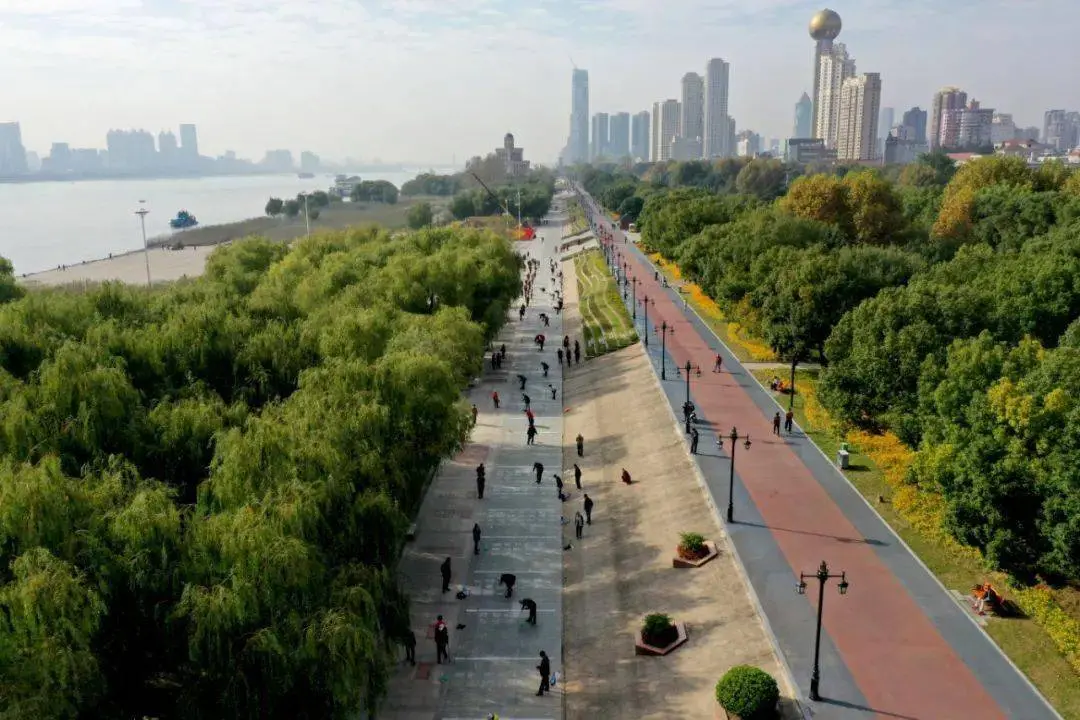
Evening on the Bund promenade: locals walk, dance, and fish along the Yangtze, with century-old European buildings watching over.
The Bund itself (the riverfront walkway) is the best part. It stretches for about 12 kilometers along the Yangtze. The section from Jianghan Customs House to Wuhan Yangtze River Bridge is the most historic, lined with plane trees and old buildings.
In the evening, this is where Hankou comes to walk. Old couples dance to boom-box music, and kids learn to roller-skate. Fishermen cast lines into the Yangtze. And on the other side of the promenade, the European buildings watch over it all, slightly confused about what century they’re in.
From here, you can see the Yangtze River Bridge to the south and the Yellow Crane Tower on the far shore.
The architecture walk
Here’s the route I take friends who visit:
Start: Jianghan Road Metro Station (Line 2/6). Walk 3 minutes south to the Jianghan Customs House. Take photos of the clock tower.
Walk west along Yanjiang Avenue (沿江大道), about 1 kilometer into the core of the old British and Russian concessions. Every building on your left (river side) was built between 1880 and 1930.
Turn right at Tianjin Road (天津路) and walk one block inland. The British Consulate is on your right. Keep walking to Dongting Street (洞庭街) and turn left.
Walk along Dongting Street. This is where the French and German buildings cluster. Look for the Catholic church, the former German consulate, and the old Japanese school.
End: At the intersection of Poyang Street (鄱阳街) and Lihuangpi Road (黎黄陂路). Lihuangpi Road is now a pedestrian street with cafes and galleries housed in restored concession buildings. Stop for coffee, and you’ve earned it.
Total time: 2-3 hours. Distance: About 3 kilometers.
Why this matters
The Hankou concessions are not a tourist trap. They’re not reconstructed. They’re not theme parks. They’re actual 100-year-old European buildings being used as offices, homes, and shops, sitting incongruously in a Chinese city of 11 million people.
For foreign visitors, it’s a strange mirror. You came to China and found Europe. For Chinese visitors, it’s a reminder of a complicated history. Either way, it’s worth a morning.
Practical info
| Item | Details |
|---|---|
| Entry | Free (streets and buildings are public) |
| Hours | Anytime; best 4:00-6:00 pm for light |
| Metro | Line 2/6, Jianghan Road Station (江汉路站) |
| Time needed | 2-3 hours |
| Museum | Wuhan Museum of Modern Architecture (inside Customs House), 30 yuan |
| Food | Walk to Jianghan Road pedestrian street for local snacks, or eat at one of the cafes on Lihuangpi Road |
| Nearby | Yangtze Bridge (walk south 20 min), Jiqing Street night market (10 min east) |
Found a building I missed or have photos of the old concessions? Email me.
Related:
-
Hankou: The River Port That Became China’s Chicago: the full history of Hankou, from mudflat to metropolis
-
Wuhan’s Lifang: The Vanishing Alleyways of Old Hankou: the red-brick alleys behind the Bund
-
3 Days in Wuhan: A Local’s Itinerary: the Bund is Day 1
-
Walking the Yangtze Bridge at Night: visible from the Bund promenade
-
Yellow Crane Tower: Beyond the Poem: on the opposite shore
-
Wuhan After Dark: Night Markets: Jiqing Street is 10 minutes away
-
The Tea Port: How Hankou Fueled the World’s Tea Habit: the Russian tea merchants who built these buildings