
The town people forget
Ask a tourist in Wuhan about Hanyang, and you’ll get a blank look. Ask a local, and they’ll say something like “oh, that’s where the factories used to be.” Then they’ll pause and add, “and Guiyuan Temple, I think.”
That’s Hanyang. It’s the town people forget, sandwiched between the commercial powerhouse of Hankou and the cultural weight of Wuchang, separated from both by the Han River and the Yangtze. It doesn’t have the shopping, it doesn’t have the universities, it doesn’t have the famous landmarks.
What it has is something more important: this is the place where modern Chinese industry was born.
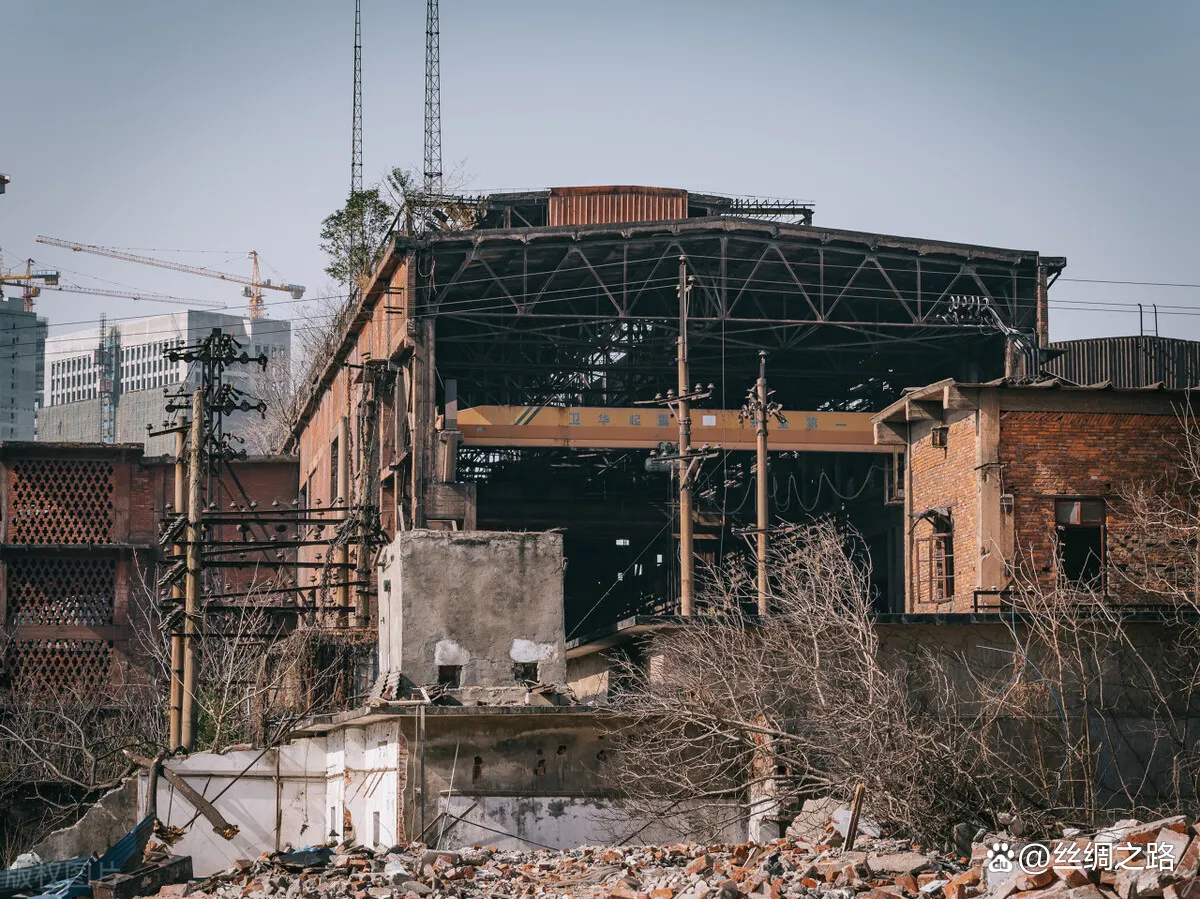
The Hanyang Iron Works: where China’s first steel was forged in 1894.
Before Hankou existed
Here’s something most people don’t know: Hanyang is older than Hankou. Much older.
The name “Hanyang” (汉阳) means “north of the Han River”, though ironically the town is now on the south side, because the river shifted. The settlement dates back to at least the Sui Dynasty (581-618 AD), when it was established as a county seat. For centuries, Hanyang was the main settlement on the west bank of the Yangtze at this stretch. It was a quiet government town: magistrates, clerks, a temple or two, and farmers.
In the 1460s, the Han River changed course during a flood. The new channel cut Hanyang off from the land to the north, the mudflat that would become Hankou. For a while, Hanyang watched from across the water as its upstart neighbor grew into one of China’s greatest commercial cities. Hanyang stayed small, quiet, administrative.
That changed in 1889, when one man arrived.
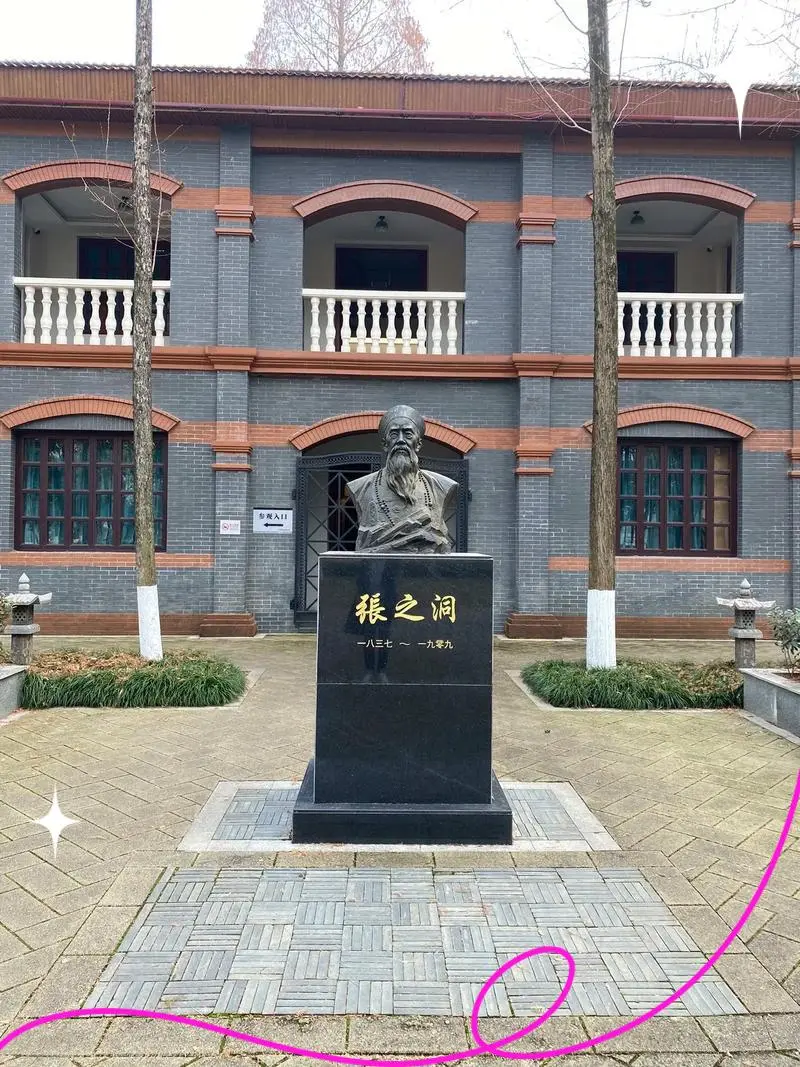
Zhang Zhidong: the Qing official who chose Hanyang as the birthplace of Chinese heavy industry.
Zhang Zhidong and the dream of steel
The man was Zhang Zhidong (张之洞), the newly appointed Viceroy of Huguang, the Qing Dynasty official responsible for the entire central China region. Zhang was what historians later called a “Self-Strengthening” reformer. He believed China could survive the Western onslaught, but only if it learned Western technology. And the foundation of that technology, he believed, was steel.
In 1890, Zhang chose Hanyang as the site for what he called the Hanyang Iron Works (汉阳铁厂). The location made sense: iron ore from Daye (大冶), 100 km south, could be shipped by river. Coal from Pingxiang (萍乡), 400 km southwest, could be shipped by rail. Hanyang sat between the two.
The construction took three years. It was, by some measures, the first modern steel mill in Asia, and certainly the first in China. When the furnaces lit in 1894, they produced something China had never made before: steel rails for railways. The Beijing-Hankou Railway, one of China’s earliest rail lines, was built with Hanyang steel.
The iron works was massive. At its peak, it employed over 3,000 workers and covered 40 hectares. Smokestacks rose along the Han River. Foreign engineers from Belgium and England were brought in to train Chinese workers. It was the beginning of Chinese heavy industry: not in Shanghai, not in Tianjin, but in Hanyang.
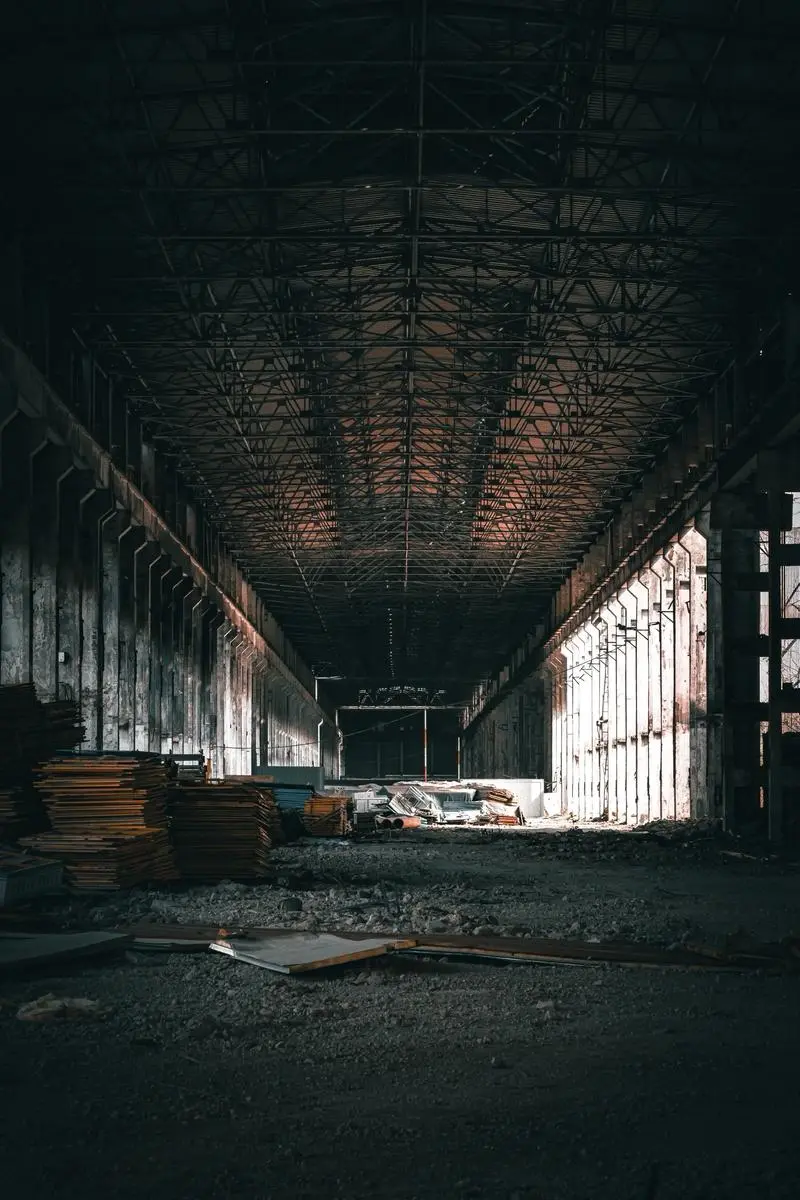
Inside the iron works: rusted machinery from China’s first modern steel mill.
The Hanyang Arsenal
Steel wasn’t Zhang Zhidong’s only ambition. In 1894, next to the iron works, he built the Hanyang Arsenal (汉阳兵工厂). Its purpose: to manufacture modern rifles for the Qing army, so China would never again be humiliated by technologically superior foreign weapons.
The arsenal’s most famous product was the Hanyang 88 (汉阳八八式), a bolt-action rifle based on the German Gewehr 88. It was the first mass-produced modern firearm in Chinese history. For decades, the “Hanyang rifle” was the standard-issue weapon for Chinese soldiers, through the fall of the Qing, the warlord era, the Northern Expedition, and well into the Second Sino-Japanese War.
If you’ve ever seen a photo of a Chinese soldier from the 1930s or 1940s holding a rifle, there’s a good chance it was made in Hanyang. The arsenal produced over a million rifles during its 40-year lifespan.
The fall
Hanyang’s industrial golden age didn’t last. The Hanyang Iron Works struggled financially from the beginning; the ore was good, but the coal was expensive to transport, and management was plagued by corruption and political interference. By the 1920s, the furnaces were cold more often than they were hot.
The final blow came in 1938. The Japanese army was advancing toward Wuhan. The Chinese government made a desperate decision: dismantle the iron works and the arsenal, load the machinery onto boats, and ship it upriver to Chongqing, where the wartime capital was being established.
The evacuation was chaotic. Some equipment made it. Much didn’t. The furnaces that couldn’t be moved were blown up to prevent them from falling into Japanese hands. When the Japanese arrived in October 1938, they found a shell: empty buildings, broken foundations, rust.
Hanyang never fully recovered as an industrial center. After 1949, new state-owned factories were built: chemical plants, machinery works, textile mills. But they were never on the scale of the old Hanyang iron works, not even close. The town settled into a quiet, working-class rhythm that it still has today.
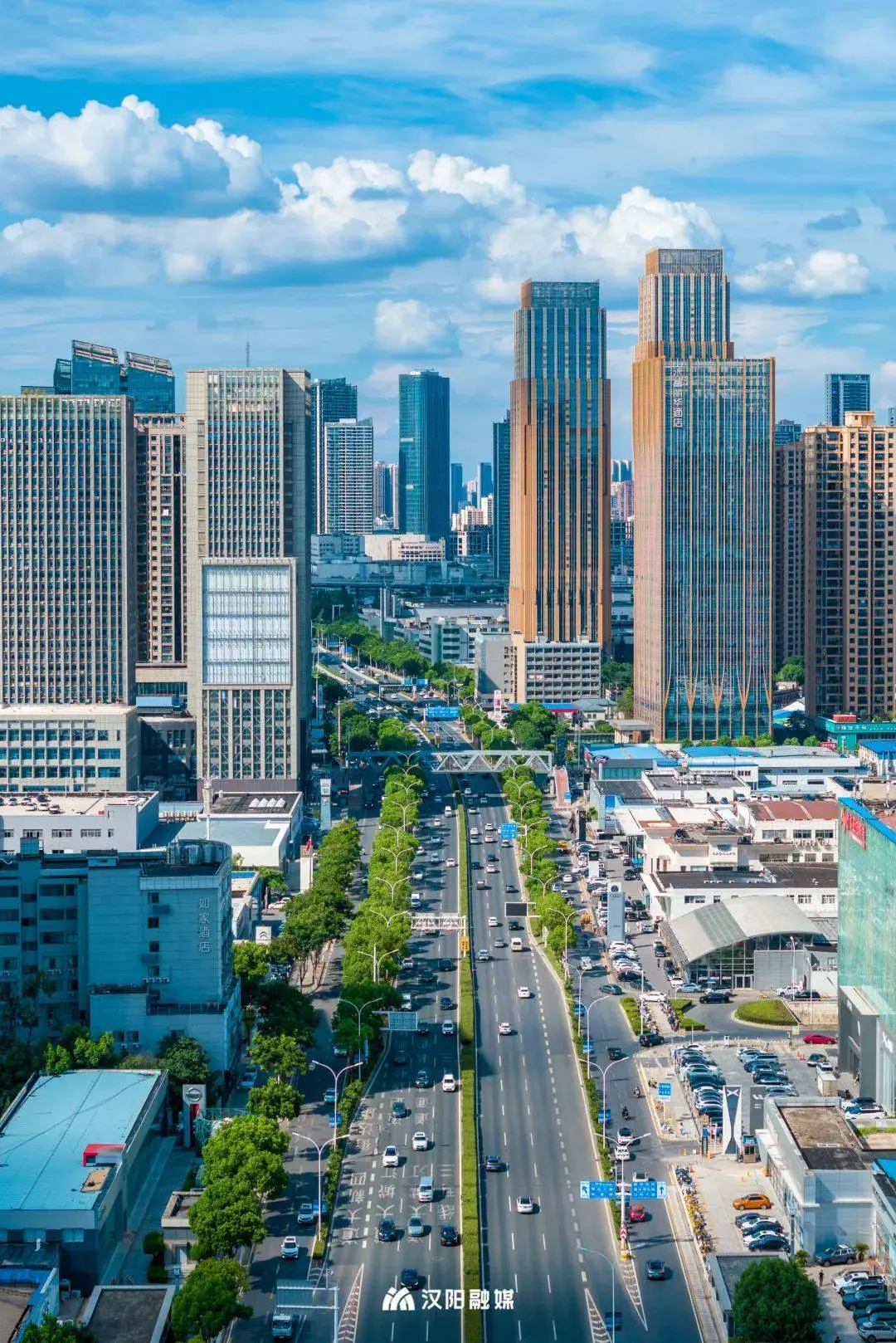
Hanyang today: the factories are gone, but the working-class character is still there.
What remains
The iron works is gone, but its memory isn’t. In 2018, the site was developed into the Hanyang Iron Works Heritage Park (汉阳铁厂遗址公园), a museum built into the surviving industrial structures. You can walk through the old foundry building, see the rusted machinery, and read the accounts of the workers who lit China’s first furnace.
There’s something else in Hanyang that predates the factories by a long way: Guiyuan Temple (归元寺). Founded in 1658, during the early Qing Dynasty, it’s one of the four great Buddhist temples in Wuhan. The temple survived the industrial era, the war, and the Cultural Revolution. It’s still an active temple: monks in grey robes, incense smoke, and the low murmur of sutras. On Chinese New Year, hundreds of thousands line up to ring the bell.
And there’s Qingchuan Pavilion (晴川阁), a Ming Dynasty tower on the Yangtze riverbank, directly across from the Yellow Crane Tower. The two landmarks have been facing each other across the river for 400 years. Qingchuan is smaller, quieter, and almost empty of tourists. I like it better that way.
The Hanyang personality
If Hankou is the trader and Wuchang is the scholar, Hanyang is the worker. Quiet. Practical. Not easily impressed. The kind of person who shows up, does the job, and goes home.
Hanyang people think both Hankou and Wuchang are too noisy. They’re probably right.
The old factories are mostly gone, replaced by parks, residential towers, and the Heritage Park. But the character remains. Hanyang is the part of Wuhan where the streets are widest and emptiest, where the pace is slowest, where you can still find a noodle shop where the owner remembers your order and doesn’t feel the need to chat about it.
It’s not a tourist destination, and that’s exactly what makes it worth visiting.
What you can still see today
| Site | What It Is | Era |
|---|---|---|
| Hanyang Iron Works Heritage Park | Museum on the site of China’s first steel mill | 1890-1938 |
| Guiyuan Temple | One of Wuhan’s four great Buddhist temples | 1658 |
| Qingchuan Pavilion | Ming Dynasty tower facing the Yellow Crane Tower | 1540s (rebuilt) |
| Tortoise Hill (龟山) | Forested hill between the two rivers, walking paths | Natural |
| Wuhan Yangtze River Bridge | The bridge that connects Hanyang to Wuchang | 1957 |
If you want to understand Hanyang, cross the Yangtze River Bridge on foot from the Wuchang side. You’ll arrive in Hanyang with sore legs and a new perspective. Walk to Guiyuan Temple, then to the Iron Works Heritage Park, then find a small noodle shop for lunch. You’ll have the most peaceful afternoon in Wuhan.
Hanyang is one of Wuhan’s three towns. Read about the other two towns: Hankou and Wuchang.
Related:
-
From Iron to Light: How Wuhan’s Optics Valley Replaced Its Factories: the 130-year industrial journey from iron to semiconductors
-
The Wuchang Uprising: How Wuhan Ended 2,000 Years of Empire: how Zhang Zhidong’s iron works and army unintentionally armed the revolution
-
Wuhan at War: The Battle That Changed WWII in China, when the iron works was destroyed
-
Two Rivers, Three Towns: why the city of Wuhan is three towns at once
-
Walking the Yangtze Bridge at Night, the bridge from Hanyang to Wuchang
-
Yellow Crane Tower: Beyond the Poem: the tower that still faces Qingchuan Pavilion across the river
-
Hubei Provincial Museum, just across the river in Wuchang
-
Wuhan’s Temples: Where 300 Years of Incense Still Burns: Guiyuan Temple and Baotong Temple, the full guide
Sources
Founding dates and figures follow the historical record of the Hanyang works.