
The accident that changed China
Revolutions never go according to plan.
The Xinhai Revolution, the uprising that ended the Qing Dynasty and 2,132 years of imperial rule in China, was supposed to happen on October 16, 1911. Not October 10. And not the way it actually happened.
On the evening of October 9, a group of revolutionaries in a rented house on Russian Concession Road in Hankou were making bombs. They were not professional bomb-makers. They were soldiers in the New Army: a modernized military force that the Qing government had built, ironically, to strengthen the dynasty. One of them, Sun Wu, was stuffing explosives into a bomb casing when he accidentally set it off. The explosion blew off two of his fingers. Smoke poured from the house.
The Russian concession police heard the blast, came running, and seized the membership lists, revolutionary seals, and documents inside. The names and addresses of every revolutionary in Wuchang were now in the hands of the Qing authorities.
The revolution’s leaders panicked. Sun Wu was rushed to a hospital. The senior leaders, Jiang Jieshi’s future rival Huang Xing and the literary figure Song Jiaoren, fled the city overnight. By dawn on October 10, the central leadership of the Wuchang uprising was gone. Fled. Wounded. Captured. The rank-and-file soldiers were on their own, and they knew the Qing government would come for them at first light, using the seized membership lists.
They had two options: wait to be arrested and executed, or rise up immediately, without leaders, without a plan, and without coordination.
They chose the second option. And that is why October 10, 1911, not October 16, became the day the Chinese empire ended.
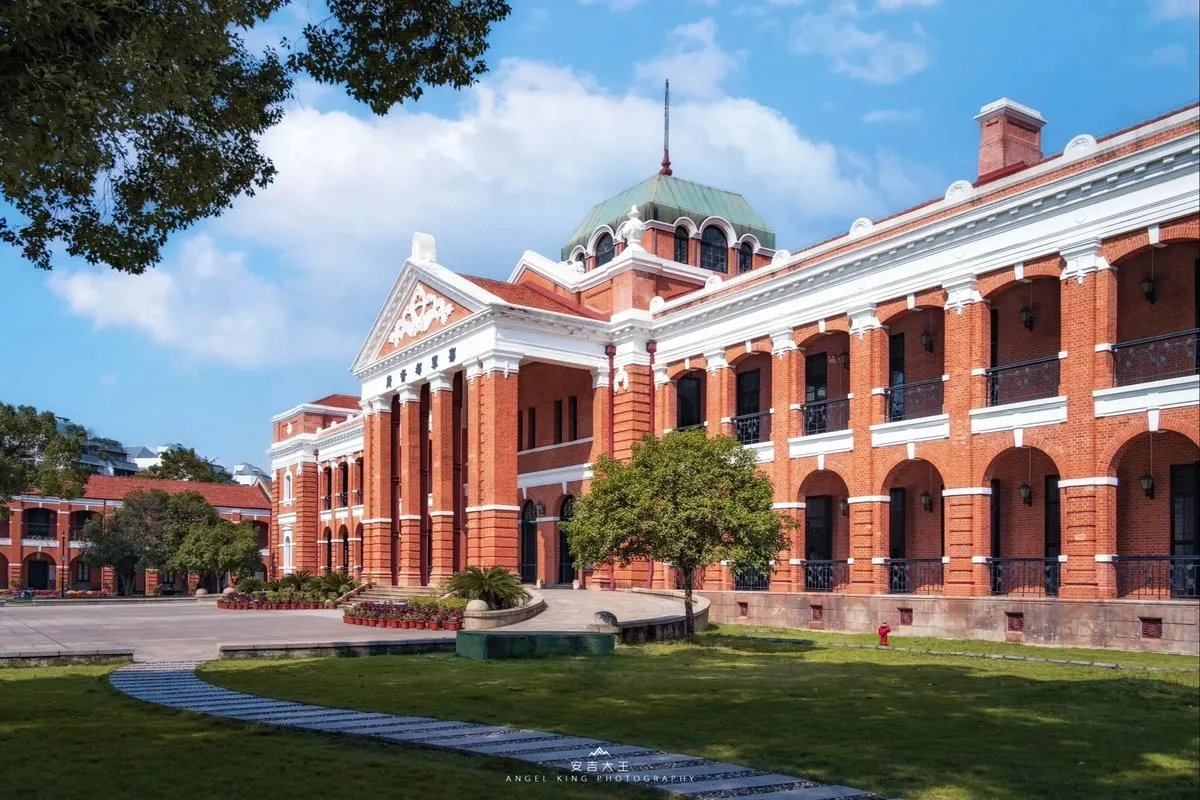
The Red House: Wuchang Uprising Memorial Hall. On October 11, 1911, revolutionaries declared a new republic here.
Why Wuhan?
People always ask: why did the revolution that ended 2,000 years of empire start in Wuhan, of all places? Not Beijing. Not Shanghai. Not Guangzhou, where Sun Yat-sen had been planning uprisings for years.
The answer comes down to one man: Zhang Zhidong.
I’ve written about Zhang before. He’s the Qing official who built the Hanyang Iron Works, founded Wuhan University, and modernized the city in the 1890s and 1900s. What I didn’t mention is that his modernization program included building a new army, the Hubei New Army, and filling it with educated soldiers.
This was a fateful decision. Traditional Qing soldiers were largely illiterate peasants who obeyed orders. Zhang’s New Army required literacy. Officers were trained in modern military academies. Soldiers read newspapers. And in the early 1900s, many of them started reading revolutionary literature, the writings of Sun Yat-sen, the anti-Manchu tracts circulating among educated young men across China.
Zhang Zhidong built an army to defend the Qing Dynasty. That army killed it.
By 1911, roughly one-third of the soldiers in the Wuchang New Army garrison were either members of revolutionary societies or sympathetic to the cause. The revolutionary organizations, the Literature Society (文学社) and the Progressive Association (共进会), had been infiltrating the New Army for years. They held meetings inside the barracks. They recruited at the unit level. When the bomb went off on October 9, the network was already in place. What was missing was the signal to move.
The signal came at 8 PM on October 10, when a single shot rang out from the Engineering Battalion barracks at Baishazhou.
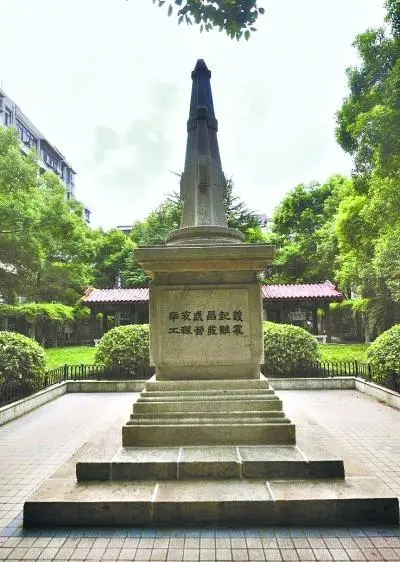
The Engineering Battalion site, where a single gunshot at 8 PM on October 10, 1911, started the end of imperial China.
The night of October 10
Here’s what happened, hour by hour, based on the accounts that survive.
8:00 PM: At the Engineering Battalion barracks in southern Wuchang, a squad leader named Xiong Bingkun fired his rifle. This was the signal. Soldiers seized the ammunition depot, killed their commanding officer when he tried to stop them, and marched north toward the city.
8:30 PM: The Artillery Battalion and the Infantry Battalion at Baishazhou joined the mutiny. Within an hour, three units had risen.
10:00 PM: The rebel forces converged on the seat of the Viceroy of Huguang, the Qing governor’s compound in central Wuchang. The Viceroy, Ruicheng, heard the gunfire and did what Qing officials did best: he fled. He climbed over the back wall of his compound, ran to a waiting boat, and escaped down the Yangtze. His deputy stayed and fought. He was killed.
Midnight: The rebel soldiers fought their way through the city gates, engaging loyalist units in street battles. The fighting was confused and chaotic; there was no central command, no coordinated plan. Units that didn’t know the uprising had started fired on each other in the dark. But the revolutionaries had numbers and momentum.
Dawn, October 11: By sunrise, Wuchang was in rebel hands. The Qing garrison had collapsed. The Viceroy’s compound was captured. The city’s arsenal was one of the largest in central China, another legacy of Zhang Zhidong’s modernization. It was seized, giving the rebels thousands of rifles and rounds of ammunition.
The revolutionaries stood in the streets of Wuchang at dawn on October 11, holding a city they hadn’t expected to take, without a single senior leader present, and faced with the question: now what?
The reluctant commander
The answer to “now what?” is one of the strangest stories in modern Chinese history.
The revolutionaries needed a leader: someone with military credentials, someone the other provinces would recognize, someone who could negotiate with foreign powers. Every senior revolutionary figure was either dead, fled, or in prison. So they did what desperate people do: they grabbed the nearest convenient general.
His name was Li Yuanhong (黎元洪). He was the commander of the 21st Mixed Brigade in the New Army, a competent but politically uncommitted officer who had not joined the revolution. When the uprising began, he hid. The rebel soldiers found him under a bed, or behind a wardrobe, depending on which account you believe.
They dragged him out and told him he was now the military governor of Hubei Province. He refused. They pointed guns at him. He still refused. They locked him in a room and refused to let him leave until he agreed. For two days, Li Yuanhong sat in the governor’s office, eating meals brought to him by his captors, signing nothing, saying nothing.
Eventually, the revolutionaries simply issued proclamations in his name without his consent. They told the other provinces that Li Yuanhong had joined the revolution, and foreign consuls that the new government was in charge. They announced the establishment of the Chinese Republic (the first in Asia) from the Viceroy’s compound, which they renamed the Military Government.
Li Yuanhong, seeing the revolution succeeding and himself declared its leader whether he liked it or not, finally agreed. He would go on to serve as Vice President and then President of the Republic of China. Not bad for a man who started the revolution hiding under a bed.
The Viceroy’s compound, a two-story red-brick Western-style building, became the seat of the new government. It’s still standing. It’s called the Red House (红楼), and it’s now the Wuchang Uprising Memorial Hall. If you visit Wuchang, it’s one of the most important historical sites in modern China, and almost no foreign tourists know it exists.
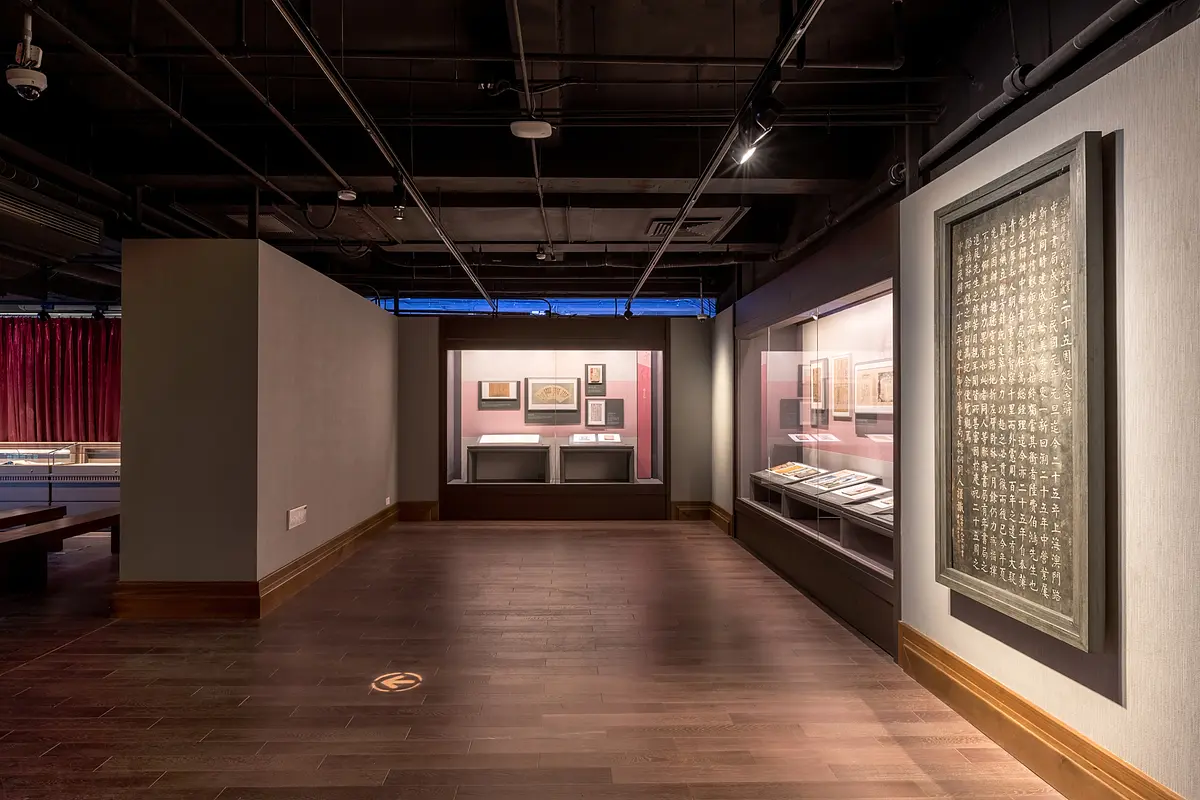
Inside the Red House, the room where the Republic of China was declared, before its leader even agreed to lead it.
The battle of Yangxia
The revolution nearly didn’t survive its first month.
The Qing government, shocked by the fall of Wuchang, sent a massive army south to crush the rebellion. The army was led by Yuan Shikai, the powerful general who would later become President of China, then disastrously declare himself Emperor. Yuan’s Beiyang Army was the most modern and effective military force in China. It marched south toward Wuhan in late October 1911.
The revolutionary forces, now organized under Li Yuanhong’s reluctant command, marched north to meet them. The two armies clashed at Yangxia, a town between Hankou and Wuchang. The Battle of Yangxia lasted from October 18 to December 1, 1911. It was the largest and bloodiest engagement of the Xinhai Revolution.
The revolutionaries fought hard but were outmatched. Hankou fell to the Qing army in early November. The Qing forces then set fire to the city, a devastating blaze that destroyed much of Hankou’s old commercial district. The fire burned for three days. Tens of thousands of civilians lost their homes.
The revolutionaries retreated across the Han River to Hanyang, where they held out for another month. Hanyang fell on November 27. The rebel forces withdrew to Wuchang, across the Yangtze, and prepared for a last stand.
But the last stand never came. By December, the political situation in Beijing had shifted. Other provinces had declared independence from the Qing Dynasty one by one, 15 provinces in total. The Qing government was collapsing from within. Yuan Shikai, seeing which way the wind was blowing, stopped attacking and began negotiating. On December 18, a ceasefire was declared. On January 1, 1912, Sun Yat-sen was inaugurated as the Provisional President of the Republic of China in Nanjing. On February 12, the last Qing emperor, a six-year-old boy named Puyi, abdicated.
The revolution that began with an accidental bomb explosion in Hankou had ended the longest-running imperial system in human history, in 124 days.
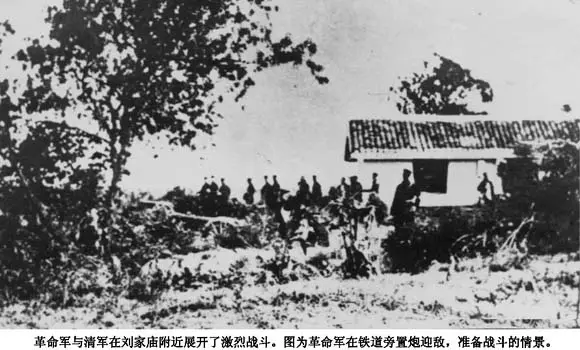
The Yangxia battlefield, where the revolution nearly died. Hankou burned for three days. The rebels held just long enough.
Double Ten Day
October 10 became the National Day of the Republic of China, “Double Ten Day” (双十节). The Republic of China government retreated to Taiwan in 1949 and kept the holiday. To this day, October 10 is the national day of Taiwan, celebrated with military parades and fireworks.
In mainland China, the date is less publicly celebrated but deeply respected. Official history recognizes the Wuchang Uprising as the beginning of the Xinhai Revolution. Every school teaches it as the end of “feudal” imperial rule and the beginning of modern China.
Sun Yat-sen was in Denver, Colorado when the uprising began, reading about it in a newspaper. He became the “Father of the Nation” (国父) in Taiwan and the “Forerunner of the Revolution” (革命先行者) in the mainland. Both governments claim his legacy. Both celebrate October 10. It’s one of the few things Beijing and Taipei agree on, even if they celebrate it differently.
What you can see today
The physical traces of the 1911 Revolution are scattered across Wuchang. Most tourists skip them. They’re not on the standard itineraries, and the signage is mostly in Chinese. But if you’re interested in history, they’re worth seeking out.
| Site | What It Is | Location |
|---|---|---|
| Red House (红楼) | Wuchang Uprising Memorial Hall, the Viceroy’s compound where the republic was declared | Wuchang, near Shouyi Road metro (Line 4) |
| Engineering Battalion Site | Where the first shot was fired on October 10 | Baishazhou area, southern Wuchang |
| Shouyi Park | Large park dedicated to the 1911 Revolution, with statues and monuments | Adjacent to the Red House |
| Yangxia Battle Sites | Scattered markers in Hankou and Hanyang | Various locations, poorly marked |
Start at the Red House. It’s a 10-minute walk from Shouyi Road metro station on Line 4. The building itself is worth seeing: a handsome red-brick structure from the late Qing period, with a clock tower. Inside, the exhibits tell the story of the uprising with photographs, documents, and weapons. The captions are in Chinese, but the visual material is powerful regardless of language.
Then walk through Shouyi Park next door. The park is large, tree-shaded, and filled with revolutionary monuments (statues of Sun Yat-sen, memorial arches, and a museum dedicated to the Xinhai Revolution). On a weekday morning, you’ll have most of it to yourself. Old people do tai chi around the statues; kids ride bicycles past the memorial arches. The revolution is 115 years old. The park treats it like family history.
If you want to see the Engineering Battalion site, take a taxi to Baishazhou. The original barracks are gone, but there’s a marker and a small memorial. It’s not a polished tourist site. It’s a quiet corner of the city where something enormous began with a single gunshot.
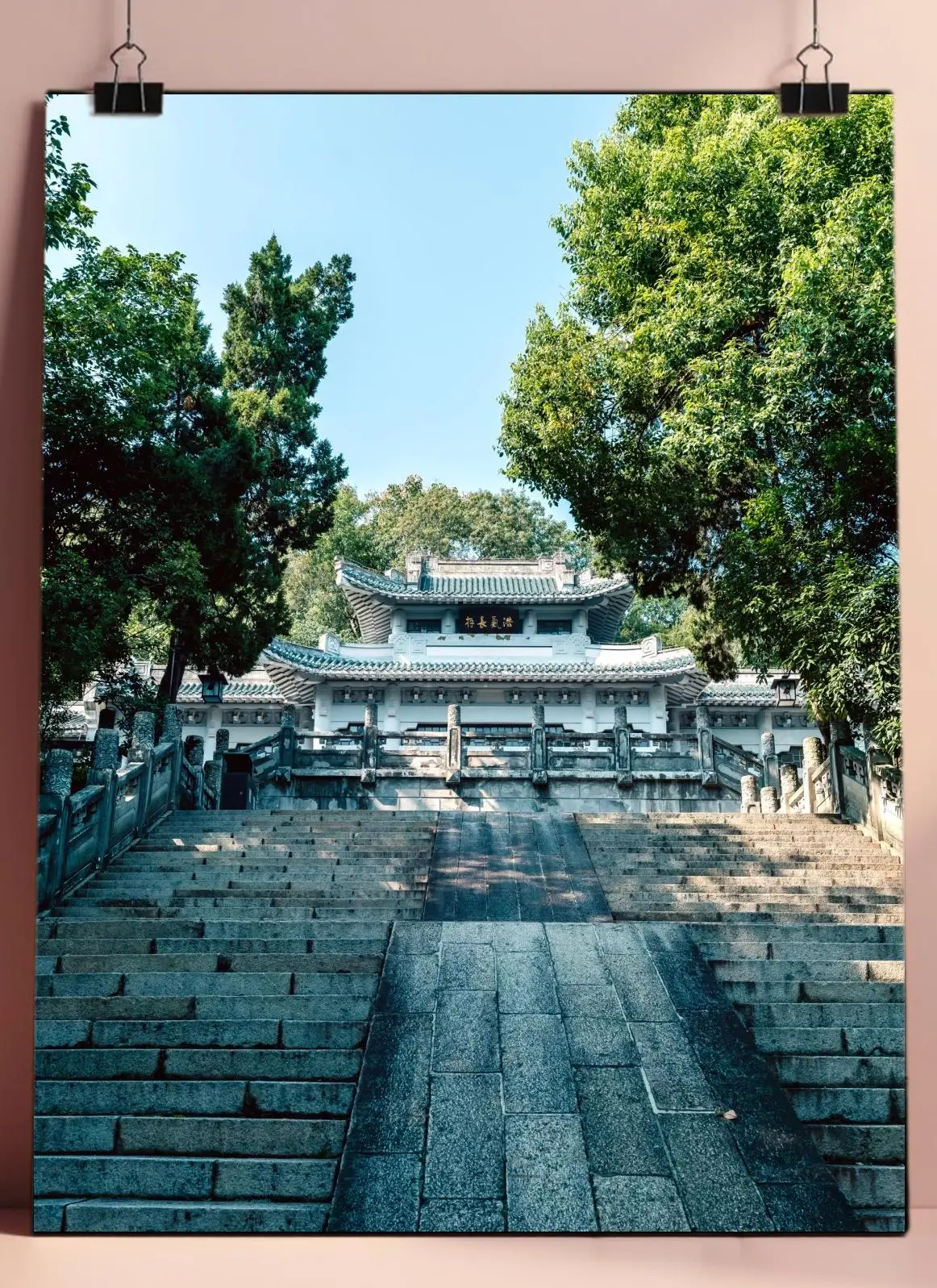
Shouyi Park: the revolution as neighborhood backdrop. Tai chi at 7 AM, history all day.
The irony of Zhang Zhidong
The man who tried hardest to save the Qing Dynasty did more than anyone to destroy it. I keep coming back to him.
He built the Hanyang Iron Works to give China modern industry. That industry produced the weapons used in the 1911 Revolution. He built modern schools, including the school that became Wuhan University, to give China modern minds. Those minds read revolutionary literature and decided that the empire had to go. He built the New Army to give China modern defense. That army fired the shots that ended the empire.
Zhang Zhidong died in 1909, two years before the revolution, and didn’t live to see what his work had wrought. But the connection is direct and unmistakable. Without Zhang’s three decades in Wuchang, without the iron works, the schools, the army, the modernization that made Wuchang a city of new ideas, the 1911 Revolution doesn’t start here.
The dynasty he served was destroyed by the tools he built to preserve it. There’s a lesson in that, somewhere, about the nature of change. You build the future you’re trying to prevent, and sometimes the future is more grateful than the present.
The 1911 Revolution is one chapter of Wuchang’s 1,800-year story. Read more: Wuchang’s full history, the iron works that armed the revolution, and Hankou’s role in the revolution.
Related:
-
Wuchang: 1,800 Years from Fortress to Revolution: where it all happened
-
Hanyang: The Iron Works That Forged Modern China: Zhang Zhidong’s factory that armed the revolutionaries
-
Hankou: The River Port That Became China’s Chicago: the city that burned in the battle
-
Wuhan at War: The Battle That Changed WWII in China: Wuhan’s other great military moment, 27 years on from the uprising
-
Two Rivers, Three Towns: the geography that shaped the battle
Sources
The dates and sequence below follow the standard historical account of the uprising.