
The day I realized I was a foreigner
I had been in Wuhan for three weeks. Freshman year, Wuhan University of Technology, September 2006. I walked into a noodle shop near the South Lake campus gate and ordered breakfast in what I thought was perfectly serviceable Mandarin.
“一碗热干面,谢谢。” One bowl of hot dry noodles, thanks.
The auntie behind the counter looked at me the way you’d look at a dog walking on its hind legs. Then she said something I did not understand a single syllable of. I stared. She stared back. She said it again, louder, as if volume would help. It didn’t.
She gave up, slapped a bowl of noodles on the counter, and shouted to the cook in the same incomprehensible language. I ate my noodles in silence and went to class.
That evening, I asked my roommate, a Wuhan native, what the auntie might have said. He shrugged. “Probably asked if you wanted chili oil, or told you to sit down, or called you a fool. Could be anything.”
That was 18 years ago. I’ve lived in Wuhan ever since, and I run a shop on Jiefang Avenue. I’m married to a Wuhan woman. I eat guo zao every morning at stalls where the aunties know my order. And I still can’t speak Wuhan dialect properly. I understand about 70% of it. I can produce maybe 40%, and it sounds wrong. The tones are off, the vowels are too clean, and any native speaker can tell within two words that I’m not from here.
Wuhan dialect is not a cute regional accent but a completely different sound system. If you visit Wuhan, you’ll hear it constantly. Taxis, markets, restaurants, every street corner where two neighbors are shouting at each other about something that happened yesterday.
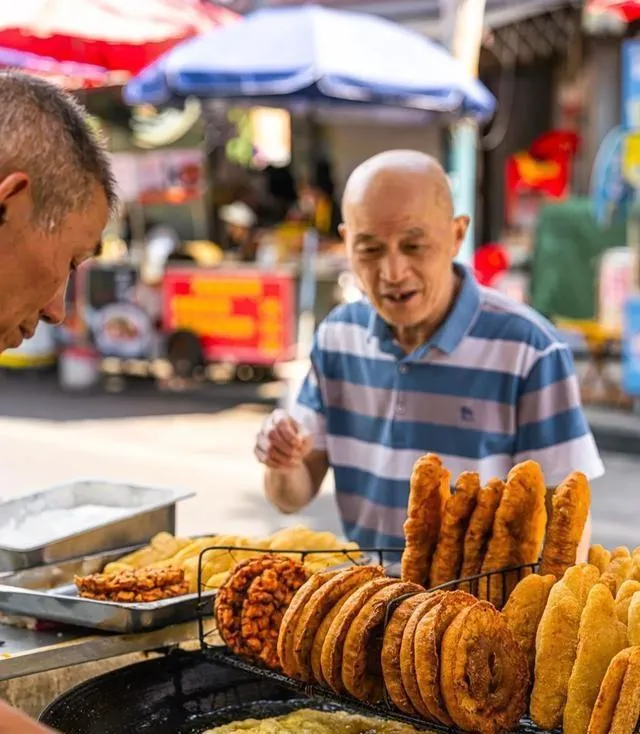
Every transaction in Wuhan starts with dialect. Mandarin is the backup plan.
What Wuhan dialect actually sounds like
Let me explain what it sounds like to someone who doesn’t speak Chinese.
Mandarin has four tones. Wuhan dialect has… well, it depends on who you ask. Linguists say four, but they’re mapped differently than Mandarin’s, and tone sandhi rules change tones based on context. What this means: words that sound one way in Mandarin sound completely different in Wuhan dialect.
The consonants shift. Mandarin zh becomes z, sh becomes s, ch becomes c. The “n” at the end of words often becomes “ng.” Vowels drift in ways that are hard to describe but you know them when you hear them.
The speed is different too. Wuhan dialect is fast. Not Cantonese-fast, where every syllable is clipped and distinct. Wuhan dialect runs together. Words blur. A sentence that takes five seconds in Mandarin takes two and a half in Wuhan dialect, and the last syllable of every phrase stretches out like taffy.
To a Mandarin speaker, it sounds almost like Mandarin but not quite. Like hearing your own language spoken underwater. You catch fragments, a word here, a phrase there, but the overall meaning slides away. It’s more frustrating than hearing a completely foreign language, because your brain keeps trying to decode it and failing.
I asked my wife once what Wuhan dialect sounds like to her when she hears someone from Beijing try to speak it. She thought for a second and said it was like a cat trying to bark.
The words you’ll actually hear
You don’t need to learn Wuhan dialect to visit the city. Everyone under 60 speaks Mandarin, and most people under 40 speak it fluently. But dialect is the default. The moment two Wuhan people talk to each other, they switch. And certain words are used even when speaking Mandarin. They’ve leaked into the local Mandarin so thoroughly that people don’t realize they’re dialect words.
Here are the ones you’ll hear constantly:
过早 (guò záo) The one I’ve already written about at length. It means “breakfast,” but it’s not the Mandarin word for breakfast (早饭, zǎofàn). Guo zao is pure Wuhan. I’ve written an entire article about it. Even when Wuhan people speak standard Mandarin, they say “guo zao” instead of “zaofan.” The other word sounds wrong to them.
板沙 (bǎn shā) This is the sound of Wuhan. You hear it everywhere. It means “to mess around,” “to cause trouble,” or “to make a fuss.” A mother yells it at a kid who won’t sit still. A shopkeeper says it about a difficult customer. Friends use it when someone is being dramatic. “莫板沙了” means stop messing around. If you spend a day in Wuhan, you’ll hear this phrase at least ten times.
岔的 (chà de) “No problem” or “it’s fine” or “go ahead.” Someone asks if they can sit at your table. “Chà de.” Someone apologizes for being late. “Chà de.” Someone asks if the food is spicy. “Chà de,” which in this case means “of course it is, what do you expect?” My wife says it probably fifty times a day.
服周 (fú zhōu) “To give in” or “to concede.” Used almost exclusively in the negative: “不服周” means I won’t back down, I refuse to accept this. This word carries the Wuhan personality in two syllables. The city has a reputation in China for being stubborn, loud, and unwilling to lose an argument. “Bu fu zhou” is that personality in language form.
拐子 (guǎi zi) “Older brother.” Used for actual brothers and for male friends slightly older than you. My wife calls our neighbor “Guazi,” Brother Guo. It’s a term of familiarity and warmth, but it sounds rough to outsiders. The first time I heard someone call my wife “sao zi” (嫂子, sister-in-law, the corresponding term for a guazi’s wife), I thought they were insulting her. They weren’t. It’s affectionate.
掉得大 (diào de dà) means “lost face big-time” or “that’s embarrassing”, and it is used when someone makes a fool of themselves. Drop your noodles on the street? “Diao de da.” Get rejected in public? Same phrase. It’s Wuhan’s way of acknowledging embarrassment without actually feeling sorry for you.
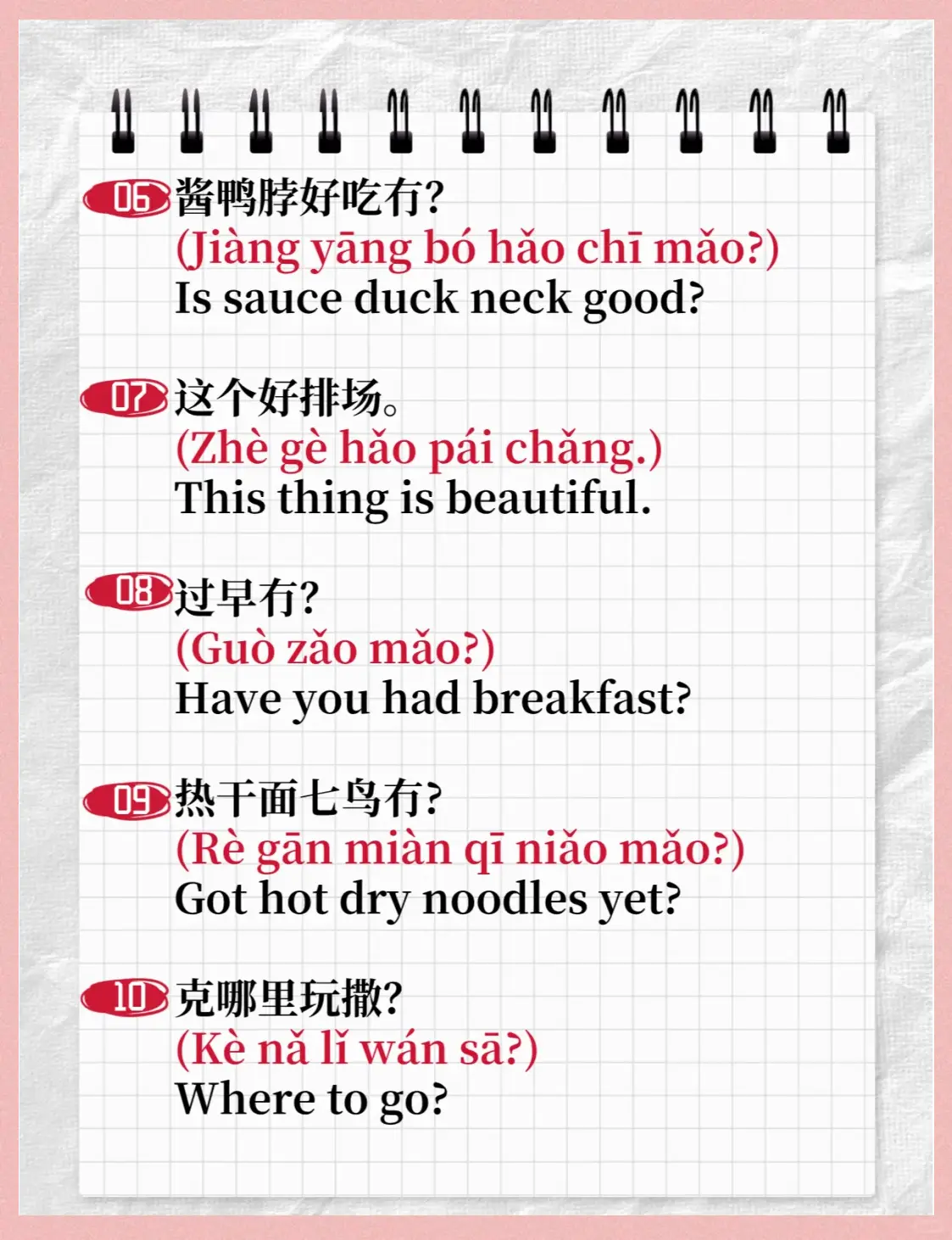
Six words you’ll hear within an hour of arriving in Wuhan. You won’t understand them. Now you will.
Why Wuhan dialect is so different
Wuhan sits at the intersection of two rivers and three towns, in the middle of China, roughly equidistant from Beijing, Shanghai, Guangzhou, and Chengdu. You’d think the dialect would be a midpoint between northern and southern Chinese. It’s not.
Wuhan dialect belongs to the Southwestern Mandarin group (西南官话). That’s the same group as Sichuan dialect, Chongqing dialect, and the dialects of Yunnan and Guizhou. If you speak Sichuanese, you can understand about 60% of Wuhan dialect. If you speak Beijing Mandarin, you can understand about 30%.
The reason is migration. During the Ming Dynasty (1368-1644), the government organized massive population movements from Hubei and Hunan to Sichuan, a historical event called “Huguang Fills Sichuan” (湖广填四川). Millions of people from the Wuhan area moved west, carrying their dialect with them, which is why Sichuan dialect and Wuhan dialect sound similar: they share a root. The people who went to Sichuan kept the old Hubei sounds. The people who stayed in Wuhan kept them too, but the language evolved differently over 600 years.
The geographic isolation helped. Hankou was a river port, not a political capital, and the people who ran the city were merchants, not mandarins. They didn’t need to speak the court language. They spoke to each other, in their own way, and the dialect developed its own vocabulary, its own tones, its own rhythm. The river trade shaped it. The merchant culture shaped it. A city that has always been louder and more direct than the capital shaped it.
The personality in the language
I’ve lived in four Chinese cities. Taiyuan (my hometown), Wuhan, and briefly Beijing and Shenzhen. Each city’s dialect reflects its personality. Beijing dialect is lazy and round, full of “er” sounds and dropped syllables, like the city itself: sprawling, informal, self-satisfied. Shenzhen doesn’t really have a dialect because it doesn’t really have locals. Everyone is from somewhere else.
Wuhan dialect is sharp, the vowels are bright and clipped, and the tone contours rise and fall aggressively. When Wuhan people talk, it sounds like they’re arguing. They might be agreeing with you, or telling you they love you. It sounds like an argument.
Outsiders think the city is angry, and the noodle stall aunties shout at you. The taxi drivers honk at everything. The people on the street talk at a volume that would be considered confrontational in Beijing or Shanghai. But it’s not anger; it’s just how the language works. Wuhan dialect is loud because Wuhan is loud. The river is loud, the traffic is loud, the breakfast stalls are loud. The dialect matches the city.
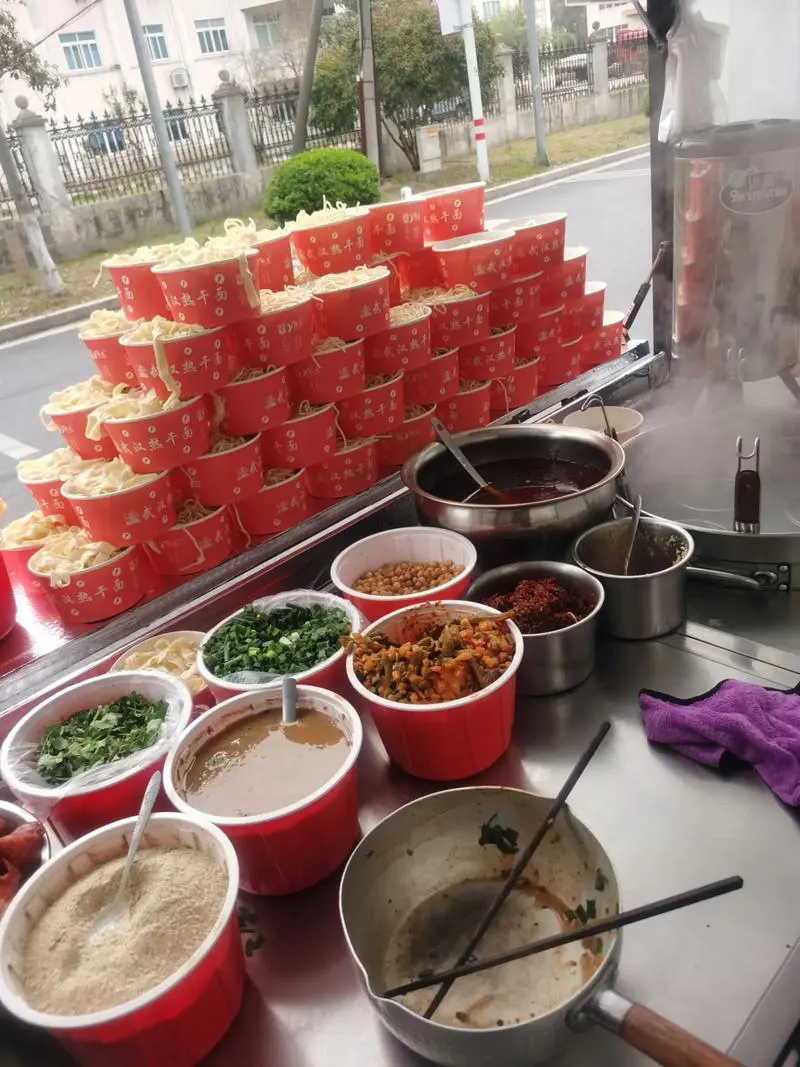
The auntie is not angry; she’s shouting because she’s taking your order.
My wife and her mother can have what sounds like a screaming match in a Wuhan restaurant and be having the most mundane conversation imaginable. “Did you buy eggs?” “Yes, I bought eggs.” “The eggs at the market near the river are better.” “I know, but that market is far.” Delivered at a volume that would clear a Starbucks in Seattle.
I used to flinch. Now I don’t notice.
How locals react to outsiders
One thing that surprised me about Wuhan: the dialect is not a closed club. Unlike some southern Chinese cities, where speaking the local dialect is a marker of belonging and speaking Mandarin marks you as an outsider, Wuhan people are generally welcoming about language.
If you try to speak Wuhan dialect and get it wrong, they’ll laugh. Not mockingly. Delightedly. The way you’d laugh if a toddler tried to say a big word. My attempts at “guo zao” with Shanxi-inflected tones have been a source of entertainment at my regular noodle stall for 18 years. The auntie corrects me every time and I get it wrong every time. We both enjoy the ritual.
If you speak Mandarin, they’ll switch to Mandarin for you. It might take a sentence or two, because dialect is the default, but they’ll do it. Wuhan people are proud of their dialect but not precious about it. They know it’s impenetrable to outsiders, and they find that slightly funny.
What they won’t do is slow down. Wuhan people speak fast in any language. If you’re learning Mandarin and you visit Wuhan, the Mandarin here is going to feel rapid and slurred compared to Beijing’s measured cadence. That’s not dialect. That’s tempo. The city runs at a different speed.
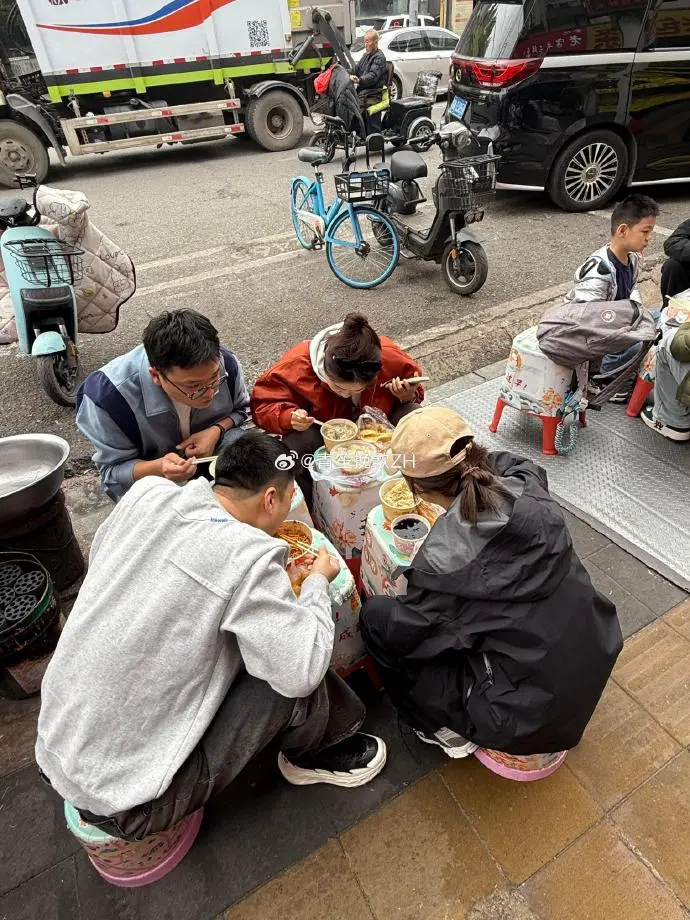
Looks like a fight, sounds like a fight, and it’s a conversation about eggs.
The dialect is fading
I should be honest: Wuhan dialect is not as strong as it was twenty years ago.
The reasons are familiar. Mandarin is the language of education, television, and career advancement. Kids grow up speaking Mandarin at school. Parents speak dialect at home, but the kids respond in Mandarin. The cycle breaks. By the time those kids are adults, their dialect is passive. They understand it, but they don’t speak it fluently.
The universities are a factor too. I wrote about how Wuhan has 1.3 million university students from all over China. On campus, Mandarin is the lingua franca. Students from Hubei’s smaller cities might speak their own dialects with friends from home, but in the dorms and classrooms, it’s Mandarin. The university district is, ironically, the least dialect-heavy part of the city.
In central Hankou and old Wuchang, where families have lived for generations, dialect is still strong. In the new suburbs and university districts, it’s fading. The generation under 25 can understand it but often can’t speak it. The generation under 15 sometimes can’t even understand it.
I’m not going to call this a tragedy: languages evolve, and dialects fade when they stop being useful. Mandarin connects Wuhan to the rest of China in ways dialect can’t. My own children will probably grow up speaking Mandarin at home, with fragments of Wuhan dialect from their mother and fragments of Shanxi dialect from me, and that will be fine.
But when the dialect goes, something goes with it. The Wuhan personality, the loudness, the directness, the stubborn “bu fu zhou” refusal to back down, is encoded in the language. You can be those things in Mandarin, but it’s not the same.
A few words go a long way
You don’t need to learn Wuhan dialect. Mandarin is enough. If you don’t speak Mandarin, English will work in major hotels and tourist sites, and translation apps will work everywhere else.
But knowing a few words makes a difference. When you walk into a noodle stall in the morning and say “guo zao” instead of “zaofan,” the auntie will look at you differently. Not because you said it perfectly. You won’t. But because you tried. In a city that doesn’t get many foreign visitors, the effort registers.
Your survival kit:
| Word | Pinyin | What It Means | When to Use It |
|---|---|---|---|
| 过早 | guò záo | Breakfast / to eat breakfast | Morning, at any food stall |
| 岔的 | chà de | No problem / it’s fine | When someone asks if something is okay |
| 板沙 | bǎn shā | Messing around / making a fuss | When someone is being difficult (use carefully) |
| 服周 | fú zhōu | To concede / back down | Usually negative: “不服周” = won’t back down |
| 拐子 | guǎi zi | Older brother / bro | To address a male friend slightly older than you |
| 掉得大 | diào de dà | That’s embarrassing | When someone (or you) makes a fool of themselves |
Start with “guo zao.” Walk into a breakfast stall, make eye contact with the auntie, and say it. She might laugh; she might correct your tones; she might give you extra noodles. Any of those outcomes beats ordering through a translation app.
Language is one layer of Wuhan’s culture. Read more: the breakfast culture behind “guo zao”, the river culture that shaped the city, and the merchant history that shaped the dialect.
Related:
-
Chu Culture in Wuhan: The Ancient Roots That Still Grow: the ancient language behind the dialect
-
Wuhan Breakfast Culture: Guo Zao: the word that defines Wuhan mornings
-
The River Is the City: Wuhan’s Yangtze Culture: the culture that produced the dialect
-
Hankou: The River Port That Became China’s Chicago: the merchant city where the dialect formed
-
Wuhan’s Universities: Why 1.3 Million Students Call This City Home: how Mandarin is replacing dialect
-
Hot Dry Noodles: Ultimate Guide: the dish you’ll order using your first dialect word
-
Wuhan: The Punk Rock Capital of China: how the city’s loud, direct personality became a music scene
-
Wuhan Survival Language: Every Phrase a Foreigner Actually Needs: the practical phrasebook version of this article