
The city that eats textbooks
I didn’t choose Wuhan. My gaokao scores chose it for me, or rather, the gap between my scores and my dreams did. I ended up at Wuhan University of Technology, studying Ships and Ocean Engineering, a major I couldn’t have picked on a map six months earlier. I arrived in September 2006 with a cheap suitcase and a red mohawk that my mother pretended not to notice.
What I didn’t know then was that I was joining the largest student population of any city in China. Wuhan has 84 universities and colleges. Combined enrollment: roughly 1.3 million students. To put that in perspective: that’s more than the entire population of Munich, all of them between 18 and 25, all crammed into one city.
And most of them are in one place: Wuchang.
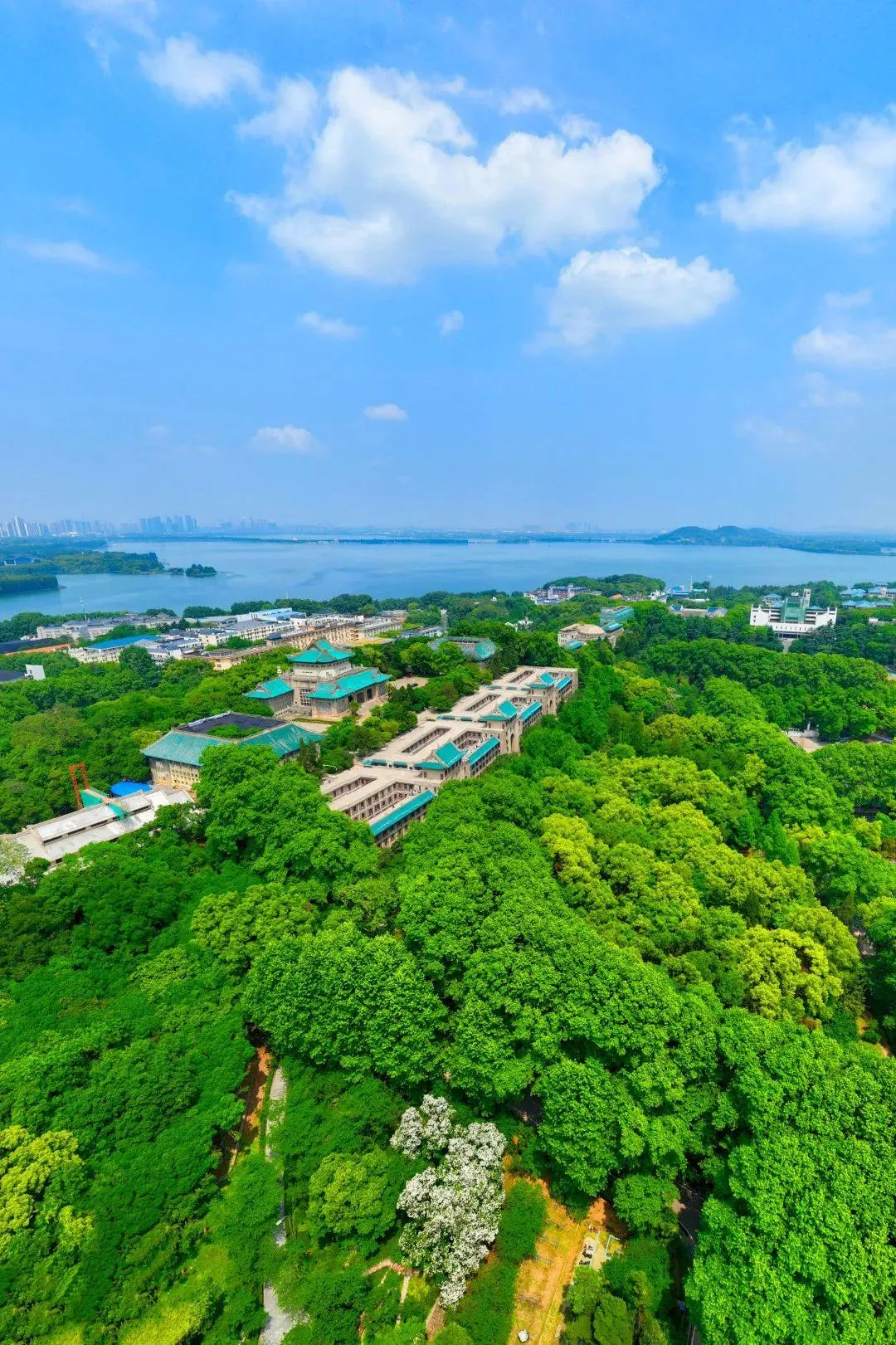
Wuchang’s university district: 84 campuses packed into one district, with 1.3 million students.
The Guangbutun Cluster
If you get off the metro at Guangbutun station (广埠屯站) on Line 2, you’ll understand immediately. Within a 3-kilometer radius of that station, there are seven universities. Seven. Wuhan University sits on Luojia Hill to the south. Huazhong University of Science and Technology (HUST) is a 15-minute bus ride east. Wuhan University of Technology (my school) straddles Mafangshan. Central China Normal University, Zhongnan University of Economics and Law, China University of Geosciences, Wuhan Textile University, all within walking distance of each other.
The streets around Guangbutun don’t look like a typical Chinese commercial district; they look like a campus that forgot to have a boundary. Students on electric scooters weave between food stalls and print shops. Every other storefront is either a noodle joint, a bubble tea chain, or a tutoring center. The bookstores sell exam prep materials alongside novels nobody has time to read. The barbershops charge 15 yuan for a haircut because they know their customers are broke.
I lived in that ecosystem for six years. You don’t really notice how unusual it is until you leave. When I visit friends in Shanghai or Beijing, the universities feel like islands: walled campuses surrounded by office towers and shopping malls. In Wuchang, the universities are the city, and the city is the universities.
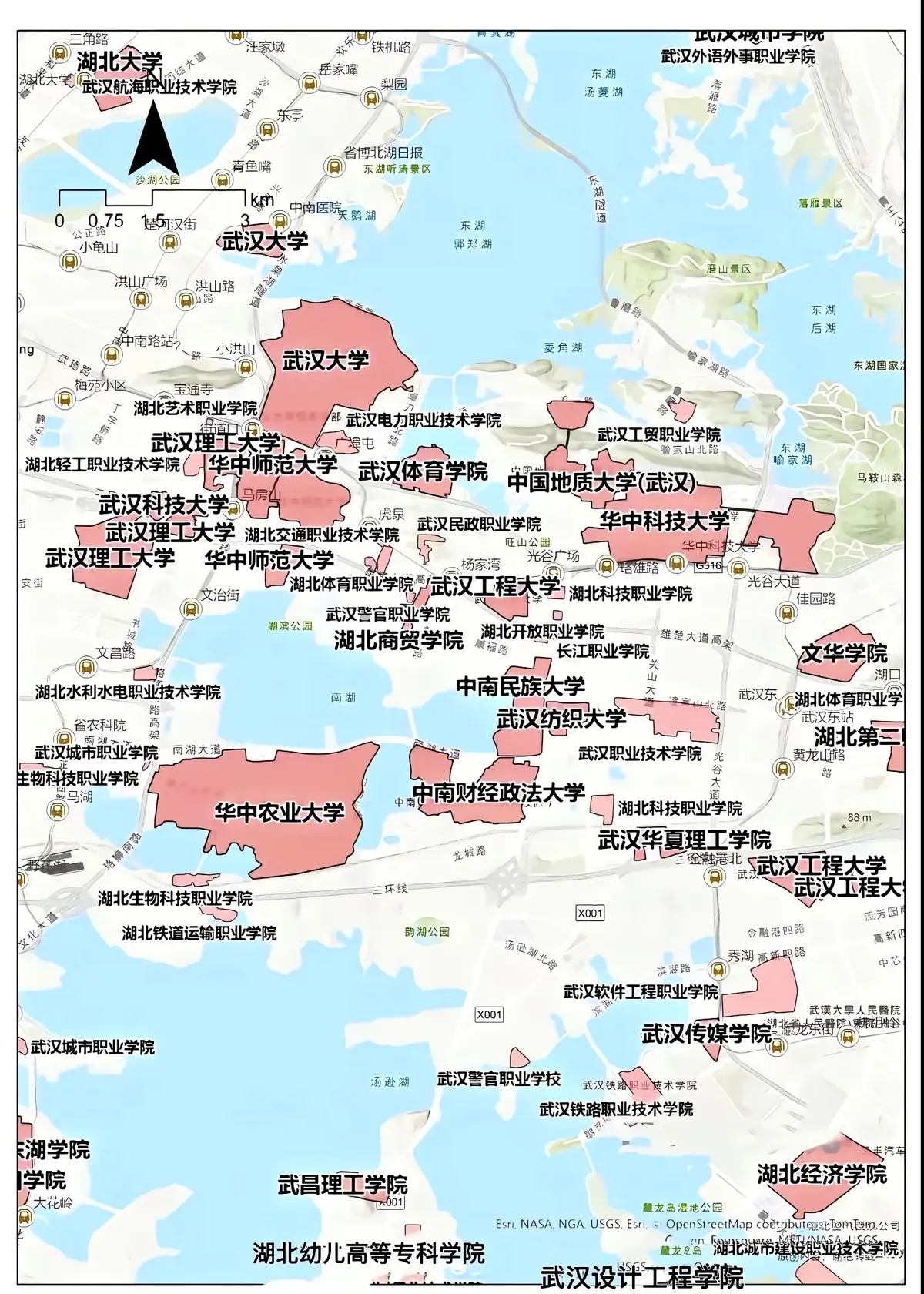
Seven universities, one metro station. The Guangbutun cluster is the densest concentration of higher education in China.
The Big Four
People outside China haven’t heard of most of these schools, but within China, they’re serious institutions. Here’s the quick guide:
Wuhan University (武汉大学): The one tourists know. Founded in 1893, it’s considered the most beautiful campus in China: hillside setting, 1930s architecture, cherry blossoms in March. Strong in law, economics, and the humanities. Ranking: consistently top 10 in China.
Huazhong University of Science and Technology (华中科技大学, HUST): The engineering powerhouse. Founded in 1953, it’s the school that feeds Optics Valley. If you meet an engineer working at YMTC or BOE in Wuhan, there’s a 50% chance they graduated from HUST. The campus is enormous: 470 hectares, with its own forest, its own hospital, and a student body of 60,000. I had friends there who said they could go four years without leaving campus.
Wuhan University of Technology (武汉理工大学, WUT): My school. Formed in 2000 by merging three smaller schools. Known for materials science, automotive engineering, and (in my case) ships and ocean engineering. The campus straddles Mafangshan Hill, which means you walk uphill to class and downhill to the cafeteria. My legs were in great shape for six years.
Central China Normal University (华中师范大学, CCNU): The teachers’ college. If you went to school anywhere in central China, there’s a decent chance your teacher studied here. The campus sits right next to Wuhan University, and the two schools share a back gate that students sneak through to use each other’s libraries.
Why so many universities here?
The concentration isn’t accidental. It goes back to the same man who built the Hanyang Iron Works: Zhang Zhidong, the Qing Dynasty governor who governed Wuchang in the 1890s.
Zhang believed that China’s problem wasn’t a lack of resources or a lack of will. It was a lack of education. He couldn’t build a modern nation without modern minds. So in 1893, he founded the Ziqiang Institute (自强学堂), a small school in Wuchang that taught foreign languages, mathematics, and “Western learning.” That school grew and merged and evolved over 130 years into what is now Wuhan University.
He didn’t stop there. He founded normal schools, agricultural schools, industrial schools, each one a seed that would eventually grow into a full university. The schools attracted scholars, the scholars attracted students, and the students attracted more schools. By the 1950s, when China’s government reorganized higher education nationwide, Wuchang already had such a dense concentration of institutions that it was designated a formal “university district.”
The government kept adding schools. In the 1950s and 1960s, engineering colleges were built to support the industrial base: steel, machinery, shipbuilding. In the 1980s and 1990s, as the economy opened, economics and law schools expanded. In 2000, China went through a nationwide university merger wave, and several Wuhan schools combined to create the current powerhouses.
The result: a city where one in ten people is a university student.
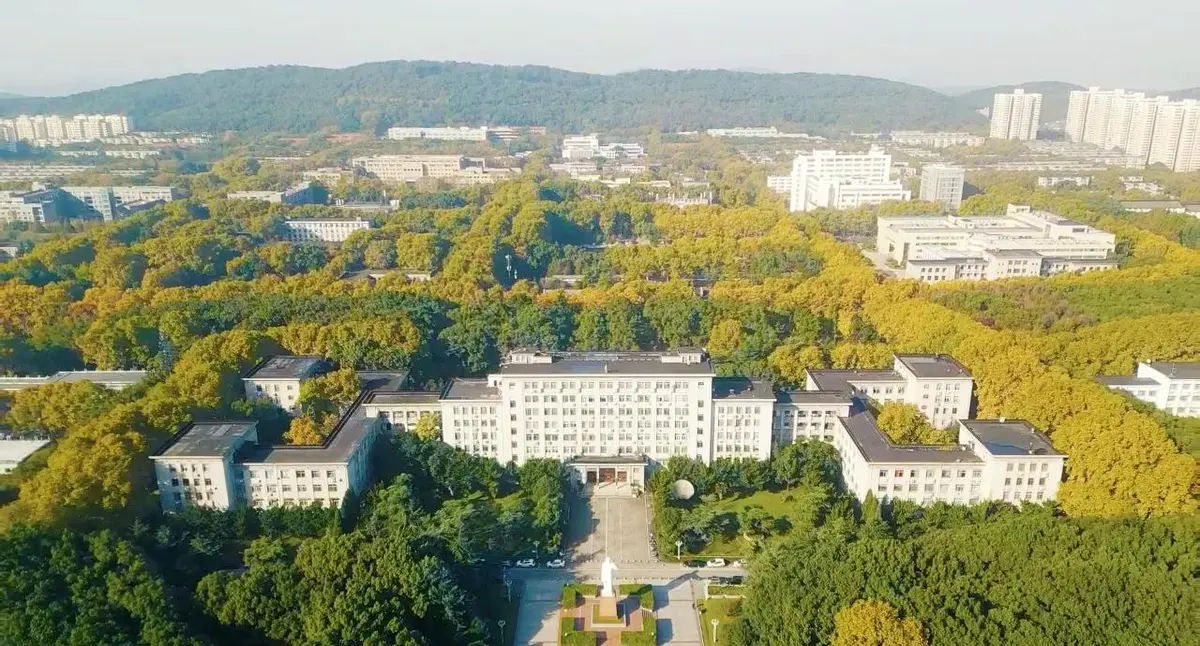
HUST: 470 hectares, 60,000 students, its own forest. The engineering school that powers Optics Valley.
Student food economy
Here’s something I love about the university district: the food is cheap, and it’s everywhere.
Around every campus, there’s a belt of food stalls that opens at 6 AM and closes at 2 AM. These aren’t restaurants. They’re foldable tables, propane burners, and aunties who have been making the same dish for 20 years. A bowl of hot dry noodles from a campus stall costs 5 yuan. At a tourist restaurant, it costs 18. Same noodles. Different rent.
The guo zao culture I’ve written about (the city’s obsession with breakfast) is driven partly by the university population. A million students need to eat before their 8 AM classes, and they need to eat cheap and fast. The stalls deliver. By the time I was a sophomore, the auntie at my regular noodle stall didn’t even ask. She’d start making it the moment she saw me walk up.
At night, the food stalls shift. The breakfast stalls close, and the night market stalls open: barbecue, crayfish, fried rice, beer. University students are the primary customers. The stretch of Hubu Alley near Wuhan University, and the back streets of Guangbutun near my school, are where you go for the most authentic, cheapest, and loudest street food in Wuhan.
If you want to understand why Wuhan’s food scene is so dense and so cheap, part of the answer is: a million students with limited budgets will create their own food economy.
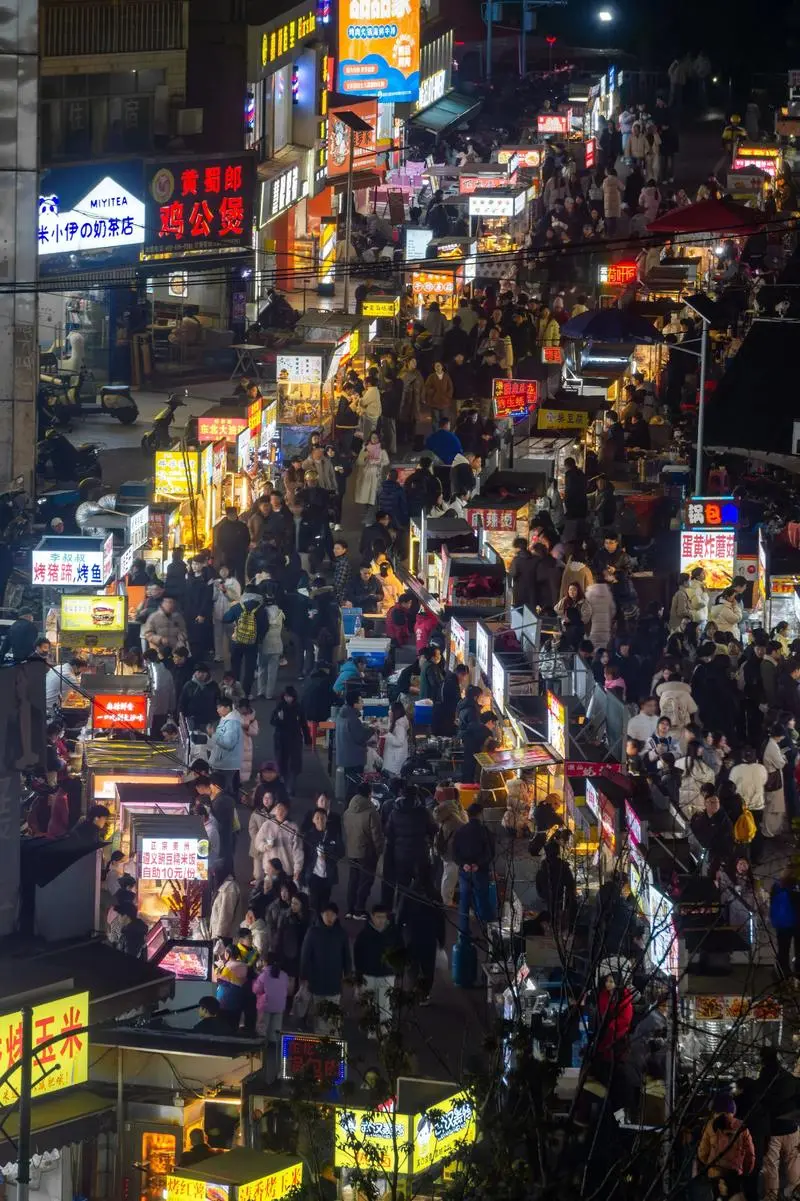
The student food economy: cheap, loud, and open until 2 AM. A million students create their own dining scene.
The Optics Valley pipeline
I mentioned in my Optics Valley article that the universities are the engine of the tech industry. Let me explain how that works in practice.
HUST sits physically inside the Optics Valley zone. The university has a national lab for optoelectronics (the Wuhan National Laboratory for Optoelectronics) that does research on fiber optics, lasers, and semiconductors. Companies in Optics Valley partner with HUST on R&D, sponsor research projects, and recruit graduates directly. It’s not unusual for a HUST professor to have a side company, or for a startup to be spun out of a lab.
WUT feeds the automotive and materials industries. Geely, Dongfeng, and other manufacturers recruit heavily from WUT’s automotive engineering program. My classmates who stayed in the field are now senior engineers at companies across China.
This is the same dynamic that made Silicon Valley what it is: Stanford and UC Berkeley producing talent that stayed local. Wuhan’s version started 40 years later, but the pattern is identical. And it’s accelerating. Every year, a fresh wave of 300,000 graduates enters the workforce, and a significant percentage of them stay in Wuhan rather than going to Shenzhen or Shanghai.
The city government noticed. In 2017, Wuhan launched a policy to retain university graduates: housing subsidies, startup grants, residency benefits. The pitch was simple: you already live here, you already know the city, stay and build something. It’s working. The retention rate has climbed steadily.
What it feels like to visit
If you’re a tourist, the university district is worth half a day. Here’s what I’d do:
Start at Wuhan University: walk through the old campus, up Luojia Hill, past the 1930s buildings. If it’s March, you’ll see the cherry blossoms. Otherwise, you’ll still see one of the most beautiful campuses.
Then walk south to CCNU and through the back gate that connects to Wuhan University. Wander down to the Guangbutun area and eat lunch at one of the student food stalls. Five yuan for noodles, fifteen yuan for a haircut. Welcome to the student economy.
In the afternoon, take the metro east to HUST. The campus is so large that you could walk for two hours and not see it all. The main avenue is lined with sycamore trees that form a canopy overhead. If you’re interested in tech, walk east from HUST and you’re in Optics Valley. The transition from campus to corporate campus is seamless.
End the day at the back gate of HUST, where there’s a street of barbecue stalls that opens at 6 PM. Order crayfish, chicken wings, and a cold beer. The engineers and students around you are the future of Wuhan’s tech industry. Listen to what they’re arguing about.
| University | Founded | Known For | Student Body |
|---|---|---|---|
| Wuhan University | 1893 | Law, humanities, campus beauty | ~58,000 |
| HUST | 1953 | Engineering, optoelectronics | ~60,000 |
| WUT | 2000 (merged) | Materials, automotive, ships | ~55,000 |
| CCNU | 1903 | Education, teacher training | ~30,000 |
| Zhongnan Univ. of Econ & Law | 1948 | Economics, law | ~20,000 |
Wuhan’s universities are the backbone of the city’s culture and economy. Read more: China’s most beautiful campus, how universities feed Optics Valley, and Wuchang’s 1,800-year history.
Related:
-
Wuhan University: Cherry Blossoms and China’s Most Beautiful Campus : the crown jewel of Wuhan’s university district
-
From Iron to Light: How Wuhan’s Optics Valley Replaced Its Factories : the tech industry built on university talent
-
Wuhan Breakfast Culture: Guo Zao : the food culture driven partly by a million students
-
Wuchang: 1,800 Years of History : the district where the universities cluster