
The factory that became a park
I take visitors to the Hanyang Iron Works Heritage Park sometimes. We walk through the old red-brick foundry, look at the rusted machinery, read about Zhang Zhidong and his dream of Chinese steel. Then I drive them 25 kilometers east. We cross the river, pass through Wuchang and the university district, and arrive at a place that looks like nothing in Hanyang.
Glass towers. Clean rooms. Engineers in white suits. A campus the size of a small city, with artificial lakes and tree-lined avenues and buildings that hum with air conditioning 24/7. This is Optics Valley (光谷), officially the Optics Valley of China. It is, by most measures, the largest optoelectronics industry base in China.
And it sits in the same city that once made iron rails for the Beijing-Hankou Railway. The connection isn’t accidental. It’s the point.

Optics Valley at dusk, where Wuhan’s industrial future is being built one nanometer at a time.
What exactly is Optics Valley?
Optics Valley is not a valley: it’s a 518-square-kilometer high-tech zone in eastern Wuchang, straddling the East Lake High-Tech Development Zone. The name is aspirational. It borrows from Silicon Valley, obviously, and from the original Optics Valley in Tucson, Arizona. But the Chinese version is bigger, newer, and more ambitious than either.
The core idea: concentrate optoelectronics companies (fiber optics, lasers, optical sensors, display panels, semiconductors) in one place, give them tax breaks and cheap land and university talent, and watch them grow. The idea started in 1988, when the Wuhan government established the East Lake High-Tech Development Zone. In 2001, it was designated a national optoelectronics industry base. The name “Optics Valley of China” followed.
It worked. Today, Optics Valley produces:
-
Over 25% of China’s optical fiber and cable, led by Yangtze Optical Fibre and Cable (YOFC, 长飞光纤), the largest fiber optic manufacturer in the world by volume
-
Laser equipment: dozens of companies making industrial lasers for cutting, welding, and medical use
-
Display panels, including BOE and CSOT factories producing OLED and LCD screens
-
Semiconductors, including Yangtze Memory Technologies (YMTC, 长江存储), which I’ll get to
The zone employs over 300,000 people. Its GDP, if it were a city, would rank among the top 100 cities in China. Not bad for something that was farmland 35 years ago.
The 1890 connection
The story starts with steel, and that’s why I think it matters.
In 1890, Zhang Zhidong chose Hanyang as the site for China’s first modern steel mill. He picked it because of geography: iron ore from Daye to the south, coal from Pingxiang to the southwest, river transport connecting them. The iron works produced China’s first domestically manufactured steel rails, the backbone of the country’s early railway network.
In 2024, Yangtze Memory Technologies, sitting 25 kilometers east in Optics Valley, produces China’s most advanced 3D NAND flash memory chips. These are the chips that store data in your phone, your laptop, your cloud servers. They’re built on processes measured in nanometers, with clean rooms so pristine that a single speck of dust can destroy an entire batch.
The parallel is exact. In 1890, Wuhan was the place where China learned to make steel, the foundational material of the industrial age. In 2024, Wuhan is the place where China is learning to make semiconductors, the foundational material of the information age.
The city didn’t plan this symmetry. But it feels like something in the character of the place: a willingness to build hard things, to learn from scratch, to bet on industries that take decades to pay off.
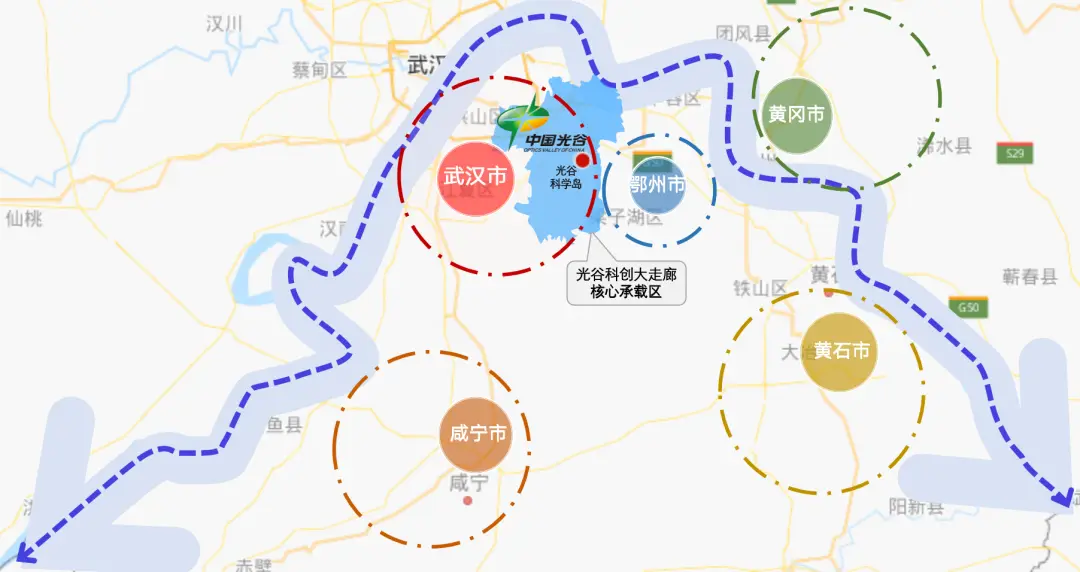
25 kilometers apart, 130 years apart: Hanyang’s iron works and Optics Valley’s clean rooms.
Yangtze Memory: the chip China couldn’t buy
If you follow the semiconductor industry at all, you’ve heard of YMTC. If you haven’t, here’s the short version.
For decades, China imported most of its advanced chips. Memory chips, the kind that store data in your devices, were dominated by Samsung, SK Hynix, and Micron. Chinese companies designed chips but couldn’t manufacture the most advanced ones. The technology gap was enormous, and it was getting wider.
YMTC was founded in 2016, in Optics Valley, with backing from the national government and the city of Wuhan. Its mission: design and manufacture 3D NAND flash memory (the chips used in SSDs, phones, and data centers) entirely in China.
The challenge was staggering. NAND flash requires some of the most precise manufacturing processes ever devised. YMTC started from scratch: hiring engineers, building clean rooms, developing its own architecture called Xtacking, which stacks memory cells vertically to increase density.
By 2023, YMTC had reached 232-layer 3D NAND, putting it technically on par with or ahead of Samsung and SK Hynix in layer count. The chips are real. They’re in products. You might be using one right now without knowing it.
Then the US sanctions hit. In 2022 and 2023, the US government added YMTC to the Entity List, restricting its access to advanced manufacturing equipment from Western suppliers. The company has since pivoted to domestic equipment suppliers and older process nodes. It’s a complicated, ongoing story, and one that people in Optics Valley talk about constantly, but carefully.
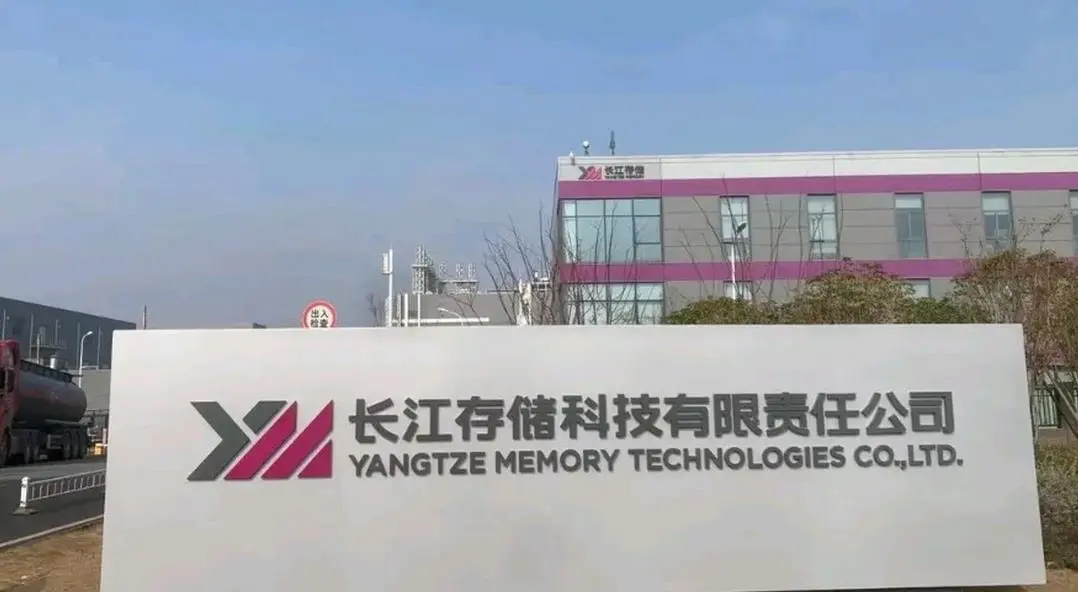
Yangtze Memory Technologies, the company trying to make China’s memory chips at home.
The university pipeline
None of this happened in a vacuum. Optics Valley works because it sits next to one of the largest concentrations of universities in China.
I mentioned in my Wuchang history article that there are over 10 universities within a 5-kilometer radius. Huazhong University of Science and Technology (HUST, 华中科技大学) is the anchor. It’s one of China’s top engineering schools, and it sits literally inside Optics Valley. Its graduates feed directly into the companies around it.
This is the same pattern that Stanford and UC Berkeley created in Silicon Valley. University research produces talent, talent attracts companies, and the jobs those companies create attract more talent. The cycle compounds. Wuhan’s version started later than California’s, but the mechanics are identical.
When I was a student at Wuhan University of Technology (also in Wuchang, also feeding into Optics Valley), half my classmates wanted to work there after graduation. The pay was good. The work was interesting. And there was a sense, not spoken aloud much but real, that you were building something that mattered for the country.
What it feels like to walk through
The surprise is that Optics Valley doesn’t feel like a factory district. It feels like a university campus that happens to have billion-dollar clean rooms.
The streets are wide and tree-lined. There are coffee shops, bubble tea stores, and noodle joints where engineers eat lunch in their company lanyards. At night, the office buildings glow blue and white. Server rooms never sleep, and clean rooms run 24/7. The pace is different from Hankou’s commercial rush. It’s quieter, more focused. People walk with purpose, but they’re not shouting.
The contrast with old Hanyang is striking. In Hanyang, the industrial heritage is ruins, preserved and honored but static. In Optics Valley, the industry is alive, growing, and uncertain. The iron works is a museum. The chip factory is a bet on the future.

Optics Valley at lunchtime. Engineers, bubble tea, and billion-dollar clean rooms.
The weight of history
There’s a statue of Zhang Zhidong in Hanyang, near the iron works ruins. He’s standing, looking forward, dressed in Qing Dynasty robes. His expression is determined, the face of a man trying to drag an empire into the modern age by force of will.
I wonder what he would think of Optics Valley. I think he’d recognize it. Not the technology. He wouldn’t understand a clean room or a NAND flash chip. But the impulse behind it: the belief that China must build things, must learn things, must not depend on foreigners for the tools of its own survival. That belief hasn’t changed in 130 years. The materials have.
In 1890, it was steel; in 2024, it’s silicon. The city, the river, and the ambition are the same.
What you can see today
| Site | What It Is | Details |
|---|---|---|
| Optics Valley Core Area | Walkable zone with tech company campuses | East Wuchang, metro Line 2 |
| Hanyang Iron Works Heritage Park | The 1890 ruins that started it all | Hanyang, 10 yuan |
| HUST Campus | The university that feeds the valley | Adjacent to Optics Valley, open to visitors |
| Optics Valley Plaza | The central hub, surrounded by tech towers | Metro Line 2, Optics Valley Square Station |
If you want to understand Wuhan’s industrial story, all of it from iron to light, do this: spend the morning at the Hanyang Iron Works Heritage Park. Touch the rusted machinery. Read about Zhang Zhidong. Then take the metro across the river to Optics Valley Square. Walk around for an hour. Look at the glass towers and the clean rooms and the engineers eating noodles. That 45-minute metro ride is a 130-year journey.
Optics Valley is Wuhan’s latest chapter. Read the earlier ones: Hanyang’s iron works, Hankou’s river port, and Wuchang’s 1,800 years.
Related:
-
Hanyang: The Iron Works That Forged Modern China, the 1890 beginning of Wuhan’s industry
-
Wuhan at War: The Battle That Changed WWII in China, when those factories were destroyed
-
Two Rivers, Three Towns: the geography that made all of this possible
-
Wuhan University: Cherry Blossoms and China’s Most Beautiful Campus, and the university culture that feeds Optics Valley
-
Wuhan’s Universities: Why 1.3 Million Students Call This City Home, the tech talent pipeline
-
What to Buy and Where: A Wuhan Shopping Guide, where to shop in the Guanggu student district