
The city that stood in the way
By the summer of 1938, most of eastern China had fallen. Beijing, Shanghai, Nanjing, all gone. The Chinese government had retreated up the Yangtze to Wuhan, making it the de facto wartime capital. The three towns (Hankou, Wuchang, and Hanyang) suddenly held the fate of a nation.
The Japanese knew it. To end the war quickly, they needed to take Wuhan. To survive, China needed to hold it, or at least, hold it long enough to move the government further inland to Chongqing.
What followed was the Battle of Wuhan (武汉会战): four months of fighting that involved over one million Chinese soldiers and 350,000 Japanese troops. It was, at that point, the largest battle in the entire Sino-Japanese War. Some historians argue it was one of the largest battles in military history.
It didn’t go well for China. But it didn’t go the way Japan expected, either.
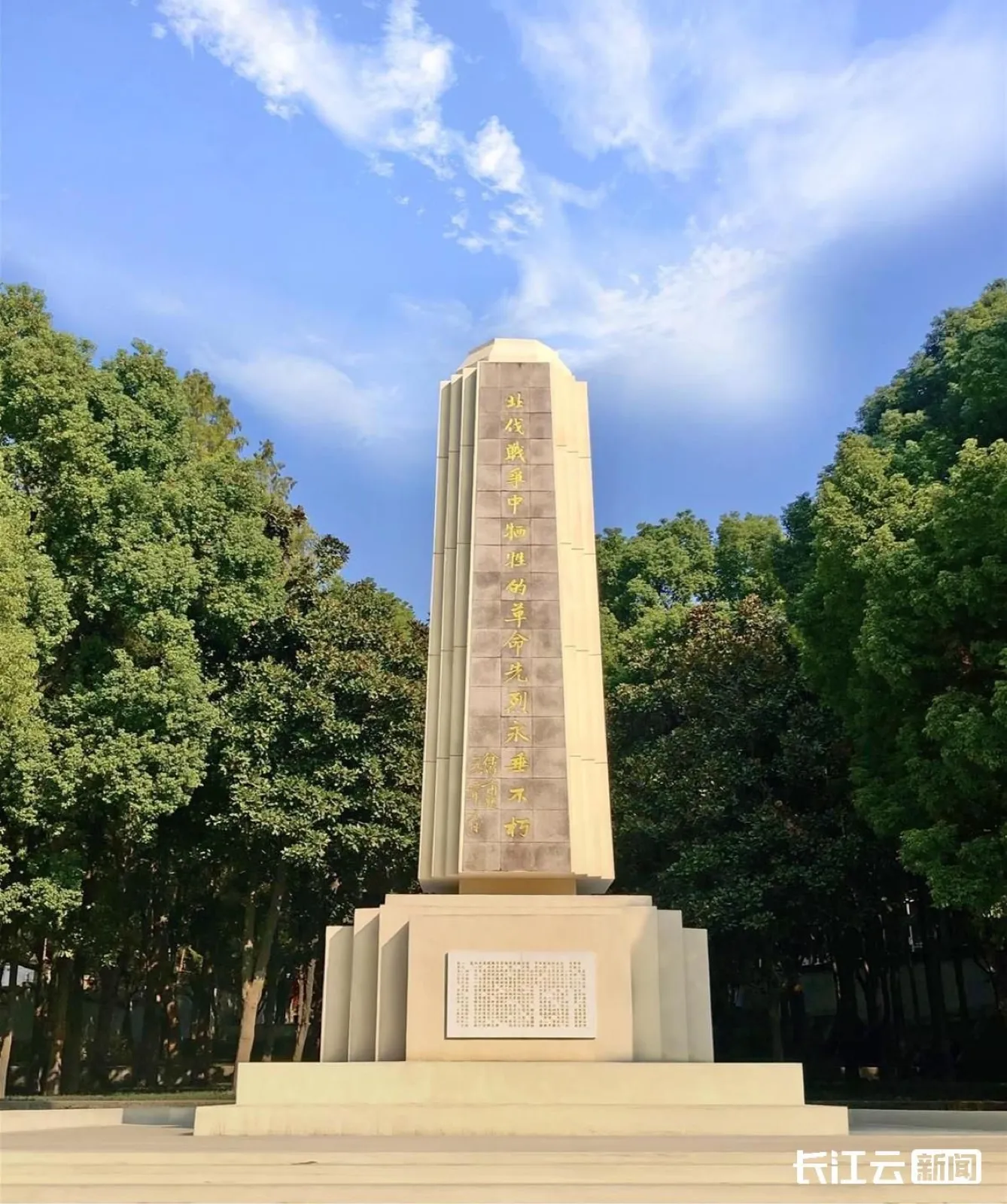
The Battle of Wuhan, 1938: four months that changed the course of the Sino-Japanese War.
Why Wuhan Mattered
If you’ve read my guide to Wuhan’s geography, you know the city sits at the intersection of the Yangtze and Han rivers. That’s not just a nice fact for tourists. In 1938, it was the reason Wuhan was worth fighting for.
The Yangtze was the main supply line from eastern China to the interior. Whichever side controlled Wuhan controlled the middle Yangtze. If Japan took Wuhan, they could push further upriver and threaten Chongqing. If China held Wuhan, they kept their supply line open and bought time.
Wuhan was also China’s industrial heart. The Hanyang Iron Works (the first modern steel mill in China) was still operating. The Hanyang Arsenal, next to it, was producing rifles and ammunition. The port of Hankou was one of the busiest in Asia. Losing all of this to the Japanese would be a catastrophe.
The bombing
The Japanese air force started bombing Wuhan in early 1938, months before the ground battle began. The raids were relentless: daylight formations of bombers flying up the Yangtze, dropping their payloads on the three towns.
Hankou took the worst of it. The commercial district (the same streets around Jianghan Road and the Bund that I walk through every morning) was hit repeatedly, and the foreign concessions weren’t spared. The Japanese bombed everything: warehouses, factories, residential neighborhoods, hospitals.
I’ve talked to old people in Hankou who remember. One woman, now in her 90s, told me her family lived near the river. When the air raid sirens went off, her mother would grab her and run to a dugout behind their building. She said the sound of the bombers was like a low hum that got louder and louder until your chest vibrated. Then the explosions.
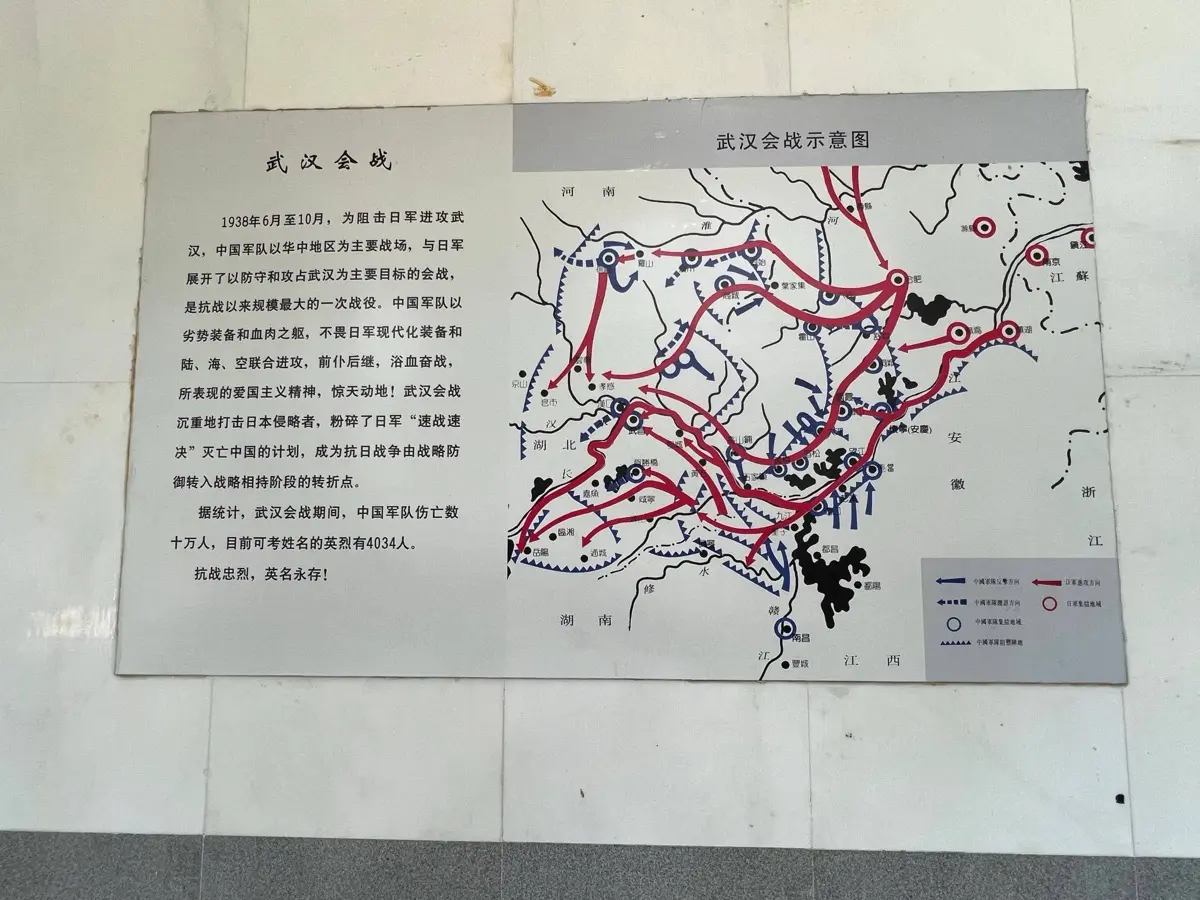
The Yangtze defense line: Wuhan was the last major city between the Japanese army and China’s wartime capital.
The ground battle
The full-scale ground assault began in June 1938. The Japanese attacked from the north and east, pushing toward Wuhan along multiple fronts. The Chinese defense was commanded by Chiang Kai-shek, with over a million troops dug in along a 500-kilometer arc around the city.
The fighting was brutal. The Japanese had superior air power, artillery, and armor. The Chinese had numbers, terrain, and desperation. In the hills east of Wuhan, entire Chinese divisions were annihilated holding positions that are now suburban neighborhoods. You can still find memorial stones along the old defensive line, half-hidden in the brush.
The Chinese strategy wasn’t to win. It was to delay. Every week they held was another week for the government to relocate to Chongqing, for factories to be dismantled and shipped upriver, for troops to regroup in the interior. In that narrow sense, the strategy worked. But the cost was staggering: an estimated 400,000 Chinese casualties in four months.
The Sacrifice of Hanyang
The most painful part of this story, for me, is what happened in Hanyang.
The Hanyang Iron Works and Arsenal were among the most valuable industrial assets in China. The Chinese government knew they couldn’t let them fall into Japanese hands, so they made a decision that still hurts to think about: they destroyed them.
Workers dismantled what they could (lathes, drills, precision instruments, anything portable) and loaded them onto boats bound for Chongqing. The equipment that was too heavy to move (the furnaces, the rolling mills, the foundry) was blown up. Workers who had spent their lives in those factories set the charges themselves.
When the Japanese entered Hanyang in late October 1938, they found a graveyard of industry. Broken walls, twisted metal, cold furnaces. The iron works that Zhang Zhidong had built in 1890 (the pride of Chinese industrialization) was gone.
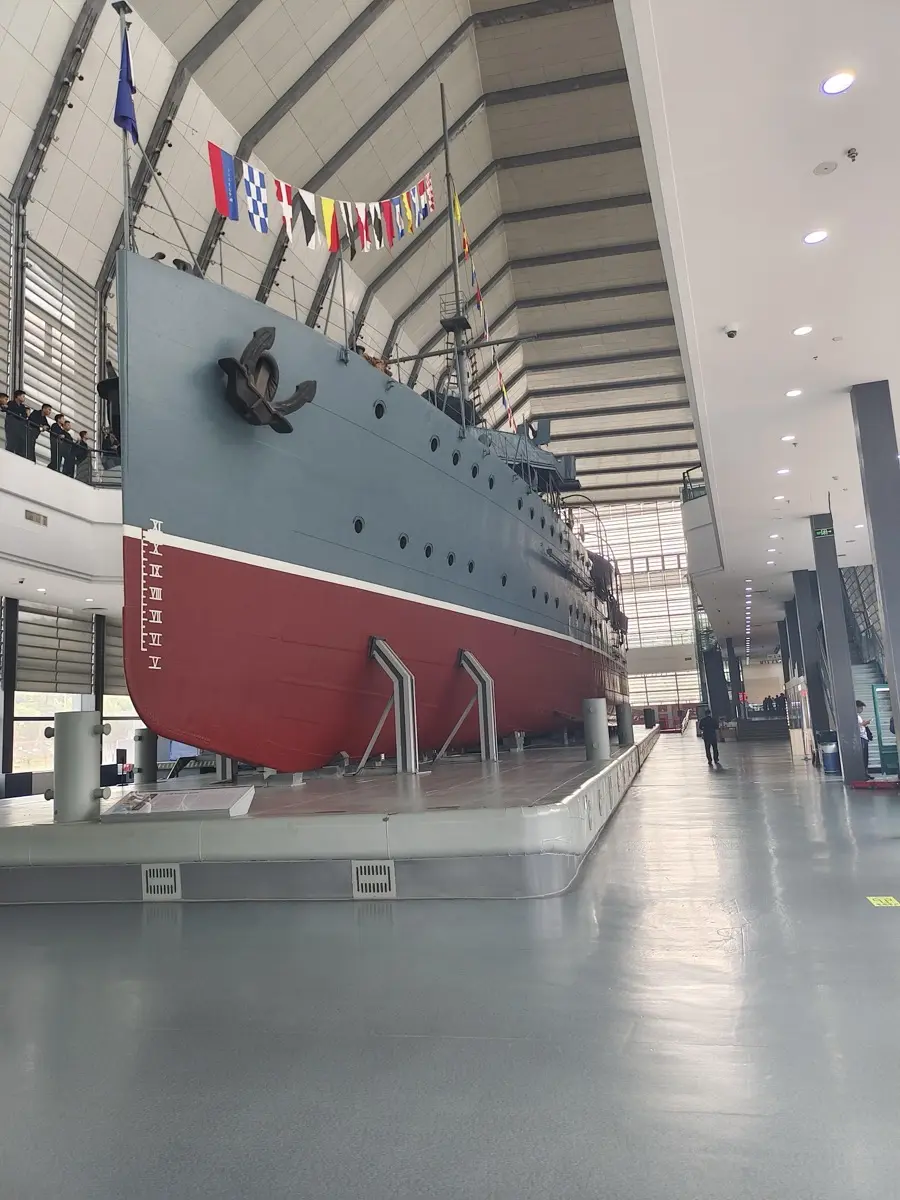
The Zhongshan Warship: salvaged from the Yangtze in 1997, now the centerpiece of its own museum in Wuhan.
The fall
Wuhan fell on October 25, 1938. The Chinese army retreated west, blowing bridges and sinking ships to slow the Japanese pursuit. The first Yangtze River Bridge wouldn’t be built for another 19 years, but the ferries that had connected the three towns were destroyed or commandeered.
The Japanese occupied Wuhan for seven years. The foreign concessions in Hankou (British, French, German, Russian) were taken over one by one. The Japanese set up a puppet government. Resistance continued in the countryside around Wuhan, but the city itself was under military rule.
Life under occupation was hard, and food was scarce. Forced labor was common. The Japanese military police (Kempeitai) operated from a building on Jianghan Road: the same street that’s now a pedestrian shopping area. People disappeared.
The Zhongshan Warship
There’s one artifact from the battle that you can still see today, and it’s remarkable.
The Zhongshan Warship (中山舰) was a Chinese naval vessel that fought in the Battle of Wuhan. On October 24, 1938 (the day before Wuhan fell), Japanese bombers attacked it on the Yangtze near Wuchang, and the ship sank in shallow water. Twenty-five sailors died.
The ship stayed underwater for 59 years. In 1997, it was raised from the riverbed in one of the largest underwater salvage operations in Chinese history. After years of restoration, it now sits in its own museum: the Zhongshan Warship Museum (中山舰博物馆), in the Jiangxia district south of central Wuhan.
I visited last year. You walk into a huge hall, and there it is: the entire ship, 62 meters long, sitting in a climate-controlled drydock. The hull still shows the bomb damage. The deck is scarred with shrapnel marks. Standing next to it, you can feel the weight of what happened here. It’s not a polished exhibit. It’s a wound, preserved.
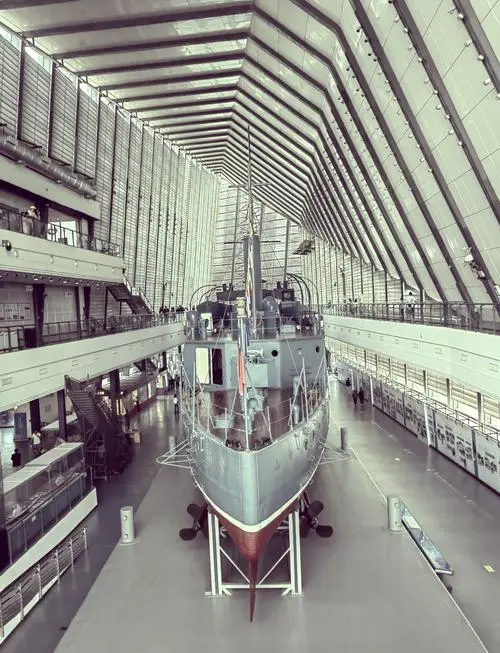
The Zhongshan Warship Museum: a 59-year underwater survivor, now the most moving war memorial in Wuhan.
What it means today
The Battle of Wuhan didn’t save China. The city fell. But it bought four months: four months that allowed the government, the factories, and hundreds of thousands of refugees to reach Chongqing. Without that time, the war might have ended very differently.
When I walk through Hankou now, past the breakfast stalls and the old colonial buildings, I think about this sometimes. The street where I eat hot dry noodles was bombed, and the building where my friend’s grandfather worked was destroyed. The river I cross every day was a battlefield.
But Wuhan doesn’t dwell on it. There are no grand war museums in the city center. The Zhongshan Warship Museum is out in the suburbs, and most tourists never go. The memorials are small, quiet, half-hidden. The city moved on. That’s the Wuhan way: endure, rebuild, keep going.
What you can still see today
| Site | What It Is | Details |
|---|---|---|
| Zhongshan Warship Museum | The salvaged warship, bomb damage preserved | Jiangxia District, 30 yuan, 1.5 hrs from city center |
| Wuchang Uprising Memorial | Red Mansion: from revolution to resistance | Wuchang, free entry |
| Hanyang Iron Works Heritage Park | The ruins of the destroyed iron works | Hanyang, on the Han River |
| Hankou Bund | Bombarded, rebuilt, now a promenade | Hankou riverfront, free |
If you’re interested in this history, start at the Zhongshan Warship Museum. It’s worth the trip. Then come back to the city center and walk the Bund at sunset. Look at the old buildings. Imagine them burning. Then notice how many restaurants and shops are open, how many people are walking, how alive the city is. That contrast is the real story.
Wuhan’s wartime history is part of its larger story. Read about the full history of Hankou, the industrial legacy of Hanyang, and 1,800 years of Wuchang.
Related:
-
Hanyang: The Iron Works That Forged Modern China : the factories that were destroyed to deny them to Japan
-
Hankou: The River Port That Became China’s Chicago : the city that was bombed and rebuilt
-
The Wuchang Uprising: How Wuhan Ended 2,000 Years of Empire : the earlier revolution that shaped modern Wuhan
-
Two Rivers, Three Towns : why Wuhan’s geography made it a military target
-
Walking the Yangtze Bridge at Night : the river that was a battlefield and a lifeline
Sources
Campaign dates, troop numbers and casualty figures follow the standard historical record.