
You could live in Wuhan five years and never walk into a temple. The skyscrapers, mega-malls, and highway overpasses feel aggressively secular. Then New Year’s Eve rolls around and your neighbor takes the subway to 归元禅寺 with a bag of incense thicker than your forearm, and you realize faith here isn’t hidden. It’s just been there before you were paying attention.
Wuhan sits geographically in a zone of China where folk belief, institutional religion, and pure superstition blend into something that is either deeply pragmatic or spiritually complex, depending on how charitable your framework is. The temple scene reflects this: buildings range from reconstructed tourist sites to genuinely living places of worship where monks and nuns run on schedules older than the city’s metro system.
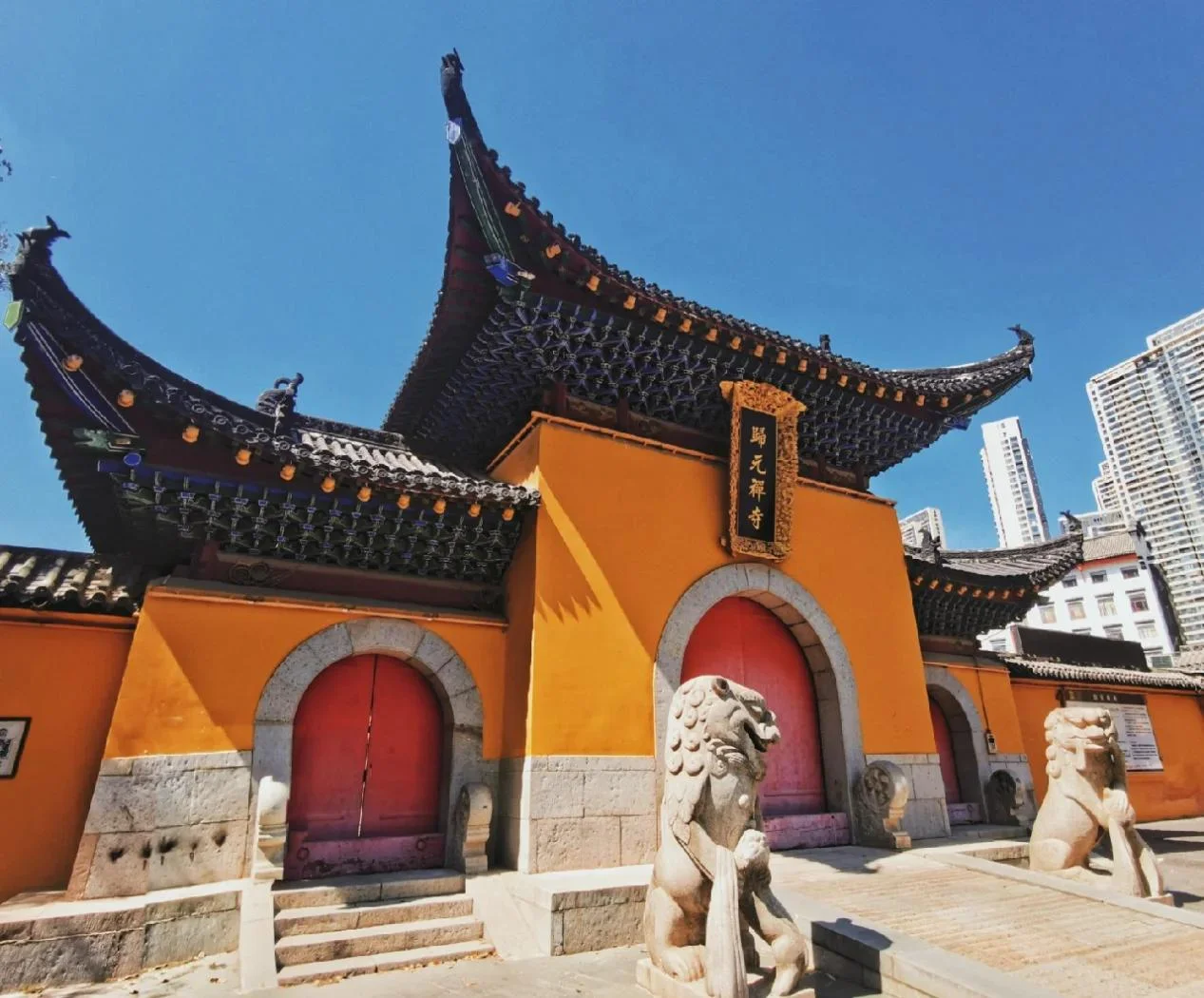
归元禅寺: The algorithm on Hongshan Road
归元禅寺 (Guiyuan Temple) in Hanyang is the temple most Wuhan people actually know. It sits among apartment complexes and a short walk from commercial streets that didn’t exist twenty years ago, yet it has been here since 1658.
Its core attraction is the Arhat Hall, which houses five hundred individually-sculpted arhat figures, each with a unique expression and posture. This is where the counting-arhat tradition lives: you stand wherever you like in the hall, pick a direction, and count the arhats until you reach your current age. The arhat you land on is supposed to tell you something about your fortune. The hall has existed in various forms since the 1800s and the temple manages it as both a devotional space and a spiritual consulting room, depending on who you ask.
归元禅寺 also runs one of the city’s most active queues during the Lunar New Year period. The first days after New Year bring crowds that wrap around the temple and down the adjacent road, with worshippers competing for space at the main burners. Security manages traffic with the bored professionalism of people who do this every year and know exactly how crazy it will get.
If you visit a foreigner on any day other than the New Year crush, the experience is reasonably calm. Morning sessions bring elderly locals doing their daily incense routine. Midday brings office workers on their lunch breaks, performing quick devotions between meetings. Evenings bring a calm that contrasts sharply with the neon-lit street outside. No one will pressure you to worship. The temple works hard to be welcoming without being evangelical. The practical guide to which temples are worth your time is Wuhan’s Temples: Where 300 Years of Incense Still Burns.
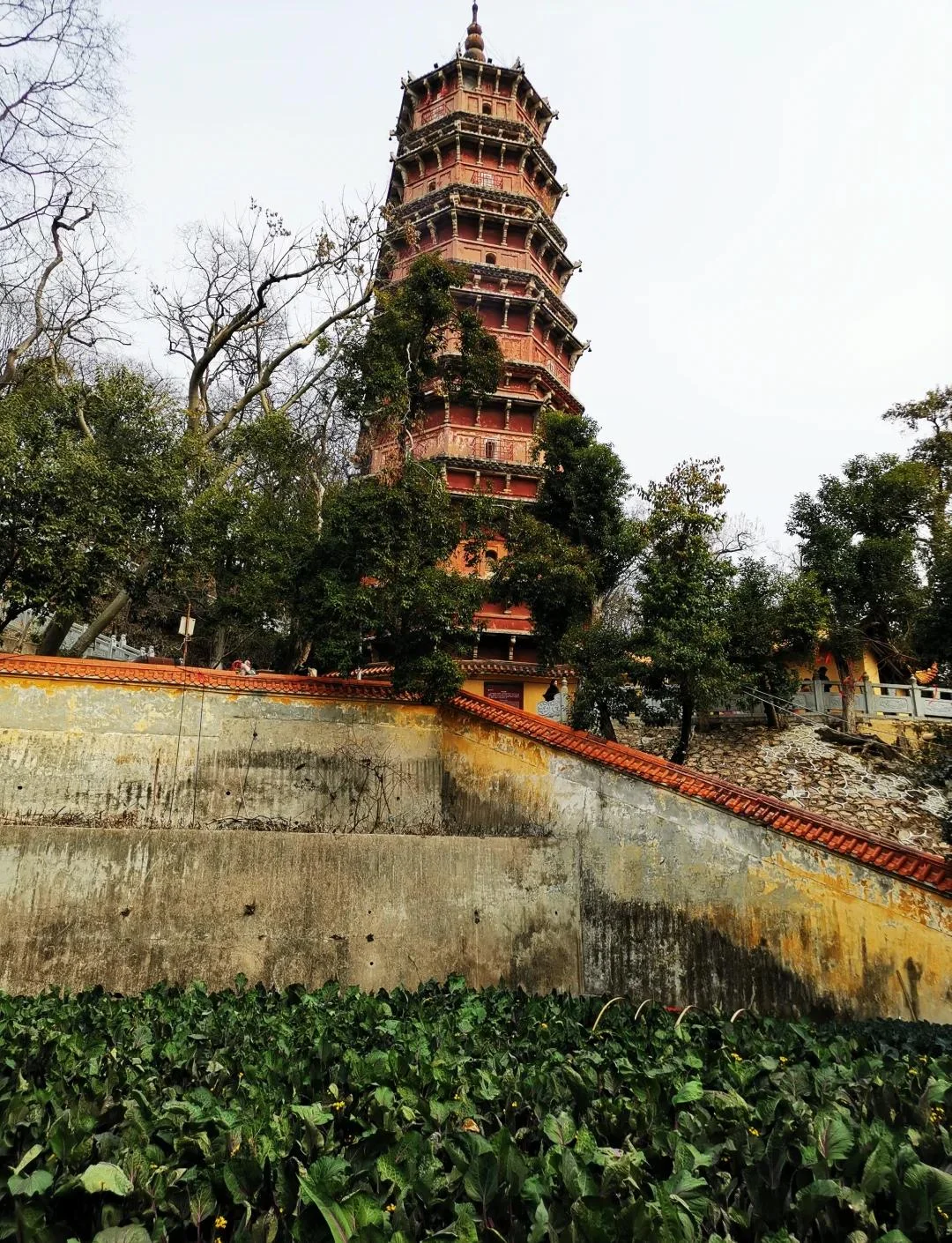
宝通寺: The hill behind the university
宝通寺 (Baotong Temple) sits on the southern slopes of 洪山 (Hongshan), the forested hill that divides 武昌’s dense core from the sliver of land leading to Guanggu (光谷). It’s been a Buddhist institution since the Northern and Southern Dynasties period, although the current structures are mostly Ming and Qing reconstructions.
Unlike 归元禅寺’s city-center accessibility, 宝通寺 feels like it’s discovering you. You walk up a slope from the surrounding residential streets, through a stone gate, and into a compound where the noise from the road disappears. The main hall sits at the top of the stairs, where elderly couples pause to catch their breath. The view from the top stretches toward the cluttered Wuchang skyline: glass towers that theoretically shouldn’t be visible from a 1,400-year-old monastery but absolutely are.
宝通寺 is where Wuhan parents bring exam-stressed children. The temple runs a gong’an meditation session on occasional Sundays that locals rave about more for the mental break than the spiritual insight. During gaokao season you will spot teenagers standing in the courtyard trying to calm down. No one calls it official. Everyone understands.
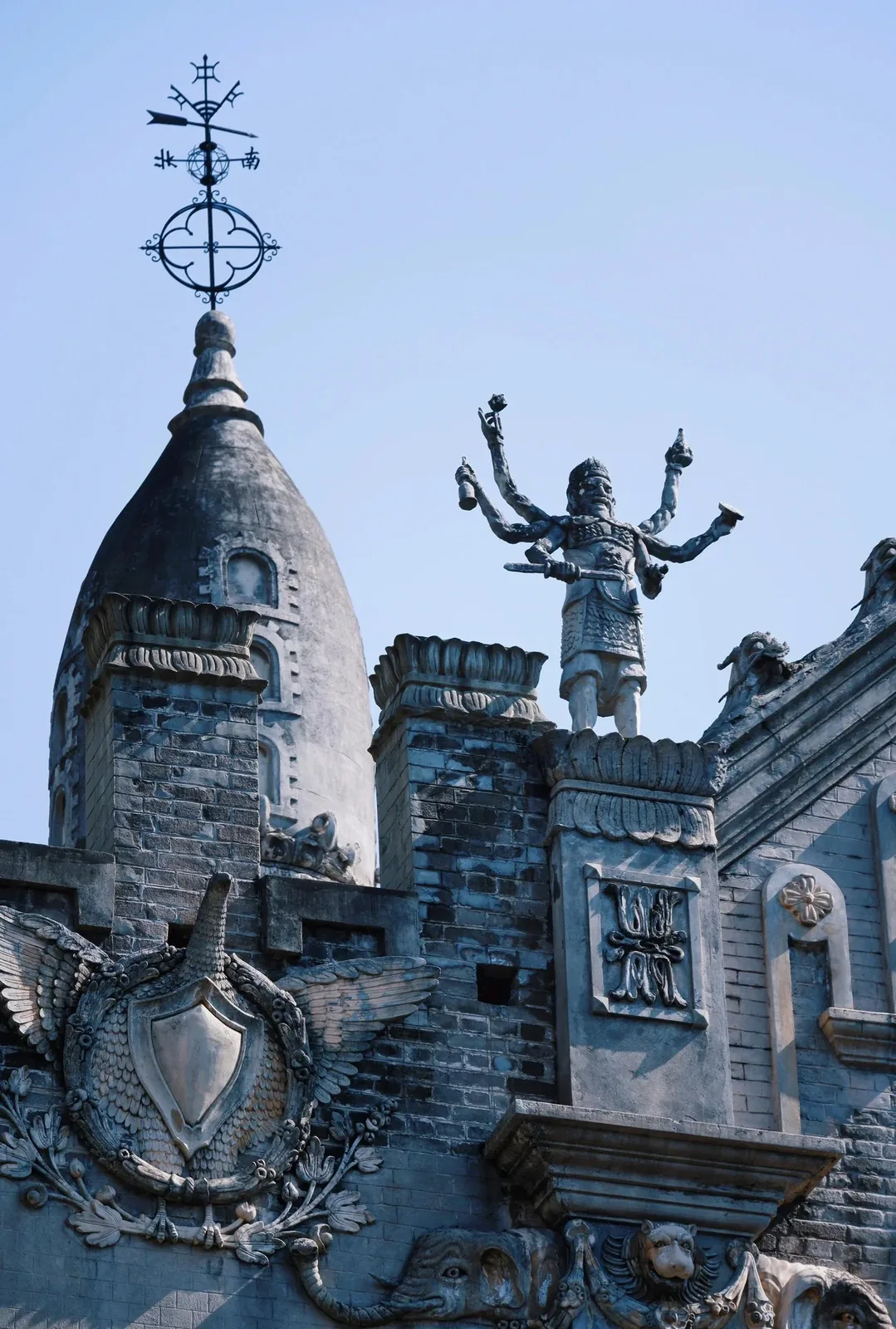
古德寺: the thing that looks like something else
古德寺 (Gude Temple) is the one that photographs best, and it’s the one that confuses first-time visitors the most. Walking in from the street you expect a Chinese Buddhist temple. What you get is a compound blending Southeast Asian, European Christian, and traditional Buddhist architecture into a composition that shouldn’t work but somehow does.
The main hall bears more than a passing resemblance to a Thai or Burmese temple. The outer walls echo elements of European Gothic revival. The whole thing was built in the early 20th century by a monk who had traveled extensively through Southeast Asia and wanted to build something fitting the connections he’d felt. The result is a temple that looks like it belongs in Bangkok and Yangon simultaneously, except it’s wedged between apartment blocks in Hankou.
古德寺 has gained an outsized reputation on Chinese social media because it photographs well. During spring it trails plum blossoms. During cherry season there are a handful of trees that make an attractive frame. The actual religious community uses the temple for modest daily rituals and periodic chanting sessions that attract a small but committed weekday crowd. Tourists occasionally sit in on chanting. The monks tolerate this politely until the photo flashes become obnoxious. Then they become firm.
What foreigners miss about belief in Wuhan
Here is what doesn’t show up in the tourist-brochure version of Wuhan religion: the vast majority of belief activity runs through unofficial channels. Your Wuhan colleague doesn’t have a home shrine to speak of but will absolutely not take an important meeting on August 8th because of the number 8’s luck. Two members of his family might visit the same fortune-teller in a basement office near 街道口 without identifying as religious people.
Fortune-tellers cluster around hospital corridors, not temple entrances. A parent worried about a sick child will consult a face-reader who operates out of a converted 10-square-meter walk-up apartment near Tongji Hospital. Office workers facing promotion decisions visit a blind fortune-teller in Wuchang who operates by appointment only and accepts cash only. These are not superstitious backwater people exercising backward beliefs. They are psychiatrists in all but name and paperwork.
In practical terms, the average Wuhan person navigates both the institutional and the folk-religious system without seeing the contradiction. A standard life can include a weekly temple visit, a quarterly session with a fortune-teller, and a firm declaration that you personally don’t believe in religion as an abstract category. All of these exist simultaneously.
If you go
归元禅寺 receives the most visitors, but 宝通寺 and 古德寺 offer more interesting experiences. None requires religious credentials. All three accept donations in the usual pattern: burn incense, drop a folded bill, bow three times. There is no required amount. Regular visitors give small amounts. Business owners during New Year give larger amounts and make a point of photographing the receipt.
For the counting-arhat tradition at 归元禅寺, remember that you count in the direction facing forward from wherever you stood when you entered. Pick your stop point at your current age, and the arhat you land on should be photographed along with its number sign. A temple volunteer sitting at a desk near the exit will help you interpret the fortune-card associated with that arhat’s number for a small fee (usually 10-20 yuan). The interpretation is intentionally broad enough to fit almost anyone. This is a feature, not a bug.
Wuhan temples don’t try to recruit you. They exist as parallel institutions that Wuhan people dip into and out of depending on the season, the stress level, and whether their mother put them up to it. The temples didn’t create this system. They manage it. And for anyone trying to understand not just the visible Wuhan (the highways and the malls) but the operating system underneath, the temples are one of the few places where the code is actually accessible.