
The kingdom nobody outside China knows
If I say “ancient Greece,” you picture marble columns and philosophers; if I say “ancient Egypt,” you picture pyramids. If I say “Chu” (楚), you probably picture nothing.
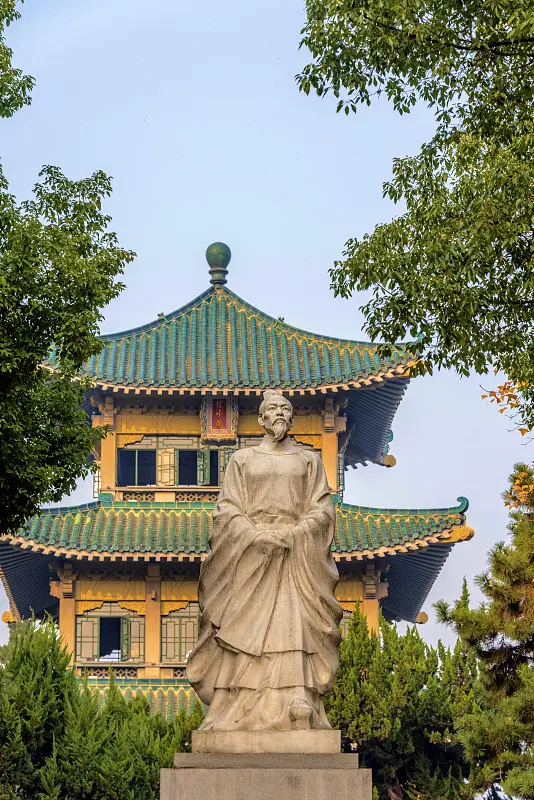
The State of Chu lasted 800 years. At its peak, it covered most of central and southern China, from the Yangtze valley to the edges of the Himalayas. It had its own writing, its own music, its own mythology. It was the largest of the warring states during the Eastern Zhou period, and for centuries it was the cultural rival of the northern kingdoms.
Then Qin Shi Huang conquered it in 223 BC, unified China, and wrote the history. The victors wrote the history. Chu became a footnote, but it didn’t disappear. Its art survived in tombs. Its poetry survived in anthologies. Its language survived in the Wuhan dialect, and its personality survived in the people who still live on this land.
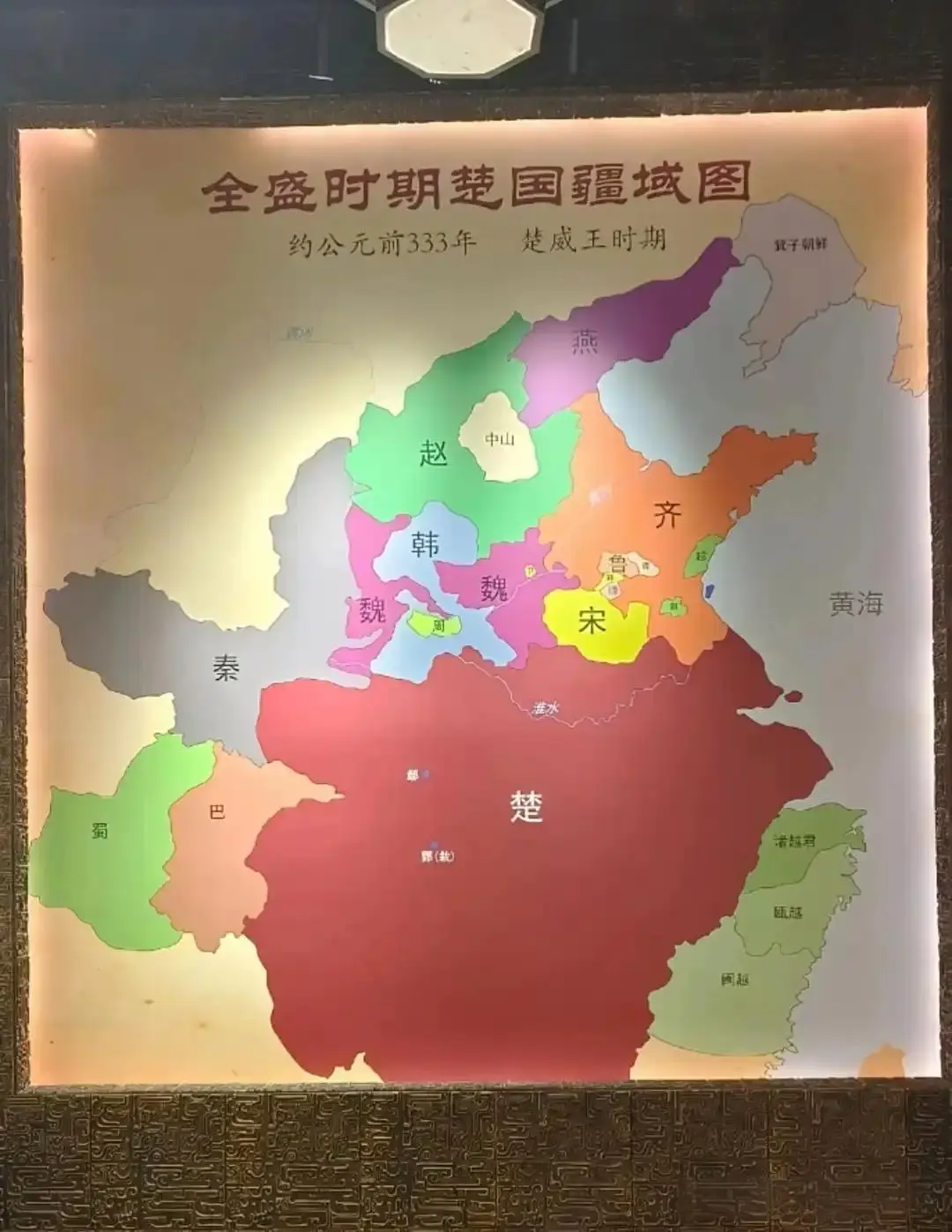
Chu lacquerware and bronzes, 2,400 years old. The red-and-black palette defined a civilization.
What was Chu?
Chu began as a small principality in the 11th century BC, when the Zhou Dynasty gave a minor noble named Xiong Yi a piece of land in the middle Yangtze valley. The land was marshy, forested, and considered barbarian territory by the northern courts. The Zhou king probably thought he was giving away nothing.
The Chu people didn’t think of themselves as barbarians. They thought of themselves as the descendants of Zhurong, the god of fire. They developed their own culture with almost no reference to northern norms. They wore different clothes and worshipped different gods. Their shamans communicated with spirits through music, dance, and trance. Their aristocrats hunted in vast forests and fished in rivers that the northern states had never seen.
By the 6th century BC, Chu was a superpower. Its armies campaigned as far north as the Yellow River. Its capital, Ying (郢), located near modern Jingzhou in Hubei, was one of the largest cities in the world. Chu controlled the Yangtze from Sichuan to the sea.
The Chu aesthetic
If you’ve been to the Hubei Provincial Museum, you’ve seen Chu artifacts. The Bianzhong bells, the lacquerware, the wooden figurines, which I wrote about separately. What I want to talk about here is the aesthetic itself, because it’s fundamentally different from what most people think of as “Chinese art.”
Northern Chinese art, from the Yellow River civilization, is geometric and restrained. The bronze ding vessels have square handles, the jade bi discs have smooth surfaces. It’s beautiful, but it’s controlled, and it wants to impose order.
Chu art is the opposite. It’s flowing and unrestrained. The lacquerware has curves that twist and spiral. The bronze vessels are decorated with serpents, dragons, and creatures that don’t exist in any bestiary. The patterns don’t repeat in neat rows. They climb and sprawl across the surface like vines.
The Chu heartland. For 800 years, this region operated as a separate civilization with its own writing, music, and mythology.
The colors are specific: red and black. Almost everything Chu is red and black: the lacquerware, the coffins, the wooden sculptures. Red for life, blood, and fire (the Chu ancestor god was the god of fire). Black for the underworld, the river, the deep. These two colors together produce a visual impact that feels primal. You see a Chu lacquer bowl from 2,400 years ago and your reaction is not “how refined.” Your reaction is “whoa.”
I stood in front of a Chu coffin in the museum once. It was shaped like a house, with a peaked roof, doors, and windows, lacquered entirely in red and black. The marquis who owned it was buried inside, meant to wake up in a miniature version of his home. I couldn’t stop staring. It was simultaneously childish and sophisticated, like a dollhouse designed by someone who understood death.
Qu Yuan: the poet who drowned
The most famous Chu person is a poet, not a king.
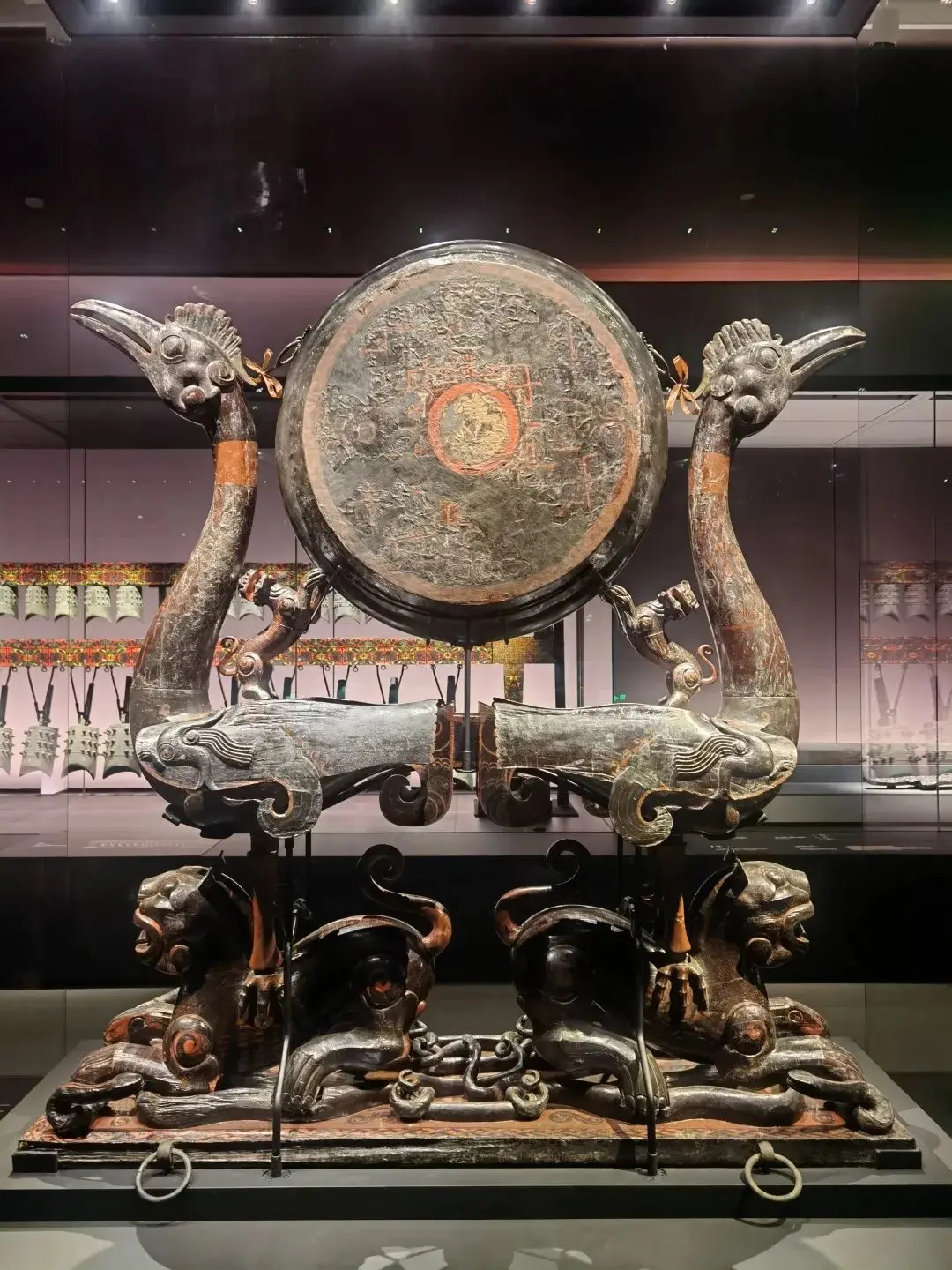
Qu Yuan (屈原, 340-278 BC) was a Chu aristocrat and minister who tried to warn his king that the expanding State of Qin was a threat. The king ignored him, exiled him, and eventually watched Qin armies burn the Chu capital. Qu Yuan, in exile, heard the news, walked into the Miluo River, and drowned himself.
That’s the story. Whether it’s exactly true is debatable. What’s not debatable is the poetry. Qu Yuan wrote the Li Sao (离骚), “Encountering Sorrow,” a 373-line poem that is one of the foundational works of Chinese literature. It’s a surreal, autobiographical journey through mythology, political frustration, and spiritual longing. Nothing in northern Chinese literature was like it.
The Li Sao belongs to a genre called Chu Ci (楚辞), “Songs of Chu.” These poems are dense with shamanic imagery, gods and goddesses, river spirits, and mountains that breathe. They read like something between a dream and a liturgy. If the northern Book of Songs is folk music, Chu Ci is opera.
Qu Yuan’s drowning became the origin of the Dragon Boat Festival (端午节). Every fifth day of the fifth lunar month, people race dragon boats and throw zongzi (rice dumplings wrapped in leaves) into rivers. The story goes that villagers paddled out to save Qu Yuan and threw food into the water to keep the fish from eating his body. Whether that happened or not, the festival is still celebrated 2,300 years later. In Wuhan, the Yangtze hosts one of the largest dragon boat races in China, part of the city’s annual events calendar.
How Chu shaped Wuhan
You might be wondering: what does a kingdom that ended 2,200 years ago have to do with modern Wuhan?
More than you’d think.
The Chu capital was in Jingzhou, three hours west of Wuhan by car. But the entire middle Yangtze region was Chu territory, and the area around modern Wuhan was Chu’s eastern frontier. Wuchang’s Snake Hill, where the Yellow Crane Tower stands, was a Chu military observation point. The lake-dotted landscape of East Lake and the surrounding wetlands was prime Chu hunting and fishing ground.
But the deeper connection is temperamental. The Chu personality, as described in the ancient texts, was romantic and stubborn. The Chu people were known for their emotional intensity, their loyalty to leaders they believed in, their willingness to die for lost causes (Qu Yuan being the prime example), and their disdain for northern practicality.
Does that sound like any city you know?
Chu culture lives on in the temperament. The loud, stubborn, romantic energy of modern Wuhan traces back 2,200 years.
I’m not claiming genetic continuity. That would be silly. 2,200 years of migration, war, famine, and intermarriage have mixed the gene pool thoroughly. But cultural continuity is real. The way Wuhan people talk and think about the world has roots in this old soil.
Wuhan people are called “hot-tempered” by other Chinese. They’re direct. They argue loudly. They eat food that burns your mouth and sweat through summers that feel like living inside a rice cooker. They’re loyal to friends in a way that northern Chinese find excessive, and they have a stubborn streak that outsiders mistake for rudeness.
A Chu aristocrat from 500 BC would not recognize a smartphone. But if you put him in a Wuhan breakfast joint at 6 AM, surrounded by people shouting for more noodles, arguing about politics, and sweating over bowls of hot dry noodles, he would recognize the energy. The Chu were loud eaters. The Chu were political arguers. The Chu were people who felt things intensely and expressed those feelings without filtering.
The Wuhan dialect itself preserves traces of Chu language. Linguists have identified phonetic patterns and vocabulary items in modern Wuhan speech that can be traced back to the Chu language of the Warring States period. The word for “stupid” in Wuhan dialect is “ka,” which appears in Chu Ci poetry. The word for “to go” in older Wuhan speech is “qi,” which is a Chu pronunciation that doesn’t exist in Mandarin.
Where to see Chu culture
If you want to experience Chu culture in and around Wuhan, here’s where to go.
The Hubei Provincial Museum has the best Chu collection in the world. The Chu Culture gallery on the second floor. The Bianzhong bells. The lacquerware. The sword. I wrote a full guide to the museum, so I won’t repeat it here. Go. It’s free.
If you want to go deeper, take the high-speed train to Jingzhou (荆州), 90 minutes from Wuhan. The Chu capital, Ying, was located just north of modern Jingzhou. The site, called Jinancheng (纪南城), is a national archaeological park. There’s not much to see above ground. The walls are eroded to low ridges in farm fields. But stand on those ridges and look across the plain, and you’re standing where the Chu court stood for 400 years.
In Jingzhou itself, the ancient city wall (mostly Ming Dynasty, but built on Chu foundations) still surrounds the old town. The Jingzhou Museum has a second collection of Chu artifacts, including some that haven’t traveled to Wuhan. If you’re doing a Chu culture tour, Jingzhou is the second stop.
Back in Wuhan, the East Lake area was Chu territory. The temples and pavilions around the lake are built on sites that Chu shamans may have used. The connection is speculative, but the landscape hasn’t changed much. The lakes, the wetlands, the fish. A Chu person from 500 BC would recognize the geography, if not the buildings.
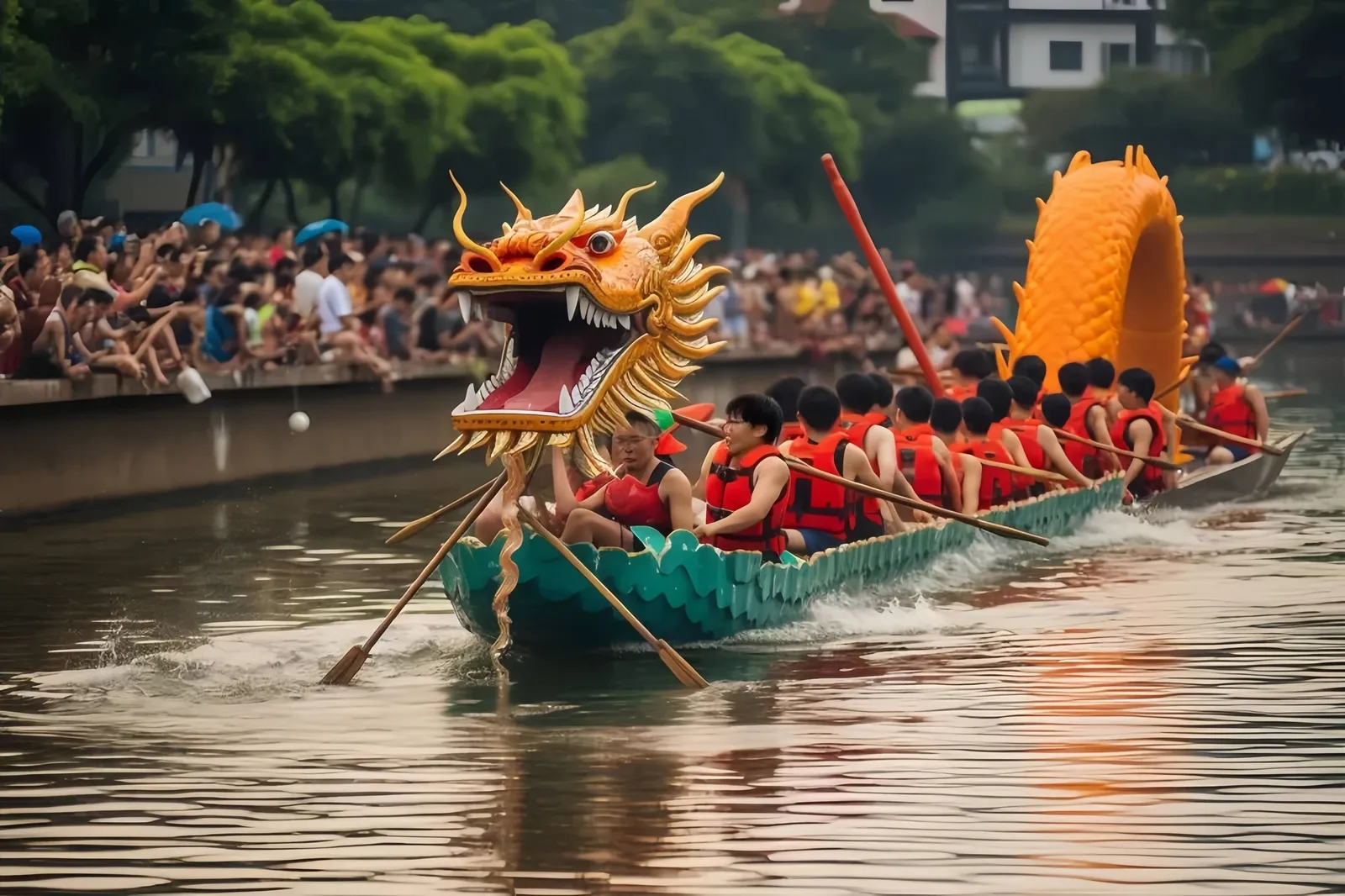
And every June, during the Dragon Boat Festival, Wuhan races dragon boats on the Yangtze.
Qu Yuan, the Chu poet who drowned himself in despair. His death gave China the Dragon Boat Festival, still celebrated 2,300 years later.
The boats are long, narrow, and painted to look like dragons, with the drummers sitting at the front to beat time. The rowers paddle in unison, forty or fifty per boat. It’s loud, wet, and exhausting, and it has been done for 2,300 years. Most participants have forgotten why. The boats still race.
Chu culture is the deepest layer of Wuhan’s identity. Read more: the museum that holds Chu’s greatest treasures, the town built on Chu’s frontier, and the river that carried Chu’s trade.
Related:
-
Hubei Provincial Museum: Home of the 2,400-Year-Old Bells: the Bianzhong, the sword, the Chu gallery
-
Wuchang: 1,800 Years from Fortress to Revolution: the town that grew on Chu’s eastern frontier
-
The River Is the City: Wuhan’s Yangtze Culture: the river that was Chu’s highway
-
Yellow Crane Tower: Beyond the Poem: built on a Chu military site
-
East Lake: Wuhan’s Green Heart: Chu hunting ground, now the city’s park
-
Wuhan’s Temples: Where 300 Years of Incense Still Burns: built on sites Chu shamans may have used
-
Wuhan Dialect Survival Guide: the dialect that preserves Chu words
-
Two Rivers, Three Towns: the geography Chu called home