
January 23
I woke up to a message from my wife’s cousin at 6 AM. “Did you see the news?” I hadn’t. She sent a screenshot. The Wuhan municipal government had announced that at 10 AM, all public transportation would stop: buses, metro, ferries, trains, flights. The city was shutting down.
It was January 23, 2020, the day before Chinese New Year’s Eve. Half the city had already left for the holiday. The other half was about to find out they couldn’t.
I walked to the window. The street below was already busier than usual. People were carrying bags of rice out of the small grocery store on the corner, and a woman was pushing a cart loaded with cooking oil and instant noodles. The breakfast stall across the street, the one that opens at 5:30, was closed. That was the first time in eight years I’d seen it closed.
By noon, the metro stations were barricaded, with yellow tape across the entrances and security guards in masks standing in front. The highway exits were blocked. No one was leaving.
We didn’t know it yet, but this was Day 1 of 76.
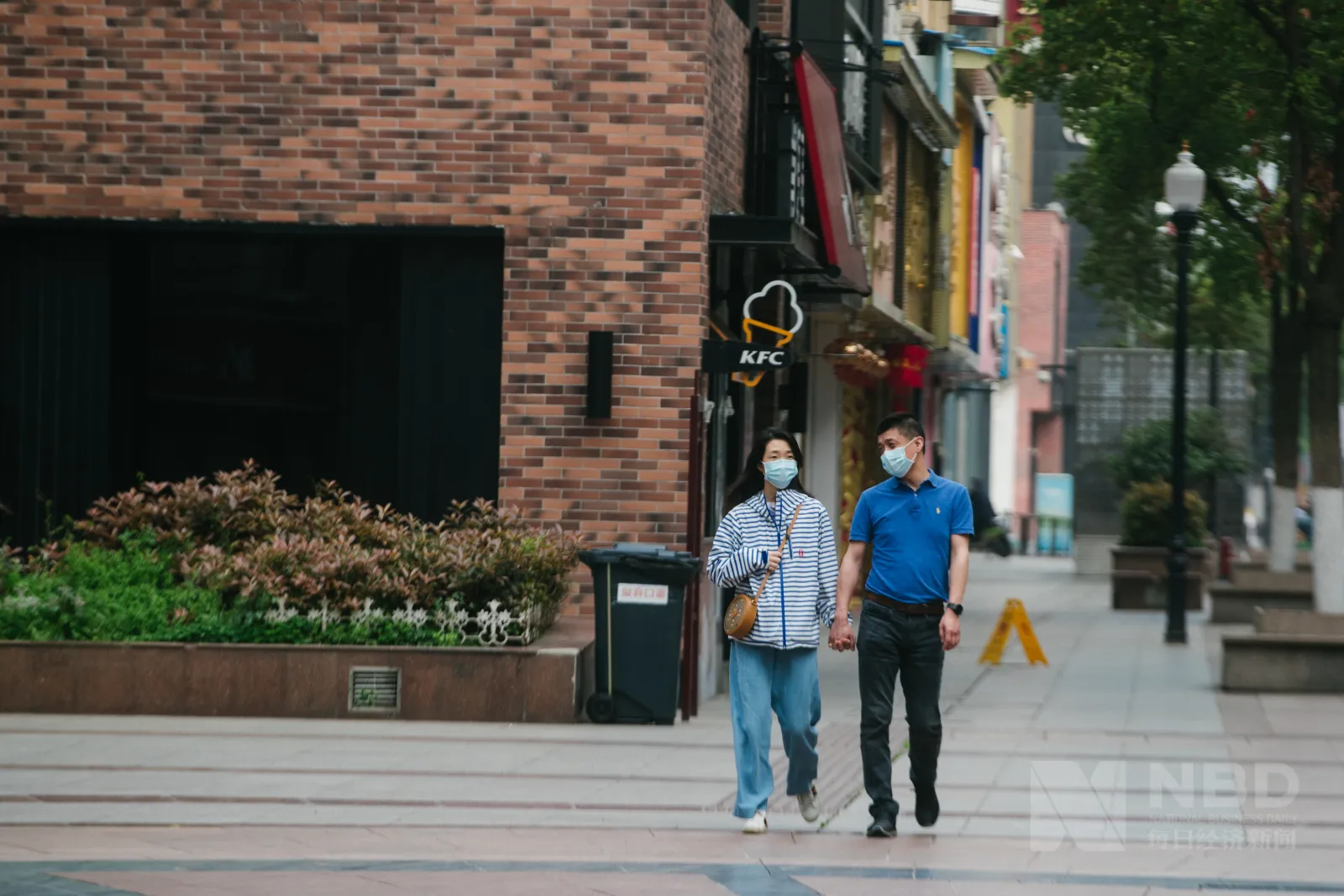
January 23, 2020. The day the city of 11 million went quiet.
The first week: confusion and cabbage
The first week was confusion. Not panic, exactly. The kind of confusion where you don’t know the rules because the rules are being written in real time.
We could leave our apartment, but we couldn’t leave our compound. The neighborhood committee (居委会, the grassroots administrative unit that manages every residential block in China) installed a barrier at the gate of our complex. A metal fence, the kind they use for construction sites, wired to the gate posts. One entrance, one exit, temperature check at the door. A woman in a red vest and a mask held a thermometer gun. She checked your forehead every time you came back.
Going out was technically allowed, but going where, when every shop within walking distance was closed within three days? The convenience stores lasted longest. The Lawson near our gate stayed open for the first week, selling instant noodles, toilet paper, and cigarettes at a pace I’d never seen. Then they ran out of everything and closed too.
We had food. My wife, a Wuhan native, had done what every Wuhan person does before Spring Festival: bought too much. The refrigerator was full of pork, fish, and vegetables. The balcony had a 50-pound bag of rice. We had two weeks of food, easy, and so did everyone else. The problem was week three.
By the end of the first week, the community group chat (WeChat group, 200-plus households) organized its first bulk vegetable order. A farmer outside the city was willing to drive a truckload of produce to our gate. Cabbage, radishes, potatoes, carrots. No choice in what you got. You paid 50 yuan, the truck arrived two days later, and the neighborhood committee divided the bags. My wife went down to pick up ours. She came back with three cabbages and five pounds of potatoes.
We ate cabbage and potatoes for a week, then the next truck came. More cabbage. More potatoes. A few daikon radishes. Someone in the group chat complained. The committee woman said, “This is what there is.”
How the food system actually worked
By week two, a system had emerged. It wasn’t designed. It grew organically, the way Wuhan systems do.
Each residential compound had a WeChat group. The group had a few designated “group leaders” who collected orders and posted a spreadsheet: chicken, pork, oil, salt, soy sauce, eggs. You filled in your quantity, transferred money via WeChat Pay, and waited. The suppliers were restaurants that had pivoted to bulk grocery delivery, or wholesale market vendors who had lost their restaurant clients and needed to sell somewhere.
The delivery arrived at the gate. You couldn’t go to the gate. The committee received the delivery, sorted it by building number, and delivered it to your door. Three deliveries a week. The committee people were in their 50s and 60s, wearing makeshift hazmat suits made from raincoats and garbage bags, carrying bags up 18 flights of stairs because the elevators were restricted.
I never knew their names. I should have.
The silence
The thing nobody talks about is the silence.
Wuhan is a loud city. 14 million people, 3 million cars, construction everywhere, horns, shouting, breakfect stalls clattering at 5 AM, square dance music at 7 PM, the metro rumbling underground. The noise is constant. You stop hearing it after a while, the way you stop hearing rain.
For 76 days, the noise stopped.
The first few days, the silence felt eerie, and I’d stand on the balcony and hear nothing. No traffic. No construction. No hawkers. No footsteps, even, because no one was on the street. The loudest sound was a bird. I don’t know what kind. It had been there the whole time, singing on the roof of the building next door, and I’d never heard it because the city had been drowning it out for 18 years.
After a week, the silence became normal, and my wife and I started talking more. Not about the virus, not about the news. About other things. Books, old memories, what we’d eat when this was over. We played cards. We cleaned the apartment, and then cleaned it again. We watched the entire run of a Chinese drama about a Tang Dynasty court. 70 episodes. I don’t remember the plot.
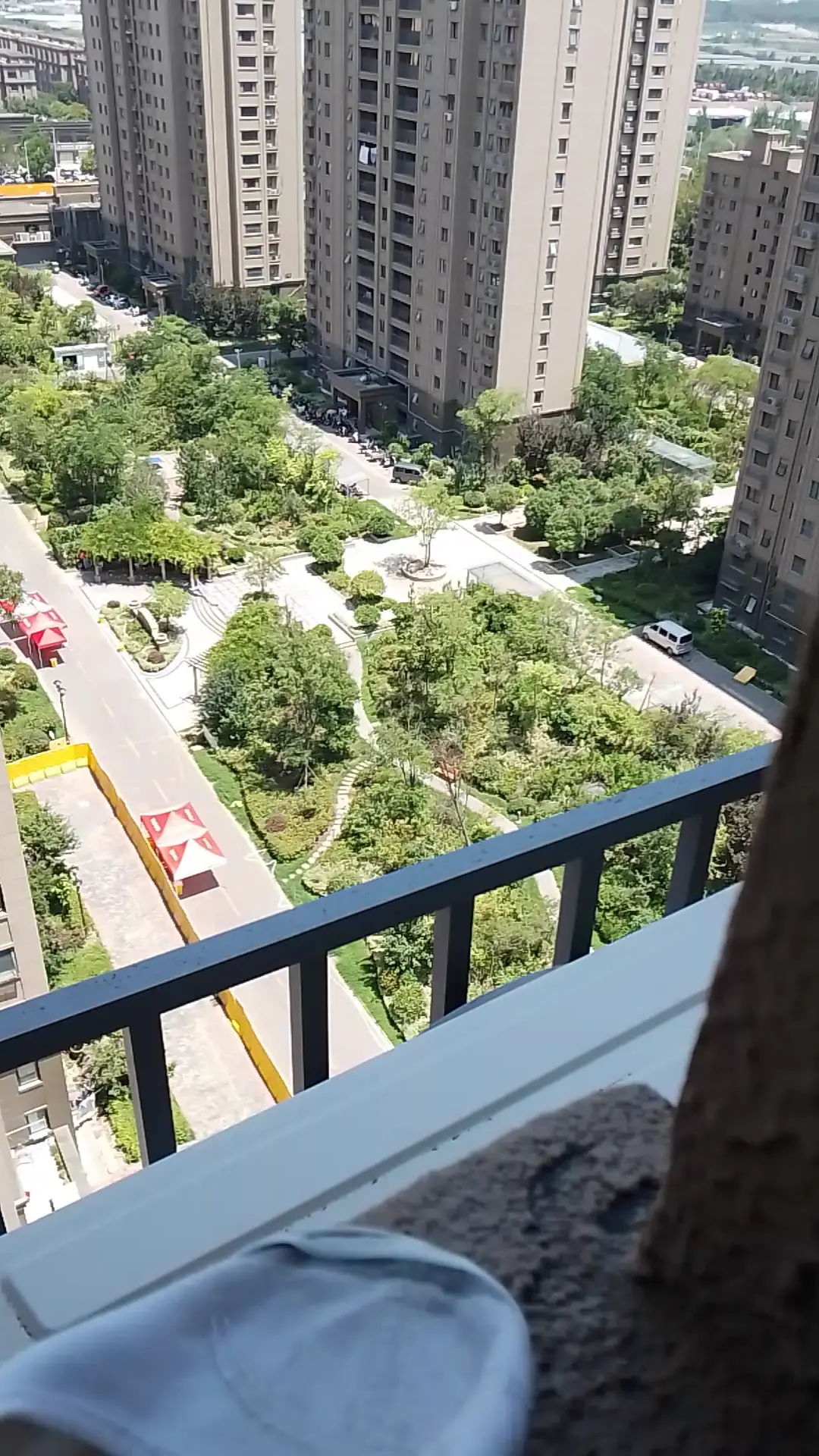
The view from a balcony in Hongshan. For 76 days, this courtyard had no children, no dogs, no footsteps.
The numbers on the wall
Our compound’s entrance had a chalkboard. Every morning, someone from the committee would update it. The numbers were simple: how many confirmed cases in our district, how many in our compound, how many days since the last new case in our building.
Our building had one case, on the 7th floor, in the first week. A man in his 60s. He was taken away in an ambulance at 3 AM. I didn’t see it. My neighbor across the hall told me. The ambulance came, people in white suits went in, he came out on a stretcher, the ambulance left. Then the disinfection truck came and sprayed the entire stairwell. The hallway smelled like bleach for three days.
His wife stayed. She was not allowed to leave the apartment for 14 days. A committee member left food at their door every day. I don’t know if she got sick. I never saw her again after the lockdown ended. I don’t know if she moved, or if she just started using a different entrance.
The chalkboard said: Day 7, 0 new cases. Day 14, 0 new cases. We watched those numbers the way you watch a timer. Counting up to something, or away from something. I’m not sure which.
February: the fog
By mid-February, the days blurred. I kept a journal for the first two weeks. Then I stopped; there wasn’t much to write.
The routine: Wake up. Check phone. Read news. Cook lunch. Check phone. Read news. Cook dinner. Watch something. Sleep. The next day, the same.
My wife started baking, and we didn’t have an oven. She found a recipe for “steamed cake” that you make in a rice cooker. Dense, slightly wet, tasted like nothing. She made it four times, and the fourth one was edible.
I started walking laps of our apartment. It’s not a big apartment: 90 square meters. I could do 40 steps from the front door to the balcony and back. I did 200 laps one afternoon. That’s 8,000 steps, and my phone said I’d exercised. I hadn’t gone anywhere.
The news from outside was a wall of noise. International media, Chinese media, social media, rumor, counter-rumor. I read all of it. Some was true. Much wasn’t. The stuff that sticks with me isn’t the big stories. It’s the small ones. The Wuhan dialect voice messages my wife’s friends sent in the group chat, half-joking, half-terrified. The video of a man standing on his balcony shouting “Wuhan jiayou!” (Wuhan, add oil! Come on!) into the silent city, and hearing it echo off the buildings, and then other voices joining in, from other balconies, until the whole compound was yelling.
That happened once. On February 8th, I think. It lasted about two minutes, then it was quiet again.
March: cracks
By March, people were fraying, not breaking or collapsing. The edges coming undone.
The group chat, which had been cooperative and almost cheerful in February, turned sharp. Someone accused the committee of skimming the vegetable money. The committee woman, Mrs. Zhou, posted her receipts, every single one, photographed and timestamped. She wasn’t skimming. The accusation was unfair. But the person who made it apologized, and the group went quiet for a day.
A man in Building 3 had a mental health crisis. He started screaming from his balcony at 2 AM. Not words, just screaming. His wife called the committee. An ambulance came, not a regular one, a special one. He was gone for a week. He came back. No one talked about it.
My neighbor, a retired teacher, started leaving her apartment at 5 AM and walking the hallway. The committee stopped her. She argued. She said she needed to walk or she’d lose her mind. They let her walk the hallway for 20 minutes a day, masked, supervised. She was 71.
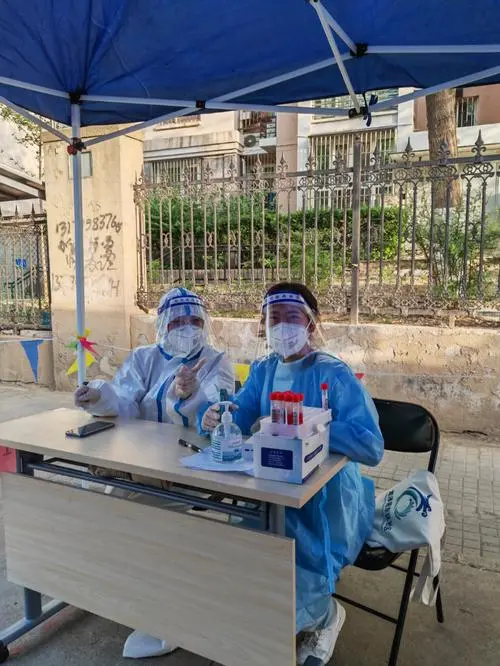
The neighborhood committee checkpoint. One entrance, one exit, a thermometer gun, and a woman in a red vest who never got a day off.
April 8: the gates open
On April 8, 2020, the lockdown was officially lifted. 76 days.
I remember the morning. The fence at our compound gate was taken down at midnight. By 6 AM, people were outside. Not doing anything specific, just standing on the sidewalk. Breathing. Looking at the sky. A man I’d never seen before was walking his dog up and down the block, over and over, like he’d forgotten how streets work.
The breakfast stall across the street reopened, and the auntie was back. She was wearing a mask. The seating was gone, the plastic stools and folding tables. You ordered, you took it home, you ate. But she was there. The steam was rising, the noodles were cooking.
I ordered hot dry noodles. I hadn’t had them in 76 days. I stood on the sidewalk and ate them from a paper bowl. The sesame paste was thick. The noodles were hot. The Wuhan dialect was back, people shouting orders, the auntie yelling at someone for using too much chili.
It was the best bowl of noodles I’ve ever had. I don’t think it was actually the best. I think I was just happy to be eating something I didn’t cook.
What changed
Physically, not much. The city was the same, the parks were the same, the lake was the same. The buildings, the bridges, the breakfast stalls, the lotus ponds. All of it was exactly where we’d left it.
But the people were different. Not dramatically. Subtly. The way a shirt that’s been through the wash too many times is still a shirt, but the color is a little faded.
My wife’s cousin, the one who sent the first message on January 23, moved to Shenzhen three months after the lockdown. She said she couldn’t stand the sight of the riverfront anymore. It reminded her of the mornings she’d stand on the balcony and see nothing moving.
The bird man from Jiefang Park didn’t come back. His spot under the trees was empty for months. Someone said he’d died. Not from COVID, but from the isolation. He was 83 and the bird was all he had, and when he couldn’t take the bird out, he stopped eating. I don’t know if that’s true, but I know his spot was empty.
The committee woman, Mrs. Zhou, kept her job. She’s still there. I see her at the gate sometimes. We nod. I’ve never properly thanked her, and I should have. She carried groceries up 18 flights of stairs in a garbage-bag suit for 76 days and she didn’t have to.
Why I’m writing this now
I’m writing this because most of what the English-speaking world knows about Wuhan’s lockdown comes from news reports. Those reports were important. They told the world what was happening. But they told it from outside, through fences and satellite images and press conferences.
This is from inside. From a 90-square-meter apartment in Hongshan district, looking out a window at a street that had no traffic for 76 days.
It’s not a complete account. It’s one person’s view, from one window, in one compound, in one district of a city of 11 million people. Everyone in Wuhan has a version of this story. Some are worse. Some are lighter. All of them are more complicated than what fits in a news headline.
If you visit Wuhan today, you won’t see the lockdown. The city has moved on, faster than I expected. The streets are full. The night markets are loud. The retirees are back in the parks. The breakfast stalls have their stools back.
But if you know where to look, there are traces. The chalkboard is gone, but the marks on the wall are still there. The fence is gone, but the scratches on the gate post where it was wired are still visible. And if you stand on the balcony of any apartment in Wuhan at 6 AM, and you listen, you can hear that bird. The one that was always there.
If you were in Wuhan during the lockdown, I’d like to hear your story. Email me. I’m collecting accounts, not for a book or a project, just because I think they should exist somewhere.
Related:
-
Is Wuhan Safe? A Local’s Honest Guide: the city after, and why it’s safe now
-
Wuhan Breakfast Culture: Guo Zao: the stall that reopened on April 8
-
Wuhan and the Floods: A City Defined by the Yangtze: COVID and floods, the same year
-
Why Wuhan’s Retirees Own This City: the people who came back to the parks
-
Wuhan in Summer: Surviving the Furnace City: the climate that made staying inside harder
-
How Wuhan Talks: A Survival Guide to the City’s Impossible Dialect: the voice messages that got us through
-
Wuhan’s Parks: Where 11 Million People Go to Breathe: the spaces we couldn’t visit
-
The Hankou Bund: The European Quarter: the riverfront that went silent