
The city that shouldn’t have this many parks
Wuhan is a furnace. From June to September, the temperature stays above 35°C and the humidity makes it feel like 45°. The city is split by two rivers and built on a floodplain. The soil is clay, the summers drown it, and the winters freeze it. None of these are ideal conditions for urban green space.
And yet, Wuhan has more parks than almost any city I’ve lived in. Not world-famous gardens carefully maintained for tourists. Working parks. Parks where people do tai chi at 6 AM, where grandmothers drag folding chairs into the shade to play cards, where teenagers practice dance routines on concrete plazas until 11 PM. The kind of parks that exist because 11 million people need somewhere to go that isn’t an apartment or a shopping mall.
I’m not going to write about East Lake here. East Lake is 87 square kilometers and deserves its own article. This is about the other parks. The ones that don’t make the guidebooks.
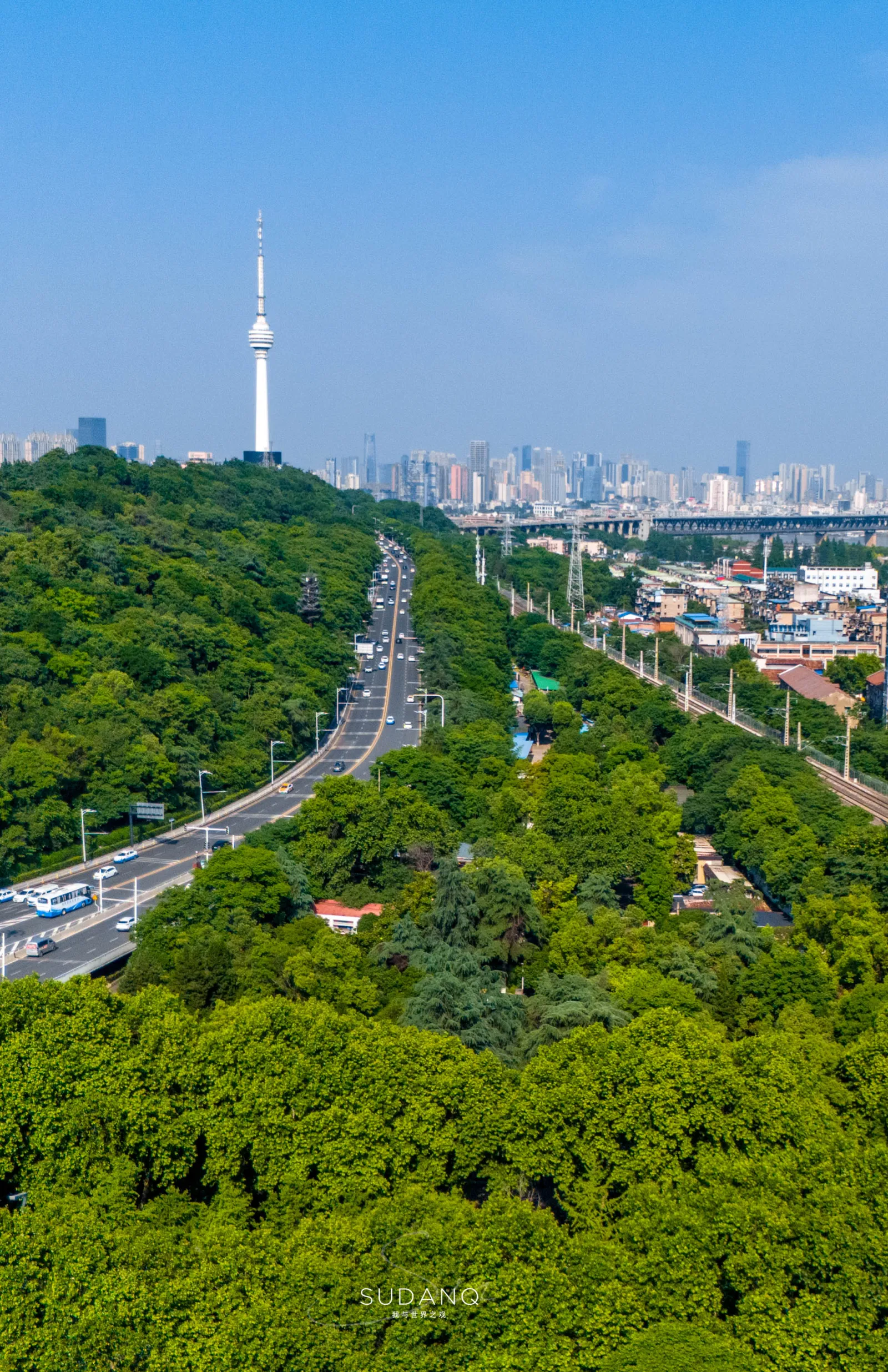
Wuhan’s green network: riverside parks, lake gardens, and neighborhood greenways threading through 11 million people.
The Hankou Riverfront (汉口江滩)
If you ask a local in Hankou where they go to walk, they’ll say the jiangtan. The Hankou Riverfront is a 14-kilometer linear park running along the north bank of the Yangtze, from the Bund in the south to the Erqi Yangtze River Bridge in the north. It’s not a nature park. It’s an engineered flood-control embankment that someone had the sense to turn into a public promenade.
The park has three layers. The lowest level, closest to the water, is a concrete walkway that floods during summer, and the middle level is a wide pedestrian path lined with plane trees, benches, and exercise stations. The top level, at street level, is a tree-lined boulevard where the old concession buildings sit. On any given evening, all three levels are full.
I walk here almost every morning. At 6 AM, the riverfront belongs to the elderly. Groups of 20 or 30 people do coordinated tai chi. A man I’ve seen for years practices calligraphy on the concrete with a bucket of water and a giant brush. The characters evaporate in 15 minutes. He doesn’t seem to mind. Fishermen cast lines from the lower level, pulling out small silver fish that I’ve never seen anyone eat.
By 8 AM, the joggers arrive. By 10 AM, tourists wander down from Jianghan Road, and by 7 PM the entire riverfront transforms again. Couples walk along the railing. Food vendors set up near the north end. Kids ride rental scooters. The Yangtze reflects the city lights, and cargo ships slide past in the darkness, low and heavy, their engines audible from a kilometer away.
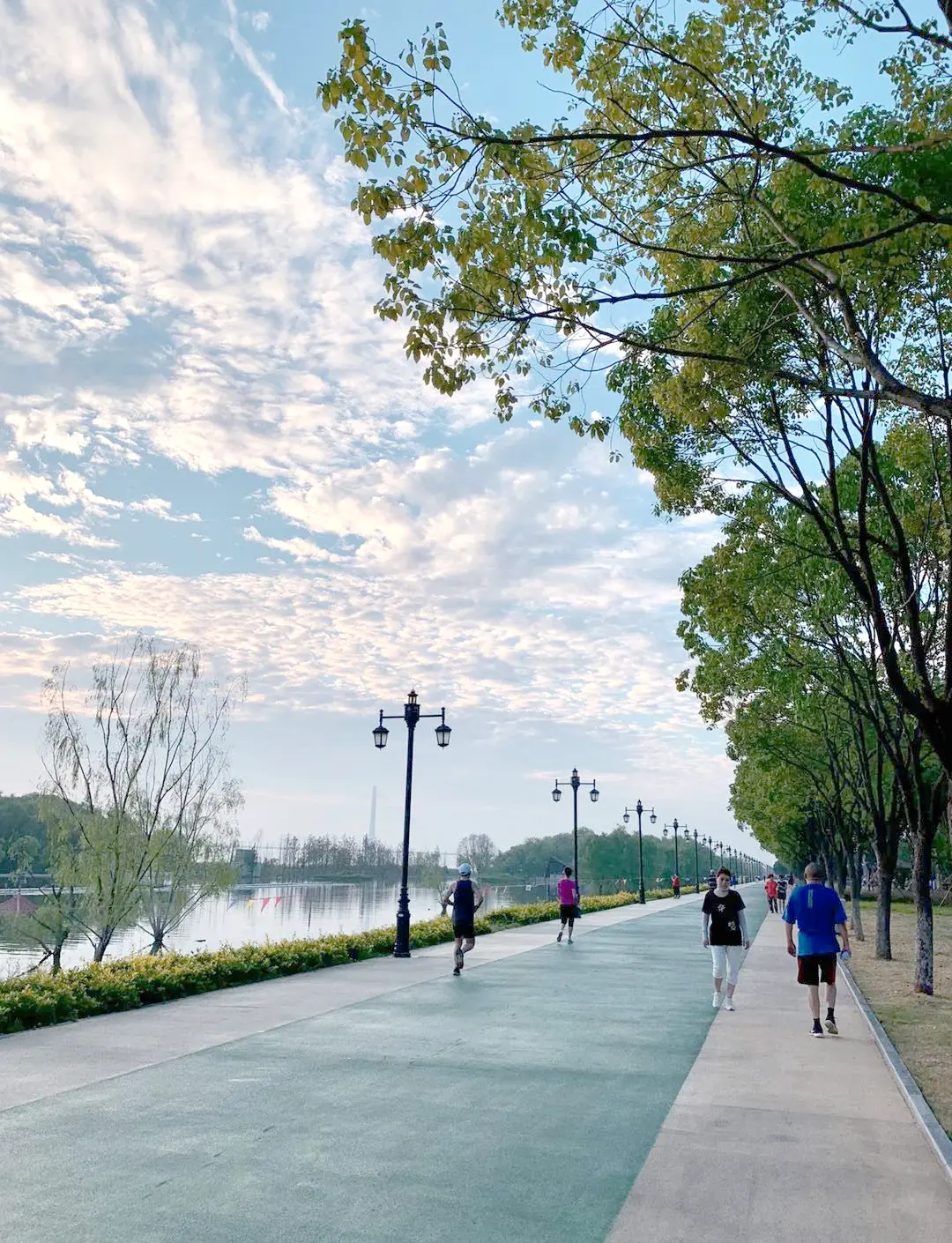
The Hankou Riverfront at 6:30 AM. The low-level walkway, the plane trees, the Yangtze. This is where Hankou breathes.
Jiefang Park (解放公园)
Jiefang Park is in the center of Hankou, surrounded by Jiefang Avenue, Hanguang Road, and Gongnong Road. It’s 46 hectares. Not huge, but dense. It’s the park I’d send someone to if they only had one hour and wanted to see how Wuhan people actually use their parks.
The park was originally a horse racing track built by the foreigners in the concession era. After 1949, it became a public park. The race track shape is still visible in the main path, a wide oval loop that everyone walks and jogs. The rest of the park is layered: a lake in the center with paddle boats nobody rents in winter, a bamboo grove that stays cool even in August, a rose garden that peaks in May, and dozens of small plazas where different groups claim territory.
The territory thing is important. Every plaza in Jiefang Park belongs to someone. The northwest corner belongs to the ballroom dancers. They bring a portable speaker, and 30 couples waltz to Chinese pop songs every evening from 7 to 9. The northeast corner belongs to the bird men. Retired men bring their caged birds, hang them in the trees, and sit on stools comparing birdsong. The south plaza belongs to the dance crews. Teenagers with portable speakers practice K-pop routines and breakdancing. They’re good. They draw crowds.
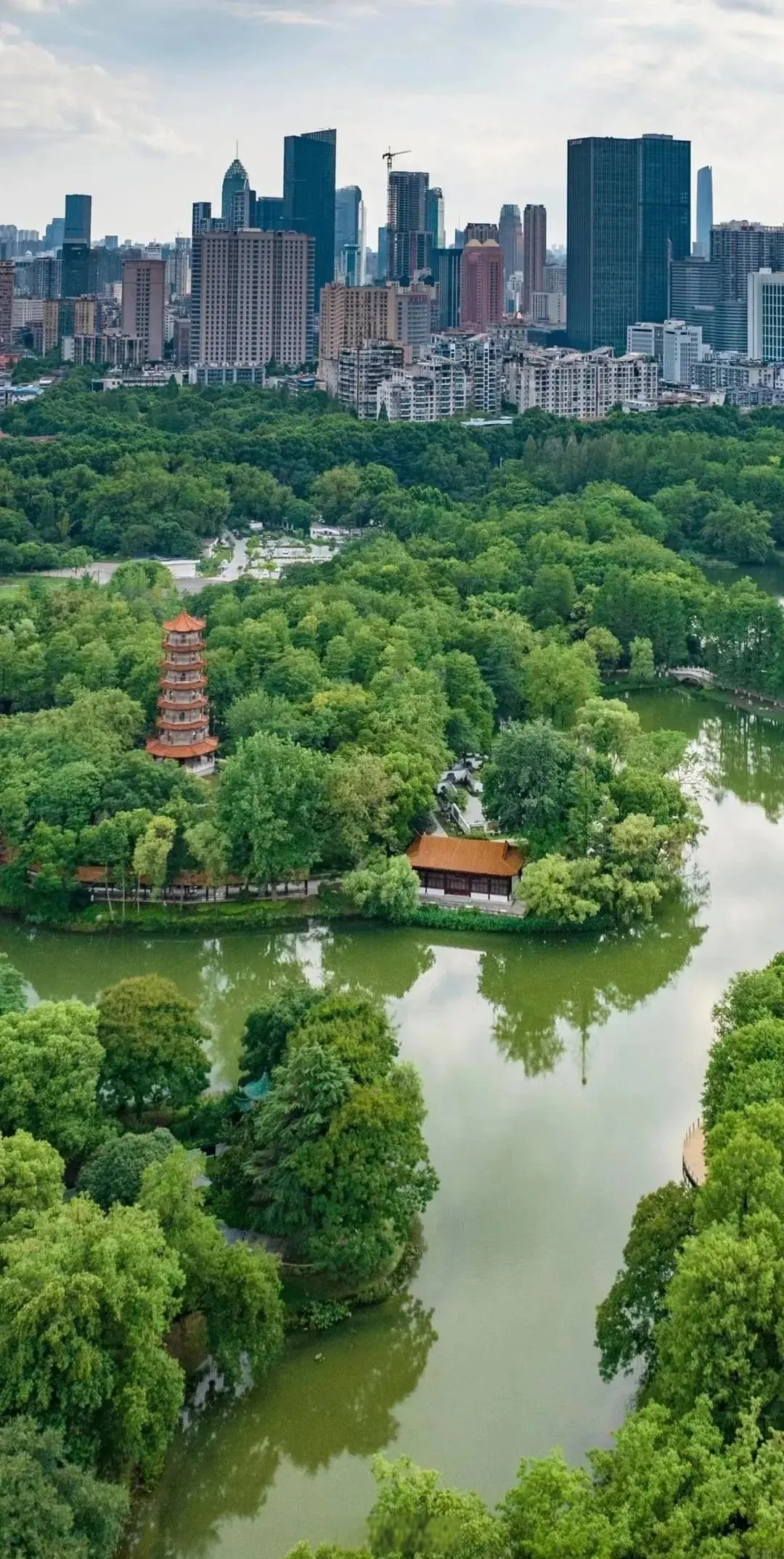
Jiefang Park at 7 PM, when every plaza belongs to someone. The dancers get the northwest corner.
There’s a memorial in the northeast corner that most people walk past. It’s for the Soviet pilot volunteers who died defending Wuhan against the Japanese in 1938. Fifteen names on a stone wall. During the war, Soviet pilots flew from Wuhan’s airfields against the Japanese air force. They lost 15 men. The memorial was built in the 1950s and renovated in 2008; it is quiet, shaded by camphor trees, and almost always empty. I go there sometimes when the park gets too loud.
Shahu Park (沙湖公园)
Shahu Park is the park I’m most protective of. It sits around Shahu Lake, a small lake in the Wuchang district, between East Lake and the Yangtze. The park is about 3 kilometers around. It’s not on any tourist itinerary. The only foreigners I’ve ever seen there were lost.
Shahu used to be a much bigger lake. Over the past 60 years, the city filled in about half of it for real estate development. What’s left is a shallow, murky lake surrounded by a park that the neighborhood fought hard to keep. The water quality isn’t great. But the trees are mature, the paths are quiet, and the park has a lived-in feeling that the larger, more manicured parks don’t have.
I come here to read. There’s a bench on the east side, under a willow tree, where the traffic noise from Youyi Avenue is muffled enough to disappear. The lake reflects the sky. Turtles sun themselves on the rocks near the south bridge. There’s a man who feeds the stray cats every afternoon at 4 PM. He told me he’s been doing it for 11 years. The cats know his schedule better than I do.
The park has a hidden feature: a community garden in the northwest corner, where residents rent small plots and grow vegetables. Tomatoes, peppers, bitter melon, loofah. The plots are tiny, maybe 10 square meters each, and the gardening is not efficient. Nobody is growing enough to feed a family. But people come every day to water their plants, talk to their neighbors, and sit in the sun, which is why it’s the most social corner of any park in Wuhan.
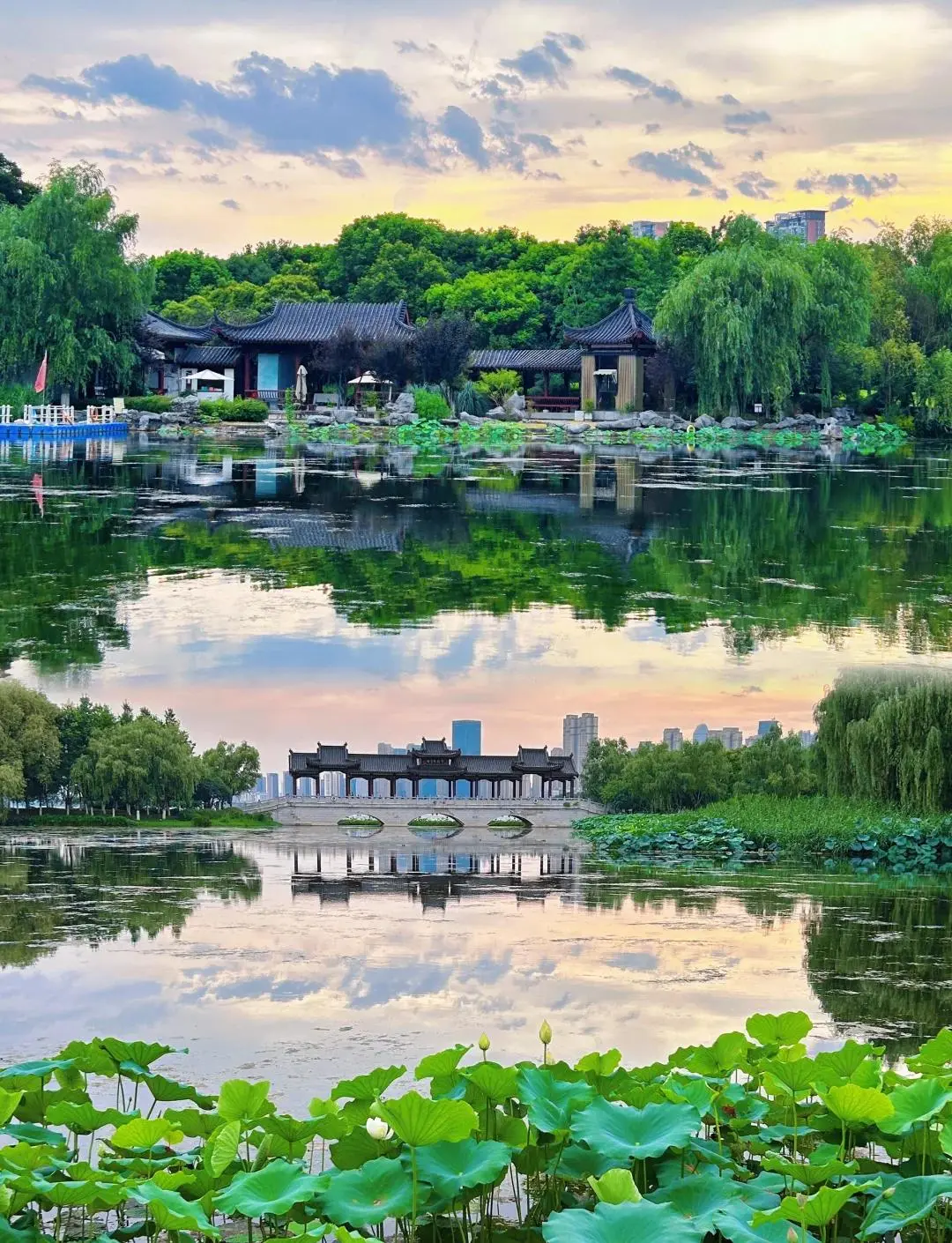
The bench under the willow on Shahu’s east side. Bring a book and stay until the turtles leave.
Hongshan Park (洪山公园)
Hongshan Park is small and steep. It sits on Hongshan Hill in Wuchang, next to Baotong Temple. The park is maybe 12 hectares, mostly forested hillside with stone paths winding up to the top. It takes 15 minutes to climb.
The reason to come here is the trees. The hill is covered in ancient ginkgo and camphor trees, some of them 200+ years old. In November, the ginkgos turn gold. The entire hillside glows. It lasts about two weeks before the leaves fall. I’ve been going for seven years and I still miss the timing some years.
At the top of the hill, there’s a clearing with a view of Wuchang’s rooftops. You can see the Yellow Crane Tower from here, about a kilometer to the west. The tower looks better from this angle than it does up close. Distance improves it.
The greenway network
Wuhan has been building a greenway network since 2012. The idea is to connect parks, lakes, and riverfronts with continuous car-free paths. The East Lake Greenway, completed in 2016, was the first major segment, and since then the network has expanded to over 200 kilometers.
The most useful segment for visitors is the Yangtze River Greenway, which connects the Hankou Riverfront to the Wuchang riverfront via the Yangtze River Bridge. You can walk from Hankou to Wuchang entirely on pedestrian paths. It takes about 2 hours. The bridge section is the best part. You’re 40 meters above the river, walking on a narrow walkway next to trains, with the entire city spread out on both sides.
Practical guide
| Hankou Riverfront | 14 km along the Yangtze. Free. Best at 6 AM or 7 PM. Metro: Jianghan Road (Line 2/6) |
|---|---|
| Jiefang Park | 46 ha in central Hankou. Free. Best at 7 PM. Metro: Huangpu Road (Line 1/8) |
| Shahu Park | 3 km loop around Shahu Lake. Free. Best on weekday mornings. Metro: Shahu (Line 2) or Crab Island (Line 4) |
| Hongshan Park | 12 ha on Hongshan Hill. Free. Best in late November for ginkgo. Metro: Hongshan Square (Line 2/4) |
| East Lake Greenway | 28 km car-free path. See my East Lake guide |
My picks for a first-time visitor: Walk the Hankou Riverfront at sunset. It’s the one that will change how you think about Wuhan. The city that gets called a furnace has a 14-kilometer park along its river, and every evening, the people who live here use it. Not for tourism. For breathing.
For a quiet morning: Shahu Park. Bring a book, sit under the willow, and watch the turtles.
If you only have 30 minutes: Jiefang Park. Walk the oval loop once. You’ll see ballroom dancers, bird men, dance crews, and at least three things you can’t explain. That’s Wuhan.
Related:
-
Why Wuhan’s Retirees Own This City: the people who fill these parks every morning and evening
-
East Lake: Wuhan’s Green Heart: the lake park that deserves its own article
-
Wuhan’s Lakes: Why China’s Biggest Lake-City Has More Water Than You Think: 166 lakes, 600 parks
-
Wuhan in Summer: Surviving the Furnace City: why the parks empty at noon
-
The Hankou Bund: The European Quarter: the promenade starts here