
The street that has everything
Jianghan Road (江汉路) is the street every Wuhan local has walked a hundred times and still walks again. It runs 1.6 kilometers from the Jianghan Customs House at the south end to Jiefang Avenue at the north. It’s pedestrian-only: no cars, no scooters, just people. On a Saturday evening, it holds 100,000 of them.
I was there last weekend. A busker was playing guitar outside a 1920s bank building, and two teenagers were taking selfies in front of a neoclassical facade. A grandmother was steering her grandson toward a dumpling stall. A couple was arguing about where to eat. The neon from a Uniqlo sign was competing with the golden light from a century-old trading house next door. None of this is remarkable. This is just what the street does at 7 PM.
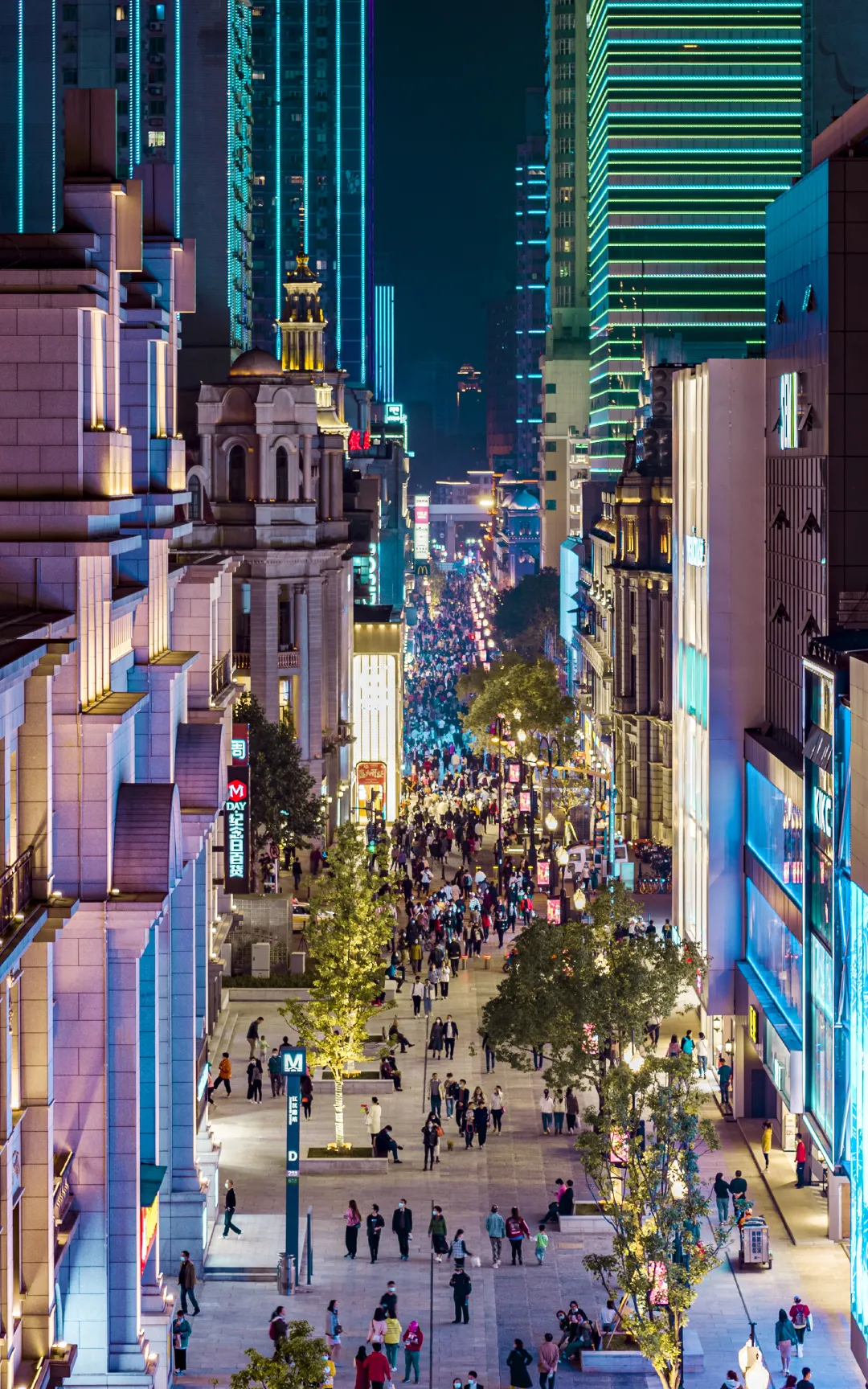
Jianghan Road at dusk: 1.6 kilometers of pedestrian promenade through 100 years of architecture.
From treaty port to main street
The street’s history starts where my Hankou history article starts: 1861, when the British opened a concession on the Yangtze riverfront. Jianghan Road was laid out in the 1900s as the main thoroughfare connecting the riverfront customs house to the growing commercial district inland. The British built the first section, and the French extended it. Chinese merchants filled in the rest.
By the 1920s, Jianghan Road was the main commercial street in one of China’s four largest cities. Banks, trading houses, department stores, hotels: the wealthiest businesses in Hankou wanted to be on this street. The architecture reflected the money. You can walk past six buildings in a row and see six different European styles: neoclassical, Renaissance revival, Art Deco, Victorian, modernist, and something that looks like a French townhouse got confused and ended up in central China.
The buildings survived the Japanese bombing of 1938, the civil war, the Cultural Revolution, and the wrecking balls of the 1990s boom. Most of them are now shops. The interiors are gutted, the facades preserved. It’s not perfect (a 1924 bank with a KFC sign on it will always look a little wrong) but the street-level architecture is better preserved than almost anything else in Hankou.
The architecture walk
If you’re going to walk Jianghan Road, walk south to north. Start at the customs house and let the street open up in front of you. Here’s what you’ll pass.
The Jianghan Customs House (江汉关)
Built in 1924, neoclassical, with a clock tower that still chimes on the hour. This is the building that anchors the entire street: the southern gateway, the most photographed structure on the Bund. It was the center of foreign trade administration for 80 years. Today it houses the Wuhan Museum of Modern Architecture, which is worth 30 minutes if you like old blueprints.
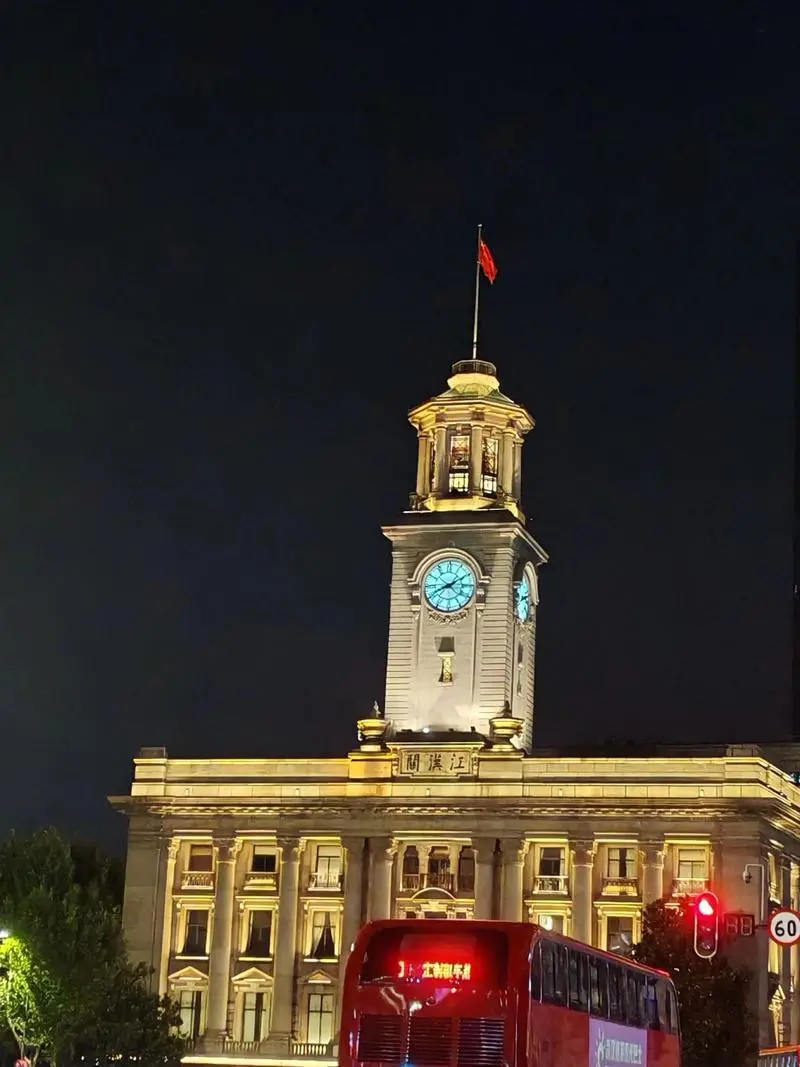
The Jianghan Customs House, built in 1924. The clock still chimes. Everything else is a shop.
The bank buildings (0-500 meters)
The first 500 meters north of the customs house is the densest stretch of old architecture. The former Bank of Communications (1920s, Renaissance revival). The former Hankou Cotton Exchange (Art Deco). The former Japanese Cotton Company (a weird mix of Western and Japanese elements). Most are now clothing stores or banks. The irony of a 1920s trading house now housing a 2020s bank is not lost on anyone.
Look up. The storefronts at street level are all modern: glass, neon, LED screens. But the second and third floors are original. Cornices, column capitals, arched windows, decorative stonework. The trick to seeing Jianghan Road’s real architecture is to walk with your chin up.
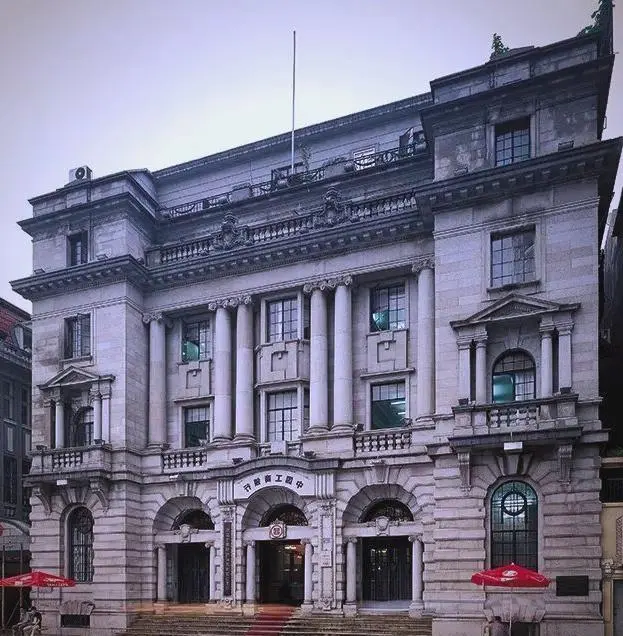
Look up past the neon: the upper floors are 1920s Hankou, preserved by accident.
Jianghan Village (江汉村)
About 600 meters in, on the west side, you’ll see a gate leading into a cluster of renovated red-brick alleyways. This is Jianghan Village, a group of lifang that were “preserved” in the 2010s by gutting the interiors and turning them into cafes, boutiques, and craft beer bars. It’s the most Instagrammable spot on the street. It’s also completely depopulated of the residents who made it a neighborhood. Walk through, take your photos, buy a 35-yuan latte, and move on.
The north end (1.2-1.6 km)
The architecture thins out as you go north. The buildings get newer, the brands get more ordinary, the street gets wider. The last 400 meters is essentially a modern shopping district that could be in any Chinese city. If you’re here for the history, turn around at the 1.2-kilometer mark. If you’re here to buy clothes, keep going.
The 2000 pedestrian conversion
Jianghan Road became pedestrian-only in 2000. Before that, it was a four-lane road choked with traffic. The conversion was controversial: shopowners worried that without car access, customers would stop coming. The opposite happened. Foot traffic tripled within a year. The street became a destination rather than a corridor.
I remember the change. I was a kid living in Hankou, and the first time I walked down the middle of a road that used to have buses on it felt transgressive. Now it feels normal. The street has been pedestrian for 26 years, and an entire generation of Wuhan residents has never seen a car on it.
The pedestrianization also changed the social character. Jianghan Road went from a shopping street to a public space, and people came to walk and hang out, not just to buy things. On summer evenings, families bring folding stools and sit along the edges. Street performers set up outside the old bank buildings. The street cleaners work constantly. It’s one of the few places in Wuhan where you can walk for 20 minutes without dodging traffic.
What to eat
Jianghan Road has two kinds of food: the chains that rent the ground floors of historic buildings, and the stalls that survive in the side alleys. Skip the chains. Head for the alleys.
Hot dry noodles (热干面): There’s a stall on the corner of Jianghan Road and Zhongshan Avenue that makes reganmian from 5:30 AM. I’ve eaten there maybe 200 times. The sesame paste is thicker than most places, the noodles are cooked slightly firmer, and they add a handful of pickled radish that most stalls skip. 7 yuan. Cash or WeChat.
Tangyuxiou (糖油馐): A Wuhan street snack that’s hard to find even in Wuhan. Sweet fried dough twists coated in caramelized sugar. There’s an old couple who sells them from a cart near the north end of the pedestrian section, evenings only. 5 yuan for a paper bag. They’re crisp on the outside, chewy inside, and you’ll burn your tongue on the first one. Worth it.
Dumplings (饺子): Walk one block east off Jianghan Road onto Bubugao Street. There’s a dumpling shop with no English sign: look for the steamer baskets stacked outside. Pork and cabbage, 12 yuan for a plate of 20, and they’re better than any dumpling you’ll find on the main street.
For guo zao, the full Wuhan breakfast experience, come between 6 and 8 AM. The street is quiet, the stalls are open, and you’ll eat alongside the shopkeepers setting up for the day. For night market food, walk two blocks east to Jiqing Street after 8 PM. That’s where the real evening food scene lives.
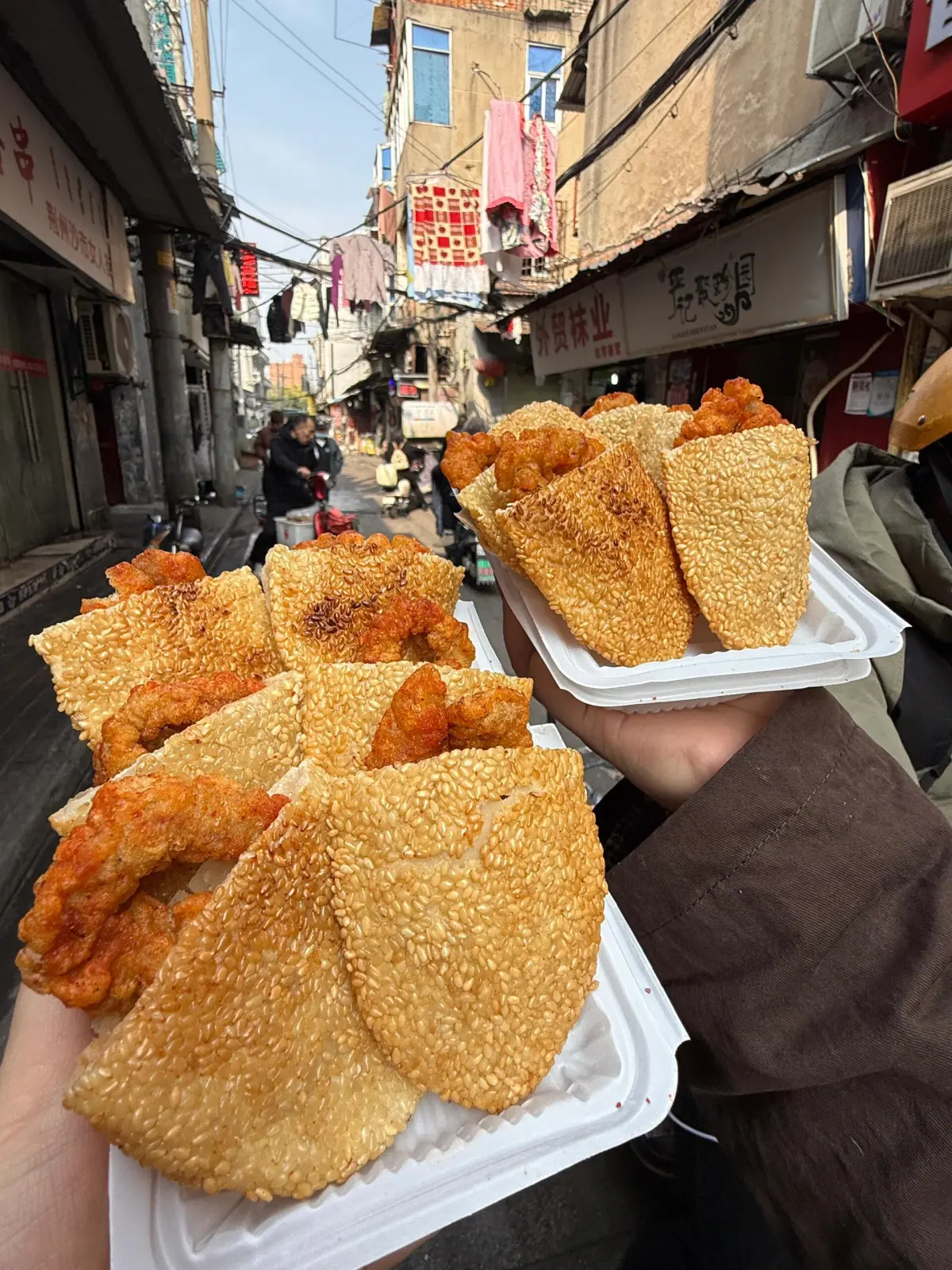
Two blocks off the main street, the food gets cheaper and better. This is the rule in Hankou.
Practical guide
| Length | 1.6 km, pedestrian-only |
|---|---|
| Metro | Line 2/6, Jianghan Road Station (江汉路站) |
| Best time | Early morning (6-8 AM) for food, evening (6-10 PM) for atmosphere |
| Start | South end: Jianghan Customs House |
| End | North end: Jiefang Avenue |
| Cost | Free to walk. Budget 20-50 yuan for snacks |
| Nearby | Hankou Bund (2 min south), Yangtze ferry (10 min south), hotels (walkable) |
My route: Start at the customs house at 6 PM. Walk north, looking up at the architecture. Stop for reganmian at the Zhongshan Avenue corner. Walk through Jianghan Village for photos, then continue to the north end. Turn east onto Jiqing Street for dinner at the night market. Total: about 2 hours, 40 yuan, one of the best evenings you can have in Wuhan.
One warning: weekends are packed. If you want to actually see the architecture rather than the back of someone’s head, come on a weekday morning. The buildings don’t have lines.