
The bells that shouldn’t exist
In 1978, soldiers digging a trench near Suizhou, three hours north of Wuhan, stumbled into an underground tomb. It belonged to a minor aristocrat named Marquis Yi of Zeng, buried around 433 BC. The tomb had been flooded for 2,400 years.
When archaeologists pumped the water out, they found something that shouldn’t exist: a set of 65 bronze bells, each one cast in two tones, still capable of playing a full chromatic scale across five octaves. Modern musicologists tested them. The pitch was perfect. The metallurgy was beyond anything anyone believed possible for the 5th century BC.
These bells (the Bianzhong of Marquis Yi of Zeng, 曾侯乙编钟) are now the centerpiece of the Hubei Provincial Museum. They are, without exaggeration, one of the most important archaeological discoveries of the 20th century. And unless you’re Chinese, you’ve probably never heard of them.
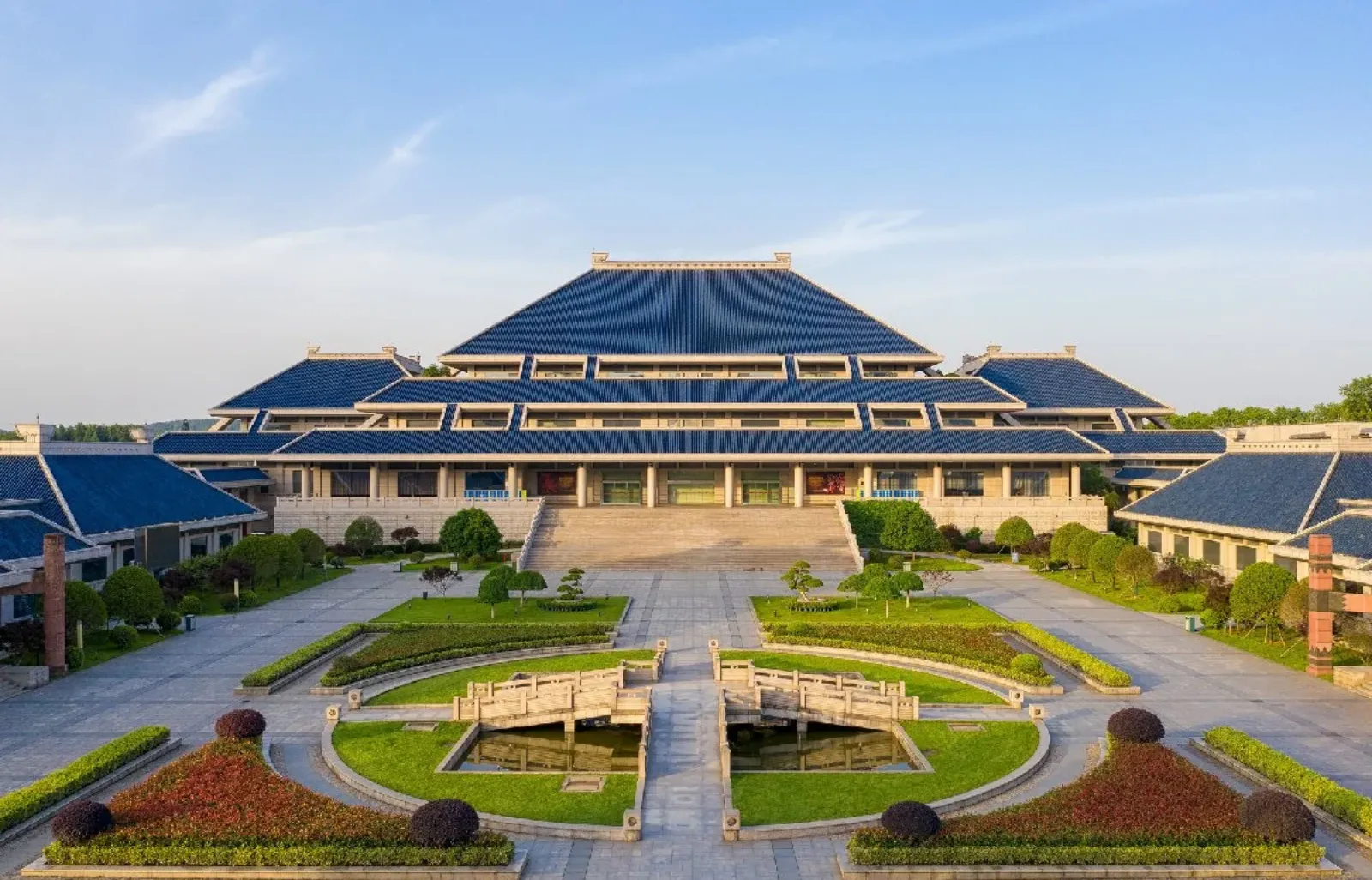
The main building of the Hubei Provincial Museum: completed in 1999, designed to evoke the architecture of the ancient State of Chu.
I’ve been to this museum more times than I can count. School trips, family visits, killing time before a train. Every time, I stand in front of those bells and think the same thing: how did people figure this out 2,400 years ago?
The bells
Let me explain why these bells are insane.
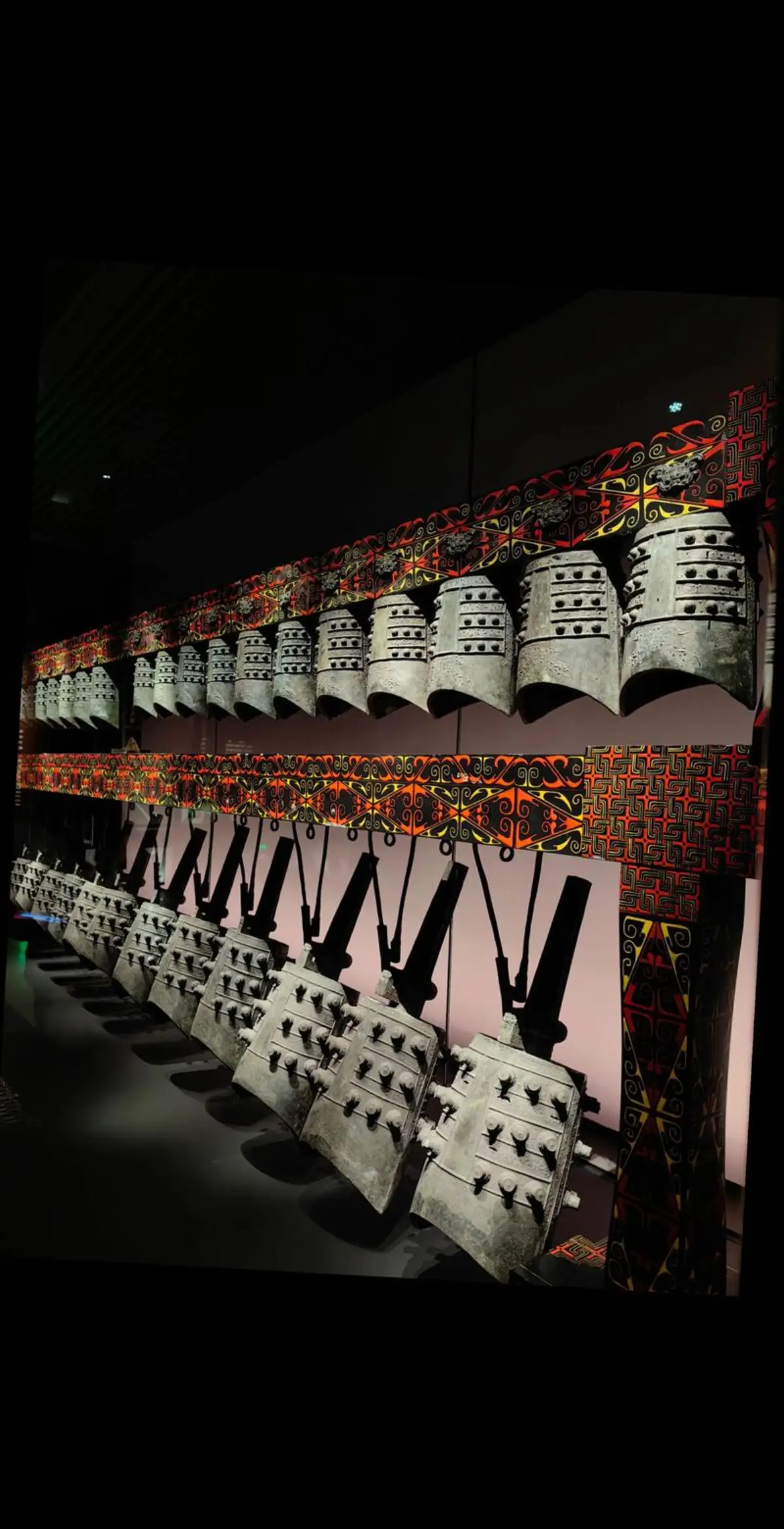
The Bianzhong of Marquis Yi of Zeng: 65 bells, 5 tons, five octaves. Still playable after 2,400 years underground.
Each bell produces two different tones depending on where you strike it, the side and the middle. That means 65 bells give you 130 notes. The range covers five octaves, which is roughly the same as a modern piano’s middle section. The tuning system is compatible with modern Western scales. You could play Beethoven on them.
The largest bell weighs 203 kilograms, and the entire set weighs nearly 5 tons. The frame is made of lacquered wood and copper, held together by interlocking joints without a single nail. It survived 2,400 years underwater.
Twice a day, the museum hosts a live bell performance. Musicians stand on a replica set and play traditional pieces, and occasionally, Western ones. I’ve heard “Ode to Joy” played on 2,400-year-old bell technology. It sounded better than it should have.
Performance times: Usually 11:00 am and 3:00 pm, but check the museum’s WeChat account (“湖北省博物馆”) for the current schedule. Tickets are 30 yuan, sold at the entrance of the performance hall. First come, first served. Arrive 20 minutes early.
The sword that won’t rust
The bells get the fame, but the museum has a second artifact that’s equally mind-bending: the Sword of Goujian (越王勾践剑).
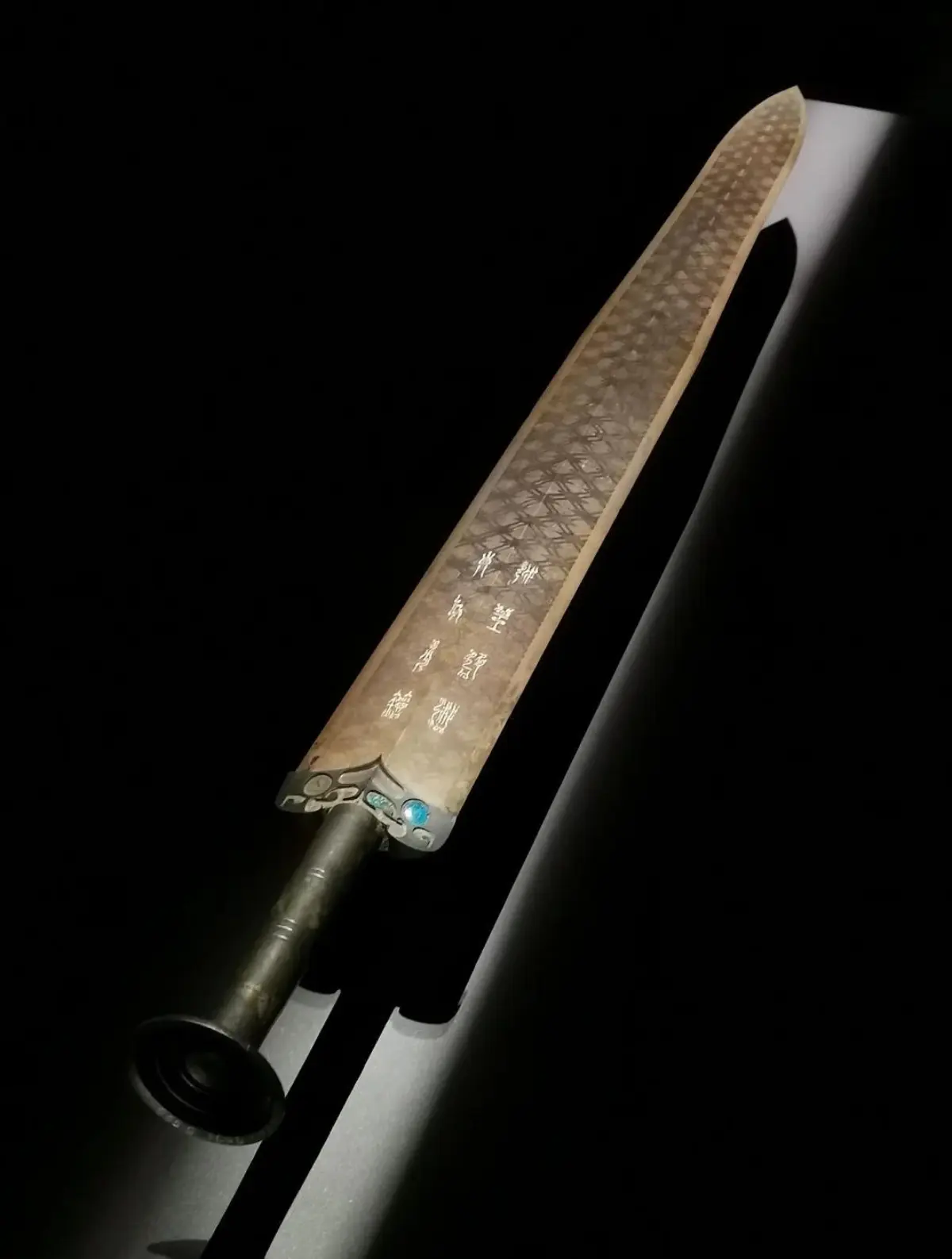
The Sword of Goujian: 2,500 years underground, zero rust. A technician cut his finger on it the day it was unearthed.
Found in a tomb in 1965, this sword was forged around 500 BC for the King of Yue, the same Goujian famous in Chinese history for “sleeping on brushwood and tasting gall” (卧薪尝胆), the ultimate revenge story. The sword was in a waterlogged wooden box for 2,500 years.
When archaeologists drew it from the scabbard, it was untarnished. Not slightly rusted. Not mostly preserved. Untarnished. A technician touched the blade and cut his finger. It was still sharp enough to draw blood after two and a half millennia.
The blade has diamond-shaped patterns etched into the surface, and eleven characters inlaid in blue glass: “King of Yue made this sword for his personal use.” The chemical composition (high tin content with trace sulfur) has kept it corrosion-free in a way that modern metallurgy still doesn’t fully understand.
The sword is in its own glass case in the center of the Chu Culture gallery. There’s usually a crowd around it. Go early.
The Chu culture gallery
The museum’s second floor is dedicated to the State of Chu (楚国): the civilization that dominated this region for 800 years before the Qin unification. Chu was the cultural rival of the northern kingdoms: wealthier, more artistic, more obsessed with beauty, music, and the supernatural.
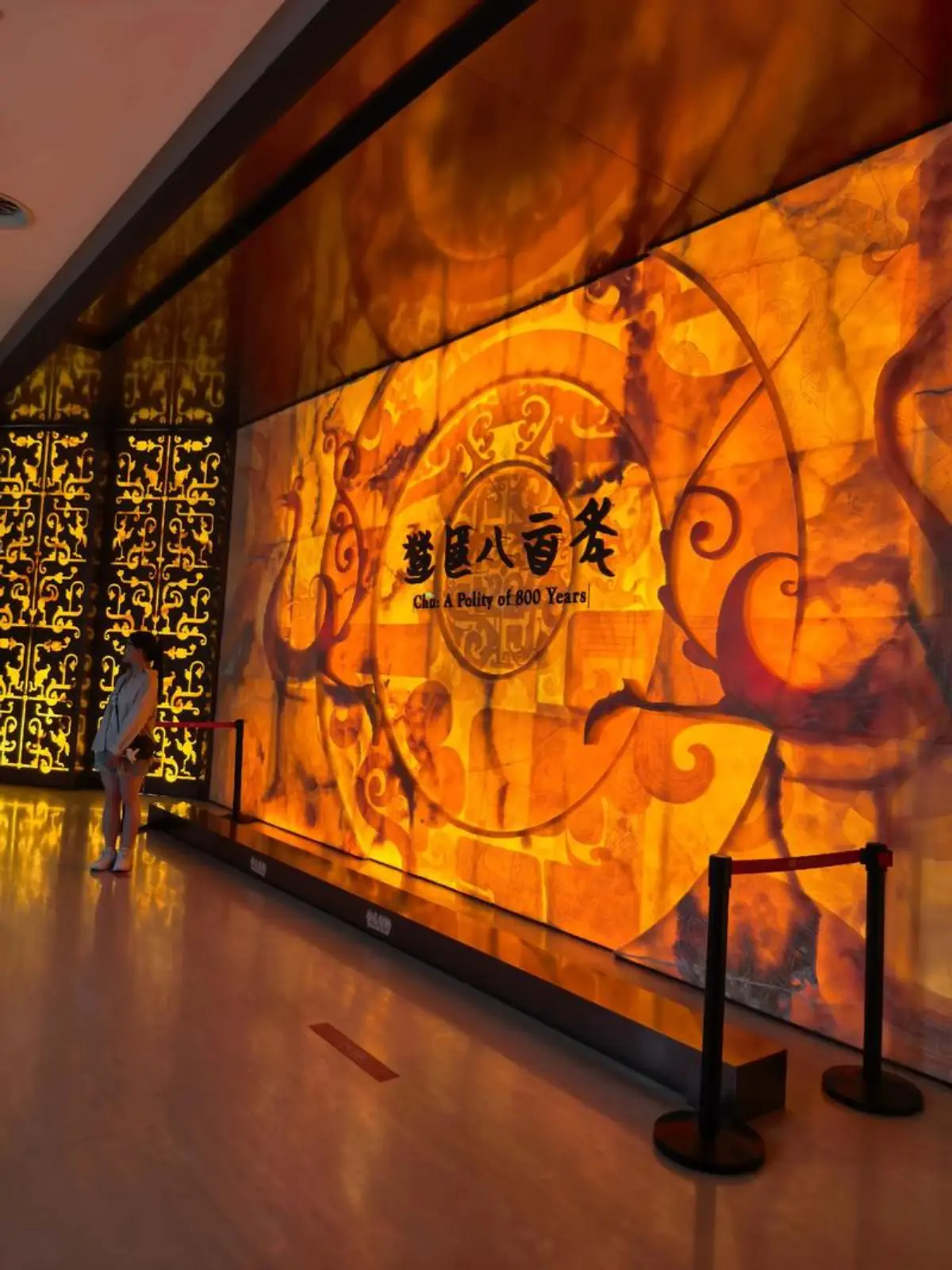
The Chu Culture gallery: 800 years of a civilization that rivaled the northern kingdoms in art, music, and ambition.
The Chu gallery is my favorite part of the museum. It’s darker, quieter, and the objects are stranger than anything in the other halls. You’ll see:
-
Lacquerware: bowls, boxes, and figurines painted in red and black, still vivid after 2,000 years. The designs are abstract and fluid, nothing like the rigid geometric patterns of northern Chinese art.
-
Wooden figurines: servants and musicians carved for the afterlife, arranged as they would have been in a Chu banquet. Their faces are serene, slightly smiling.
-
Bronze vessels: used for wine and food offerings, decorated with intertwined serpents and mythical beasts. The craftsmanship makes them look cast rather than hammered.
-
A coffin shaped like a house: the marquis’s inner coffin, a lacquered wooden box with doors and windows, like a dollhouse for the dead.
The Chu aesthetic (flowing lines, bold colors, a fascination with dreams and spirits) feels closer to Celtic or Southeast Asian art than to what most people think of as “Chinese.” It’s a reminder that “China” was never a monolith. It was always a collection of distinct, competing cultures.
The building
The museum itself is worth noticing. The main building, completed in 1999, was designed to evoke Chu architecture: a grand roof with overhanging eaves, symmetrical wings, and a platform base. The interior is vast and well-lit, with the bells in a central hall that feels like the nave of a cathedral.
In 2023, the museum completed a major expansion, adding the new East Building (东馆), which nearly doubled the exhibition space. The East Building hosts rotating special exhibitions: often on loan from other major museums. Check what’s on before you go.
When to go
Best time: Weekday mornings, 9:00-11:00 am, since the museum opens at 9:00. If you arrive at opening, you’ll have the bell hall almost to yourself for 30 minutes before the tour groups arrive.
Avoid: Weekends and national holidays. The museum is free, which means it gets extremely crowded. During summer holidays (July-August), the line can take an hour.
Pro tip: The museum issues 10,000 free tickets daily through its WeChat mini-program (“湖北省博物馆”). Book 1-2 days in advance. Walk-in tickets are available but limited, and they run out by noon on busy days.
Practical info
| Item | Details |
|---|---|
| Entry | Free (reservation required via WeChat) |
| Hours | 9:00 am-5:00 pm, closed Mondays |
| Metro | Line 4, Dongting Garden Station (东亭站), then 10-min walk |
| Bell performance | 30 yuan, ~11:00 am & 3:00 pm (check schedule) |
| Time needed | 2.5-4 hours (it’s bigger than you think) |
| Audio guide | Available in English, 20 yuan |
| Photography | Allowed (no flash). Some special exhibitions prohibit it. |
| Food | Cafe on the ground floor. Better option: walk 10 minutes to East Lake area for lunch. |
Heard the bells play? Found a Chu artifact I should have mentioned? Email me.
Related:
-
Chu Culture in Wuhan: The Ancient Roots That Still Grow: the 800-year civilization behind these artifacts
-
Yellow Crane Tower: Beyond the Poem: 15 minutes away on Snake Hill, same cultural lineage
-
3 Days in Wuhan: A Local’s Itinerary: the museum is Day 1
-
East Lake: Wuhan’s Green Heart: the museum sits on the lake’s north shore
-
Wuhan University: Cherry Blossoms and Campus: 10 minutes down the lake by metro
Sources
Artifact dates and museum holdings follow the museum’s published collection records.