
The city that grew from mud
I walk through Hankou every morning. Past the breakfast stalls on Jiefang Avenue, past the old bank buildings on Jianghan Road, past the Bund where old women do tai chi against a backdrop of colonial facades. Most days I don’t think about the fact that 600 years ago, none of this was here. Hankou was a mudflat.
The story of Hankou is the story of a river that changed its mind. For centuries, the Han River (汉江) emptied into the Yangtze further north. The land where Hankou now stands was a swampy, flooded mess: useless for farming, useless for living. Then, sometime in the early Ming Dynasty, around the 1460s, the Han River shifted south during a massive flood. It carved a new channel, and the old riverbed dried into solid ground.
People noticed. River traders started using the new north bank as a mooring point. It was sheltered, the water was deep enough for cargo ships, and it sat at the intersection of two major waterways. Within decades, a settlement grew. By the late 1500s, Hankou was already being called one of the “Four Great Famous Towns” of China, alongside Foshan, Jingdezhen, and Zhuxianzhen. Not bad for a place that used to be underwater.
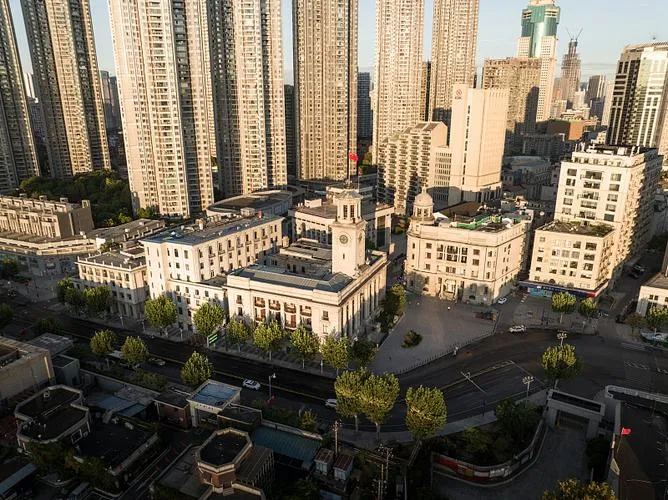
Hankou’s historic riverfront, where a mudflat became one of China’s greatest commercial cities.
The thoroughfare of nine provinces
Hankou’s success wasn’t an accident. Geography made it inevitable.
The Yangtze flows east to the sea. The Han River flows south from the heartland of central China. Hankou sat at the junction, a natural hub where goods from Sichuan, Hunan, Jiangxi, Henan, and Shaanxi all converged. The Chinese called it “九省通衢”, the thoroughfare of nine provinces. Rice, tea, salt, cotton, tobacco, medicinal herbs: everything moved through Hankou.
By the early Qing Dynasty (1700s), Hankou was one of the largest commercial cities in China. European visitors in the 18th century compared it to Chicago: a young, fast-growing city built entirely on trade, with no ancient capital pedigree, no imperial palace, just commerce and ambition. The comparison stuck. Foreigners later called Hankou “the Chicago of China.”
The city had no walls. Most Chinese cities of that era were walled. Wuchang had walls, and so did Hanyang. Hankou didn’t. It didn’t need them. The rivers were its defense, and its wealth came from being open. Walls would have just slowed down the cargo.
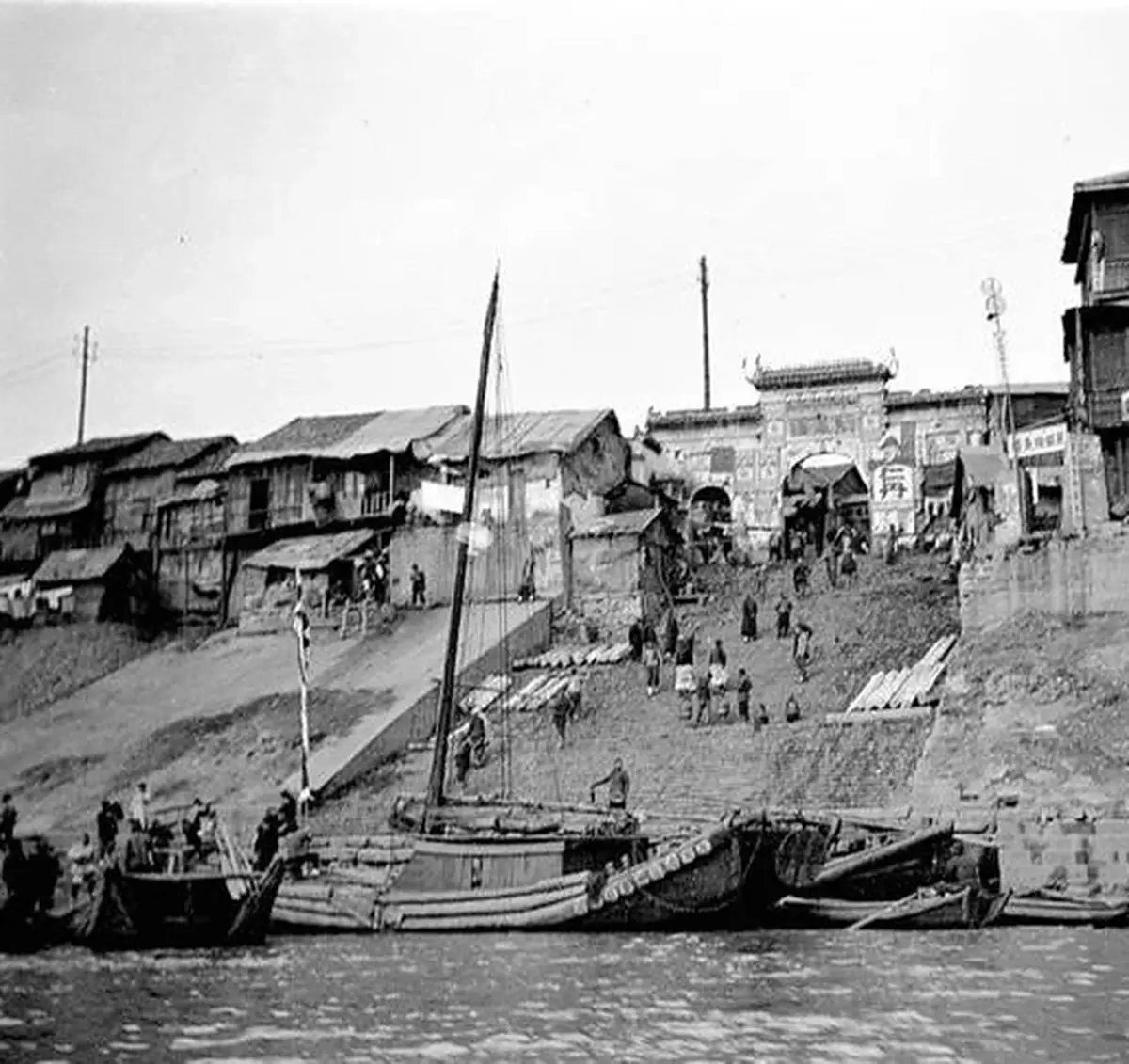
The thoroughfare of nine provinces. Hankou’s river trade made it one of Qing China’s largest commercial cities.
1861: The treaty port
Everything changed in 1861.
The Second Opium War had just ended. The Qing Dynasty had lost, again. The Treaty of Tianjin forced China to open more ports to foreign trade, and Hankou (with its massive river trade and central location) was near the top of the list.
The British arrived first, in March 1861. They surveyed the riverbank and picked out a stretch of land for their concession. The French followed. Then the Germans and the Russians. Then the Japanese. By the early 1900s, Hankou’s riverfront was sliced into five foreign concessions, each flying a different flag.
I’ve written about what those concessions look like today in my guide to Hankou’s Bund. But the history matters more than the buildings. The concessions weren’t just European neighborhoods; they were extraterritorial zones. Foreigners lived under their own laws, policed by their own officers, answering to their own consuls. Chinese people could enter during the day but couldn’t live there.
The irony is that the concessions modernized Hankou. The British built a customs house, the Jianghan Customs (江汉关), which still stands and still chimes. They built railways, telegraph lines, banks, and modern port facilities. Hankou’s trade volume exploded. By 1900, it was one of the four largest cities in China, with a population approaching a million.
But the cost was dignity. Walking through the old concession area today, I sometimes think about the signs that used to hang at the gates: “No Chinese or Dogs Allowed.” That was real. Not a metaphor, not an exaggeration: an actual sign, in English, at the entrance to a park built on Chinese soil.
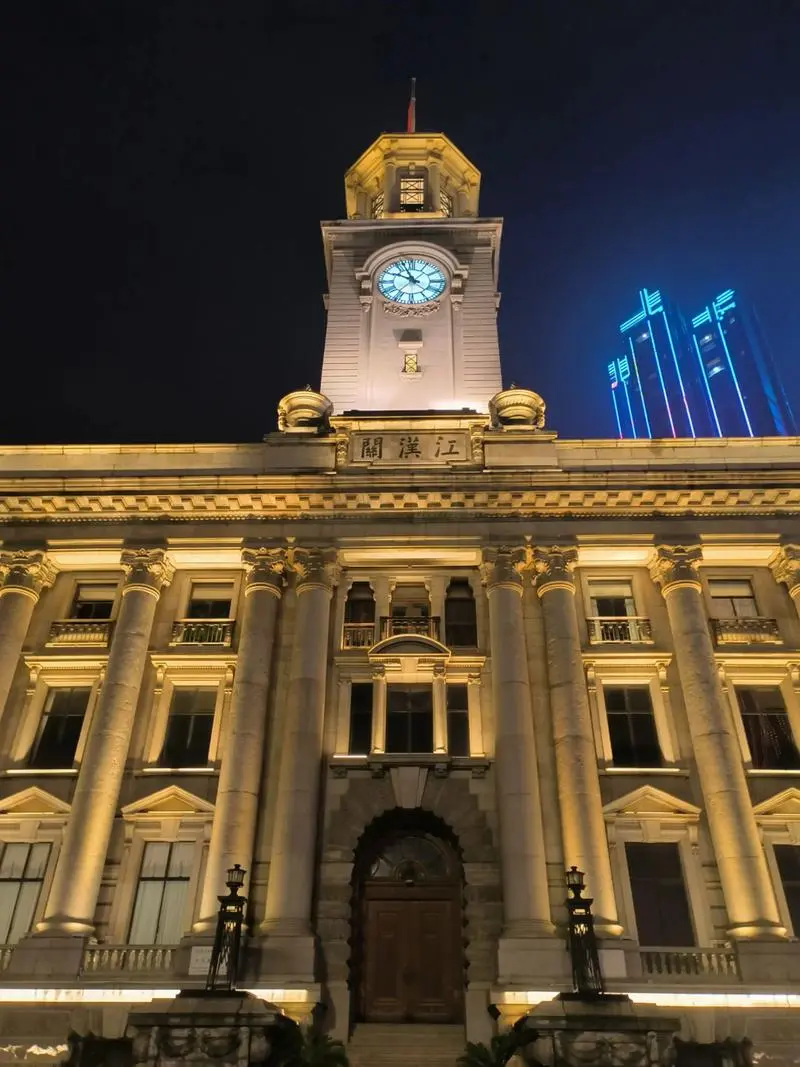
The Jianghan Customs House, built by the British in 1924, still chiming every hour.
1911: Fire on the riverfront
When the Wuchang Uprising broke out on October 10, 1911, Hankou became a battlefield.
The Qing Dynasty sent troops south to crush the revolution; they reached Hankou and fought street by street with the revolutionary army. The fighting lasted over a month: the “Battle of Yangxia” (阳夏之战). Qing forces eventually set fire to Hankou’s commercial district to deny the revolutionaries cover. The fire burned for three days and destroyed most of the old town.
Hankou’s business elite had long supported the revolutionaries in secret. They’d funneled money to Sun Yat-sen’s organizations. When the fighting started, many of them opened their warehouses to feed the revolutionary troops. The Qing burned Hankou, but Hankou had already chosen sides.
The revolution succeeded and the Qing Dynasty fell. But Hankou was in ruins. Rebuilding took a decade.
The golden age: 1920s-1930s
Rebuilt Hankou in the 1920s was something to see. The concessions were still there, but Chinese-run businesses had grown up around them, bigger, louder, more competitive. Jianghan Road became the main commercial street, lined with banks, department stores, and trading houses. Hankou’s cotton exchange was one of the largest in Asia. Tea from Hubei’s mountains was processed here and shipped to London, Moscow, and New York.
In 1927, for the first time, the three towns were unified into a single city: “Wuhan.” The experiment lasted only a few years before they were split again. But the name had been born.
The 1938 Japanese invasion ended everything. Hankou fell in October 1938, after a months-long aerial bombardment. The retreating Chinese army destroyed factories and infrastructure as they withdrew. The Japanese occupied Hankou for seven years.
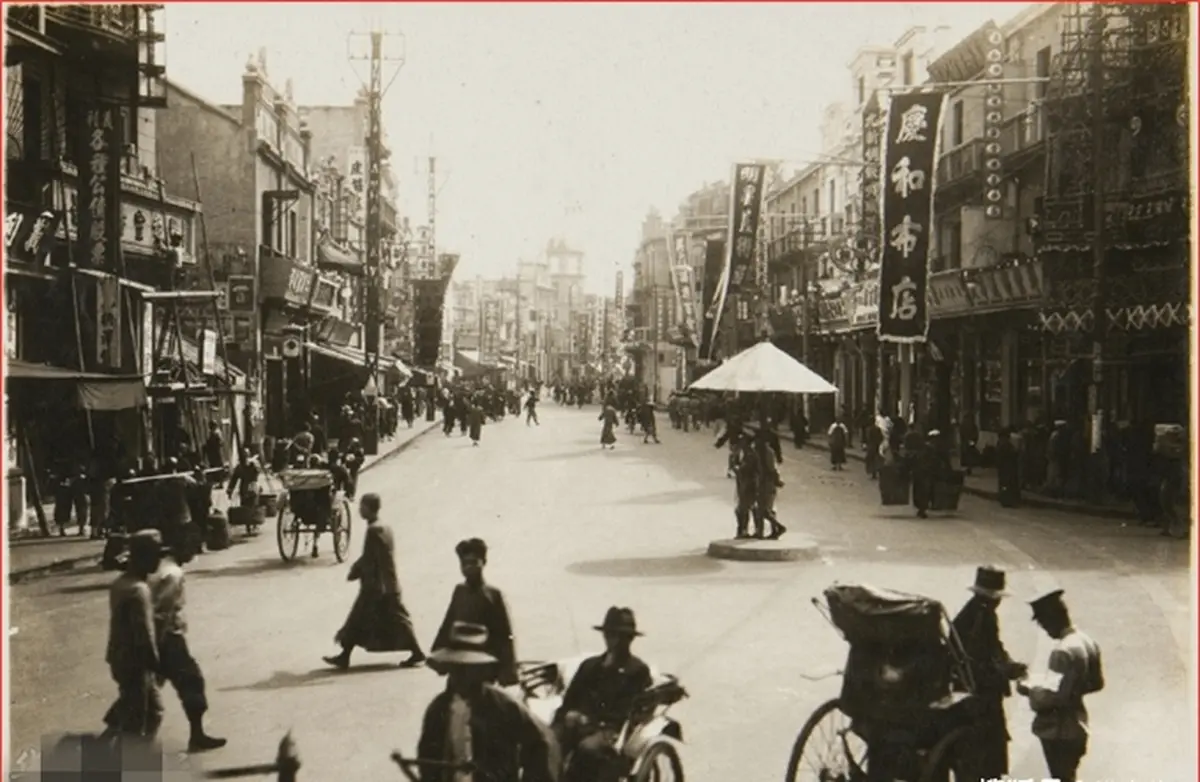
Hankou’s golden age: Jianghan Road in the 1920s, when the city was one of China’s four largest.
From treaty port to shopping district
After 1949, the foreign concessions were gone. The old buildings stayed. The Communist government nationalized the banks, the factories, the trading houses. Hankou became a center of state-owned industry: textile mills, machine factories, food processing plants.
The 1980s brought reform. Hankou’s commercial DNA reawakened. The old streets filled with private shops, then markets, then malls. Jianghan Road became a pedestrian-only shopping street. The Bund, once a playground for foreign merchants, became a public promenade where anyone could walk.
Today, Hankou is still the commercial center of Wuhan. The same river, the same trade routes, the same pragmatic energy. The breakfast stalls open at 5:00 AM, the shops stay open until 10:00 PM, and the pace of life is faster than either Wuchang or Hanyang.
The old Jianghan Customs building still chimes every hour. I can hear it from my shop if the wind is right. It’s been chiming since 1924, through the revolution, the Japanese occupation, the Communist takeover, the reform era, and whatever comes next. Hankou has seen it all. It’s still here, still loud, still making money.
What you can still see today
| Site | What It Is | Era |
|---|---|---|
| Jianghan Customs Building | The old British customs house, still chiming | 1924 |
| Hankou Bund | 12 km of colonial-era riverfront promenade | 1861-1938 |
| Jianghan Road | Pedestrian shopping street with early 20th-century architecture | 1900s-1930s |
| Jiqing Street | Night market on the site of the old commercial district | Rebuilt post-1911 |
| Dazhimen Station | One of China’s oldest railway stations | 1903 |
If you want to understand Hankou, start at the Bund at sunrise. Walk north along the river. You’ll pass the old British, French, German, and Russian concessions in order: each with different architecture, different trees, different feel. Then turn inland at Jianghan Road and follow the shopping crowds. By the time you reach Jiqing Street for night market food, you’ll understand what Hankou has always been: a place where people come to trade.
Hankou is one of Wuhan’s three towns. Read about the other two: Wuchang and Hanyang.
Related:
-
Hankou’s Bund: The European Quarter, the concessions, building by building
-
Wuhan’s Lifang: The Vanishing Alleyways of Old Hankou, the old red-brick alleys where Hankou’s merchants lived
-
The Wuchang Uprising: How Wuhan Ended 2,000 Years of Empire, the revolution that started with a bomb in Hankou
-
Wuhan at War: The Battle That Changed WWII in China, when Hankou was bombed and occupied
-
The River Is the City: Wuhan’s Yangtze Culture, the river that made Hankou rich in the first place
-
Two Rivers, Three Towns, why Wuhan is three cities
-
Wuhan Breakfast Culture: Guo Zao, Hankou’s 5 AM food culture
-
Where to Stay in Wuhan, why Hankou is the best base for visitors to Wuhan
-
Wuhan and the Floods: A City Defined by the Yangtze, the river that made and destroyed Hankou
-
The Tea Port: How Hankou Fueled the World’s Tea Habit, 40 years running as the world’s largest tea export port