
The city behind the towers
If you stand on the Hankou Bund and look inland, you see glass towers. Shopping malls, luxury hotels, apartment buildings 40 stories high. It looks like every other Chinese megacity: shiny, vertical, impersonal.
But if you know where to look (if you turn off Jianghan Road into a side alley, walk 50 meters past a noodle stall and a motorcycle repair shop), you’ll find a wooden gate. Behind it, the city changes. The towers disappear. You’re in a narrow red-brick corridor, maybe three meters wide, with doorways on either side leading into shared courtyards. Laundry hangs between the walls. An old man is sitting on a plastic stool, reading a newspaper. Someone is cooking: the smell of garlic and chili drifts from an open kitchen window.
This is a lifang (里份). It’s Wuhan’s version of a hutong, or a shikumen, or a lilong: the alley-based residential architecture that once defined every Chinese city and now survives in fragments. Hankou had over 200 lifang before 1949. Today, fewer than 30 remain. They’re disappearing at the rate of one or two per year.
I’ve been walking through them for years. Not as a historian, as someone who lives here and watches the city erase itself, one alley at a time.
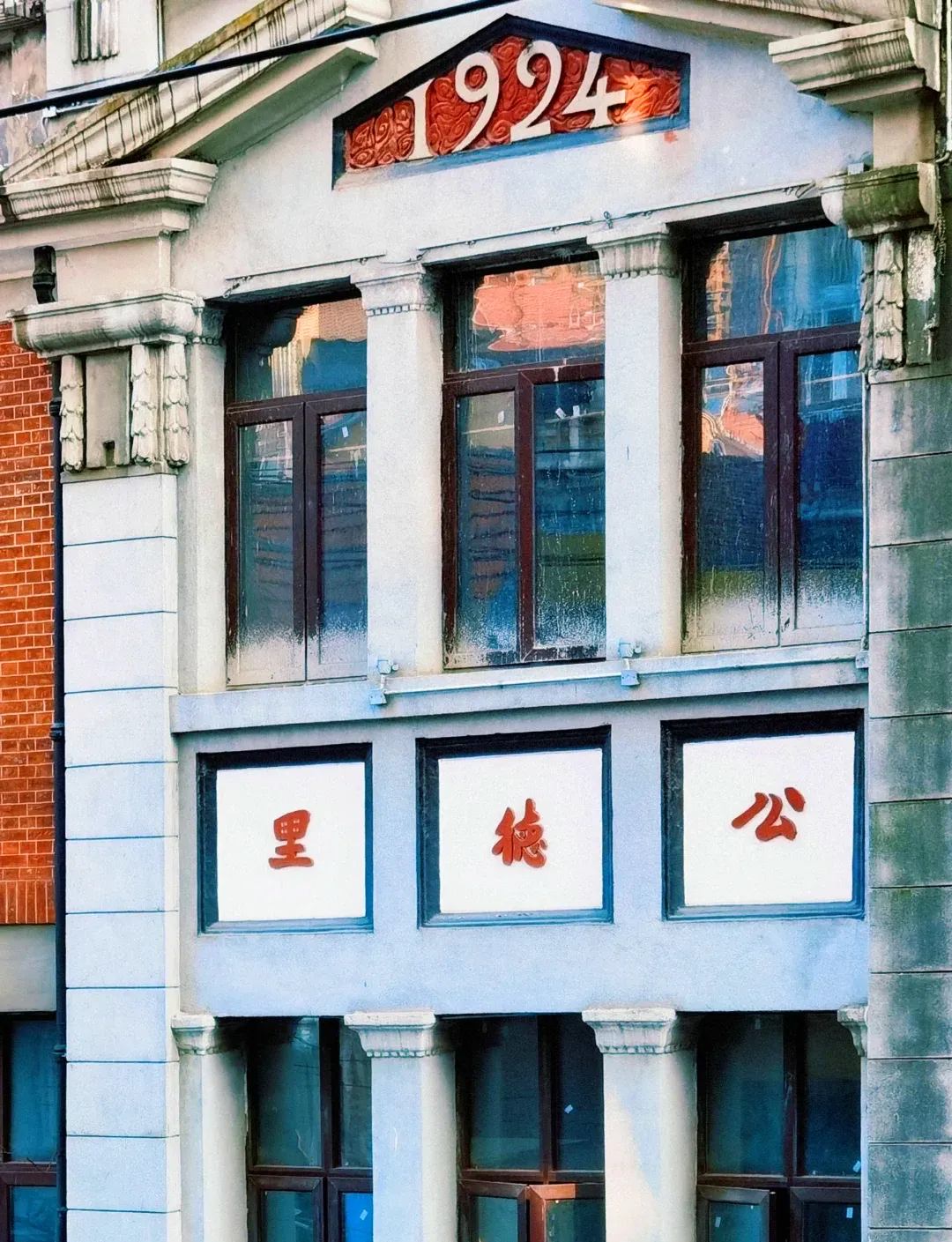
A lifang entrance on a side street in Hankou: step through the gate and the city changes.
What is a lifang?
A lifang is a residential compound. Think of it as a neighborhood compressed into a single block. The basic structure: a gate on the street, a main alley (called the long 巷) running straight back from the gate, and smaller cross-alleys branching off it. Along the alleys, individual houses (usually two-story red-brick row houses) share walls, courtyards, and sometimes kitchens.
The design is a hybrid. The layout comes from European row-house architecture: narrow frontage, deep setback, shared party walls. But the social logic is Chinese: multiple families sharing a courtyard (天井), neighbors who know everything about each other, a community defined by proximity rather than choice. The British built concessions in Hankou in the early 1900s. The lifang is what happened when Chinese builders took the European row-house form and adapted it for Chinese family life.
They were built by merchants. Hankou in the 1910s and 1920s was one of the richest cities in China, the “thoroughfare of nine provinces”, a river port where tea, rice, and cotton moved in staggering volumes. The merchants who made fortunes from trade wanted modern housing: not the old courtyard houses, not the wooden shacks of the working class, but something new. The lifang was the answer: Western-style brick construction, Chinese-style communal living, and a location in the commercial heart of Hankou.
Each lifang had a name. Tongxing Li (同心里) means “Shared Heart Alley,” Wenxing Li (文星里) means “Literary Star Alley,” and Yanqing Li (延庆里) means “Extended Celebration Alley.” The names were poetic, aspirational, and utterly forgotten by the time the demolition crews arrived.
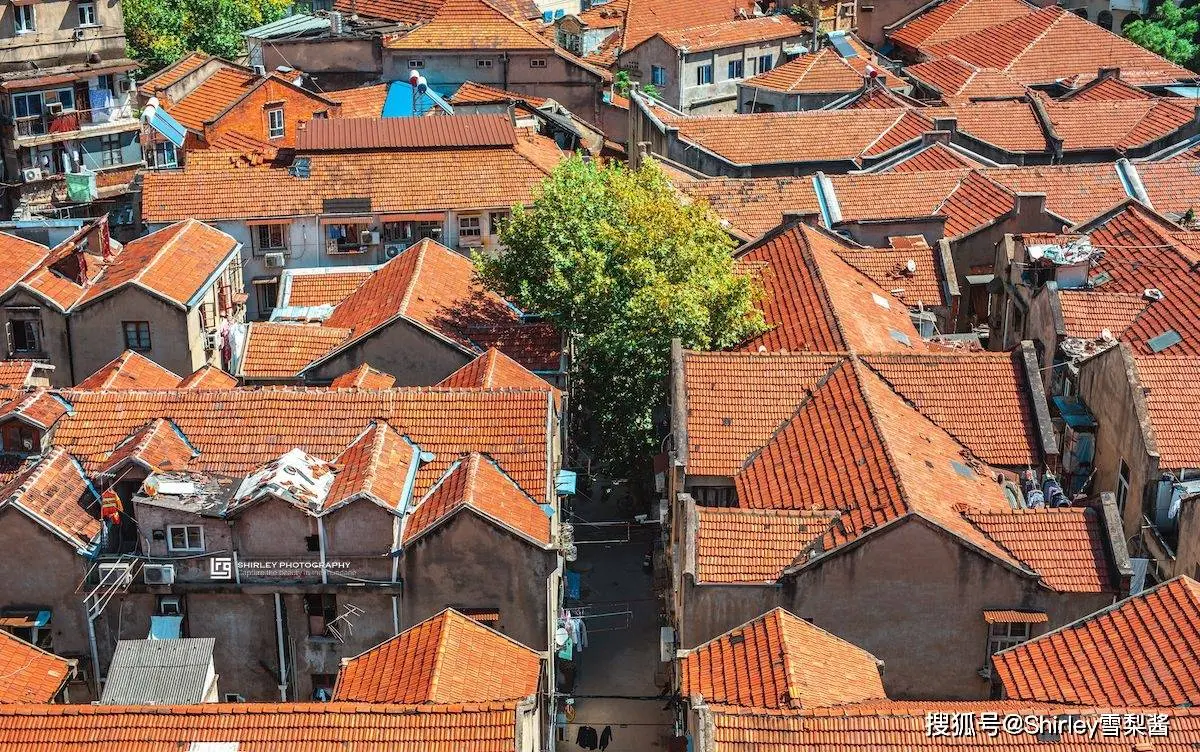
A lifang from above: one gate, one main alley, cross-alleys, and dozens of families sharing the same block.
What it was like to live there
I never lived in a lifang. But I know people who did. My wife’s aunt lived in Yanqing Li until 2008, when the compound was demolished for a shopping center. She described it like this:
“You walked through the gate and you were home. Not your house. Your home. The whole alley was your home. Mrs. Chen on the left, Old Wang on the right, the Zhou family across the courtyard. You knew them. You knew their schedules, their arguments, their cooking. If Mrs. Chen was making dumplings, you’d know by 10 AM because the smell came through the window. If the Zhou kid was getting scolded, you’d hear every word.”
The houses were small: usually 40 to 60 square meters per family. Two stories, with a narrow staircase inside. The ground floor was the living room and kitchen. The second floor was the bedroom. Some houses had a tiny courtyard (three or four square meters of open sky) where you could grow a pot of scallions or hang laundry.
The plumbing was communal. A shared tap in the courtyard. A shared toilet: usually a squat latrine at the end of the alley, cleaned by the city sanitation service. In summer, the concrete radiated heat until midnight. In winter, the wind came through the cracks in the window frames and the only warmth was a coal stove that smoked up the whole room.
Nobody who lived in a lifang would describe it as comfortable. The plumbing was bad and the insulation was worse. Privacy was nonexistent. If you had a fight with your spouse, the entire courtyard knew the details by morning.
But what the lifang had (and what the glass towers that replaced it do not have) was community. Not the abstract, Facebook-Group kind of community. The physical, inescapable, sometimes suffocating kind. You borrowed salt from your neighbor and watched their kids after school. You sat on a stool in the alley in the evening and talked about nothing and everything with people you’d known for 30 years.
When the demolition notices went up, some residents fought. Some accepted the compensation money and moved to modern apartments on the city’s edge, places with private bathrooms and elevators and walls thick enough that you couldn’t hear your neighbors. They were happier with the plumbing. They missed the alley.
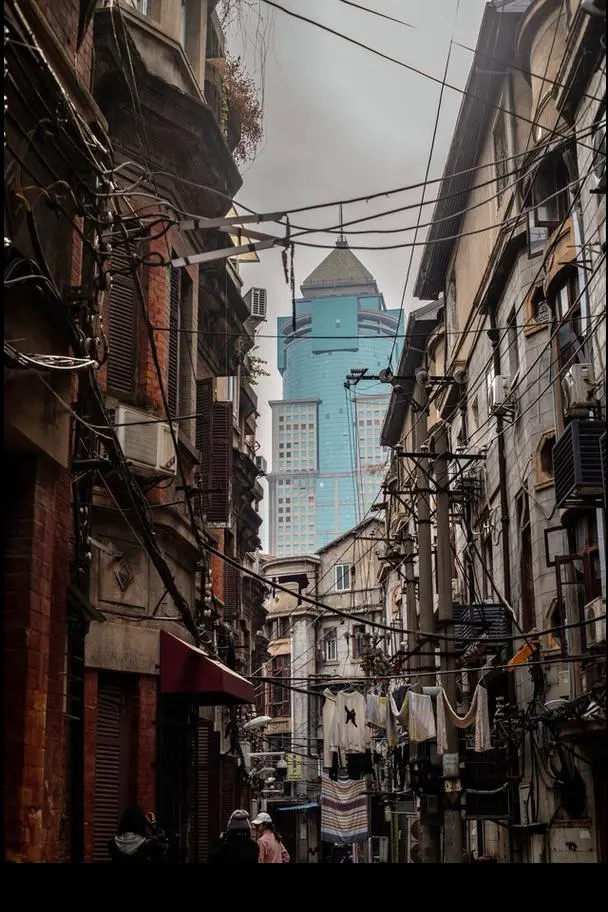
Still alive: laundry, bicycles, and an old man’s newspaper. This lifang hasn’t been demolished yet.
The Disappearance
The numbers tell the story plainly. In 1949, when the People’s Republic was founded, Hankou had over 200 lifang. By 1990, after four decades of urban development, about 110 remained. By 2010, the number was below 50. Today, fewer than 30 are left, and many of those are partially demolished or in advanced disrepair.
The pattern is always the same. A developer identifies a block of old lifang in a desirable location, usually near Jianghan Road, Zhongshan Avenue, or the riverfront. The residents are offered compensation: typically a cash payment or a new apartment in a suburban development. Some accept. Some hold out. The holdouts are eventually removed, through negotiation, pressure, or (in the more aggressive cases) by having their water and electricity cut off.
Then the wrecking crews arrive. The red-brick walls come down in a day. The bricks are carted away. The alley disappears. In its place: a shopping mall, an office tower, or a luxury apartment complex with a name like “Central Park Manor” or “Riverside Garden”, names that have nothing to do with the alleys they replaced.
A few lifang have been preserved, not as living neighborhoods, but as tourist attractions. The most famous is Jianghan Village (江汉村), a cluster of lifang near Jianghan Road that was “renovated” in the 2010s. The exteriors were preserved. The interiors were gutted and converted into cafes, clothing boutiques, and craft beer bars. It’s pretty. It’s Instagrammable. It’s also dead: the residents are gone, replaced by commercial tenants who close at 10 PM. The community that made the lifang a lifang is gone.
I have mixed feelings about the preservation-as-tourism approach. On one hand, it’s better than demolition, because at least the buildings stand. On the other hand, a lifang without residents is a stage set, the architecture without the life. It’s like preserving a theater and removing the actors. You can admire the set design, but the play is over.
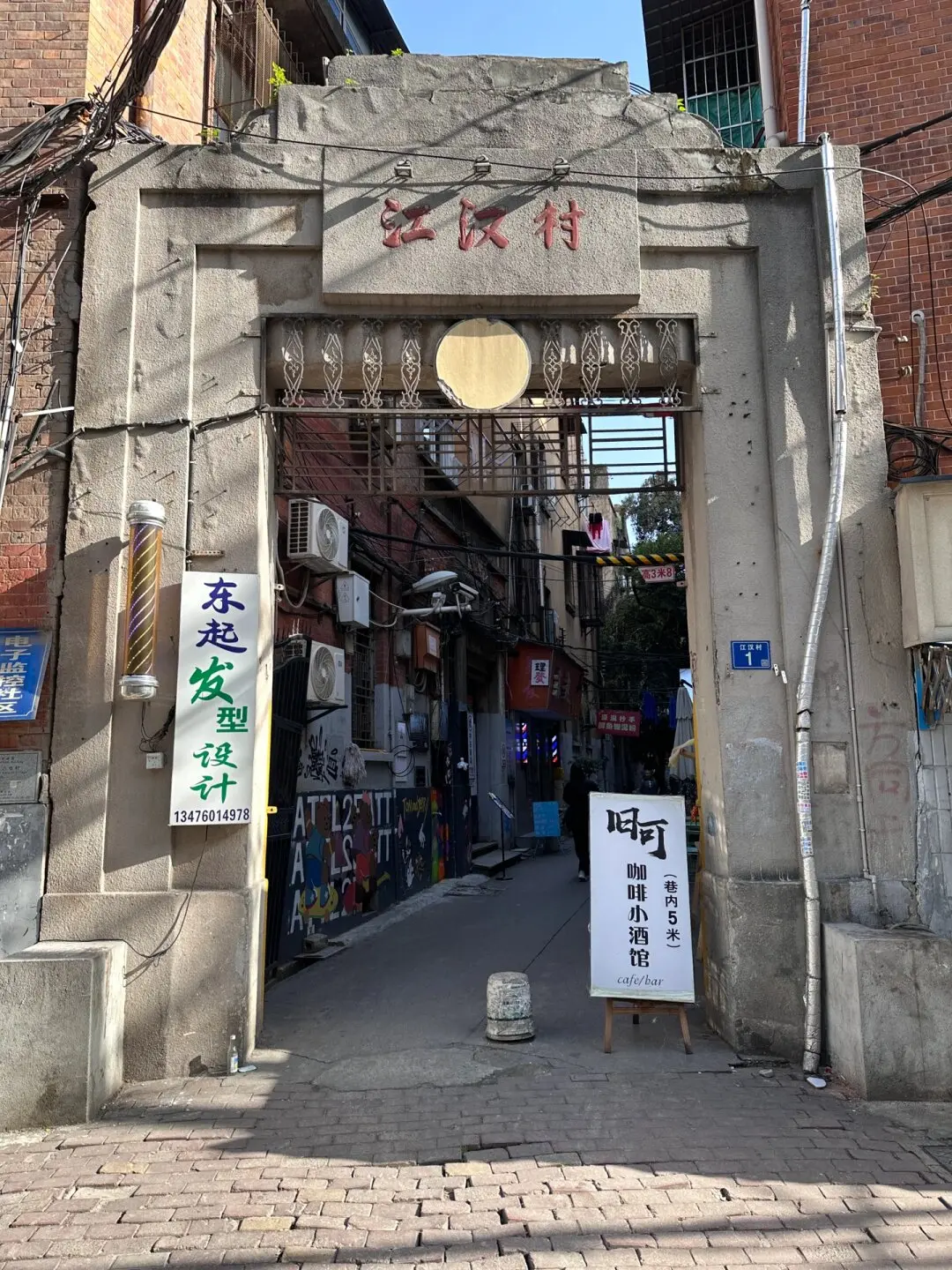
Jianghan Village, the lifang as Instagram backdrop: the bricks are the same, the residents are gone.
The ones that are left
If you want to see a real lifang (one where people still live, where the laundry still hangs, where the old man still reads his newspaper in the alley) you need to go looking. The city doesn’t advertise them. There are no signs, and the tourist maps don’t mark them.
Here’s where I’d send you:
Tongxing Li (同心里): near Zhongshan Avenue and Jianghan Road. This is one of the best-preserved lifang in Hankou. The main alley is about 80 meters long, with cross-alleys on both sides. The brickwork is original, so you can see the maker’s stamps on some of the bricks, dated to the 1920s. About 30 families still live here. Walk through slowly. It’s a neighborhood, not a museum.
Baoli Li (宝润里) is near Dazhi Road. Smaller and less known. The houses here are slightly newer (1930s and 1940s) and the architecture shows it, with Art Deco influences on some of the doorframes. The courtyard at the center still has its communal water tap.
Xianzheng Li (咸安坊) is the controversial one. It was partially demolished for a metro line construction, and the remaining section was renovated. It’s somewhere between “living neighborhood” and “tourist attraction”: some families remain, but the commercial creep is visible. Still worth seeing for the architecture.
Walk through any of these and you’ll notice something: the temperature drops. The brick walls and narrow alleys create a microclimate: cooler in summer, warmer in winter. The noise of the street is muffled. You’re 30 meters from a six-lane avenue, and it feels like a different century.
That’s the lifang experience. Not a museum, not a tourist attraction. A place where people live (for now) in the last remaining fragments of the city that existed before the towers.
Why it matters
I’m not an architectural preservationist. I’m not going to tell you that every old building should be saved, or that the lifang represent some perfect way of life that we should return to. The plumbing was bad. The privacy was nonexistent. The residents who moved to modern apartments are, by most measures, better off.
But I will say this: when the last lifang is gone, Wuhan will have lost something it can’t rebuild. Not just the buildings, though the buildings, with their red-brick walls and arched doorways and stamped bricks from the 1920s, are genuinely beautiful. What will be lost is the texture. The physical evidence that this city had a life before the towers. The alleys where merchants walked home from the river port, where children played tag in the courtyards, where families shared salt and gossip and 30 years of proximity.
You can build a new shopping mall in six months. You can build a new apartment tower in two years. You cannot rebuild a lifang. The bricks are gone and the residents are scattered. The memory of who lived where, and what they cooked, and what they argued about, that memory dies with the alley.
So go see them. Walk through Tongxing Li. Look at the brickwork, smell the cooking, and nod at the old man on the stool. He’s seen a thousand foreigners with cameras. He doesn’t mind. He’s just living his life, in the last alley of a city that used to be full of them.
| Lifang | Location | Status | Best Feature |
|---|---|---|---|
| Tongxing Li | Near Jianghan Road | Living neighborhood | Best-preserved original brickwork |
| Baoli Li | Near Dazhi Road | Living neighborhood | Art Deco doorframes, communal tap |
| Xianzheng Li | Near Jianghan Road | Partially renovated | Mixed-use, half residential half commercial |
| Jianghan Village | Jianghan Road | Fully commercialized | Cafes and boutiques in preserved shells |
The lifang are one face of old Hankou. Read more: Hankou’s 500-year history, the European Bund, and the 1911 Revolution that began in these streets.
Related:
-
Hankou: The River Port That Became China’s Chicago, the city where the merchants who built the lifang made their fortunes
-
Hankou’s Bund: The European Quarter; the colonial architecture next door
-
Wuhan’s Elevated Highways: The Concrete Canopy Over Three Towns the new concrete city, built above the old one
-
Where to Stay in Wuhan, the neighborhood guide, including the old Hankou streets and what to expect there