
The oldest of the three
Wuchang doesn’t announce itself the way Hankou does. There’s no roaring commercial district, no row of colonial bank buildings, no 5 AM breakfast crowd flooding the sidewalks. Wuchang is quieter, older, and more self-assured. It doesn’t need to prove anything to anyone.
It’s 1,800 years old.
While Hankou was still a mudflat and Hanyang was a sleepy county town, Wuchang was already a military fortress, built in 223 AD by Sun Quan (孙权), the ruler of Eastern Wu during the Three Kingdoms period. He needed a stronghold on the middle Yangtze to defend against his rivals to the north. He chose Snake Hill (蛇山), a low ridge overlooking the river, and built a fort on it.
That fort grew into a city. The city grew into a provincial capital. And the provincial capital, 1,688 years later, became the place where the Chinese empire died.
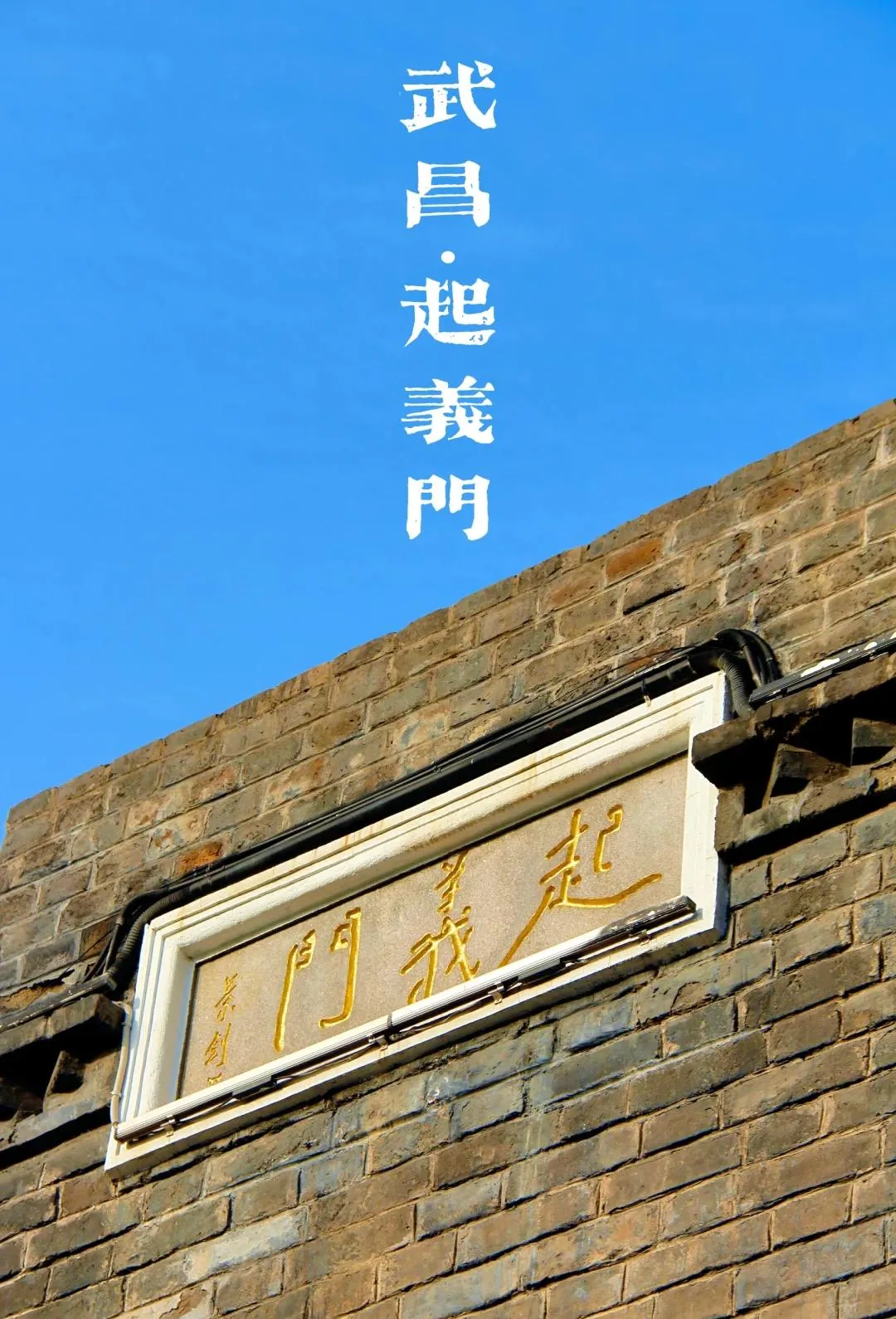
Wuchang from above: 1,800 years of history overlooking the Yangtze.
The name
The name “Wuchang” (武昌) literally means “military prosperity”: a fitting name for a fortress town. But the name has moved around. The original Wuchang was actually located further downstream, near modern Ezhou (鄂州). During the Tang Dynasty, the administrative center shifted to its current location on Snake Hill, and the name came with it.
Sun Quan’s fortress is long gone. But if you stand on the top of Yellow Crane Tower and look down at the Yangtze, you’re standing roughly where his soldiers stood, watching the river for enemy ships. The view has changed. The strategic logic hasn’t: whoever controls this stretch of the Yangtze controls central China.
Tang and Song: the cultural flowering
Wuchang’s military importance made it wealthy, and its wealth attracted poets, scholars, and monks. By the Tang Dynasty (618-907), it had become a cultural center.
The Yellow Crane Tower was the magnet. Originally built in 223 AD as a military watchtower, it was rebuilt as a scenic pavilion during the Tang Dynasty. Poets came specifically to climb it, look at the Yangtze, and write. Li Bai (李白), the greatest poet in Chinese history, visited multiple times. Cui Hao (崔颢) wrote the poem that made the tower immortal: a poem so good that Li Bai reportedly read it and gave up trying to write a better one.
This is the thing about Wuchang: its history isn’t political alone. It’s literary. The city’s identity took shape under generals and governors, and just as much under poets who stood on a hill and wrote about what they saw. That cultural DNA is still here: Wuchang remains the university district, the intellectual side of Wuhan, the side where people read books.
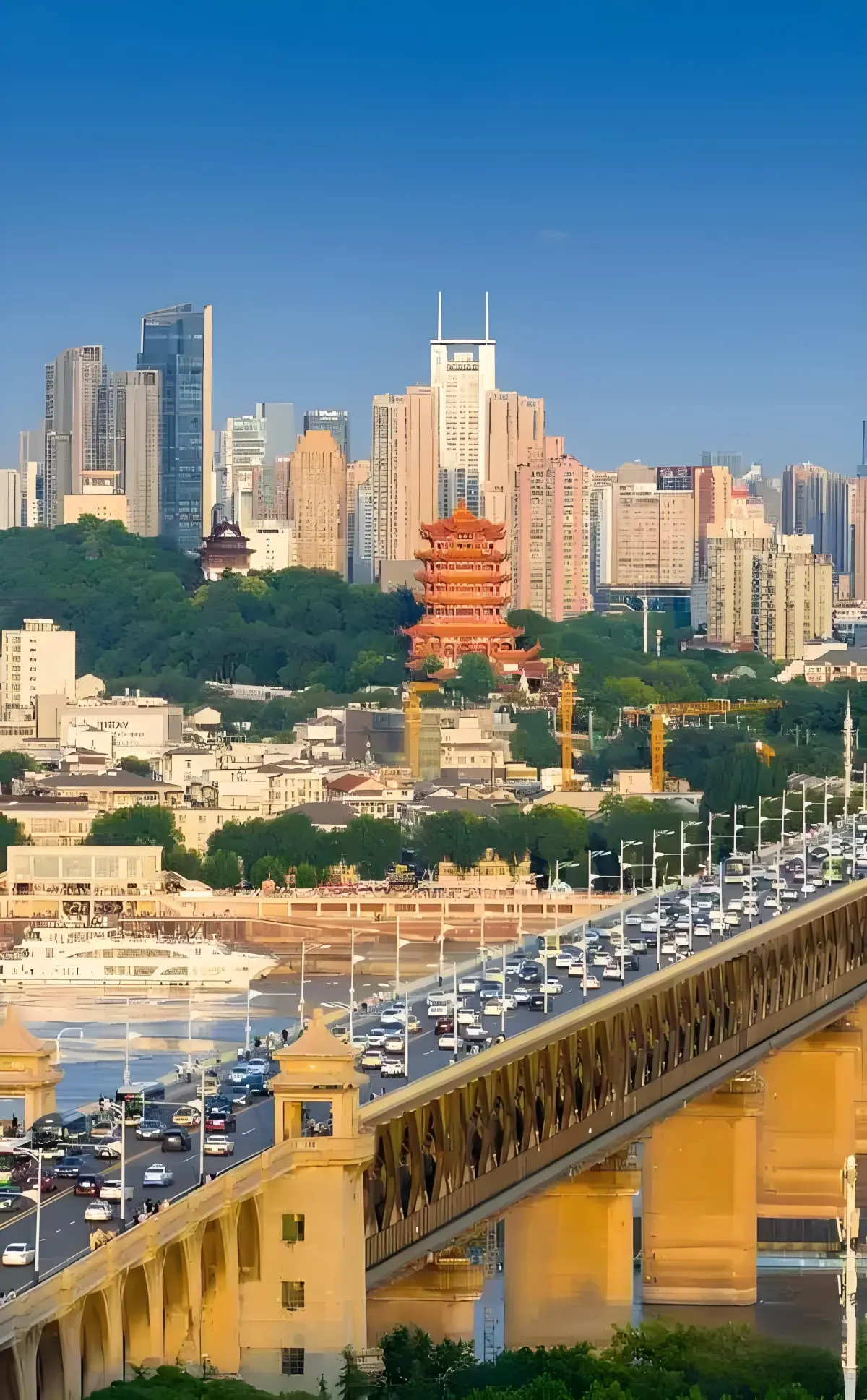
Yellow Crane Tower and the Yangtze: the view that inspired China’s greatest poets.
Ming and Qing: the provincial capital
During the Ming Dynasty (1368-1644), Wuchang became the capital of Huguang Province (湖广省), a vast territory covering modern Hubei and Hunan. It was one of the most important administrative centers in inland China.
The Ming built walls around Wuchang: thick stone walls, 10 kilometers around, with nine gates. Most of them are gone now, demolished in the 1920s and 1930s to make way for modern roads. But one gate survives: Binyang Gate (宾阳门), tucked away in a residential neighborhood. If you know where to look, you can find it. Most people walk past without noticing.
The Qing Dynasty (1644-1912) kept Wuchang as the Hubei provincial capital. The viceroy’s office, the seat of power for all of central China, was here. In the late 19th century, Zhang Zhidong arrived as viceroy and started building. He founded the Hanyang Iron Works across the river, but he also built schools, libraries, and military academies in Wuchang. He was, in his own way, trying to save the empire by modernizing it.
The irony: his modernizations helped kill the empire he served. The military academy he founded trained the officers who would launch the 1911 Revolution.
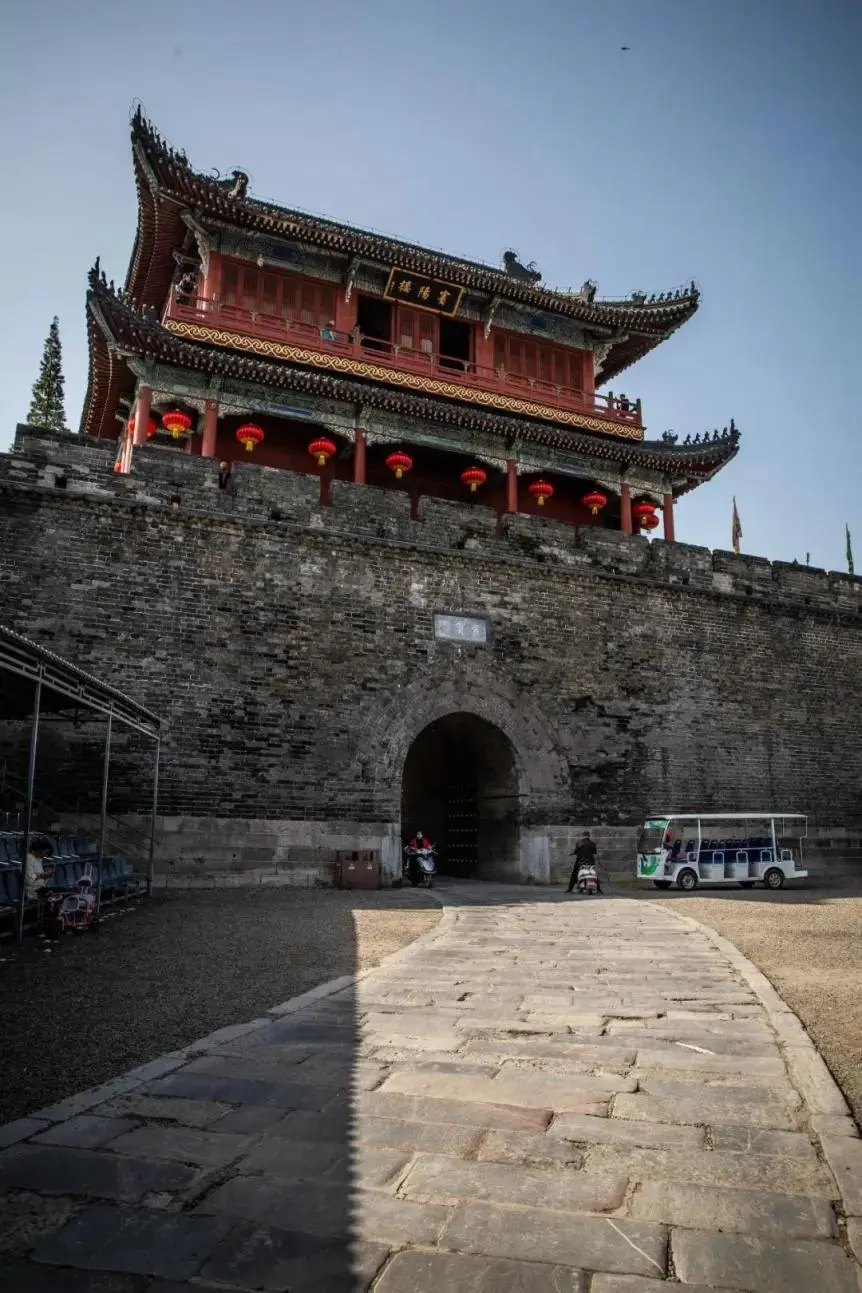
Binyang Gate: the only surviving gate of Wuchang’s Ming Dynasty city wall, hidden in a residential neighborhood.
October 10, 1911: the day everything changed
This is the story that every Chinese student learns. But most foreigners, even those who live in China, have never heard it.
By 1911, the Qing Dynasty was rotting. It had been humiliated by foreign powers for 70 years. The empire was broke, the government was corrupt, and the military was fractured. In Wuchang, a group of revolutionary officers in the New Army (the modernized military force that Zhang Zhidong had helped create) had been secretly planning an uprising.
The plan was set for October 16. But on October 9, a bomb accidentally exploded in a revolutionary bomb-making workshop in the Russian concession in Hankou. The explosion alerted the police, who raided the workshop and found membership lists of the revolutionary organization. The Qing authorities started arresting and executing suspected revolutionaries in Wuchang.
The revolutionaries realized they had hours, not days. On the night of October 10, a group of soldiers from the Engineering Battalion at Baishazhou (白沙洲), on the southern edge of Wuchang, fired the first shots. They seized the ammunition depot. Other revolutionary units joined. By dawn on October 11, they had taken Wuchang.
The uprising wasn’t organized. It wasn’t planned down to the last detail. It was a desperate, chaotic response to being about to be arrested and executed. But it worked. Within two months, 15 provinces had declared independence from the Qing. Within four months, the last emperor of China (a six-year-old boy named Puyi) abdicated. Two thousand years of imperial rule ended because a bomb went off early in Hankou and some soldiers in Wuchang decided not to wait.
The date, October 10, became National Day of the Republic of China (双十节). It’s still celebrated in Taiwan. In mainland China, it’s known as the Wuchang Uprising (武昌起义), and October 10 is commemorated but not as a national holiday.
There’s a memorial on Wuchang Road: the Wuchang Uprising Memorial (武昌起义纪念馆), in the old Red Mansion (红楼) that was the revolutionary government’s first office. It’s quiet, not crowded. When I visited last year, I was the only person there for most of the afternoon.
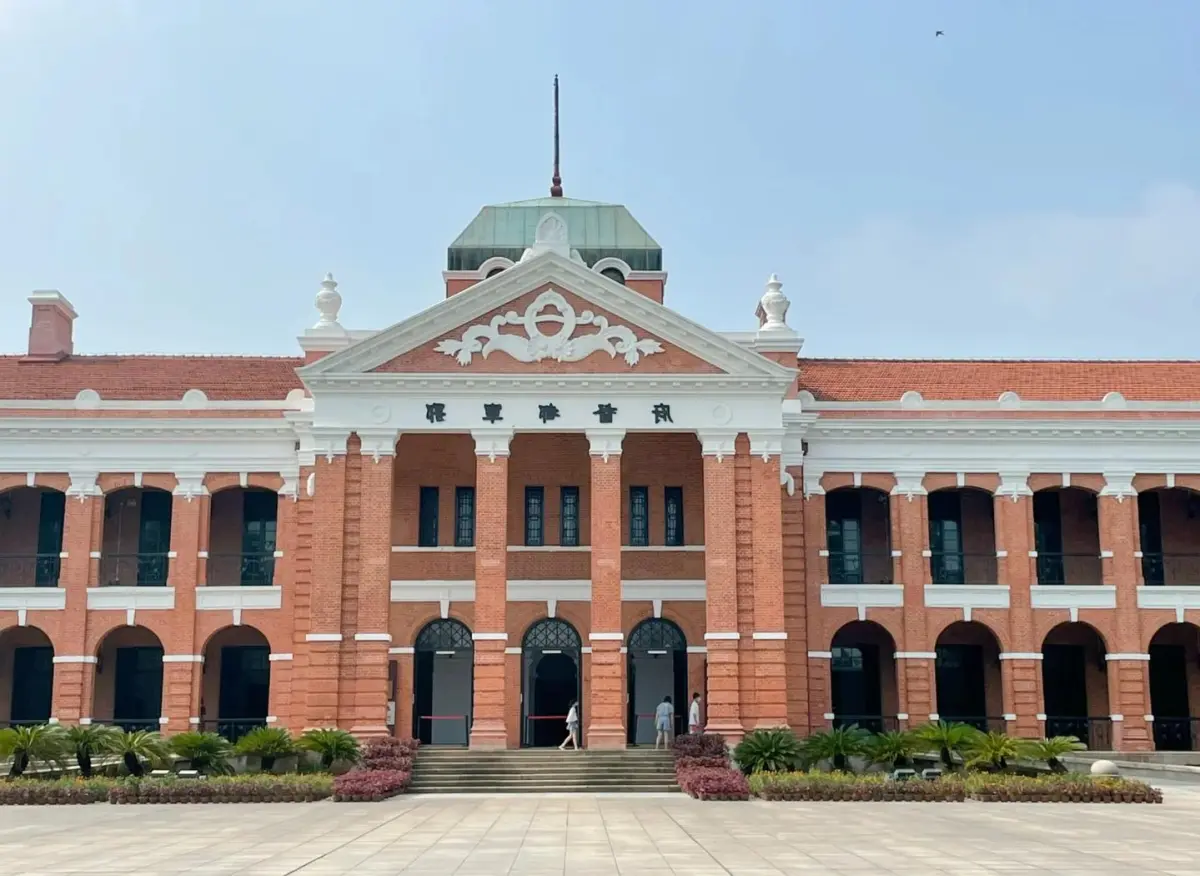
The Red Mansion; Wuchang Uprising Memorial, where the 1911 Revolution began.
The university town
After the revolution, Wuchang’s role shifted. It was no longer a military fortress or an imperial capital. It became an educational center: a role it had been growing into since Zhang Zhidong’s era.
The key moment was 1928, when the National Wuchang Zhongshan University (later reorganized into Wuhan University) was established on Luojia Hill (珞珈山), overlooking East Lake. The campus was designed in the 1930s with a hybrid Chinese-Western architectural style: sloping green-tile roofs on modern concrete buildings. It’s widely considered the most beautiful university campus in China.
Today, Wuchang has more than 10 universities within a 5-kilometer radius. Wuhan University, Huazhong University of Science and Technology, China University of Geosciences, Wuhan University of Technology (where I studied, though I try not to hold that against the place). During the school year, the streets around Guangbutun (光谷) are packed with students on electric bikes, eating at 10-yuan noodle shops, arguing about philosophy at midnight tea houses.
This is Wuchang’s modern identity: the mind of Wuhan. Not the money, that’s Hankou. Not the industry, that was Hanyang. The mind.
The Wuchang Personality
Wuchang people are intellectuals, or at least they think of themselves that way. They’re more interested in history than commerce, and they walk more slowly than Hankou people. They talk in hushed tones. They have opinions about poetry and politics, and they’re not shy about sharing them.
Wuchang people think Hankou is too loud, too fast, too obsessed with money. They have a point. But Hankou people think Wuchang is too slow, too academic, too disconnected from the real world. They also have a point.
The truth is, Wuhan needs both. And the third one, Hanyang, to keep things calm.
What you can still see today
| Site | What It Is | Era |
|---|---|---|
| Yellow Crane Tower | The 1,800-year-old landmark, rebuilt multiple times | 223 AD (current: 1985) |
| Wuchang Uprising Memorial (Red Mansion) | The revolutionary government’s first office | 1911 |
| Binyang Gate | The only surviving gate of Ming-era Wuchang city wall | Ming Dynasty |
| Wuhan University campus | China’s most beautiful campus, 1930s architecture | 1928 |
| Hubei Provincial Museum | 2,400-year-old bells and the Sword of Goujian | Various |
| East Lake | 87 km² of water, the city’s green lung | Natural |
If you want to understand Wuchang, start at Yellow Crane Tower at 8 AM, before the crowds. Look at the Yangtze. Then walk down Snake Hill to the Red Mansion. Then take the metro to Wuhan University and walk through the campus to East Lake. 1,800 years, one afternoon.
Wuchang is just one of Wuhan’s three towns. More: Hankou and Hanyang.
Related:
-
Chu Culture in Wuhan: The Ancient Roots That Still Grow, Chu culture’s roots
-
The Wuchang Uprising: How Wuhan Ended 2,000 Years of Empire, the revolution that began in Wuchang’s streets
-
From Iron to Light: How Wuhan’s Optics Valley Replaced Its Factories, how Wuchang transformed from industrial capital into a modern technology hub
-
The River Is the City: Wuhan’s Yangtze Culture, the river that shaped Wuchang for 1,800 years
-
Two Rivers, Three Towns, why Wuhan is three cities
-
Yellow Crane Tower: Beyond the Poem, the tower that defined Wuchang’s skyline
-
Wuhan University: Cherry Blossoms and China’s Most Beautiful Campus, Wuchang’s modern identity
-
Hubei Provincial Museum, 2,400 years of history in Wuchang