
The thing nobody tells you about Wuhan
Tourists come to Wuhan for the tower, the museum, the noodles. They spend three days here and leave. What they don’t see, because they’re not awake early enough, is the city that belongs to its retirees from 5 AM to 9 AM every morning.
I’m talking about a 65-year-old man doing a handstand walk along the Hankou Riverfront. A group of 40 women doing synchronized fan dance to music played from a Bluetooth speaker strapped to a shopping cart. A man writing calligraphy on the concrete with a brush the size of a mop and a bucket of water. Two grandmothers sitting on upside-down buckets, playing cards with a deck so worn the suits are invisible.
I’m 46. My social life is worse than my 72-year-old neighbor’s. She has a morning exercise group, an afternoon card group, a weekly choir, and a square dance squad that performs at the district cultural festival. I have a phone and a couch.
This is what retirement looks like in Wuhan when it works. And in Wuhan, it mostly works.
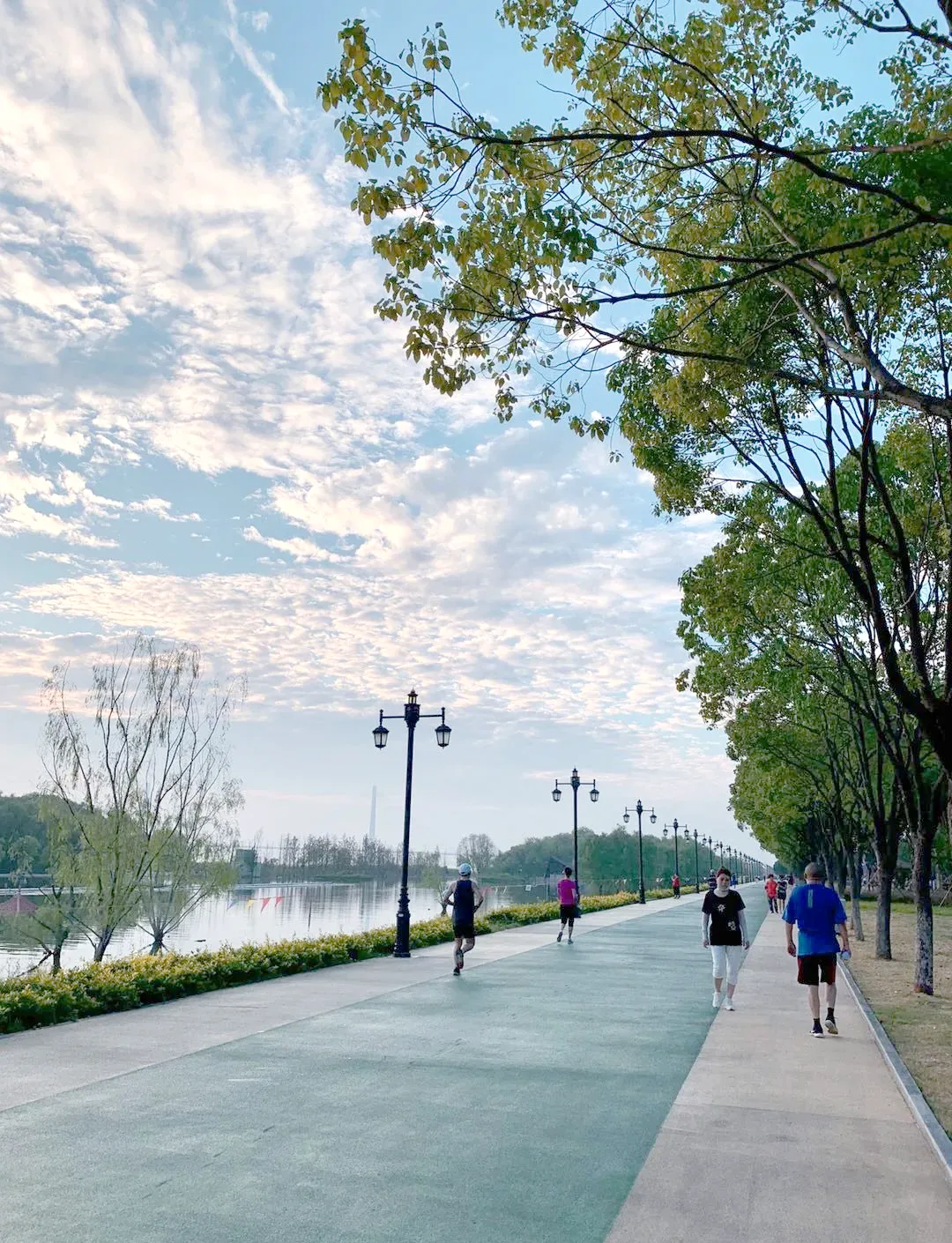
The Hankou Riverfront at dawn. From 5 AM to 9 AM, this 14-kilometer promenade belongs to Wuhan’s retirees.
The morning city (5 AM - 9 AM)
Tai chi on the riverfront
The Hankou Riverfront at 5:30 AM belongs to the elderly. The 14-kilometer promenade along the Yangtze is where retired people gather in informal groups to practice tai chi, qigong, and a form of slow-motion martial arts that I can’t identify but looks like someone swatting invisible flies while walking through honey.
The groups are self-organizing. No instructor, no fee, no sign-up. Someone shows up at the same spot every morning, others join them, and over the years a group forms. The man I see most often is in his late 70s, wears a tracksuit from the 2008 Beijing Olympics, and moves with the fluidity of someone 30 years younger. He arrives at 5:15, practices until 7, chats with his group for 20 minutes, then leaves. Every morning. Rain or shine, though he moves under the bridge approach when it rains.
Where to see it: Hankou Riverfront, between Jianghan Road and Wuhan Customs House. Metro Line 2, Jianghan Road station. Walk south to the river. 5:00-7:00 AM.
The water calligraphers
You’ll see them on any concrete surface large enough to write on. They use brushes the size of broom handles, dipped in water, writing Chinese characters that evaporate in 10-15 minutes. The characters are beautiful. The medium is temporary and the point is the practice, not the product.
I asked one calligrapher, a retired teacher named Mr. Chen, why he didn’t use ink and paper. “Ink costs money,” he said. “Paper costs money. The city gives me concrete and the river gives me water. I write, it dries, I write again. Every morning is a new page.”
Where to see it: any park or riverfront promenade, though Jiefang Park and the Hankou Riverfront are the most reliable. 6:00-8:00 AM.
Bird walkers
This is a Wuhan thing I’ve never seen anywhere else. Retired men carry their pet birds in wooden cages to the park, hang the cages in the trees, and sit on benches while the birds sing. They do this every morning. The birds are thrushes and larks, and the men compare songs, discuss breeding, and occasionally hold impromptu singing contests between their birds.
It’s not a tourist attraction. It’s a social institution. The bird men have known each other for decades. They were work colleagues, or neighbors, or army buddies. Now they’re retired, and the birds are the reason to leave the house every morning.
Where to see it: Jiefang Park (解放公园), under the trees near the south entrance. Metro Line 1/8, Huangpu Road station. 6:00-9:00 AM.
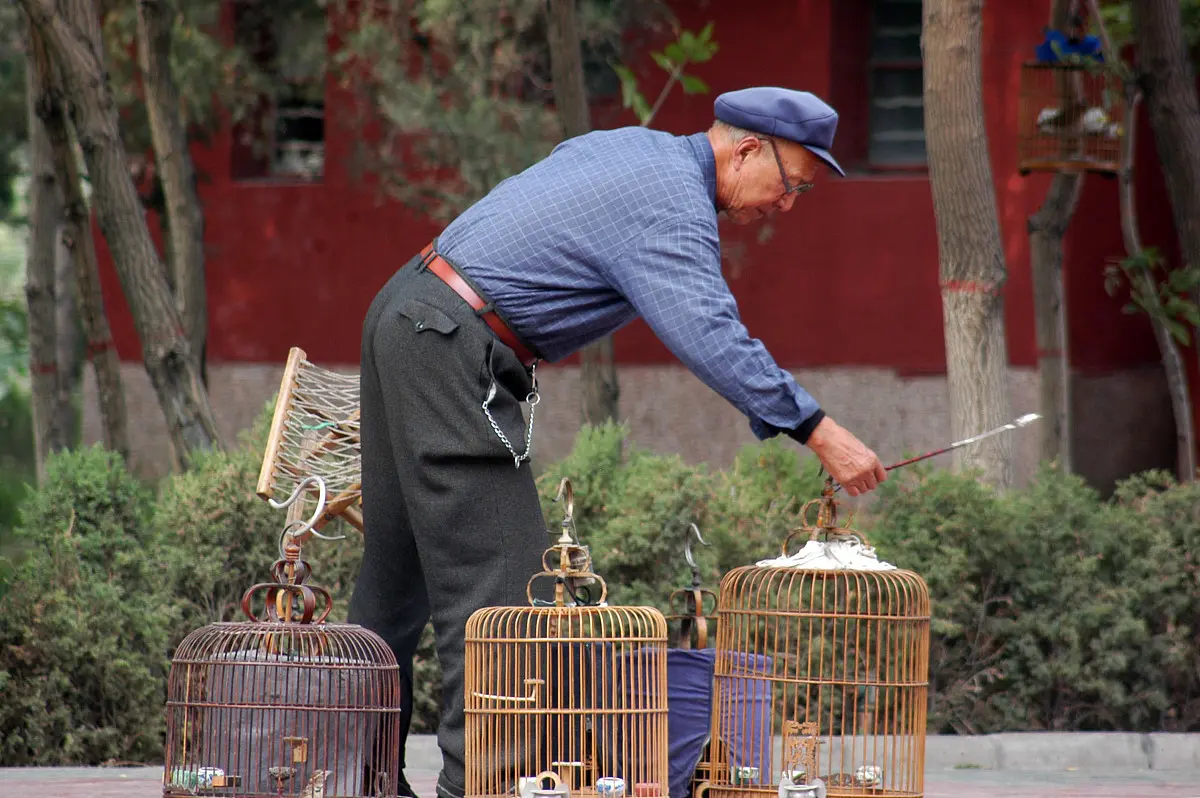
The bird men of Jiefang Park. Every morning, they hang their thrushes and larks in the trees and compare songs.
The afternoon city (1 PM - 5 PM)
The card players
Wuhan retirees play cards the way Wuhan students play video games: seriously, loudly, and for hours. The game of choice is guandan (掼蛋), a four-player partnership game that originated in Jiangsu but has spread across China like a virus. It’s complex enough to be interesting and simple enough that you can learn it in an afternoon.
You’ll find card games in every park, on every sidewalk corner with shade, and in dedicated card rooms that charge 5 yuan for a table and unlimited tea. The players bring their own cards, their own snacks, and folding stools if the park doesn’t have benches. The games run from 1 PM to 5 PM, sometimes later. I’ve seen a game in Shahu Park that’s been meeting at the same table under the same willow tree for 12 years.
Where to see it: Shahu Park (沙湖公园), under the willows on the east shore. Metro Line 2, Shahu station. Any afternoon.
The teahouses
East Lake has several teahouses along its shore. These aren’t tourist attractions. They’re where retired people spend their afternoons. You order a pot of tea for 10-20 yuan, they give you a thermos of hot water, and you sit. For hours. No one rushes you. No one brings a bill until you ask for it.
The East Lake teahouses are the best ones. They’re simple structures with plastic chairs and folding tables, some of them built into the lakeside pavilions that have been there since the 1950s. The tea is nothing special. The view is the point: water, willows, and the slow drift of pedal boats.
I sat at one last Tuesday. The table next to me had four men in their 70s, all retired factory workers from the same Hanyang steel plant. They meet every Tuesday and Thursday. They drink green tea, eat sunflower seeds, argue about football, and occasionally fall asleep in their chairs. The owner doesn’t care, and they’ve been coming for 15 years. They are the teahouse.
Where to go: East Lake Tingtao Scenic Area, follow the path along the north shore. The teahouses are the small structures with people sitting outside. 10-20 yuan per pot. Open 8 AM to 6 PM.
The evening city (6 PM - 9 PM)
Square dancing
At 7 PM, the parks and public squares fill with women in matching outfits, dancing in formation to Chinese pop music played from a portable speaker. This is guangchang wu (广场舞), literally “square dancing,” and it’s the most visible expression of retiree social life in China.
The dancers are mostly women, mostly 55-75 years old, and mostly in groups that have been dancing together for years. They have names. They have uniforms. Some of them have choreography that would put a professional dance troupe to shame. The Hankou Riverfront has at least eight groups along its 14 kilometers, each occupying a section of the promenade, each with its own music, each pretending the others don’t exist.
I tried to join one once. A woman in a red tracksuit looked me up and down, said “you’ll step on people,” and went back to her formation. She was right.
Where to see it: Hankou Riverfront (7-8:30 PM), Hongshan Square (7-9 PM), Jiefang Park (7-8 PM). Any large public space after sunset.
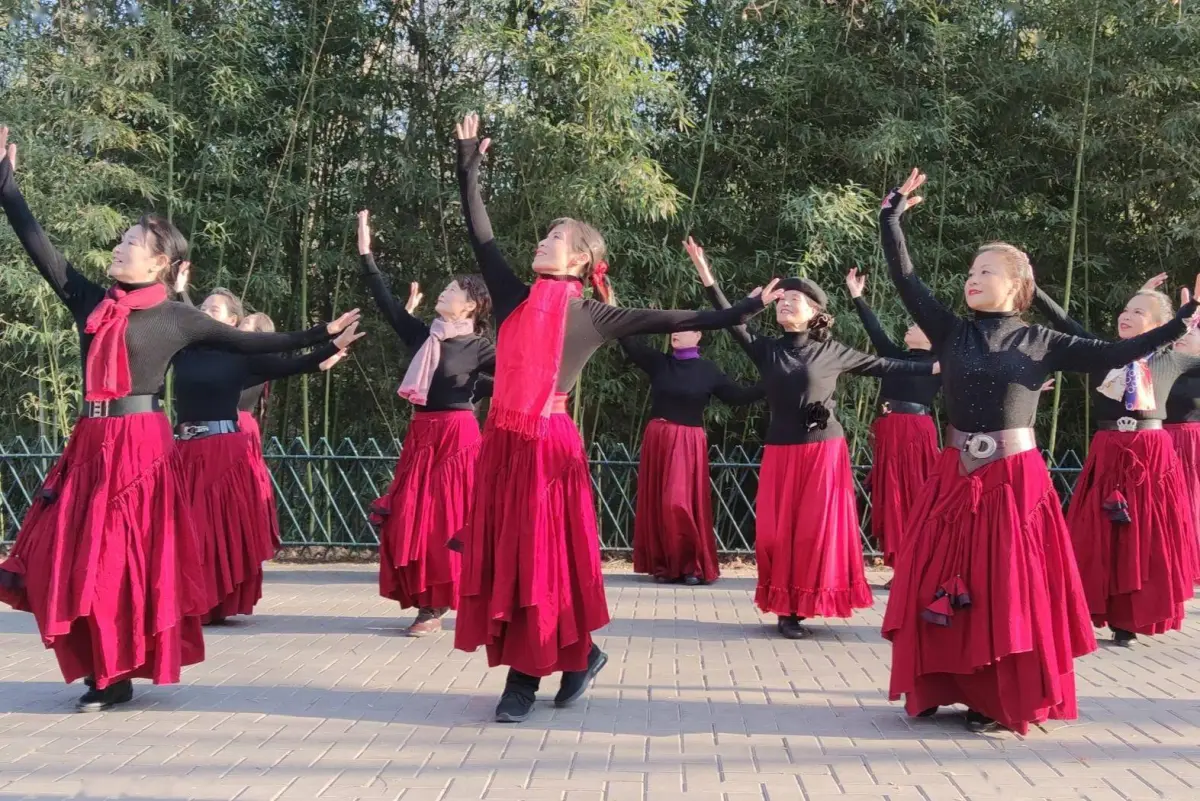
Square dancing on the Hankou Riverfront. Each group claims its section of the promenade, its own music, its own choreography.
The walking groups
After dinner, retired couples walk. Not leisurely strolls. Power walking, often in matching tracksuits, often in groups of 10-20, often with a leader who sets the pace. They walk the riverfront, the park paths, the greenways. They walk fast. They walk seriously. They walk like someone is timing them, and maybe someone is.
This is the Wuhan version of the evening constitutional, and it’s taken with the same seriousness that Germans apply to hiking. The walking groups have routes, schedules, and hierarchy. The fastest walker leads, the slowest walks at the back. Nobody talks. They just walk.
I walk the riverfront most evenings. I am always passed by at least three walking groups, all moving faster than me. I am 46. They are 70.
Why it works here
You can see this kind of retiree culture in every Chinese city. But Wuhan does it better than most, and the reasons are specific.
Wuhan has over 600 parks and green spaces. The 166 lakes mean there’s water and shorelines everywhere, and the city has built walking paths and exercise stations along most of them. There’s a park within 10 minutes’ walk of almost every apartment in the city. Retirees don’t need to travel far to find a place to gather.
The pension matters too. Retired factory workers in Wuhan receive 2,500-4,000 yuan per month. It’s not luxury, but it covers rent, food, and the 10 yuan teahouse habit. Most retirees own their apartments, purchased during the 1990s housing reforms for almost nothing, so the pension covers daily life without being stretched by housing costs.
Then there’s the climate. Wuhan’s summers are brutal and its winters are damp and cold, with no central heating in most apartments. People go outside because the alternative is sitting in a concrete box that’s either 35°C or 8°C. The summer furnace drives everyone to the parks at dawn and dusk, while the winter cold drives them to any sunny bench they can find.
What foreigners get wrong
Westerners sometimes see Chinese retiree culture and project a narrative onto it. “It’s because they have no nursing homes,” they say. “It’s because of the one-child policy, they have no one to care for them.” Both points have truth in them. China’s elder care infrastructure is underdeveloped, and the one-child policy did produce fewer children to support aging parents.
But the people I see on the riverfront every morning are not out there because they have nowhere else to go. The tai chi group has been meeting for 15 years. The card players in Shahu Park have been playing at the same table for 12 years. The teahouse regulars at East Lake have been drinking tea at the same pavilion since they retired.
These people have schedules, social circles, and daily routines built over years. The retiree on the riverfront at 5:30 AM has somewhere to be, and it’s the riverfront. She’ll be there tomorrow too.
See a retiree activity I missed? Email me: I’m always looking for more spots to walk past on my way to being jealous of their social lives.
Related:
-
Wuhan’s Parks: Where 11 Million People Go to Breathe: the parks where retirees gather
-
East Lake: Wuhan’s Green Heart: the teahouses along the shore
-
Wuhan’s Lakes: Why China’s Biggest Lake-City Has More Water Than You Think: the water that shapes the outdoor culture
-
Wuhan in Summer: Surviving the Furnace City: why dawn and dusk are the only outdoor hours
-
The Hankou Bund: The European Quarter: the promenade where the riverfront walks happen
-
Best Time to Visit Wuhan: when the morning culture is most visible
-
Where to Stay in Wuhan: stay near the riverfront to see the morning city
-
Wuhan’s Temples: Where 300 Years of Incense Still Burns: another retiree gathering spot
-
Is Wuhan Safe? A Local’s Honest Guide: the city at night, from a different angle
-
Wuhan’s Year: Festivals and Events Calendar: when retirees perform at cultural festivals
-
76 Days: What the Wuhan Lockdown Actually Looked Like from Inside: the retiree who didn’t come back