
Wuhan has more than 2,000 coffee shops. That figure comes from Meituan’s 2022 coffee report and it put the city in China’s national top ten, and the city government has repeated it often enough that you have probably seen the number without ever knowing what it counts.
Here is what it counts: mostly Luckin.
If you arrive in Wuhan expecting a specialty coffee town, the thing that will surprise you is not the quality. It is that you will struggle to find anything that isn’t a chain. This is a city with one of the densest footprints of Chinese coffee chains in the country, sitting on top of an independent scene that is small, uneven, and slowly being priced out of existence.
That is a more useful thing to tell you than a list of ten shops.
Why the count is misleading
The national picture does the arithmetic for you.
As of March 2024, China had 52,308 chain-operated coffee shops. Of those, the top ten chains control 77% of all coffee shops in the country, and the top three account for most of it between them: Luckin at 35%, Starbucks at 14%, Cotti at 12%.
So when a city reports 2,000 coffee shops, the honest read is that roughly 1,500 of them are the same three companies, and the number tells you about retail property and franchise economics, not about coffee.
Wuhan is unusual only in how well that structure has been filled in. The city is sometimes described as one of the earliest in central China to build a coffee culture at all, which is true and also slightly misleading in the same way. That early adoption happened during the chain expansion, not before it.
The price war built the scene
The reason a mid-sized inland city ended up with a top-ten coffee footprint is that Chinese coffee spent about two years being sold below cost.
The anchor prices were brutal. Luckin at 9.9 yuan. Cotti at 8.8 yuan, with a free cup thrown in for new customers. Mixue at 6 yuan for coffee and ice cream together. A 6-yuan coffee is not a market, it is a customer acquisition cost.
The scale it reached is visible in Luckin’s first quarter of 2025 results. Store count in county-level markets, the smallest towns in China, was up 240% year on year. Average daily sales per store ran to 350 cups.
This is why there is a coffee shop on your street in a city of eleven million people. The economics were designed to make opening one feel free. For a small shop competing at 30 yuan a cup, that is not free.
The war is ending, and that changes your bill
Here is the part most guides have not caught up to.
The International Coffee Organization reported in January 2025 that the global coffee price index was up 75.8% year on year. Green bean costs went up faster than anything on the retail shelf.
And the 9.9-yuan cup has been withdrawn. The coupon now has to be claimed through customer service rather than bought at the till. It is capped at roughly one per week. Luckin has already raised prices in several markets, and the word doing the rounds in the Chinese financial press is that the company is willing to give up the price war to cover bean costs.
What this means for you: do not build a Wuhan trip around a 9.9-yuan latte. If you have read guideposts from 2024 that quote it, those are out of date.
Here is what a chain counter board actually looks like now, read off the menu at a Luckin in Wuhan:
| Drink | Price |
|---|---|
| Drip coffee | ¥3.45 |
| Americano | ¥4.45 |
| Cold brew | ¥4.95 |
| Latte | ¥5.75 |
| Cappuccino | ¥5.75 |
| Flat white | ¥5.95 |
| Coconut or Yakult latte | ¥6.45 |
| Matcha latte | ¥6.45 |
| Any of the four frappes | ¥6.75 |
Espresso shots add 0.8, flavour syrups 0.8, and swapping to alternative milk 0.7. There is a members-only deal that puts selected drinks at 6.45, but the standard board has nothing on it above 6.75.
Not one drink is 9.9. The most expensive thing on that board is a mango cloud frappe at 6.75, and the plainest possible cup of drip coffee is 3.45.
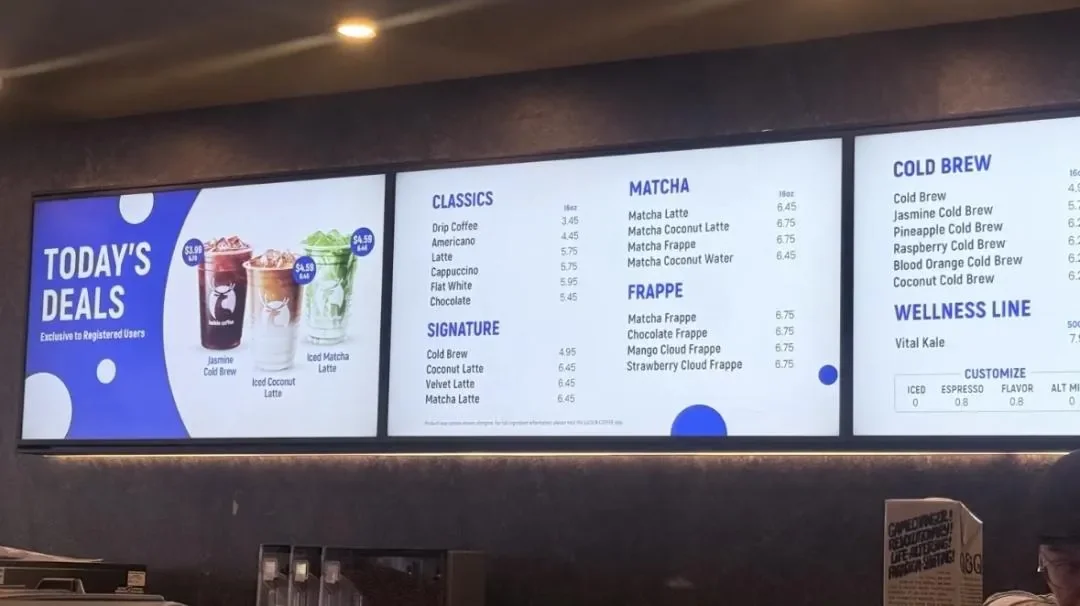
The useful comparison is that a flat white here costs the same as in Shanghai or Shenzhen at the same chain. The coffee is not cheap in Wuhan. It is ordinary.
The floor price at the good independents is unchanged and has not moved much, because it was never part of the war.
Do the numbers work out per person?
Run the division and the scene gets smaller.
China’s per capita coffee consumption in 2023 was 16.74 cups for the whole year, up from 9 cups in 2016. That is roughly two cups a month for the average person.
For contrast, Shanghai has 9,553 shops, 6.1% of the national total, and per capita takeaway coffee of 6.5 cups. Shanghai is the reference city for a mature Chinese coffee market and it is not a particularly intense one by international standards.
Wuhan has around 2,000 shops for a population of about 11.7 million. That works out to roughly one shop per 5,900 people.
The honest summary of this section is that Wuhan has an unusually dense supply chain and a very ordinary level of demand. The density is a distribution achievement. Do not read it as a coffee town.
What the independent shops are actually like
They exist. They are worth finding, and they sit in two quite different kinds of place, and the reason is rent.
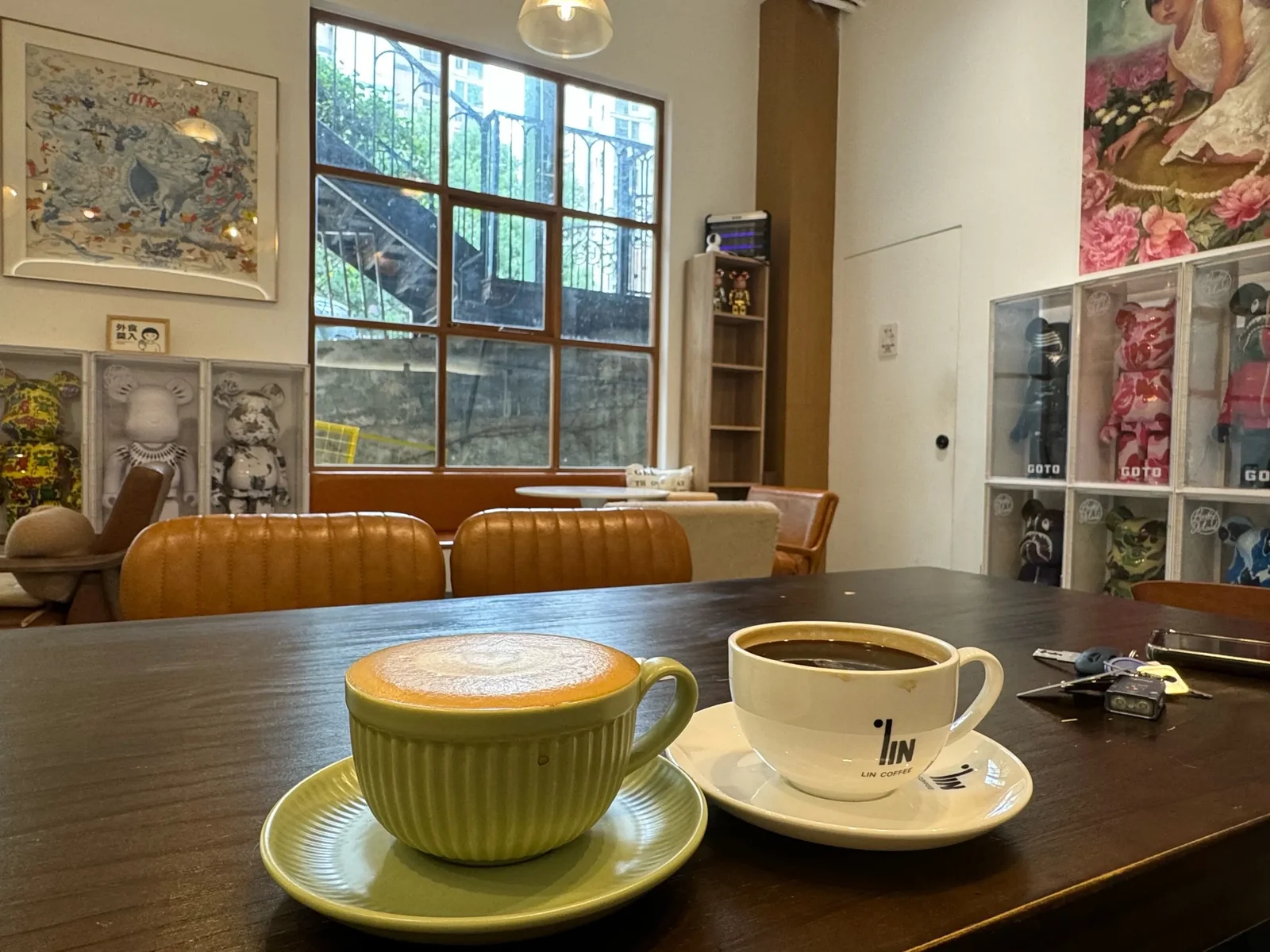
The concession-district ones are in the renovated 1920s buildings along the riverside in Hankou, where the cheap rent and the tourist footfall make an independent room viable. I have covered that geography properly in my guide to the bars and craft beer on those streets, and the same blocks work for coffee in the afternoon.
The old-town ones are the opposite problem. 昙华林 in Wuchang has been gentrifying for fifteen years, and the small rooms there charge what the neighbourhood has become worth. You are paying for the walls.
Prices in that tier run high. One well-reviewed independent in 积玉桥 by the Wuchang riverfront, 不正咖啡, sits around 65 yuan a head on current listings, which is more than six times the old chain price. The same listings carry a complaint worth repeating: that Wuhan’s specialty coffee often charges specialty prices for pour-over that is not very good.
That is the honest failure mode. Wuhan is not a coffee town, and it is not a coffee scam either. It is a strong retail market with a thin specialty layer on top, where you will find genuinely good cups if you know where to look and you will also find expensive mediocre ones.
The crossover with breakfast
A handful of the newer independents have tried to take the breakfast format and westernise it. Serve doupi, or the full guozao (过早) spread, alongside a flat white and call it brunch. I have already made the point in my breakfast guide that this does not work, and having now looked at the coffee side of it I would put it more strongly: the attempt is a mistake twice over.
It charges you breakfast prices for coffee prices, and it puts you in a room built for a thirty minute meal. The thing you actually came for, a bowl of reganmian (热干面) that costs five yuan, happens on a pavement outside at half past five in the morning.
Eat the breakfast where the breakfast is. Drink the coffee somewhere that is trying to be a coffee shop.
How to actually order, and what to ask for
If you walk into an independent and want the local experience rather than a flat white, ask for what the room was opened to serve.
手冲 (shouchong) is hand pour-over. This is where you find out whether the room is worth it, and where the complaint above comes from. A good shop will talk you through the bean and the water, and a bad one hands you a cup and does not blink.
Dirty is the local order and it is not on any English menu. Espresso with a cold splash of cold brew in the same glass. It is sweet, strong, cheap, and it is what the person at the counter drinks when they are working, not customers. Order one and you will be treated like a regular for the rest of your visit.
At a chain, order the small format instead. The large is the default at checkout and you will overpay for milk.
What I would skip
Skip building an afternoon around coffee the way you would in Shanghai or Shenzhen. Wuhan’s coffee is a good cheap thing, not a destination. Two cups is plenty and the rest of the day is better spent on breakfast, which this city does considerably better than coffee.
Skip the guideposts quoting 9.9 yuan. They were written during the war and the war is over.
Skip assuming a high rating means good beans. The listings here rate atmosphere at 4.5 and service at 4.5 with the same enthusiasm, which tells you what those platforms actually measure.
And if you are only here for a week and have to choose between this and the milk tea scene, which runs four yuan a cup and has not lost a single percent of its price war, then the answer is not close.
The honest summary
The 2,000 number is real and it is not what it looks like. Roughly three quarters of China’s coffee is three companies, Wuhan has an unusually dense version of that, and the 9.9-yuan anchor that made the whole thing feel cheap is being withdrawn as bean costs rise 75.8%.
Per capita, Wuhan drinks 16.7 cups a year. That is not a coffee culture. That is a well-supplied city where coffee has become a cheap daily habit and little else.
The independents are where the actual coffee is. They sit in the concession blocks along the river and in the old town west of Wuchang, they charge 60-odd yuan, and some of them are excellent. Look for the hand pour-over and order a dirty. Skip the brunch rooms and skip the 9.9 guides.
The breakfast is the thing this city does better, and it costs a fifth of the price and starts three times earlier in the day.