
You order hot pot in Wuhan expecting a particular thing. Red oil, Sichuan pepper, a cloud of steam, a table covered in thin-sliced beef and pale sheets of tripe, and a mild structural risk to your evening.
You will get that. It is on the menu, and half the restaurants on Hong Kong Road are Chongqing operations. It is also the version most guides hand to visitors without telling them it is an import.
Wuhan has its own hot pot. It runs on a completely different fat base, it tastes nothing like the Chongqing original, and in winter half of it is not spicy at all. This is what the local version actually is, and what three specific things about it confuse visitors.
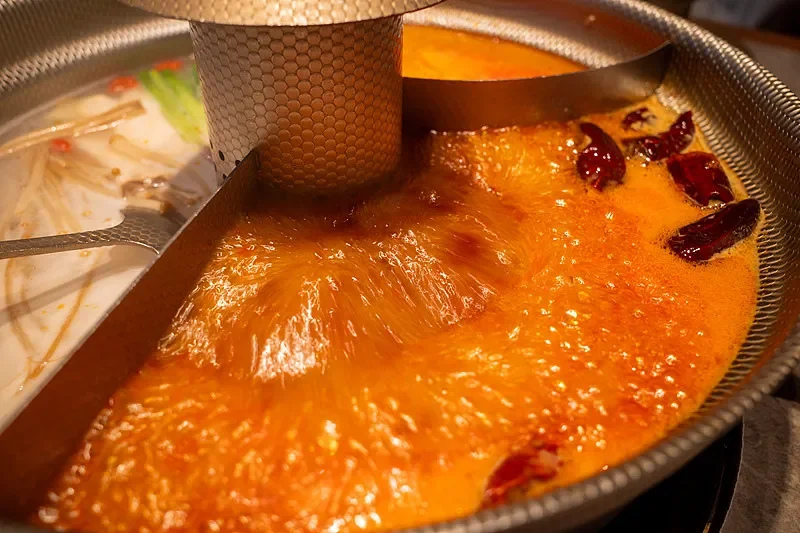
The base is the whole story
If you understand one thing about Wuhan hot pot, make it the base.
Chongqing hot pot is built on 牛油, beef tallow. It is hand-chopped, hand-fried, and it arrives as a thick red layer that coats everything you lift out of the pot. That fat is the delivery system for the whole flavour, and it is also the reason Chongqing hot pot clings to your clothes. Local descriptions use phrases like 辣而不燥 and 麻而不涩, spicy without burning and numbing without astringency.
The Wuhan local version is built on 清油, clear oil. Same architecture, completely different result. The pot does not get the heavy film. The aromatics come through cleaner, and what you taste is the ingredient rather than the broth.
This is not a knock-off and it is not a compromise. Wuhan calls it 汉派火锅, Han-school hot pot, and it is treated as a legitimate regional category rather than a knock-down version of somebody else’s dish. The city government promotes Han-school cuisine as an export category, there is an official Han-cuisine promoter competition, and it was part of what Wuhan sent to Paris for Chinese New Year.
The useful comparison I can give you: Chongqing hot pot in Wuhan is often toned down on purpose. Local restaurants running Chongqing-style explicitly adjust the heat range to what Wuhan diners want. Even in a Chongqing room, you are eating a Wuhan interpretation of it.
Which kills a claim I have seen repeated, including in my own writing elsewhere on this site: Wuhan hot pot is not milder than Chongqing. It is different. A 清油 pot can be properly spicy. What changes is the fat carrying it, and that changes everything about how it lands.
The winter version has no chili in it
Here is the thing almost nobody tells visitors, and it is the reason Wuhan hot pot is a winter food here rather than a year-round one.
Wuhan’s paigu outang (排骨藕汤), pork rib and lotus root soup, took a public vote for the city’s top ten famous dishes in late 2024, with more than 140,000 votes cast. That makes it one of the most decisively chosen dishes in the city, and in cold months it is what people actually reach for.
It is not a spicy dish and nobody would order it as hot pot. But a pot of it, with ribs and lotus root simmering at the table, is hot pot in Wuhan in the plain sense of a shared pot of food kept boiling through a cold evening. Locals put the two in the same mental category.
The craft is entirely in the broth and the vessel. Hubei cooks 煨, a slow simmer, in a 铫子, a clay pot whose inner wall has micro-pores that absorb oil. That is why the result is described as rich but not greasy. Good kitchens run it for close to eight hours. The lotus root is a powdery variety from Honghu and the ribs come from black pork. It arrives on a block of wax that keeps it bubbling at the table, and as it cools a thin film forms on the surface, which people call a paper coat. Served properly the lotus root breaks into long strands. I have written about this dish properly on its own, because it deserves the space and because it is the reason the winter hot pot season here means something different.
That season runs December through February. That is the window when the sidewalk tables that hold crayfish pots all summer get converted, and when the riverside spots fill up from about six in the evening until well after midnight. You can see the seasonal swap happening around the city in my crayfish piece, since crayfish and hot pot compete for exactly the same tables.
Malatang is not hot pot
This one comes up constantly, including from people who speak decent Mandarin, so it deserves stating plainly.
麻辣烫 (màlàtàng) and 火锅 (huǒguō) are mechanically different foods.
In hot pot, raw ingredients arrive at the table and you cook them yourself in a pot that stays on a flame for as long as the meal lasts. The cooking is part of the meal.
In malatang, the vendor has already cooked everything. You stand in front of the counter, hand over your bowl, they fill it with cooked ingredients in a seasoned broth, you add your own sesame, chilli oil and vinegar, and then you eat it standing up or sitting on a plastic stool.
There is no flame at the table and no waiting for anything to cook. You are handed a bowl and you leave.
The origins lean the same way. Malatang came out of Sichuan as a stripped-down street relative of spicy hot pot, traditionally attributed to boatmen and porters who needed something portable. That origin is one reason it spreads fast anywhere people are moving. Wuhan sits between the Sichuan version and the Fushun-style northern version, and both styles exist here with their own regulars.
In Wuhan this is not a side note. Malatang is a genuine local fixation, and the recent direction of travel is hot pot shops converting to malatang, because a takeaway bowl needs a fraction of the floor space and turns tables faster.
So when someone in Wuhan recommends malatang to you, they are recommending a different meal, not an alternative spelling of the same one. It is also cheaper, faster, and much easier to eat alone.
Where to actually go
Hong Kong Road (香港路) in Jianghan, Hankou, is the street people name when they ask about hot pot. It is a Chongqing-leaning stretch, with 羊大爷涮肉 and 香宫季海鲜牛肉火锅 both running locations on it, plus 川妹火锅, which has been a fixture long enough that a 2018 piece described it as keeping the city warm through winter. The windows fog and the tables stay full into the small hours.
For Han-school specifically, you need to look further out from the tourist corridors. A place I would point you toward is 弯弯香火锅 in Houhu, which is run as a 汉派火锅 and worth the trip out of the centre for that reason alone. This is a category where the neighbourhood shop beats the famous address, which is the opposite of most Wuhan food.
The reason is freshness of the base rather than skill of the cook. A 清油 pot has nowhere to hide, so the base has to be made properly and cannot be stretched the way a heavy tallow base can. When a restaurant gets lazy you taste it at once.
Time of night matters more than the shop. The late slot after eleven is when the room becomes a 宵夜 crowd. That whole after-midnight eating culture is documented separately in my winter survival piece, and it is the version locals actually live.
Ordering, phrased for a foreign speaker
Ask for 鸳鸯锅 and you will get a divided pot, spicy on one side and clear on the other. It is the default answer when a group cannot agree, and it is also the move that lets a table share both worlds.
Say 清油锅底 for the clear oil base if you want the local style rather than the imported one. Servers will know what you mean.
Order 藕汤锅 for the lotus root version in cold months, and give it time.
If you want the raw meat and offal ritual that everyone pictures when they hear hot pot, ask for 毛肚 and 鸭肠. That style of ordering is codified in Chongqing, and Wuhan serves it, but understanding where it comes from makes it easier to tell whether a restaurant is good or just expensive.
What I would skip
Skip the 串串 confusion while you are at it. 串串香 is skewers on a stick cooked in a pot, closer to a street format than to a hot pot meal. If someone sells you 串串 as hot pot, you have been handed the cheaper cousin.
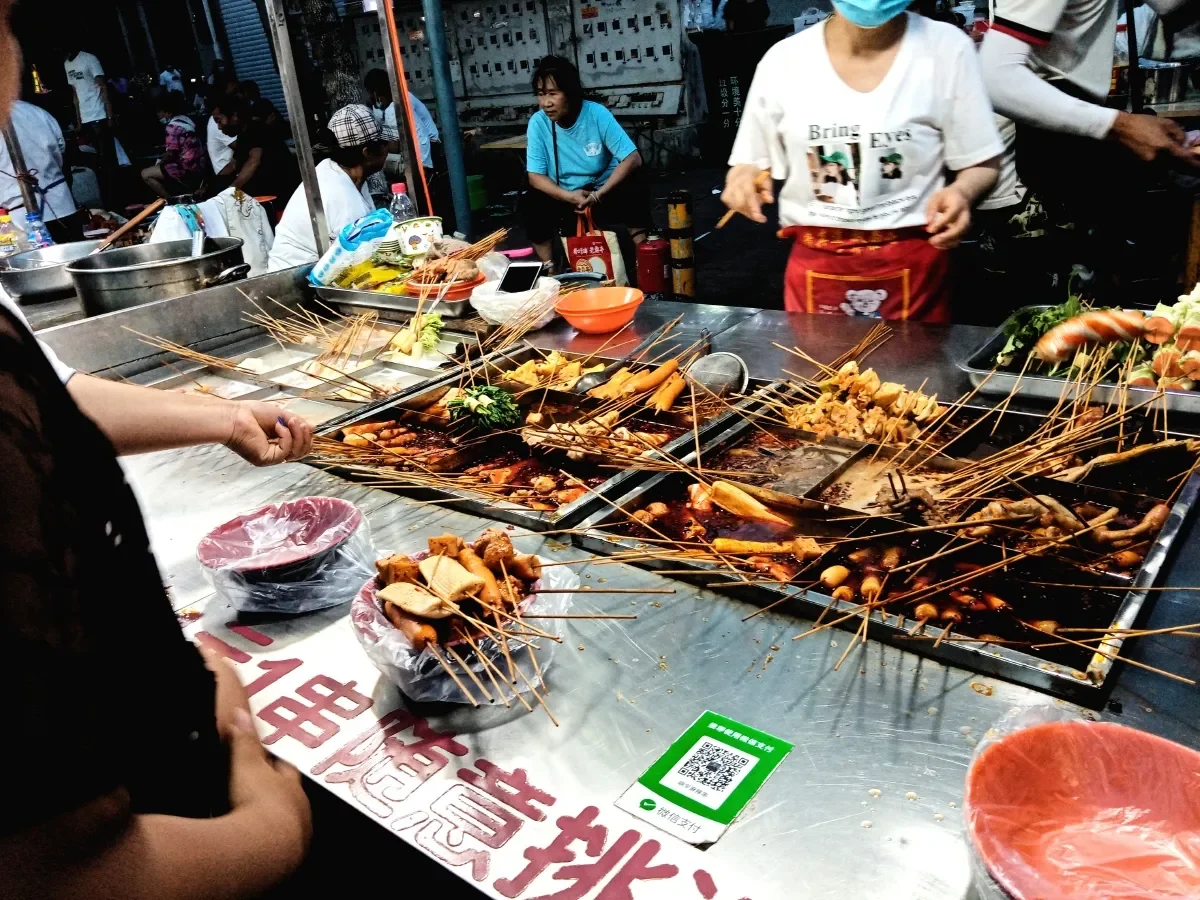
Skip any place near Jianghan Road with a laminated English menu showing a Chongqing-style split pot. Those exist to sell visitors the version they already know about, which is fine as a meal and a waste of an evening when Han-school rooms are the thing you came for.
And skip ordering hot pot in October expecting it to be the main event. In this city October belongs to crayfish, and the switch to hot pot is a late-November thing. If it is warm enough to sit outside, eat the crawfish. I have covered the seasonal argument in more depth in the best time to visit.
The Honest Summary
Wuhan hot pot is not Chongqing hot pot and not a faded version of it. The base is clear oil instead of beef tallow, the winter form is a lotus root and rib soup that has no chilli in it at all, and the season runs December to February rather than all year.
If you walk into a 清油 pot expecting the numbing burn and find it too gentle, you have probably been sold the imported version. Ask for 汉派 by name and the room changes.
Give the lotus root soup eight hours of somebody’s attention and then eat it at the table at midnight with the steam still coming off it. That is the version I would put in front of a visitor, and it is the one that has no equivalent anywhere else.