
The tallest building in Wuhan is 475 metres tall. It was supposed to be 636.
That single number is the most useful thing I can tell anyone who comes here expecting a Shanghai or Chongqing style skyline, so I will start there and work outward. Along the way there is a second tower at 438 metres that has been standing as an empty concrete shell since 2015, and a third at 339 metres that is a shopping mall and full of people. All three facts are true at the same time, and they are the reason Wuhan looks the way it does from a distance.
I have watched the skyline change shape from the same ferry crossing for years, and I wrote about that ride separately. The short version is that you get both halves of the city at once from the water, which no observation deck can manage. If you only have one evening here, take the ferry. This post is about the buildings themselves.
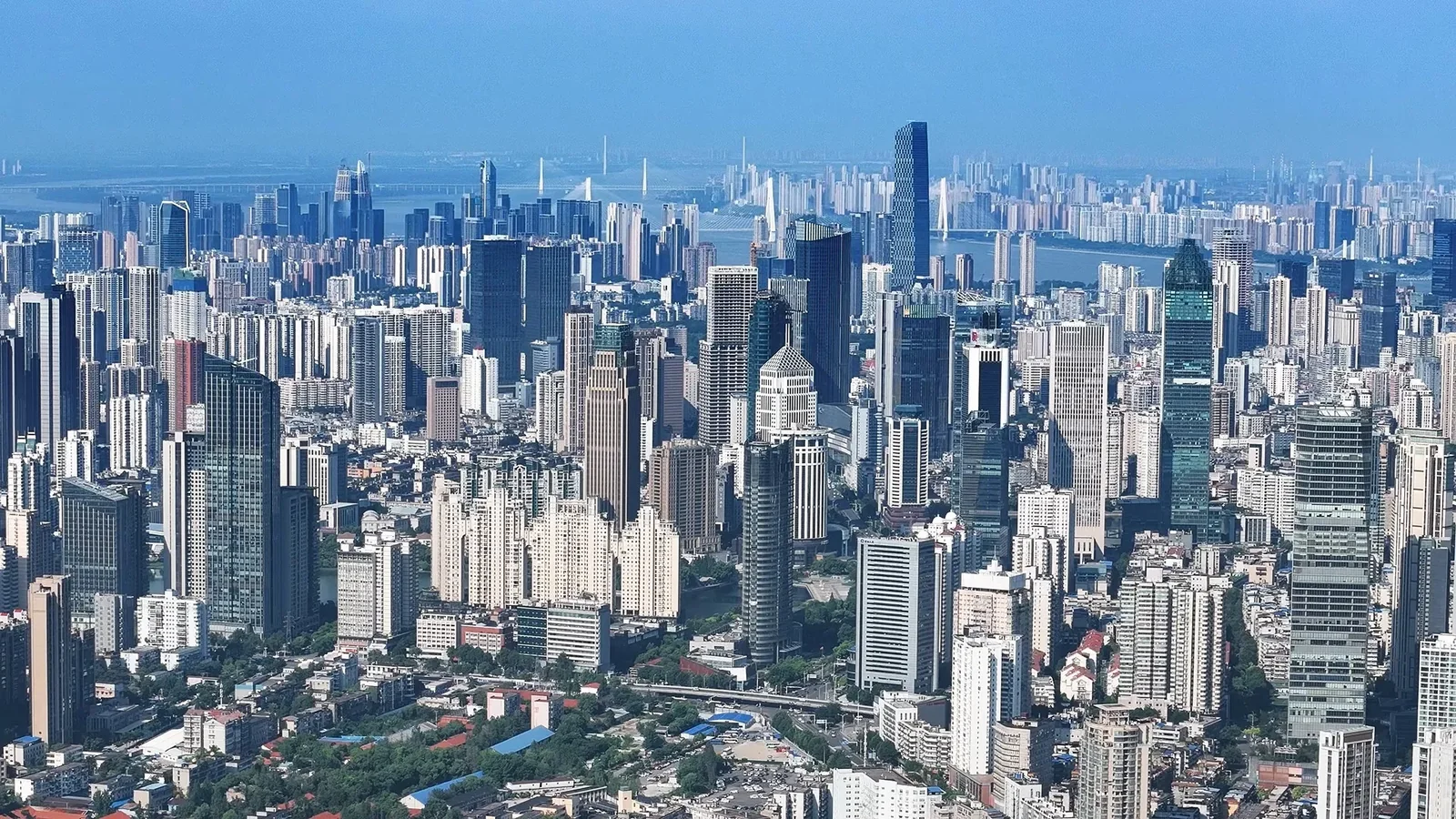
Wuhan Greenland Center, 475m
武汉绿地中心 stands in the Wuchang riverside business district, near the 和平大道 end of the city, on a 630,000 square metre site. It is the tallest building in Central China.
It was designed by AS+GG, the Los Angeles firm of Adrian Smith and Gordon Gill. If that name means nothing to you, it should. They are the firm behind the Burj Khalifa in Dubai, and they are one of the reasons the tower looks the way it does: a tapering, faceted shaft that is slightly twisted so the corners never read as corners.
The building has been under construction since 2011. It went to the public as a 636-metre design and was a credible candidate for the tallest building in China. It finished at 475.
Fifteen years from breaking ground to delivery is the other number worth holding on to, because it tells you that the height story is only half of it. This is a building that took the better part of two decades to arrive at a decision the city had already made.
Why the height was cut. The aviation answer. Wuhan Tianhe International Airport sits inside the city, and the tower stood inside a flight path. In 2018 a leaked internal Greenland document fixed the main tower at a 500-metre height above sea level, and the massing on the drawings changed to match. That is not a design compromise you can negotiate with. The building is capped by the geography around it.
The tower has been standing finished for a while now, and the surrounding Greenland International Financial City complex around it is filling in. Shops opened at the base. The lighting was switched on for the first time over the 2024 to 2025 New Year, and when people filmed it, the reports were that two floors lit up. Two. The tallest building in Central China, lit two floors.
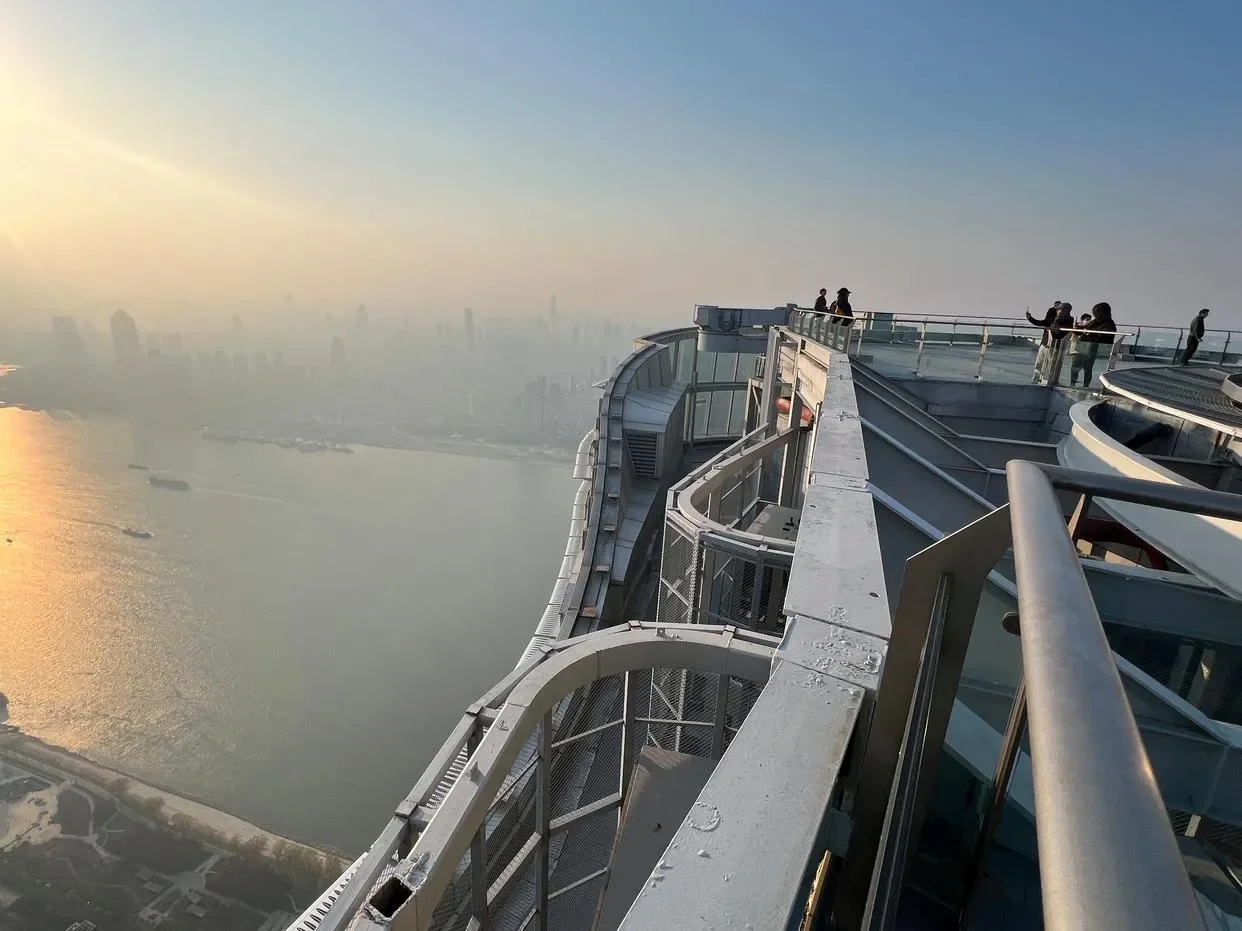
The observation deck is real and open. It sits on the 100th floor, roughly 486 metres up, on what is described as a helipad deck. The ticket was 30 yuan when I last checked. Groups go up about twenty people at a time and spend roughly twenty minutes up there. You cannot just walk in, because the official account on WeChat called 武汉绿地中心 is where you book, under the ticket menu, for the viewing level.
Thirty yuan for the highest public floor in Hubei is one of the better deals in the city, and it is the only place in Wuhan where you can see how far apart Hankou, Hanyang and Wuchang actually are. The river does that job too, but from 486 metres the geometry is obvious in a way it never is from a boat.
What you can pick out from up there is more specific than the usual river-and-bridges answer. The old Bund riverfront reads as a low, continuous, foreign-looking band on the opposite bank, which is exactly the contrast that makes the modern towers behind it look tall. The Yangtze Bridge sits south of you at an angle you never get from the bridge itself, because from the bridge you are on it. And the density difference between the three towns is plain: Wuchang has the tower, Hankou has the wall of mid-rises, and Hanyang is the quietest of the three from any height.
Worth knowing that you are looking at the same skyline you paid to enter, which sounds obvious written down. It is not. Twenty minutes is enough to walk the perimeter and then it is somebody else’s turn.
Wuhan Center, 438m, and Empty
武汉中心大厦 sits at the southwest corner of the Wangjiadun CBD, on the land that used to be an airport before the city moved it. It was planned in 2009 and topped out in April 2015, becoming the first building in Central China over 400 metres. At that point it held the 华中第一高楼 title that the Greenland Center now holds.
Eight floors from the ground, 88 floors, 438 metres, roughly 360,000 square metres of floor area, and 5 billion yuan of investment. The shape gets described two ways locally. It looks like a lipstick, and it is also called the evil eye, because the way the windows curve around the top gives it a watching expression from certain angles.
The curtain wall went up. The fish-scale glazing is beautiful and has been catching the light on that corner of the CBD for the better part of a decade.
Inside is where it stops.
Every floor is still a rough shell. No fit-out, no fire suppression system, no complete mechanical and electrical services. When a building of that size is sealed on the outside and left open on the inside, it becomes a wind instrument. Reports about the project have focused on how much more money it would take to finish, and in 2026 the company managing it entered judicial restructuring.
The original 2009 plan put an observation pavilion on floors 87 and 88, at a 410-metre elevation. It was always meant to be something you could climb. That pavilion is a line item in a 2009 press release.
One thing worth saying plainly: an empty tower is a visible fact in this city and people talk about it. When I mention that I watched the tallest buildings go up here, the question that comes back is usually about this one. You do not have to have an opinion to answer it.
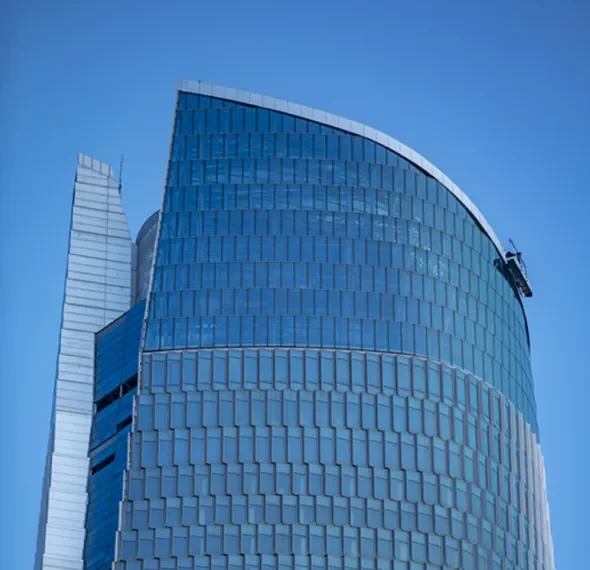
Heartland 66, 339m, and Working
The third tower is the one that got built and filled, and it is the proof that the other two are not a verdict on the city.
武汉恒隆广场 opened in 2020 in Qiaokou, beside Jinghan Avenue, within walking distance of the Wuguang shopping district and the Zhongshan Avenue one. For buildings completed in 2020 it ranked eighth in the world and fourth in China. It holds a shopping centre of about 177,000 square metres.
This is the part that surprised me. A 339-metre mall in Qiaokou draws a completely different crowd from the waterfront. It is not a place to look at the skyline. It is a place to spend an afternoon inside one, and it is busy. People bring their families. That contrast is the single most useful thing I know about Wuhan’s high-rise story.
The gap between the three numbers, 475, 438 and 339 metres, is small. What happened to each of them is not. That is the shape of the story in Wuhan’s CBD: one capped tower, one empty one, one that works.
Where to actually stand
If you want to see the skyline, use the geometry of the city. The three towns are on the Yangtze and the Han River, which is why a city this size does not read as one skyline, and my piece on the three towns explains why that matters more than it sounds.
The Greenland Center deck is the only place you can see all three at once from a fixed point. Book on WeChat before you go, carry your ID, and go at golden hour rather than at midday, because at midday the towers flatten into grey slabs against a bright sky.
The riverbank at dusk is free and it is better than most paid decks. Shoot from the Jianghan Road side and look across, and the buildings layer themselves: Bund frontage in front, towers behind, bridge on top. That layering only works because the old river port architecture is low and horizontal, so anything built after it reads as taller than it is. My photography guide has the specific spots and lenses, including the Wuchang bridge approach that gets you the whole Hankou skyline in one frame, and the seasonal version of the same light is in the four seasons photography piece.
From the road, not the water. This is the one that surprises visitors who assume the city is built around its rivers. Much of the tallest modern development in Wuhan is nowhere near a waterfront, sitting on arterial roads and elevated interchanges. Driving the ring road system or the elevated highways gives you more sheer vertical mass than any riverside walk, and I have a separate piece on why the elevated roads matter here.
The ferry beats all of it. It is 1.5 yuan and twenty minutes, and you are on the water between the two skylines with both banks passing you. Nothing on land gives you that. I have said it before and I will keep saying it.
What I would skip
Skip the rooftop bar with a view of a car park. Wuhan has several. The city is not short of elevated outdoor spaces with a drink in your hand and a wall of glass between you and the river.
Skip the claim that this is Asia’s fourth largest city by skyscraper count, or any similar ranking. I could not verify a reliable version of that number and the ones in circulation all trace back to the same unsourced list.
Skip treating the empty tower as a photo opportunity. I will happily point a camera at a building that has been abandoned in the middle of Europe, because ruin photography has a long history. This is a 5-billion-yuan commercial project sitting in a working district of a city of eleven million people. Photograph it if you want, but know what you are framing.
And if the tower you came to see is not a building, then read about the one everybody photographs instead. Huanghelou (黄鹤楼) was built to be impressive when it was already old, which is a different and better trick than being 475 metres tall.
The Honest Summary
Wuhan’s skyline is not a ranking, it is three specific situations that happen to share a skyline. The tallest building was designed to be 161 metres taller and cannot be, because of a flight path. The second tallest has been a sealed empty shell for a decade. The third is a busy shopping mall that ranked fourth in China in the year it opened.
None of that makes the city less worth looking at, and I am not going to pretend it makes it more interesting to stand in front of.
Ask why the tallest one is 161 metres shorter than advertised, and the question does all the work for you without me having to editorialise.
Go up the 30-yuan deck. Go stand on the ferry afterwards and watch both skylines pass each other. That is the whole evening.