
Most visitors never leave Wuhan. That’s fine, until it isn’t.
If you have three days in Wuhan, you should spend all three inside the city. The itinerary I wrote covers the essentials: Yellow Crane Tower, the Bund, East Lake, the museum. Stay put.
But if you’re here for a week, or you’re living in Wuhan and need to get out, the surrounding area has more than you’d expect. Hubei province isn’t just the provincial capital. There’s a Taoist mountain where monks still grow their own vegetables, a lake clean enough to eat from, an 1,800-year-old battlefield, and a village that tourist buses haven’t found yet.
I’m not going to list twenty places and hope you pick one. I’m going to write about five trips I’ve actually taken, with the transport information you need to get there without a tour group.

Mulan Mountain area in autumn: the countryside 60 km north of Wuhan that most visitors never see.
1. Mulan Mountain and Mulan Lake (木兰山·木兰湖)
What it is
Mulan Mountain sits in Huangpi District, about 60 kilometers north of central Wuhan. It’s named after Hua Mulan. Yes, that Mulan, the one Disney made a movie about. Whether she actually existed is debated by historians, but the mountain has been a Taoist religious site since the Tang Dynasty, and locals have been climbing it for considerably longer than Disney has existed.
The mountain itself isn’t tall, 582 meters at the highest peak. What makes it worth the trip is the temple complex near the summit: several Taoist halls built into the rock face, incense smoke drifting through the trees, and a view that stretches across Huangpi’s farmland to Mulan Lake on a clear day.
Mulan Lake is about 15 minutes’ drive from the mountain. It’s a reservoir built in the 1950s, now surrounded by guesthouses and fish restaurants, and the water is clean enough that local restaurants serve fish caught from it the same morning.
How to get there
By bus: Take Metro Line 1 to Hankou Railway Station, then walk to the adjacent long-distance bus terminal. Buses to Huangpi Bus Station run every 20 minutes, about 40 minutes, 12 yuan. From Huangpi Bus Station, take the Huangpi-Mulan Mountain scenic area shuttle (every 30 minutes, 25 minutes, 8 yuan). Total one-way time from central Wuhan: about 2 hours.
By car/taxi: Drive north on the S18 Expressway. 60-70 minutes from Hankou. Parking at the scenic area entrance is 10 yuan for the day.
What it costs
| Item | Cost |
|---|---|
| Scenic area entry | 80 yuan |
| Cable car (optional, one way) | 40 yuan |
| Lunch at Mulan Lake | 60-80 yuan per person |
| Round-trip bus from Wuhan | 40 yuan |
Honest advice
Go in October or November. The mountain is exposed, no shade at the summit, and in summer it’s punishing. Spring is fine too, but the temple complex is more atmospheric in autumn, when the light is lower and the incense smoke catches the afternoon sun.
Skip the cable car going up. The walk takes about 90 minutes and the path is well-maintained stone steps. Take the cable car down if your knees are complaining.
Eat at one of the fish restaurants along Mulan Lake, not the restaurants inside the scenic area. The scenic area restaurants are overpriced and mediocre. The lake restaurants serve casserole fish (鱼头火锅) that’s worth the drive by itself.
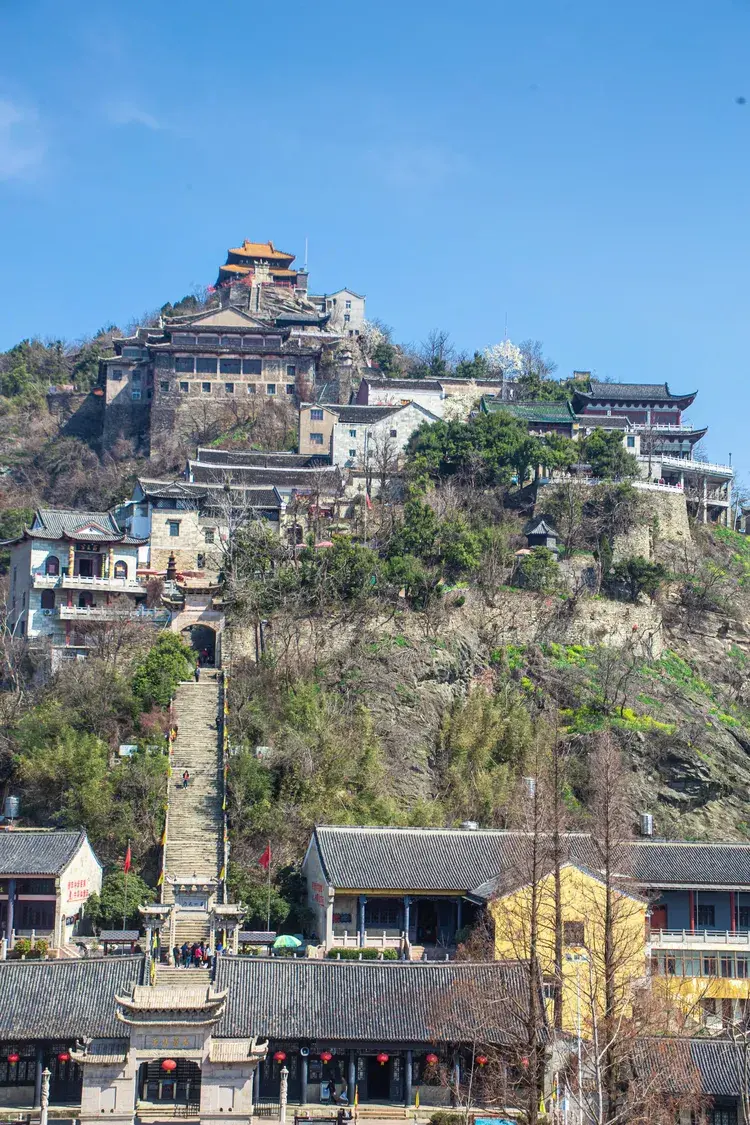
Taoist halls built into the cliff at Mulan Mountain’s summit.
2. Duyuwan ancient village (大余湾古村落)
What it is
About 70 kilometers north of Wuhan, also in Huangpi, there’s a village called Duyuwan. It was built in the Ming Dynasty, and roughly 40 of the original stone-and-wood houses are still standing and still occupied. The residents are mostly elderly. The young people left for the city, which is why the village looks the way it does.
This isn’t a reconstructed “ancient town” like the ones you find in every Chinese tourist city, where they tear down the old buildings and rebuild them to look old so they can charge entry and sell souvenir snacks. Duyuwan is genuinely old. The stone walls have moss growing in the cracks. The courtyard gates carry carved lintels that date to the Qing Dynasty. Some houses still have the original wooden window grilles.
There’s no entrance fee. You just walk in.
How to get there
By bus: Take the bus to Huangpi Bus Station (same as Mulan Mountain). From there, take a local minibus to Duyuwan (ask for “大余湾”) which runs roughly every hour, 30 minutes, 6 yuan.
By car/taxi: Same S18 Expressway as Mulan Mountain, then follow county road 108 north. About 80 minutes from Hankou. The last 10 minutes are on a narrow village road.
What it costs
Essentially nothing. No entry fee. If you eat at the one village restaurant (run from a farmer’s house), lunch is about 30-40 yuan. The restaurant serves whatever they grew that morning.
Honest advice
Combine this with Mulan Mountain in a single trip. They’re 40 minutes apart by car. Do Duyuwan in the morning when the light is soft, then Mulan Mountain in the afternoon.
There’s almost no tourism infrastructure here. No English signage, no coffee shops, no ATMs. Bring cash and bring water. The village has one small shop that sells instant noodles and bottled water, and that’s it.
If you’re photographing, the best spot is the small hill behind the village. Walk up the dirt path past the last house, turn around, and you’ll see the whole village: gray tile roofs, stone walls, and the farmland beyond. That view tells you why people built a village here 600 years ago.
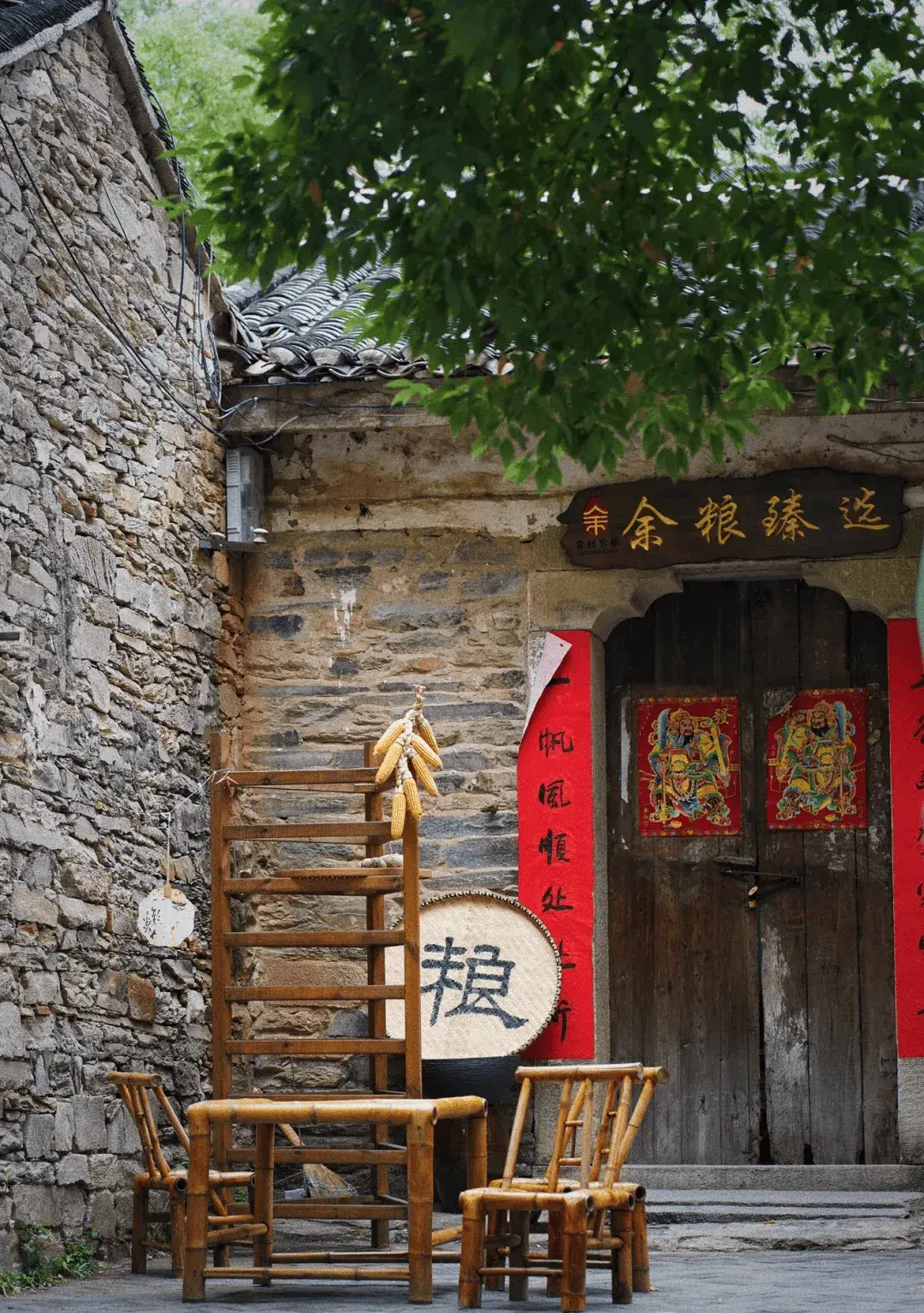
Duyuwan village: 40 original Ming Dynasty stone houses, still occupied, no entrance fee.
3. Liangzi Lake (梁子湖)
What it is
Liangzi Lake is the second-largest freshwater lake in Hubei, straddling the border between Wuhan’s Jiangxia District and Ezhou City. It’s about 50 kilometers southeast of central Wuhan.
What makes Liangzi Lake special isn’t the size. It’s the water quality. Most lakes in central China have water you wouldn’t touch. Liangzi Lake is clean enough that it supplies drinking water to Ezhou, and the lake’s hairy crabs (梁子湖大闸蟹) are considered some of the best in central China. They’re not as famous as Yangcheng Lake crabs, but locals in Wuhan know the difference.
The lake has an island, Liangzi Island, reachable by ferry from the south shore. The island has a few hundred residents, a small street of restaurants and guesthouses, and not much else. It’s the kind of place where people sit on their doorsteps in the evening and the loudest sound is fish jumping.
How to get there
By bus: From Fujiapo Long-distance Bus Station (near Metro Line 2 Fujiaba station), take a bus to Ezhou. About 50 minutes, 25 yuan. From Ezhou, take a taxi or local bus to Liangzi Lake ferry terminal (20 minutes, 15 yuan by taxi). Ferry to the island: 30 minutes, 30 yuan round trip.
By car/taxi: Drive south on G50 expressway, exit at Ezhou. About 70 minutes from Wuchang. Park at the ferry terminal, take the ferry to the island.
What it costs
| Item | Cost |
|---|---|
| Ferry to island (round trip) | 30 yuan |
| Lunch on island | 80-150 yuan per person (depends on whether you order crabs) |
| Round-trip bus from Wuhan | 50 yuan |
If you go in crab season (September-November), a meal of two Liangzi Lake hairy crabs, a steamed lake fish, and vegetables will run about 120-150 yuan per person. That sounds expensive, but the same meal at a restaurant in Shanghai would be 500+.
Honest advice
Go between September and November. Two reasons: crab season, and the temperature. The lake is wide open with no shade, and in summer the sun is brutal, but in October the air is cool, the water is calm, and the crabs are full of roe.
Don’t bother going to the island if you just want to look at the lake. The south shore has viewing platforms and restaurants with the same view. The island is for people who want to stay overnight (basic guesthouses, 100-150 yuan a night) or who want the experience of being somewhere with no cars and no noise.
The crab restaurants on the island are all roughly the same quality. Pick whichever one has the most locals sitting in it. Avoid the ones with English menus. There are only two, and they’re priced for tour groups.

Liangzi Lake in October: clean water, quiet shores, and the best hairy crabs in central China.
4. Chibi: the Red Cliffs battlefield (赤壁古战场)
What it is
In the year 208 CE, on the banks of the Yangtze River about 120 kilometers southwest of Wuhan, a coalition of warlords led by Sun Quan and Liu Bei defeated the much larger army of Cao Cao. The Battle of Red Cliffs (赤壁之战) is one of the most famous military engagements in Chinese history. It’s the battle that split China into three competing kingdoms.
If you’ve read Romance of the Three Kingdoms or played any of the dozens of video games based on it, you know this battle. The fire ships, the wind shift, and Huang Gai’s feigned surrender. The battle has been so heavily mythologized that it’s hard to separate history from fiction, but the actual site exists, and you can stand on the cliff where the allied forces reportedly watched Cao Cao’s chained fleet burn.
The Chibi Battlefield scenic area is in Puqi, a county-level city under Xianning’s administration. The site includes the Red Cliff itself (a 30-meter sandstone bluff above the Yangtze), a museum, and several reconstructed historical displays.
How to get there
By high-speed train: From Wuhan Railway Station (Hongshan district), take a high-speed train to Chibi North station (赤壁北). About 25 minutes, 40 yuan. From Chibi North, take a taxi to the scenic area (15 minutes, 20 yuan).
This is the fastest option. Total travel time from central Wuhan is under an hour.
By car: Drive southwest on G4 expressway. About 2 hours from Hankou.
What it costs
| Item | Cost |
|---|---|
| Scenic area entry | 100 yuan |
| Museum entry | included |
| High-speed train (round trip) | 80 yuan |
| Taxi from station | 20 yuan each way |
Honest advice
If you have no interest in Chinese history, skip this. The cliff itself is modest. Thirty meters isn’t dramatic after you’ve seen the Yangtze gorges. The museum is decent but not outstanding. The reconstructed displays are somewhat tacky.
But if you’ve read the novel or you’re interested in military history, standing on that cliff is worth the trip. The Yangtze at this point is about 1.5 kilometers wide. You can see the north bank where Cao Cao’s army was camped. Looking at that distance, you understand why a fire attack on a chained fleet worked.
The best time to go is March-April or October-November. The scenic area has a lot of walking on exposed paths, and summer is miserable. The surrounding area also has hot springs (Xianning is famous for them), so you can combine the battlefield with a soak at Yueshan Hot Springs in the afternoon.
5. Longquan Mountain and the Ming Tombs (龙泉山·明楚王墓)
What it is
This is the one on the list that even most Wuhan residents don’t know about. Longquan Mountain is in Jiangxia District, about 25 kilometers southeast of central Wuhan. It’s a low ridge, barely 230 meters, but it holds the tombs of nine Ming Dynasty princes of the Chu vassal state.
From 1381 to 1643, the Chu princes governed Hubei from their capital in Wuchang. When each prince died, he was buried at Longquan Mountain. Nine tombs, spread across the ridge, built over 260 years. The site is called the “Ming Chu Prince Tombs” (明楚王墓) and it’s a nationally protected cultural heritage site.
What makes this site different from the Ming Tombs in Beijing is the atmosphere. The Beijing tombs are a major tourist attraction: busloads of visitors, entrance fees of 130 yuan, reconstructed buildings. Longquan Mountain has almost no visitors. The tombs are partially excavated, partially overgrown, and you can walk among them. The stone spirit-way statues (soldiers, horses, and officials lining the path to each tomb) are original Ming Dynasty carvings. Some are cracked. Some are half-buried in soil. They’ve been sitting there for 600 years, largely unattended.
How to get there
By metro + bus: This is the easiest trip on the list. Take Metro Line 2 to Guanggu Square station (光谷广场), then take bus 909 or 915 from the bus stop outside the station. The bus goes directly to Longquan Mountain. Total travel time: about 90 minutes from central Wuhan. Bus fare: 4 yuan.
By car/taxi: Drive southeast on Longquan Avenue to the site. About 40 minutes from Guanggu.
What it costs
The site is free. There’s a small museum at the entrance that’s also free. You’ll spend maybe 30-40 yuan on lunch at the village restaurants near the entrance.
Honest advice
Go on a weekday if possible. On weekends, a few local families come to hike the ridge, but even then it’s quiet. On a weekday, you may have the entire tomb complex to yourself.
Wear shoes you don’t mind getting dirty. The paths between the tombs are dirt trails, not paved walkways. After rain, they’re muddy.
Bring your own water and snacks. There’s one small village shop near the entrance, but it closes unpredictably.
The most striking thing about this site isn’t any single tomb. It’s the fact that nine princes were buried here over two and a half centuries, and almost nobody comes. In Beijing, you’d pay 130 yuan and stand in a crowd. Here, you’re alone with 600-year-old stone horses and no one else.
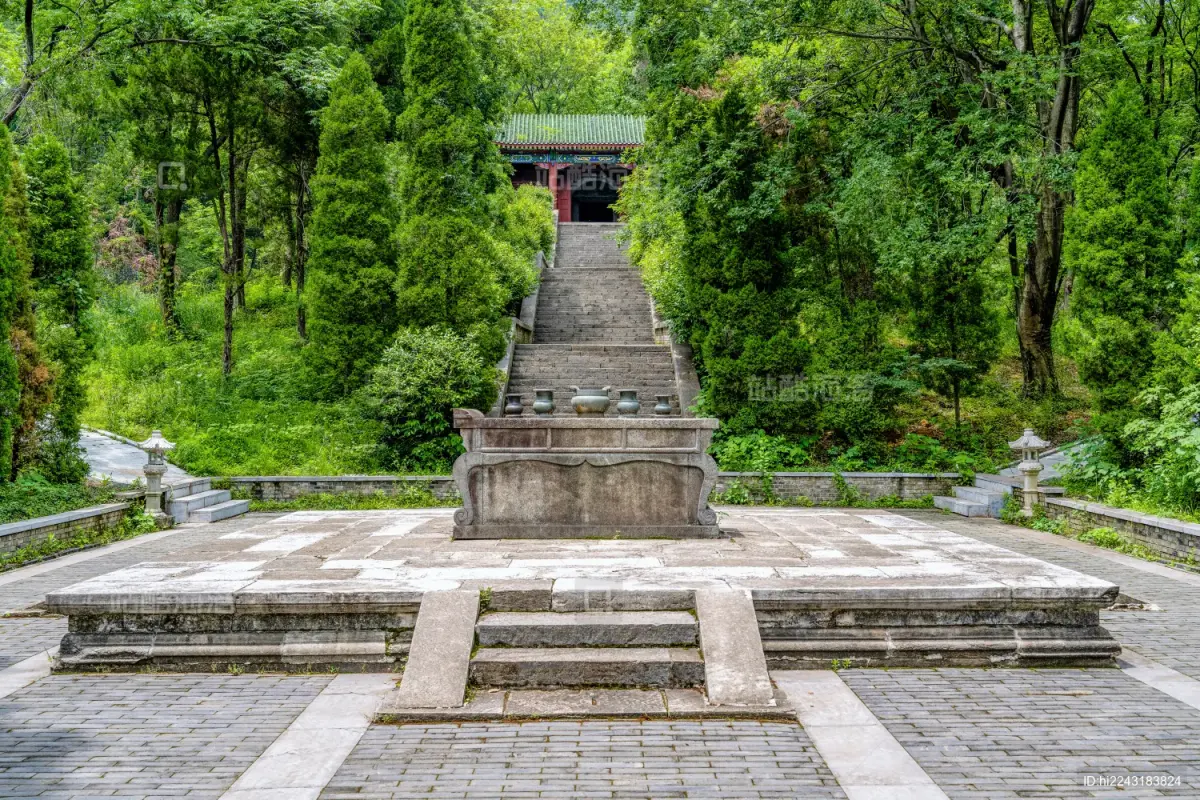
Stone spirit-way statues at the Ming Chu Prince Tombs, Longquan Mountain: 600 years old, largely unattended.
How to choose
If you only have time for one trip: Mulan Mountain for nature and exercise, Duyuwan for something old and authentic, Liangzi Lake in October for the best meal of your trip. Chibi if you’re a history nerd, Longquan Mountain if you want to be alone somewhere that deserves more visitors.
If you have a car, you can combine Mulan Mountain and Duyuwan in one day. The other three are each a full-day trip on their own.
Practical notes
None of these destinations require a tour group, and all are reachable by public transport from Wuhan. But if you can rent a car or hire a Didi driver for the day (about 300-500 yuan depending on distance), it makes everything easier. The bus routes to rural areas run infrequently and stop early.
None of these sites have English signage. Bring a translation app and screenshot the Chinese names before you go. Show the Chinese name to bus drivers and taxi drivers. Saying the name in English won’t help.
Bring cash. The scenic areas accept Alipay and WeChat Pay, but village shops, village restaurants, and local minibuses often don’t. 200 yuan in cash is enough for any single trip.
October and November are the best months for all five trips. The weather is cool, the crowds are thin, and if you’re going to Liangzi Lake, the crabs are in season.
All five destinations are in rural Hubei, where crime is essentially nonexistent. The main risks are dehydration and sun exposure in summer, and slipping on mountain trails after rain. Tell someone where you’re going, bring water, and don’t climb on the tomb statues.
Want more specific directions to any of these places? Email me and I’ll send you the exact bus routes.
Related:
-
3 Days in Wuhan: A Local’s Itinerary, the city itinerary to start with
-
Best Time to Visit Wuhan, a guide to the weather month by month
-
Getting Around Wuhan: Transportation Guide: metro, bus, and ferry basics
-
East Lake: Wuhan’s Green Heart: the closest stretch of nature to the city center
-
Wuhan’s Parks: Where 11 Million People Go to Breathe: the city’s green spaces
-
Wuhan’s Year: Festivals and Events Calendar, for timing your trip around local events
-
Is Wuhan Safe? A Local’s Honest Guide: safety advice for rural areas too
-
Two Rivers, Three Towns: Understanding Wuhan’s Geography: why Wuhan is where it is, between two rivers
-
Where to Stay in Wuhan: base yourself before day trips
-
Wuhan’s Lakes: Why China’s Biggest Lake-City Has More Water Than You Think: lake culture beyond Liangzi