
A city that runs on seasons
Most cities have a calendar of events that feels arbitrary. A food festival here, a music festival there, dates chosen by marketing committees. Wuhan’s calendar is different. Every major event in this city is tied to something physical: the temperature, the river, the blooming of a tree, the flooding of a lake. The calendar isn’t designed; it’s imposed by geography.
I’ve been here 18 years, and I’ve stopped tracking events by date. I track them by feel. When the air gets thick and the heat drives everyone outside at night, it’s crayfish season. When the river level markers hit 25 meters, it’s flood watch season. When the campus smells like wet petals and the metro is packed with people carrying selfie sticks, it’s cherry blossom season.
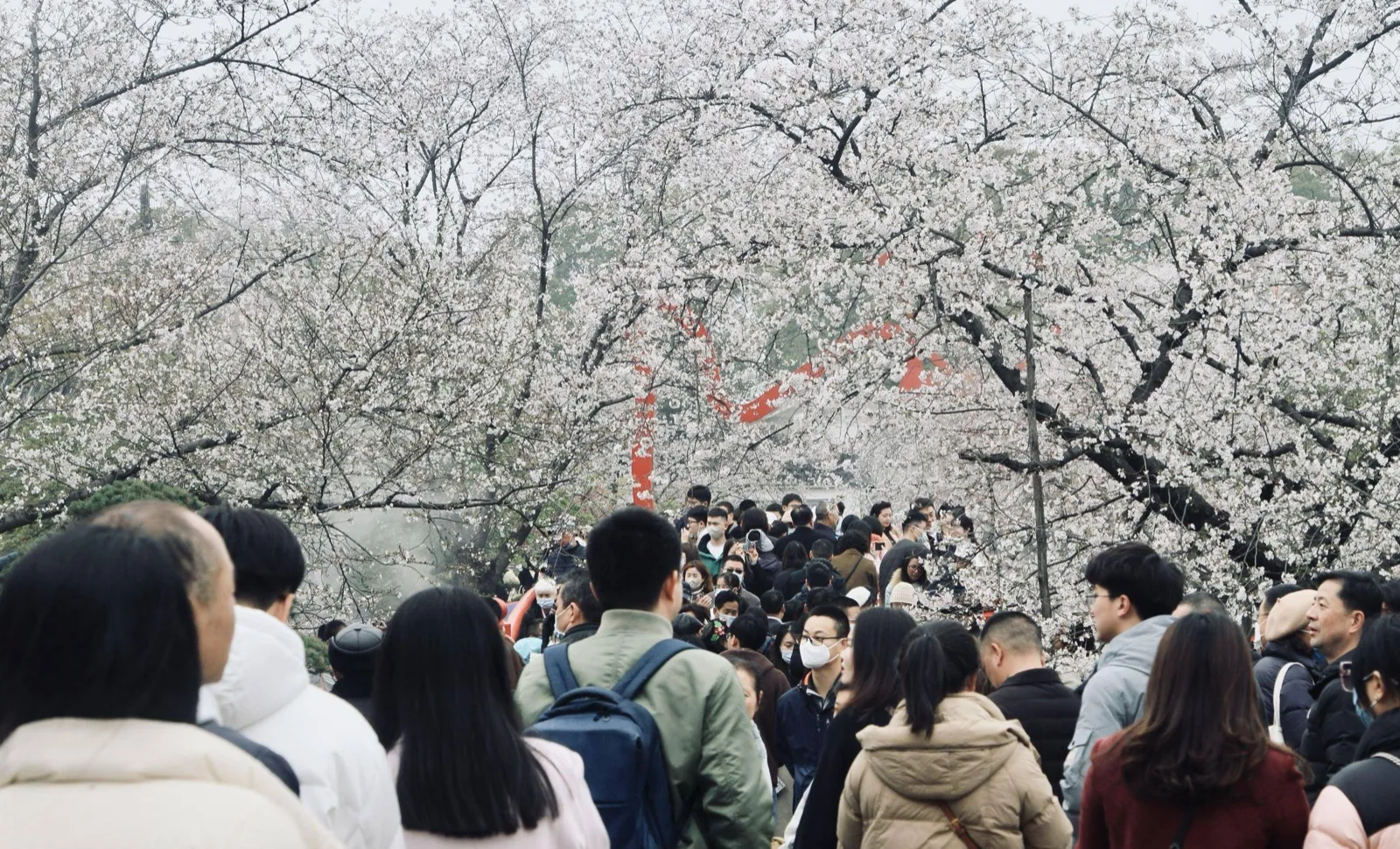
From cherry blossoms in March to river swimmers in July, the calendar follows the temperature, the water, and the stubbornness of 14 million people.
Here’s the year, broken down by the events that matter. Not all are official festivals. Some are just things that happen every year, reliably, because the city’s rhythm hasn’t changed in decades.
Spring: the city reawakens
March: Cherry blossom madness
For two weeks every March, Wuhan becomes a different city. A million visitors descend on Wuhan University to see 1,000 cherry trees bloom on Luojia Hill. The metro lines near Guangbutun station triple in ridership. Traffic on East Lake Road stops moving. Hotel prices double.
The cherry blossom season is technically a natural event, not a festival. But it functions like one. The university sets up a reservation system through its WeChat mini-program, limiting visitors to 20,000 per day. The East Lake Cherry Blossom Garden (磨山樱花园), with 10,000 trees, charges 60 yuan and is less crowded. Both spots are worth visiting, but the university campus is the one that matters: the 1930s architecture, the hillside setting above East Lake, the students cycling through the petals. It’s the most beautiful two weeks of the year.
The exact bloom depends on the weather. Warm years: March 15-20; cold years: late March, even early April. The forecast is tracked obsessively; local news outlets publish daily bloom reports. People plan their entire March around the peak.
If you visit during bloom season, book your hotel two weeks early. Expect crowds. Bring patience. The flowers are worth it.
April: Qingming and the quiet week
Qingming Festival (清明节), the tomb-sweeping day, usually falls in early April. Families visit cemeteries to clean ancestors’ graves, burn incense, and leave food. It’s not a festival in the celebration sense. It’s a duty.
What this means for visitors: the city empties out. Everyone goes to their hometown. The trains and highways are packed on the days before and after. Wuhan itself becomes quiet. The parks are empty, and so are the restaurants. If you’re a tourist who dislikes crowds, the Qingming week is a secret window. The city is yours.
The weather in April is also the best of the year. 15-25°C, low humidity, blue skies. I wrote about this in the best time to visit guide, and I stand by it: April is the sweet spot.
May: Labor Day chaos
The May 1-5 Labor Day holiday is one of China’s biggest travel weeks. 800 million people move across the country in five days. Wuhan, as a central hub, gets hit from both directions. The Jianghan Road pedestrian street is shoulder-to-shoulder. The Yellow Crane Tower has a two-hour line. Every restaurant on every food street has a wait.
My advice: avoid May 1-5 entirely. If you’re already here, spend those days in less popular spots. Walk the Bund early in the morning, then cycle the East Lake Greenway. Visit Guiyuan Temple in Hanyang, which tourists rarely find. Stay away from anything with “famous” in the description.
After May 5, the city returns to normal, and late May is warm but not yet furnace-hot. The night markets start expanding their hours. The first crates of crayfish hit the market.
Summer: the city moves outside
June: Dragon Boat Festival
The Dragon Boat Festival (端午节) falls on the fifth day of the fifth lunar month, usually in June. It commemorates Qu Yuan, the Chu kingdom poet who drowned himself in the Miluo River in 278 BC. The story goes that villagers paddled out in boats to save him and threw zongzi (rice dumplings wrapped in bamboo leaves) into the water to keep fish from eating his body.
Wuhan, in the middle of the old Chu territory, takes this festival seriously. The city hosts one of the largest dragon boat races in China on East Lake. Teams from universities, corporations, and neighborhood associations compete. The boats are 12 meters long, carved and painted, with a drummer at the bow setting the pace. The race is loud, fast, and genuinely exciting.
The race is usually held at the East Lake Moshan area. Spectators line the causeway, and it’s free to watch. Bring a hat and water. June in Wuhan is already hot, and the lakeside has no shade.
The food of the festival is zongzi. Every family makes them or buys them. Sticky rice wrapped in bamboo leaves, stuffed with red bean paste or pork, steamed for hours. My wife makes 50 every year. We eat them for breakfast for a week.
July: The Wuhan Yangtze River Crossing Festival
This is the event that foreigners never hear about and locals talk about all summer.
Every July 16, Wuhan holds the Yangtze River Crossing Competition (武汉渡江节). Thousands of swimmers cross the Yangtze River, not on a bridge and not on a boat. They swim.
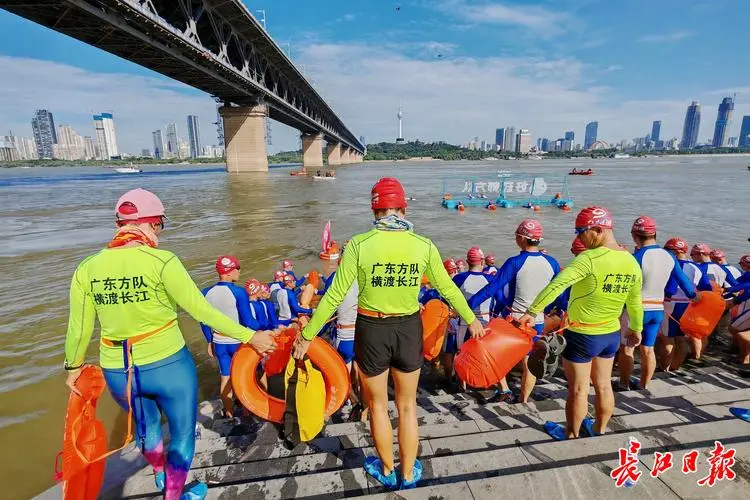
July 16: thousands of swimmers cross the Yangtze. The river is 1.2 kilometers wide here, and the current is strong. They do it anyway.
The event commemorates a specific moment. On July 16, 1956, Mao Zedong swam across the Yangtze in Wuhan. He was 63 years old. He swam for over an hour, covering roughly 15 kilometers with the current. The next year, the city organized the first crossing competition. It has run almost every year since.
The distance is about 1,200 meters at the narrowest crossing point. But the current is strong, so swimmers enter upstream and drift downstream, ending up at a different point than where they started. The water is brown, moving, and carries whatever the river has collected upstream. This is not a swimming pool.
The competitors are a mix. Professional swimmers go first, in a timed race. Then the mass crossing, where anyone with a qualifying certificate can participate. To get the certificate, you have to pass a swimming test in a pool: 200 meters in under 4 minutes, plus a 1,000-meter endurance swim. About 2,000 people qualify each year.
I tried it once. In 2014, I trained for three months, got my certificate, and entered the mass crossing. The water was warmer than I expected, and the current was stronger than I expected too. Halfway across, I couldn’t see either bank clearly. The river was wide and brown and moving. I swam for 22 minutes and came out on the other side with my legs shaking. The Yangtze is not something you cross lightly.
The event starts at Wuchang’s Hankou Beach Park and ends at the Hankou side. Spectators line both banks. The Yangtze Bridge above is closed to pedestrians for the morning. The atmosphere is half sporting event, half neighborhood block party. You see Wuhan people genuinely proud of their river, not just living beside it.
July-August: Night market season
I’ve written about the night markets separately, so I won’t repeat myself. What I’ll say here is that in July and August, when the daytime temperature hits 40°C, the night markets become the city’s real social space. Eating dinner at 10:00 PM on a folding table on the sidewalk, with a fan blowing and a beer sweating in your hand. The heat makes it necessary. The culture makes it fun.
This is also peak crayfish season. If you want to understand Wuhan in summer, spend one Saturday night at a crayfish restaurant on Donghu Road. You’ll get it.
Autumn: the city breathes again
September: Mid-Autumn Festival
The Mid-Autumn Festival (中秋节) falls on the 15th day of the 8th lunar month, usually in September. It’s the second most important family holiday after Spring Festival: people go home, eat mooncakes, and look at the moon.
In Wuhan, the Mid-Autumn Festival has a specific geography. People go to the river. The Hankou Bund riverside promenade fills with families sitting on folding stools, eating mooncakes and drinking tea. The ferry runs late. The river reflects the moon. It’s one of the few nights when the riverside feels gentle instead of chaotic.
Mooncakes in Wuhan follow the local palate. The Wuhan style is less sweet than the Cantonese version. Fillings include black sesame, lotus seed paste, and salted egg yolk. The lotus root connection extends to mooncakes: some bakeries make lotus root paste mooncakes, using the same high-starch lotus from the lakes around the city. They’re dense, earthy, and not for everyone.
The other September event is the start of the university semester. Wuhan has 84 universities and 1.3 million students. When they return in early September, the city’s energy shifts. The back-gate food streets come alive. The metro gets crowded and the bookstores fill up. The city goes from summer lethargy to autumn busyness in the space of a week.
October: National Day and the week to avoid
The October 1-7 National Day holiday is, along with May Day, one of the two weeks to avoid Wuhan entirely. 800 million Chinese people travel in this week. Every major attraction in Wuhan has lines that take hours. The Yellow Crane Tower. The Hubei Provincial Museum. East Lake. Every restaurant. Every metro train.
After October 7, the city empties out and the weather is perfect. October is the best month in Wuhan: 15-25°C, low humidity, blue skies. The plane trees along the Bund turn yellow, and the ginkgo trees at Wuhan University drop golden leaves. If you’re planning a trip, this is the window.
November: Lotus root season and quiet parks
November doesn’t have a major festival, but it has something better: the food. This is when the high-starch lotus root from Wuhan’s lakes hits the markets, and every family starts making paigu ouan tang. The parks are at their best. The crowds are gone and the air is crisp.
If I had to pick one month for a foreign visitor to come to Wuhan, it would be November. No festivals, no crowds, no heat. Just the city at its most itself.
Winter: the city goes inside
December to February: Spring Festival
Spring Festival (春节), Chinese New Year, is the biggest event on the calendar. It falls in late January or early February, based on the lunar calendar. The entire country shuts down for 7-15 days. In Wuhan, this means:
The city empties. Migrant workers return to their home provinces, and university students go home. The population drops by several million. The streets are quiet, and many shops and restaurants close. The breakfast stalls that are normally open at 5:00 AM don’t open at all.
For visitors, Spring Festival is a mixed experience. The lack of crowds is nice; the closure of businesses is not. If you come during Spring Festival, expect limited dining options, closed attractions, and a city that feels half-asleep. On the other hand, the temples are active. Guiyuan Temple in Hanyang holds a massive New Year bell-ringing ceremony; Baotong Temple on Hongshan Hill burns incense all night. The temples are where the energy goes during the holiday.
The food of Spring Festival in Wuhan is specific. Every family makes fish. A whole fish, steamed or braised, served with the head and tail intact. The word for fish (鱼) sounds like the word for surplus (余), which is why you eat fish so you’ll have surplus in the new year. The fish is Wuchang fish, naturally. What else.
The other winter tradition is hot pot. Not the Sichuan kind, but the Wuhan version, which is milder and uses the local ingredients. Beef hot pot with lotus root. Fish hot pot with tofu. The hot pot restaurants on Xianggang Road in Hankou stay open until midnight all winter. The windows fog up. The tables are full.
February: Lantern Festival
The Lantern Festival (元宵节) marks the end of the Spring Festival period, on the 15th day of the first lunar month. Families eat tangyuan (sweet glutinous rice balls) and walk outside to look at lanterns.
In Wuhan, the main Lantern Festival event is at the East Lake Moshan area, where a lantern display covers the hillside. Smaller displays appear in neighborhood parks and temple courtyards. It’s a quiet event. The frenzy of Spring Festival is over. People are tired. They eat sweet rice balls and walk slowly.
The events nobody talks about
Flood season (June - August)
Not a festival. Not a celebration. But it happens every year, and it shapes the calendar more than any official event.
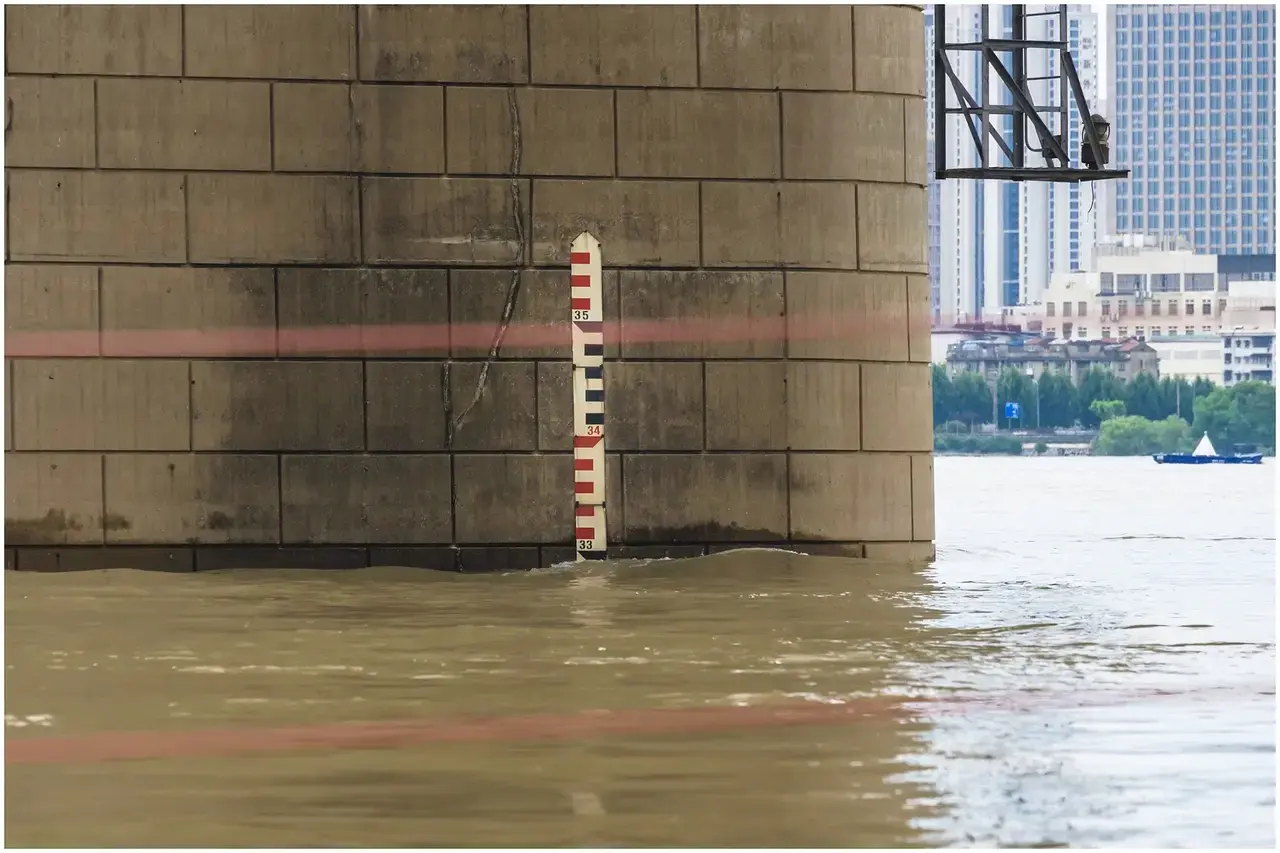
July. The river is at 26 meters. The park under the bridge is underwater. People come to watch.
Every summer, the Yangtze rises: snow melts in Tibet, rains fall across the watershed, and the river swells. In Wuhan, the water level is tracked obsessively. The markers are visible on the bridge pylons and the riverside steps. 25 meters is the warning level. 27 meters is danger. The record was 29.73 meters in 1954.
I’ve written about Wuhan’s flood history separately. What I’ll add here is the cultural angle. Flood season is not a panic event in Wuhan. It’s a watch event. People go to the river to check the level. Old men stand on the Bund, point at the markers, and argue about whether it was twenty-six or twenty-seven last year. It’s a conversation, not a crisis.
The parks along the riverbank close when the water gets too high. The ferry adjusts its schedule; the bridges stay open. Life continues. The river is always there, sometimes closer than at other times.
University graduation (June)
Every June, 300,000 students graduate from Wuhan’s universities. The campuses hold graduation ceremonies. The back-gate food streets hold farewell dinners. Students cry, drink, and take photos in their graduation gowns at Luojia Hill and the East Lake Greenway.
This isn’t a festival. It’s a mass emotional event. If you’re near a university in late June, you’ll see it. Groups of 20-year-olds in black gowns, posing for photos, drinking beer at 2:00 PM, singing off-key. The atmosphere is bittersweet. Wuhan is a university city. These students are the city’s temporary population, and every June, a quarter of them leave.
Plum blossom season (February - March)
Everyone knows about cherry blossoms. Few people outside Wuhan know about plum blossoms.
East Lake’s Plum Blossom Hill (磨山梅花园) has 30,000 plum trees, and they bloom in February and early March, before the cherries. The flowers are smaller, darker, and more fragrant. The park is almost empty. No crowds, no selfie sticks. Just old people doing morning exercises and the occasional photographer.
If you’re in Wuhan in late February, go: it’s the city’s quietest beautiful moment.
A calendar for visitors
| Month | Key Event | Good for Visitors? | Notes |
|---|---|---|---|
| Jan | Spring Festival prep | Mixed | City empties, shops close |
| Feb | Spring Festival, Plum blossoms | Mixed | Temples active, plum blossoms quiet and beautiful |
| Mar | Cherry blossoms | Yes (book early) | Peak crowds, peak beauty |
| Apr | Qingming | Yes | Best weather, city quiet during Qingming week |
| May | Labor Day holiday | Avoid May 1-5 | After May 5, good |
| Jun | Dragon Boat Festival | Yes | Races on East Lake, zongzi everywhere |
| Jul | River Crossing, flood season | For the brave | 40°C heat, but the crossing event is unique |
| Aug | Peak summer | No | Furnace heat. Only night markets |
| Sep | Mid-Autumn, universities return | Yes | Cooling down, mooncakes by the river |
| Oct | National Day holiday | Avoid Oct 1-7 | After Oct 7, best month of the year |
| Nov | Lotus root season | Best month | No events, no crowds, perfect weather |
| Dec | Winter quiet | Yes | Hot pot, temples, no tourists |
The bottom line
Wuhan’s events calendar is not about entertainment. The cherry blossoms happen because the climate produces them; the crayfish season happens because the heat demands outdoor eating at midnight. The river crossing happens because the Yangtze is here and someone decided to swim across it; the flood watch happens because the river rises every summer and always has.
The dragon boat races happen on the lakes because Qu Yuan drowned in this river system 2,300 years ago. The mooncakes by the river happen because the river is the widest open space in the city and the moon looks best reflected in moving water. The Spring Festival fish happens because Wuhan is a fish city, surrounded by 166 lakes, and surplus is what you wish for when you live on a floodplain.
You can plan your trip around these events, or you can ignore them entirely and just come in October or November. But if you happen to be here during one of them, pay attention.
Wuhan’s calendar is shaped by its geography and history. Read more: when to visit, the river that drives the calendar, and why summer changes everything.
Related:
-
Best Time to Visit Wuhan: A Season-by-Season Guide: the weather framework behind this calendar
-
Wuhan University: Cherry Blossoms: March’s main event
-
The River Is the City: Wuhan’s Yangtze Culture: why so many events happen on or around the river
-
Chu Culture in Wuhan: Ancient Roots: the origin of the Dragon Boat Festival
-
Wuhan in Summer: Surviving the Furnace City: why July and August are different
-
Wuhan’s Crayfish Summer: The Social Ritual: summer’s defining food event
-
Wuhan’s Floods: A Yangtze History: the event nobody talks about