
Wuhan’s food identity goes deeper than breakfast
Everyone knows about hot dry noodles and guo zao breakfast culture. But Wuhan’s food scene doesn’t stop at 9 am. This is a city that sits between two rivers, surrounded by lakes and farmland, with 1,800 years of culinary history.
Wuhan is the capital of Hubei cuisine (鄂菜): a style most foreigners have never heard of, because it’s overshadowed by Sichuan and Cantonese food. But Hubei cuisine has its own logic: freshwater fish, lotus root, steamed dishes, and a balance of flavors that’s neither spicy nor sweet, but clean and savory.
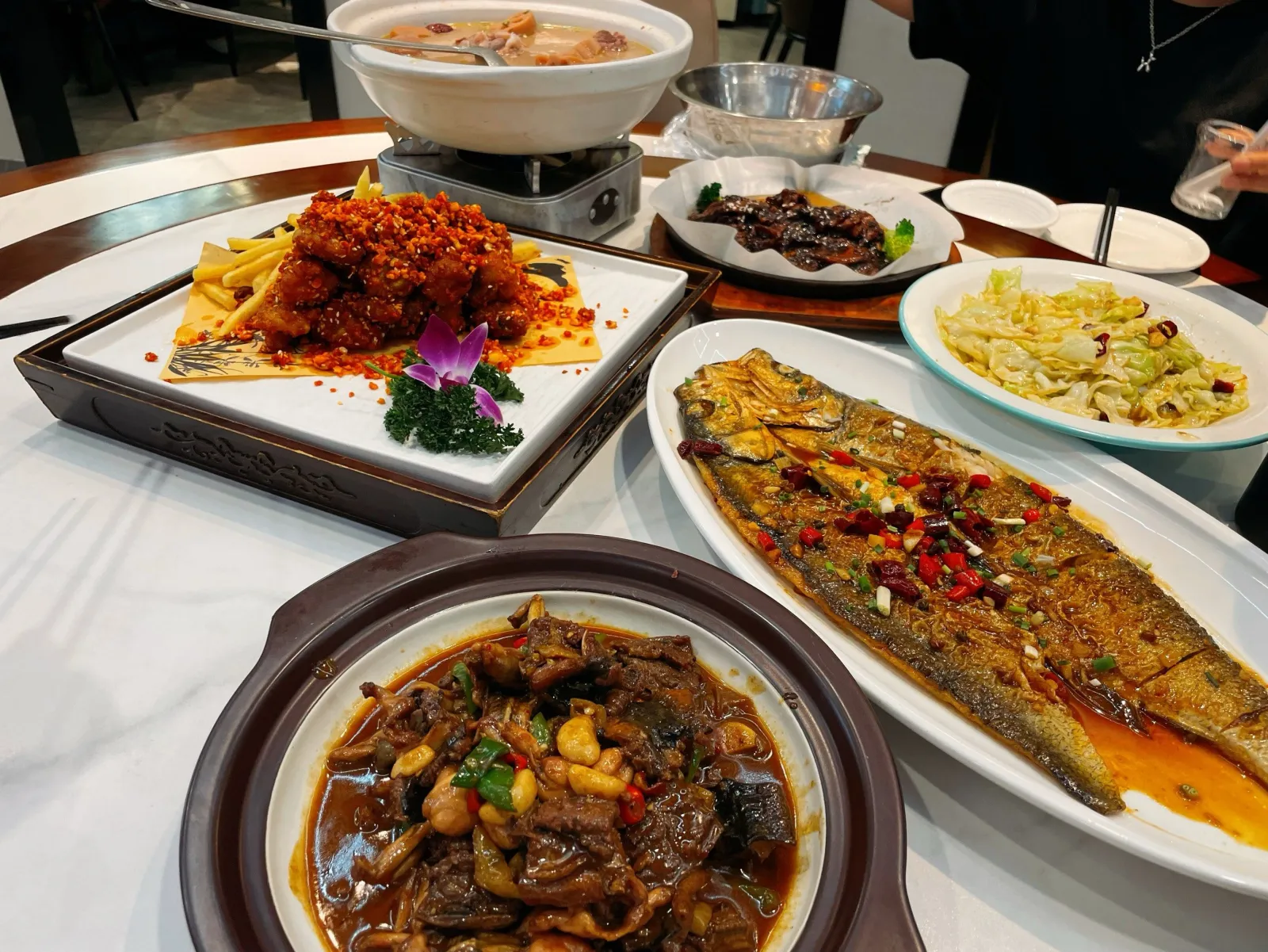
A proper Wuhan dinner: Wuchang fish, lotus root soup, rice-flour steamed pork, and stir-fried Hongshan greens.
Here are 10 dishes that go beyond breakfast, the food I eat for lunch and dinner, the dishes that make Wuhan home.
1. Steamed Wuchang Fish (清蒸武昌鱼)
Mao Zedong wrote a poem about this fish: “才饮长沙水,又食武昌鱼”: “Just drank the water of Changsha, now eating the fish of Wuchang.” That was 1956, and the fish is still Wuhan’s signature dish.
Wuchang fish (武昌鱼) is a type of freshwater bream found in the lakes around Wuhan. It’s delicate, sweet, and almost bone-free in the belly. The classic preparation is simple: steamed with ginger, scallion, a splash of cooking wine, and light soy sauce. No chili, no heavy sauce: the point is to taste the fish.
Every proper Wuhan restaurant has this on the menu. If you eat one non-breakfast dish in Wuhan, make it this one.
Where to try it: Any mid-range Hubei restaurant. Look for 醉江月 in Wuchang or 湖锦 in Hankou.
2. Lotus Root and Pork Rib Soup (排骨藕汤)
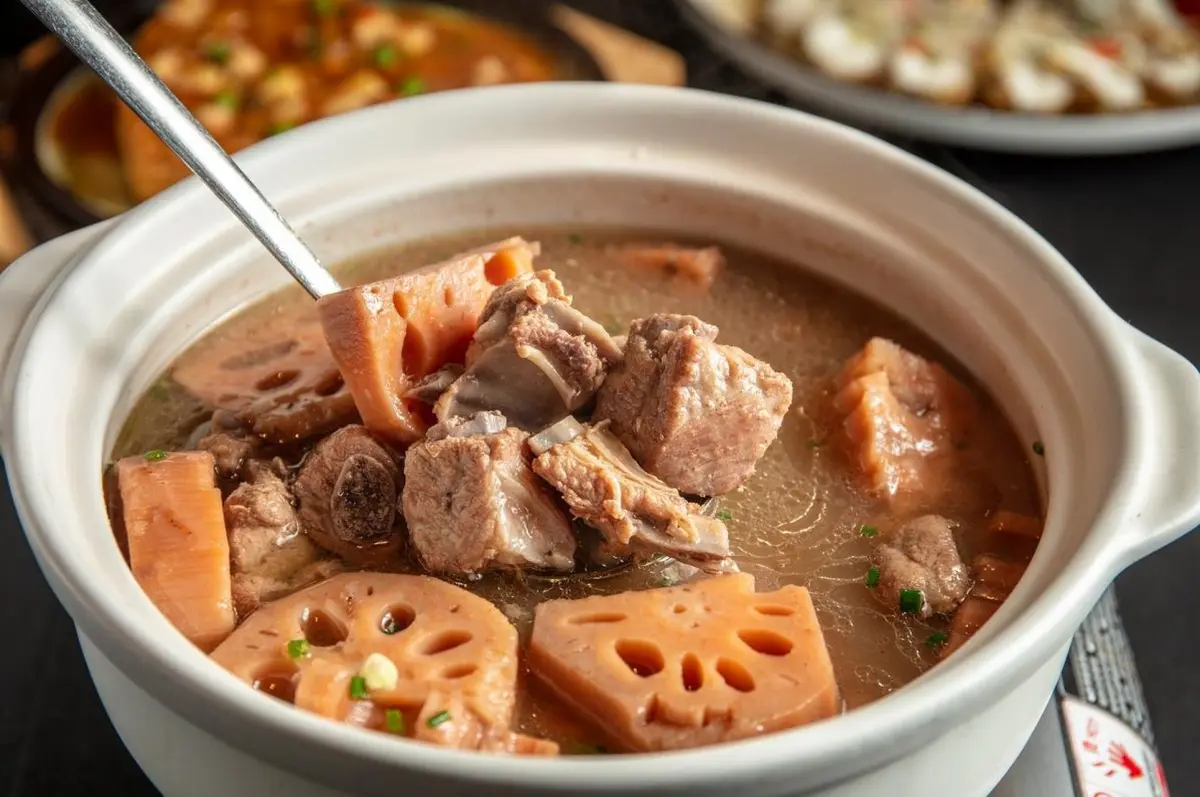
Lotus root and pork rib soup (排骨藕汤): five hours in a clay pot, milky white, and it tastes like home.
This is the dish that tastes like home to every Wuhan person. Lotus root (藕) from the lakes around Wuhan is starchier and sweeter than anywhere else in China. Slow-cooked with pork ribs for 3-5 hours in a clay pot, the root breaks down into a creamy, almost potato-like texture, and the soup turns milky white.
My mother made this every winter. Every Wuhan mother makes this every winter. It’s not a restaurant dish; it’s a Sunday afternoon, the whole house smells like pork and lotus, and you know it’s ready when the clay pot has been on the stove for four hours.
Many Hubei restaurants serve it too. Order it in cold weather; it’s less satisfying in summer.
Where to try it: 艳阳天 in Hankou, or any restaurant with 鄂菜 on the sign.
3. Braised Wuchang Fish with Soy Bean Paste (红烧武昌鱼)
Not all Wuchang fish is steamed. The braised version (红烧) is the home-style preparation: pan-fried then simmered in a dark sauce of soy bean paste (豆瓣酱), soy sauce, sugar, garlic, and dried chili. The skin gets crispy. The flesh absorbs the sauce, and the bones soften enough to chew.
This is what you’ll find in every neighborhood restaurant (小馆子) in Wuhan, usually for 40-60 yuan. It’s the everyday face of Wuchang fish, cheaper, bolder, more satisfying than the steamed version.
4. Hongshan Mustard Greens (洪山菜薹)
This is Wuhan’s vegetable royalty. Hongshan Caitai (洪山菜薹) is a type of flowering mustard green that only grows in the Hongshan district of Wuchang. The stems are purple, the flowers are yellow, and the taste is unlike any vegetable you’ve had: tender, slightly sweet, with a faint bitterness that disappears when stir-fried.
The classic dish is stir-fried with cured pork (腊肉炒菜薹). The saltiness of the pork balances the sweetness of the greens. This dish only exists in winter, the greens are harvested from November to February. If you visit Wuhan in winter, this is the dish to order.
Locals swear that only the vegetables grown in the shadow of the Yellow Crane Tower on Hongshan Hill are the real thing. Whether that’s true or not, the myth makes it taste better.
5. Wuhan Duck Neck (精武鸭脖)
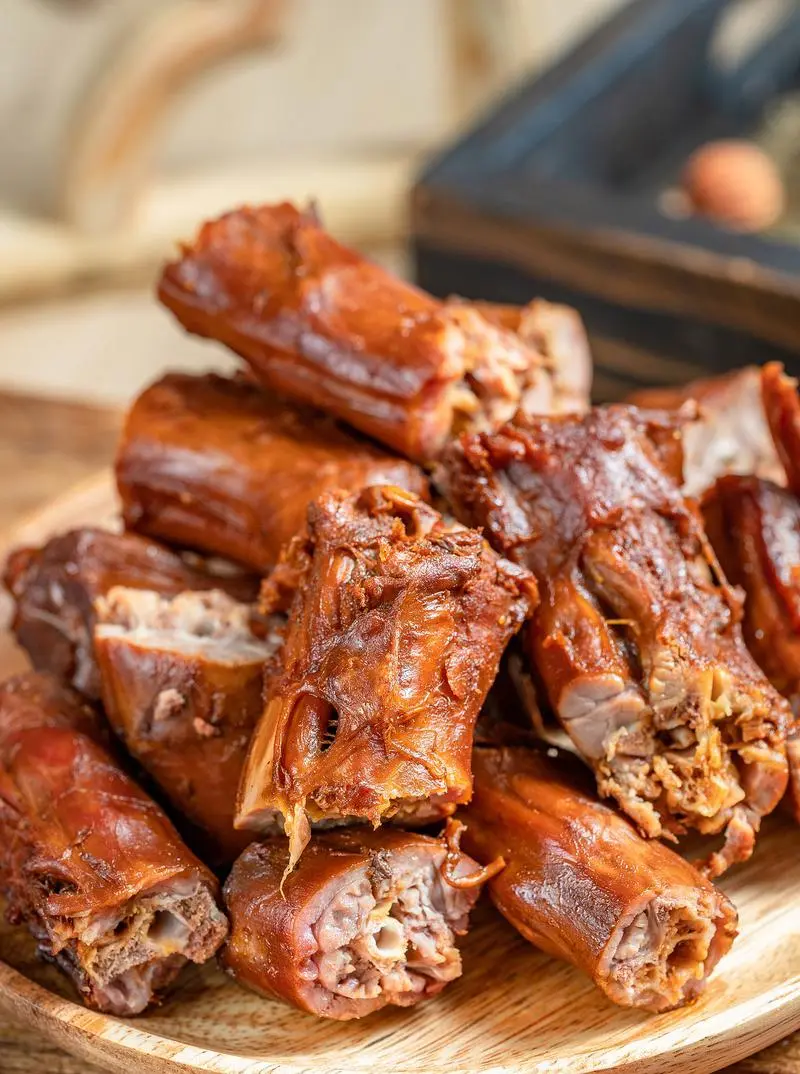
Duck neck (鸭脖): braised in chili and spice until the meat falls off the bone. Best with beer.
If breakfast is Wuhan’s morning ritual, duck neck (鸭脖) is Wuhan’s evening addiction. Duck necks are braised in a spicy, numbing broth of chili, Sichuan peppercorn, star anise, and cinnamon for hours, until the meat falls off the bone and every fiber is saturated with spice.
The famous brand is 精武鸭脖, named after Jingwu Road in Hankou where the dish was invented in the 1990s. But every neighborhood has its own duck neck shop; look for the ones with the longest line.
Eating duck neck is a social activity. You buy a bag (15-30 yuan), sit on a plastic stool by the street, drink beer and gnaw; the meat is sparse, so the spice, the conversation, and the beer are the point.
Where to try it: 精武路 in Hankou, or any 周黑鸭 (Zhou Hei Ya) shop; they’re everywhere.
6. Bean Skin (豆皮)
Yes, this is technically a breakfast item, but I’m including it because most foreigners never try it. Doupi (豆皮) is a crepe made from mung bean flour, filled with sticky rice, diced pork, mushrooms, and bamboo shoots, then pan-fried until the bottom is crispy.
The master of doupi is Laotongcheng (老通城), a 90-year-old brand in Hankou. Their original shop is gone, but branches exist. The dish is heavy, savory, and genuinely unique to Wuhan, you won’t find it anywhere else in China.
Where to try it: 老通城 in Hankou, or 严老幺烧麦 near Jianghan Road.
7. Smashed Bun and Beef Tripe (面窝+牛肉炒生片)
This is two dishes eaten together. Mianwo (面窝) is a deep-fried rice batter ring: crispy on the outside, soft in the middle, with a hole in the center. It’s the most common breakfast side in Wuhan, but it’s also eaten with meals as a bread substitute.
The pairing: stir-fried beef tripe (炒生片) with pickled peppers. The tripe is crisp, the peppers are sour-spicy, and you tear off pieces of mianwo to soak up the sauce. It’s a Hankou thing, old-school, unpretentious, perfect with a beer.
8. Steamed Pork with Rice Flour (粉蒸肉)
Fenzhengrou (粉蒸肉) is a Hubei classic: thin slices of pork belly coated in ground rice and spices, steamed until the rice becomes a soft, fragrant crust and the pork melts in your mouth. The rice absorbs the fat, so it’s rich but not greasy.
In Wuhan, this is often cooked under a layer of sweet potato or taro at the bottom of the steamer, which absorbs the pork drippings. The sweet potato might be better than the pork.
Every Hubei restaurant has this. It’s a safe order, and it’s always good.
9. Three-Flavor Steamed Dish (沔阳三蒸)
This is the signature technique of Hubei cuisine: steaming. Mianyang Sanzheng (沔阳三蒸) means “three steamed things from Mianyang”: traditionally pork, fish, and lotus root, each coated in rice flour and steamed separately.
The result is three dishes in one: the pork is fatty and fragrant, the fish is delicate, and the lotus root is earthy. It’s the dish that best represents Hubei’s cooking philosophy: let the ingredients speak, use steam instead of oil, and balance land and water on the same plate.
Where to try it: 楚灶王 in Wuchang, or any restaurant advertising 沔阳三蒸.
10. Glutinous Rice Balls (欢喜坨)
Also called “happy balls” (欢喜坨), because that’s what they make you. These are deep-fried glutinous rice balls coated in sesame seeds, crispy on the outside, chewy and slightly hollow inside. Sometimes filled with red bean paste.
You’ll find them at breakfast stalls, but also at night markets as a snack. They’re cheap (2-3 yuan each), sweet, and impossible to eat just one. If you see a cart with a wok of oil and sesame-covered balls, stop and buy three.
Where to try it: Jiqing Street night market in Hankou, or any breakfast street in the morning.
How to order like a local
If you walk into a Hubei restaurant and don’t know what to order, here’s the cheat sheet:
-
Steamed Wuchang fish (清蒸武昌鱼): the must-have
-
Lotus root and pork rib soup (排骨藕汤): if it’s cold outside
-
Hongshan mustard greens (洪山菜薹): if it’s winter
-
Steamed pork with rice flour (粉蒸肉): the safe bet
-
A vegetable: stir-fried whatever-is-in-season
-
Rice: for everyone
That’s a full table for 3-4 people, and it’ll cost 120-200 yuan total. Cheap by Western standards. It’s what I order when I take friends out.
The fish city
You’ll notice that four of these ten dishes involve fish or water. That’s not a coincidence. Wuhan sits at the confluence of two rivers, surrounded by 166 lakes. The city has more freshwater surface area than any other major city in China. Fish isn’t a specialty here; it’s the default.
If you don’t eat fish, Wuhan will be harder for you. But the lotus root soup, the duck neck, the steamed pork, and the doupi are all worth the trip on their own.
Practical info
| Item | Details |
|---|---|
| Average meal cost | 20-40 yuan (street), 80-150 yuan (restaurant for 2-3 people) |
| Must-try restaurant | 湖锦酒家: multiple locations, classic Hubei food |
| Best food street | 粮道街 in Wuchang, 吉庆街 in Hankou |
| Vegetarian options | Limited, Hubei cuisine is meat-and-fish heavy. Buddhist restaurants near Guiyuan Temple in Hanyang |
| Spice level | Low, Wuhan food is not spicy by Chinese standards. If you want heat, add chili oil |
Found a dish I missed? Argue with me: Email me.
Related:
-
Lotus Root and Pork Rib Soup: The Taste of a Wuhan Home: the home-cooked dish no tourist finds
-
Hot Dry Noodles: The Ultimate Guide: the dish that started it all
-
Wuhan Breakfast Culture: Guo Zao: the morning ritual
-
Wuhan After Dark: Night Markets: where to eat duck neck after dark
-
Best Time to Visit Wuhan: eat lotus root soup in winter, and fish in autumn
-
Wuhan’s Crayfish Summer: The Social Ritual: the summer food that takes over the city
-
3 Days in Wuhan: A Local’s Itinerary: day-by-day eating plan