
Wuhan is a better photography city than it gets credit for
Nobody comes to Wuhan for the photos. They come for the noodles, the history, the fact that it’s not on the standard China tourist trail. And because nobody comes for the photos, nobody has over-photographed it. No busloads of photographers with tripods at sunrise. No queues to take the same shot that 10,000 people have already taken.
What you will find is a city built on two rivers, stitched together by bridges, with 100-year-old European architecture on one bank and a 1,800-year-old walled city on the other. There are 166 lakes, mountains inside the city limits, and alleys that haven’t changed since the 1930s.
I’ve been photographing Wuhan for 18 years. Here are the spots that consistently produce the best images, with the practical information you need to get there and get the shot.
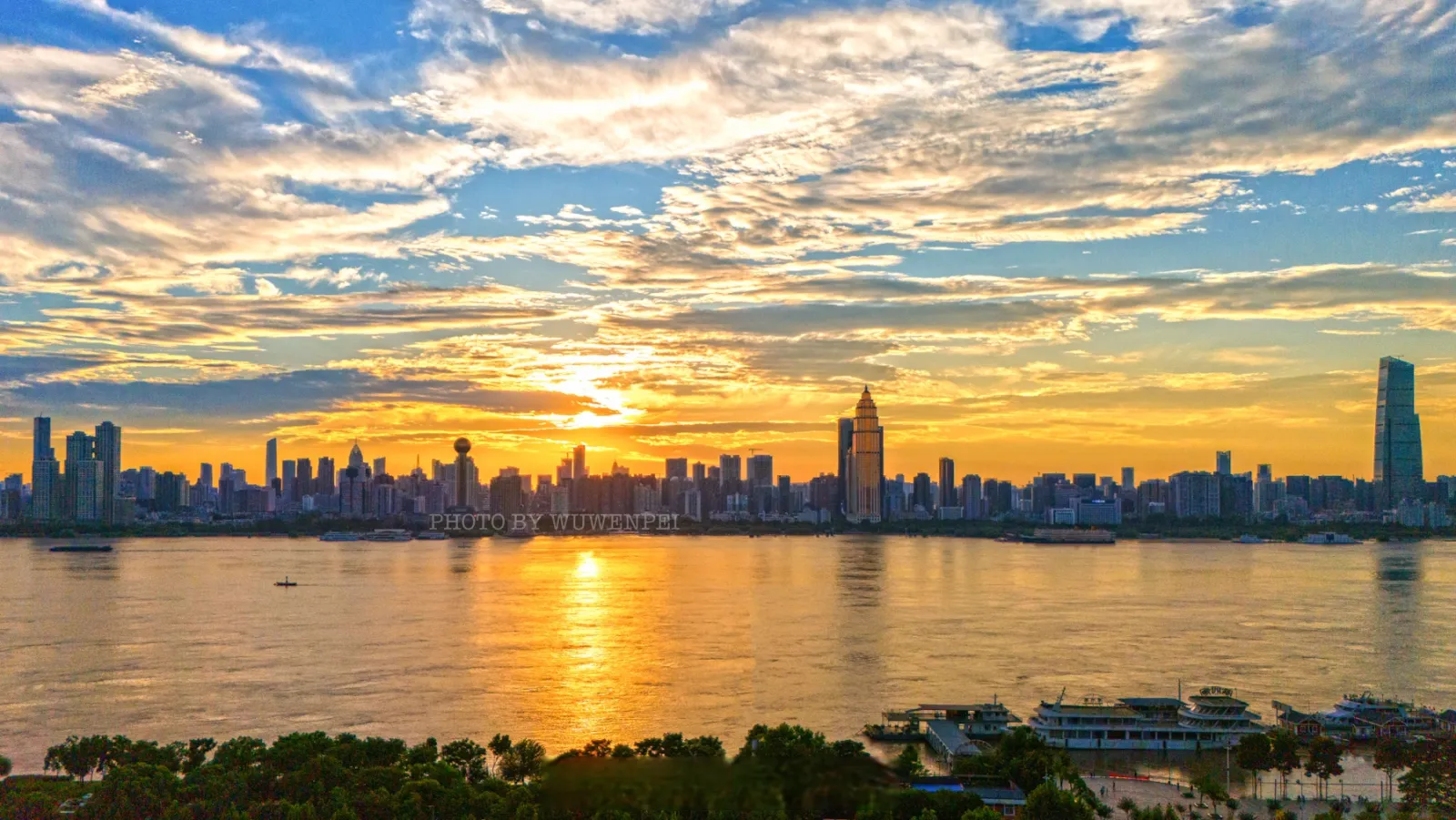
The view from the Yangtze Bridge approach at golden hour: the shot that makes Wuhan worth photographing.
The Yangtze Bridge at golden hour
Where: Wuhan Yangtze River Bridge (武汉长江大桥), Wuchang side approach.
How to get there: Metro Line 4, Wuchang Railway Station (武昌火车站), then walk 15 minutes south to the bridge approach. Or take Metro Line 2 to Jianghan Road, walk south to the Bund, and cross the bridge on foot from the Hankou side.
When: 30 minutes before sunset. The bridge faces roughly east-west, so the light hits the water from the south and turns gold as the sun drops behind Hankou.
What to shoot: The bridge itself is the obvious shot, but the better image is the one looking back at the city. Stand on the Wuchang approach, about 100 meters out on the bridge, and shoot west. You’ll get the bridge railing in the foreground, the Yangtze, the Hankou skyline, and the Bund buildings silhouetted against the sunset. On a clear day, the light is extraordinary. On a hazy day, the haze diffuses the light and makes the skyline look like a watercolor.
Lens: Wide angle, 24mm or wider. The bridge is wide enough that you won’t feel cramped, but the skyline needs context.
Tip: Walk to the middle of the bridge and shoot straight down the river. The Yangtze is 1.2 kilometers wide at this point. Cargo ships pass underneath. The scale is hard to capture without a wide lens.
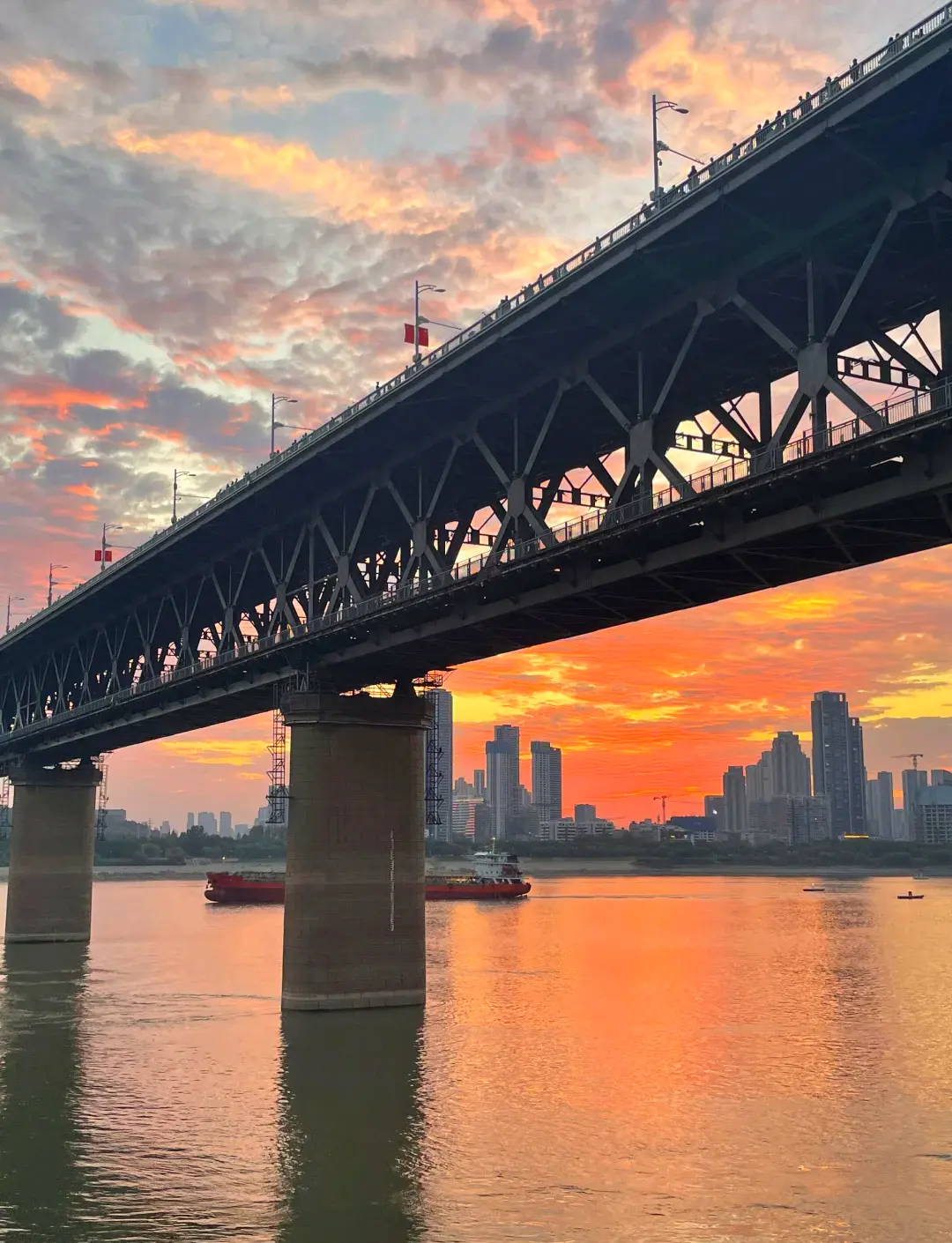
From the Wuchang approach, looking west: bridge railing, Yangtze, Hankou skyline. Golden hour, October.
East Lake at cherry blossom season
Where: East Lake (东湖), Cherry Blossom Garden at Moshan (磨山樱花园).
How to get there: Metro Line 8, Lijia Street station (梨园站), then take the East Lake scenic shuttle to Moshan. Or bike from the Lijia Street entrance along the greenway (30 minutes).
When: Mid-to-late March. The blossoms last about two weeks. Go at 7:00 AM, not 8:00 and not 7:30. 7:00. By 8:30, the tour buses arrive and the path becomes a moving wall of selfie sticks. At 7:00, you have the garden almost to yourself, the light is soft, and the dew is still on the petals.
What to shoot: The cherry blossoms with the lake behind them. The garden is on a slope, so if you position yourself at the bottom and shoot up, you get the blossoms filling the top third of the frame with the lake visible through the branches. If you’re shooting people, the dappled light under the blossom canopy is beautiful. Move around. The light changes every 20 minutes at this time of morning.
Lens: 50mm for blossoms-and-lake, 85mm or 70-200mm for compressed shots of people under the canopy.
Tip: If you miss cherry blossom season, the Wuhan University campus has a second bloom in early April, less famous but equally beautiful.
The old Hankou alleyways (Lifang)
Where: Hankou Lifang (汉口里分), the red-brick alleyways behind the Bund, specifically Tongxing Li (同兴里) and Yanqing Li (延庆里).
How to get there: Metro Line 2, Jianghan Road station. Walk south to the Bund, then turn into the alleys behind the old customs house. The lifang are the red-brick lanes that look like they belong in a different century. I wrote about them in detail here.
When: Morning, 8:00-10:00. The light comes through the lane from the east and lights the brick walls. After 11:00, the lanes are in shadow. The residents are still out: hanging laundry, buying vegetables, playing cards. These are not abandoned heritage streets. People live here, and the life is what makes the photographs work.
What to shoot: The brick texture. The laundry lines. The doors, many of which are original 1920s wood. The cats. The residents, if they’ll let you. Always ask before photographing someone in their home, and a nod and a raised camera is usually enough. If they wave you off, put the camera down and move on.
Lens: 35mm or 50mm. These lanes are narrow, 3-4 meters wide. A wide-angle will distort the brick lines. A 35mm gives you the lane, the walls, and the sky without distortion.
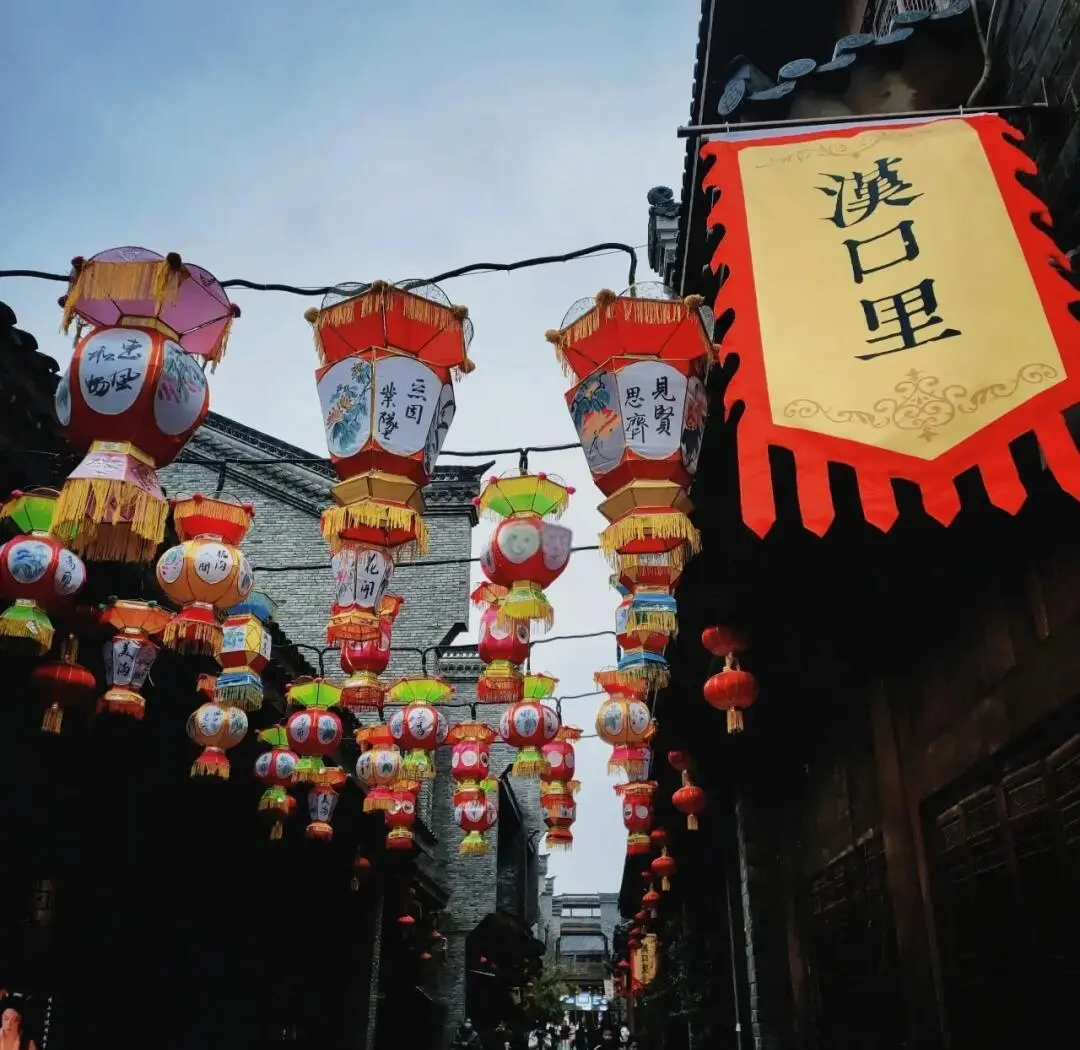
A Hankou lifang at 8 AM: red brick, laundry lines, and side light that hasn’t changed since the 1930s.
Yellow Crane Tower from Simenkou
Where: Simenkou (司门口) at Wuluo Road, on the ridge above the old Wuchang city wall.
How to get there: Metro Line 5, Simenkou station, then walk 5 minutes south up the hill.
When: Late afternoon, 4:00-5:30 PM. The tower faces west, and the low sun lights the facade. The tower is on a hill 60 meters above the river, so you’re shooting across a gap to it, and the air between you and the tower is what creates the depth in the image.
What to shoot: Yellow Crane Tower framed against the sky, with the old Wuchang rooftops in the foreground. From Simenkou, you’re looking up at the tower from below, which makes it loom, while the rooftops of the old town are clay tile, weathered gray and red. The tower is yellow-tiled, and the contrast is what you want.
Lens: 85mm or 70-200mm. You need compression to bring the tower and the rooftops closer together. A wide lens from this position will make the tower look small.
Tip: Don’t shoot from inside the tower park. The trees block the angle. The best shots are from outside the park, from the old town below.
The Hankou Bund at blue hour
Where: Yanjiang Avenue (沿江大道), the promenade along the Yangtze in Hankou.
How to get there: Metro Line 2 or 6, Jianghan Road station, then walk south to the river.
When: Blue hour, the 20 minutes after sunset when the sky is deep blue and the city lights are on but not yet overwhelming. In summer, this is around 7:30 PM. In winter, around 6:00 PM.
What to shoot: The colonial-era buildings lit from below by floodlights, with the deep blue sky above. The Jianghan Customs House is the anchor. It has a clock tower that catches the light beautifully. Shoot from the riverside promenade, looking inland, with the river and the lights of the ferries crossing the water in the background.
Lens: Wide angle, 24-35mm. You need the building and the sky in the same frame.
Tip: Bring a tripod or find a railing to rest the camera on. Blue hour exposures are 1-4 seconds at ISO 200. The ferries leave streaks of light on the water at those shutter speeds.
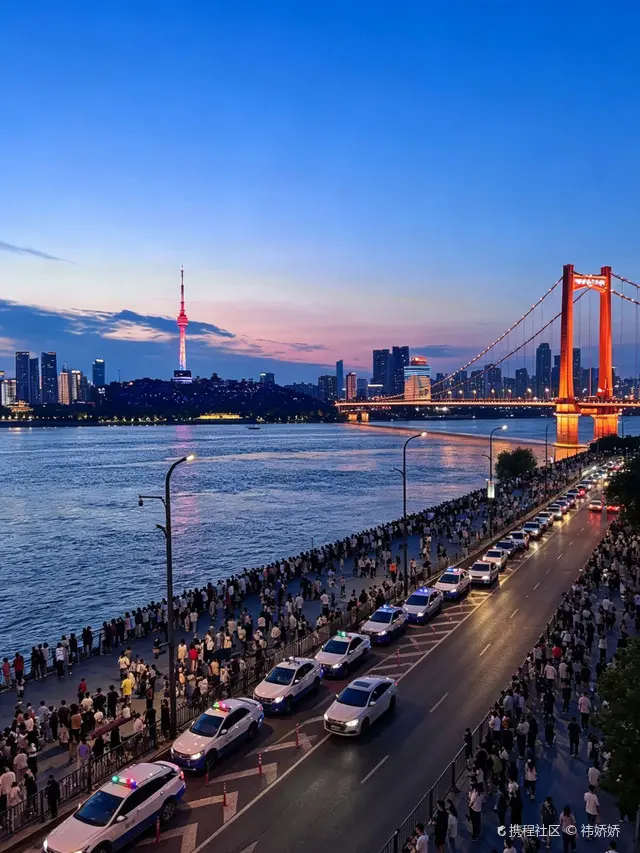
Blue hour on the Hankou Bund: the customs house clock tower, ferry light trails, 20 minutes after sunset.
Hubu Alley before the crowds
Where: Hubu Alley (户部巷), Wuchang. The old food street.
How to get there: Metro Line 5, Simenkou station. Walk 5 minutes east.
When: 7:00 AM. The food stalls open at 6:30. The tour groups arrive at 9:30. The window between 7:00 and 9:00 is when the street belongs to locals eating breakfast.
What to shoot: The vendors. The woks. The steam. Hubu Alley is a sensory overload: oil, smoke, shouting, the clatter of bowls. The best images are close: a vendor flipping noodles in a wok, the steam catching the morning light. Shoot at f/2.8 or f/4, focus on the hands and the wok, let the background blur.
Lens: 35mm or 50mm, fast aperture. The alley is narrow and the light is dim at 7 AM. You need f/2.8 or wider.
Tip: Buy something to eat before you start shooting. Vendors are more friendly to paying customers. A bowl of reganmian (8 yuan) buys you 10 minutes of access.
Practical notes
Gear: Wuhan is a walking city. Bring one body, one lens. The 35mm or 50mm is the most useful focal length here. The streets are narrow, the subjects are close, and a prime lens forces you to move your feet instead of zooming. A zoom is useful at the bridge and the tower, but for everything else, a 35mm is the right tool.
Permits: You don’t need a permit to photograph in public spaces in Wuhan. For the metro system, photography is allowed but tripods are not. For temples, ask before photographing inside the halls. The monks at Guiyuan Temple are generally fine with it if you don’t use flash.
Drones: Drones are technically restricted in central Wuhan because of the military airport proximity, though in practice flying over the river and the lakes away from the city center is tolerated. Do not fly over the bridge, the government district, or any building with a flagpole. If security approaches, land immediately and be polite.
Weather: The best light is October-November and March-April. Summer is hazy, which can work for moody, diffused images but kills long-range visibility. Winter is clear but cold; the light at 4 PM in January is the same as 6 PM in July.
People: Wuhan residents are not camera-shy, but they’re also not performing for you. If you want to photograph someone, ask. A smile and a gesture toward your camera is usually enough. If they say no, respect it. If they say yes, show them the photo on the back of the camera. They’ll smile. That’s your second shot.
The spot I’m not telling you about
There’s a rooftop on a building in Hankou where you can see the entire city: the river, the bridge, the three towns, the skyline, all of it. I’m not going to tell you which building. It’s not open to the public, the elevator doesn’t go to the top floor, and the last time I was up there I had to climb a ladder and push open a skylight. If you find it, you’ll know. The view is the one that explains why Wuhan is a city worth photographing. It’s real and complicated, built by 11 million people who are too busy living in it to pose for it.
Have a Wuhan photography spot I missed? Email me and I’ll check it out.
Related:
-
Walking the Yangtze Bridge at Night: the bridge experience, not just the photo
-
East Lake: Wuhan’s Green Heart: the cherry blossom garden and greenway
-
Yellow Crane Tower: Beyond the Poem: the tower’s history and how to visit
-
Hankou’s Bund: The European Quarter: the colonial architecture along the river
-
Wuhan’s Lifang: The Vanishing Alleyways of Old Hankou: the red-brick lanes in detail
-
Wuhan Breakfast Culture: Guo Zao: the food culture you’ll photograph at Hubu Alley
-
Wuhan University: Cherry Blossoms: the second cherry blossom spot
-
Best Time to Visit Wuhan: when the light and weather are right
-
Wuhan’s Parks: Where 11 Million People Go to Breathe: green spaces for landscape shots
-
Wuhan’s Temples: Where 300 Years of Incense Still Burns: photographing incense and architecture