
Wuhan is not a shopping city. That’s fine.
Nobody comes to Wuhan to shop. People come for the breakfast, the tower, the museum. Luxury shoppers go to Shanghai, silk and pearl hunters to Suzhou.
But you’ll need things while you’re here. A SIM card, a power adapter, a gift for someone back home, a pair of shoes because yours fell apart walking the pedestrian street. And if you know where to look, Wuhan has things worth buying that you won’t find in Shanghai’s airport boutiques.
I’m not going to pretend this is a luxury shopping guide. It’s a practical guide to what’s worth your money and where to find it.
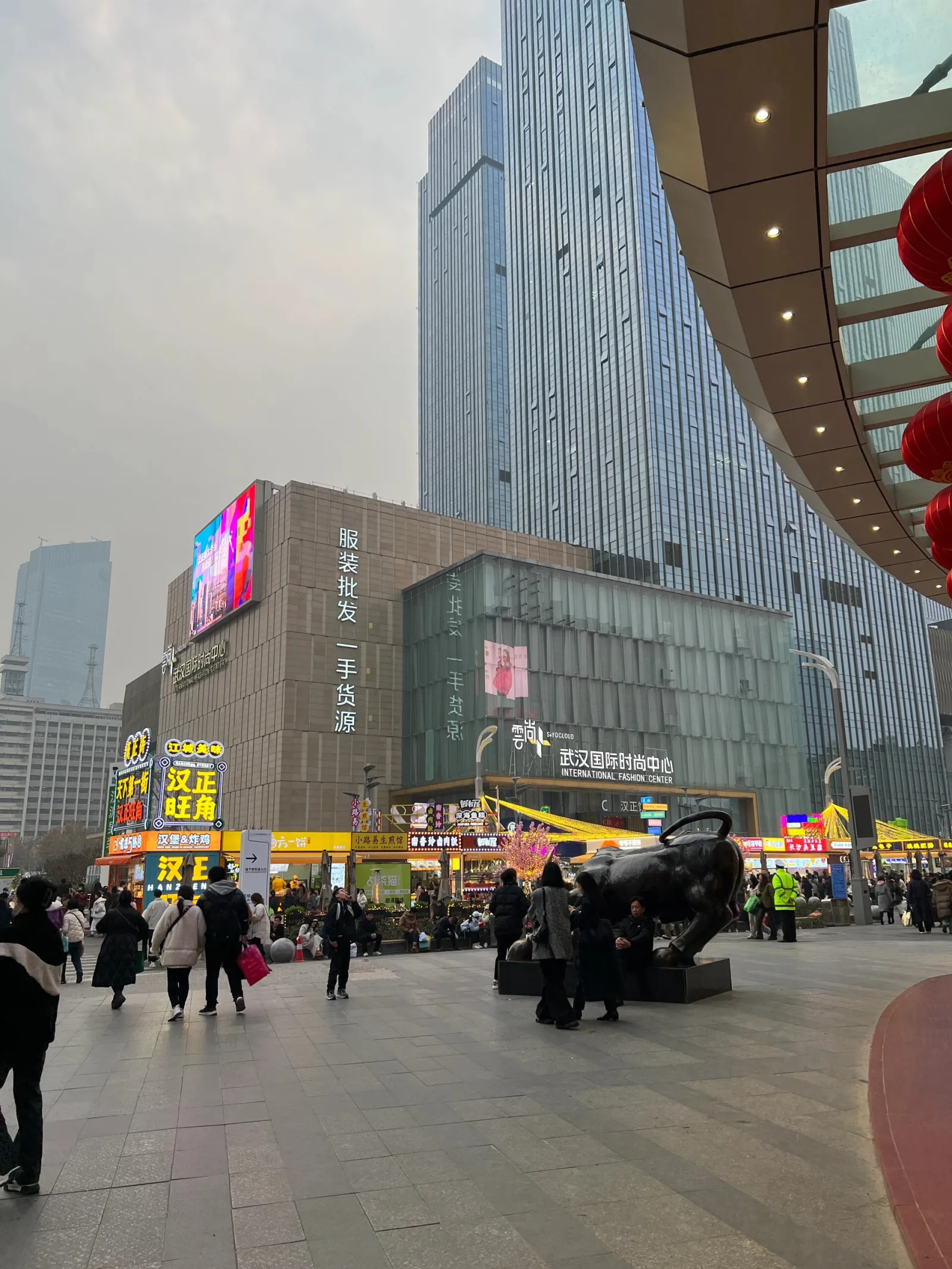
Wuhan shopping streets come alive after dark: neon, crowds, and the same commercial energy that made Hankou a trading port 400 years ago.
The five shopping areas
1. Jianghan Road and Zhongshan Avenue (江汉路·中山大道)
This is the main shopping artery of Hankou. Jianghan Road is a 1.6-kilometer pedestrian street lined with early 20th-century architecture, now occupied by H&M, Uniqlo, Sephora, and the usual international brands. The side streets off Zhongshan Avenue have older, smaller shops selling shoes, eyewear, and phone accessories.
What to buy here: Mid-range international brands, shoes, cosmetics, phone cases. The architecture, not the shops, is the real reason to come. Shop for an hour, photograph for two.
Price range: 50-500 yuan for most items. International brands are priced the same as anywhere in China.
Metro: Line 2/6, Jianghan Road station.
2. Wusheng Road and Hankou Department Store (武胜路·武商集团)
If Jianghan Road is for tourists, Wusheng Road is for locals. This is the older commercial district, anchored by the Wuhan Department Store (武商集团) and the Wusheng Road shopping street. The stores here sell practical things: clothing, household goods, electronics, stationery. Fewer international brands, more domestic labels, lower prices.
What to buy here: Daily necessities, inexpensive clothing, phone accessories, eyeglasses (there’s an entire eyewear street running off Wusheng Road with frames starting at 50 yuan).
Price range: 20-300 yuan.
Metro: Line 1, Wusheng Road station.
3. Chuhe Han Street (楚河汉街)
Chuhe Han Street is the newest commercial development in Wuhan, a 1.5-kilometer pedestrian street along a canal connecting East Lake to Shahu Lake. It’s the closest thing Wuhan has to a “lifestyle” shopping district: high-end boutiques, a cinema, and restaurants overlooking the water. The architecture is a pastiche of Republican-era Chinese and modern glass, which sounds worse than it looks.
What to buy here: International fashion brands, Zara, Apple Store, imported cosmetics. The walk itself is the main attraction.
Price range: 100-1000+ yuan.
Metro: Line 4, Chuhe Han Street station.
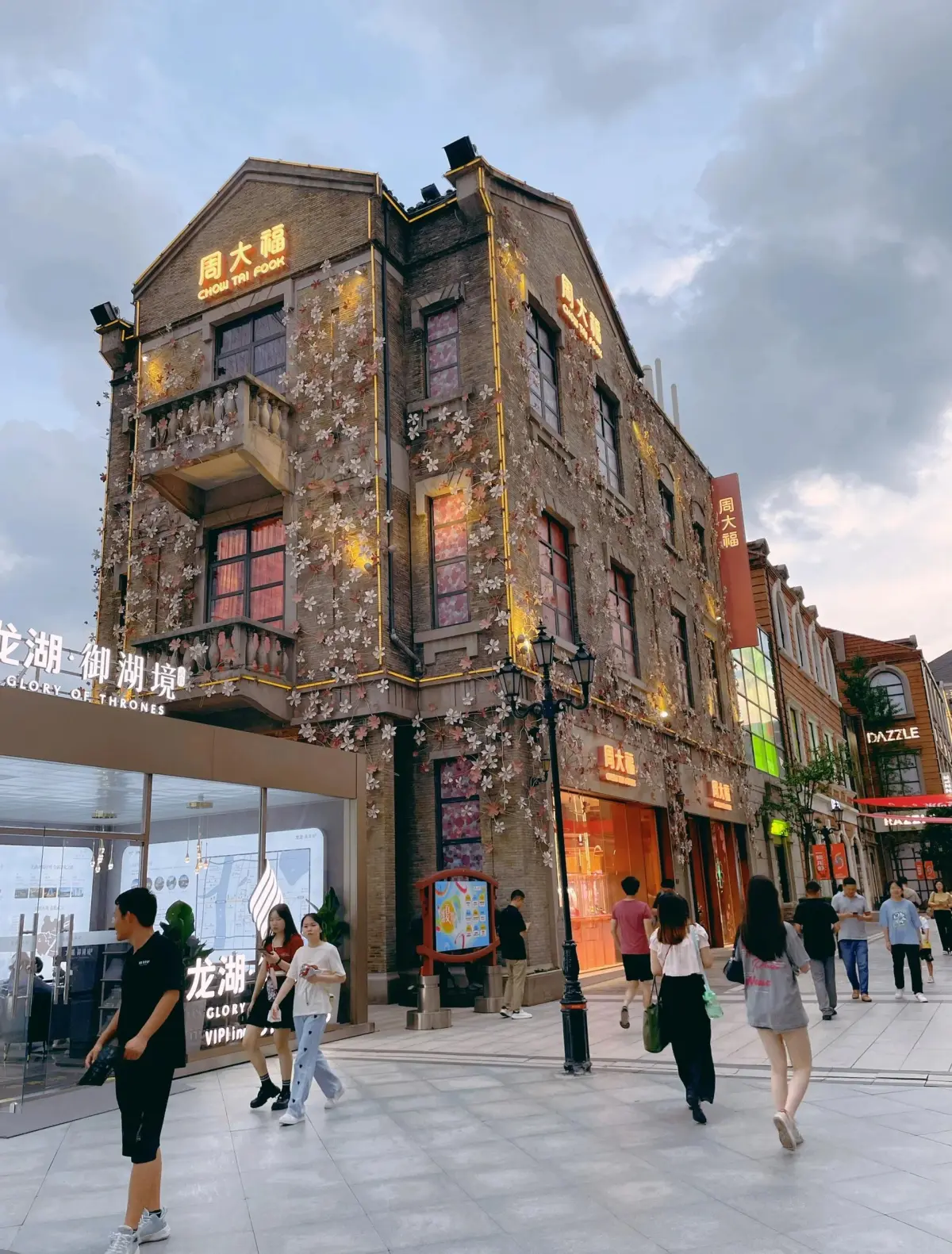
Chuhe Han Street: Wuhan’s newest shopping promenade, built along a canal connecting two lakes.
4. Guanggu Pedestrian Street (光谷步行街)
This is the Optics Valley shopping area, the largest pedestrian street complex in Wuhan. It’s designed for students and young professionals: cheap fashion, electronics, milk tea shops, and a sprawling underground mall that connects to the metro. The commercial space is enormous, over 300,000 square meters, and it feels like it was designed by someone who just discovered escalators.
What to buy here: Inexpensive clothing, phone cases, electronics accessories, streetwear, snacks. The night market here is also one of the best in the city.
Price range: 10-200 yuan for most items. This is the cheapest shopping area in the city, by a wide margin.
Metro: Line 2, Optics Valley Square station (光谷广场).
5. Hanzheng Street (汉正街)
Hanzheng Street is the oldest wholesale market in Wuhan, dating back to the Ming Dynasty. For 400 years, this was where central China’s merchants came to buy and sell everything: fabric, tea, porcelain, herbs, hardware. Today, it’s still a wholesale district, though much of the old street has been demolished and replaced with modern wholesale towers.
What to buy here: Fabric, clothing (wholesale prices if you buy in quantity), small goods, accessories. The old street atmosphere is mostly gone, but the southern end still has some pre-war buildings worth seeing.
Price range: Very low. 10-100 yuan for most items if you buy retail.
Metro: Line 6, Hanzheng Street station.
Warning: Hanzheng Street is crowded, chaotic, and not designed for browsing tourists. Go only if you want to see what a Chinese wholesale market looks like, or if you genuinely need to buy 30 identical phone cases.
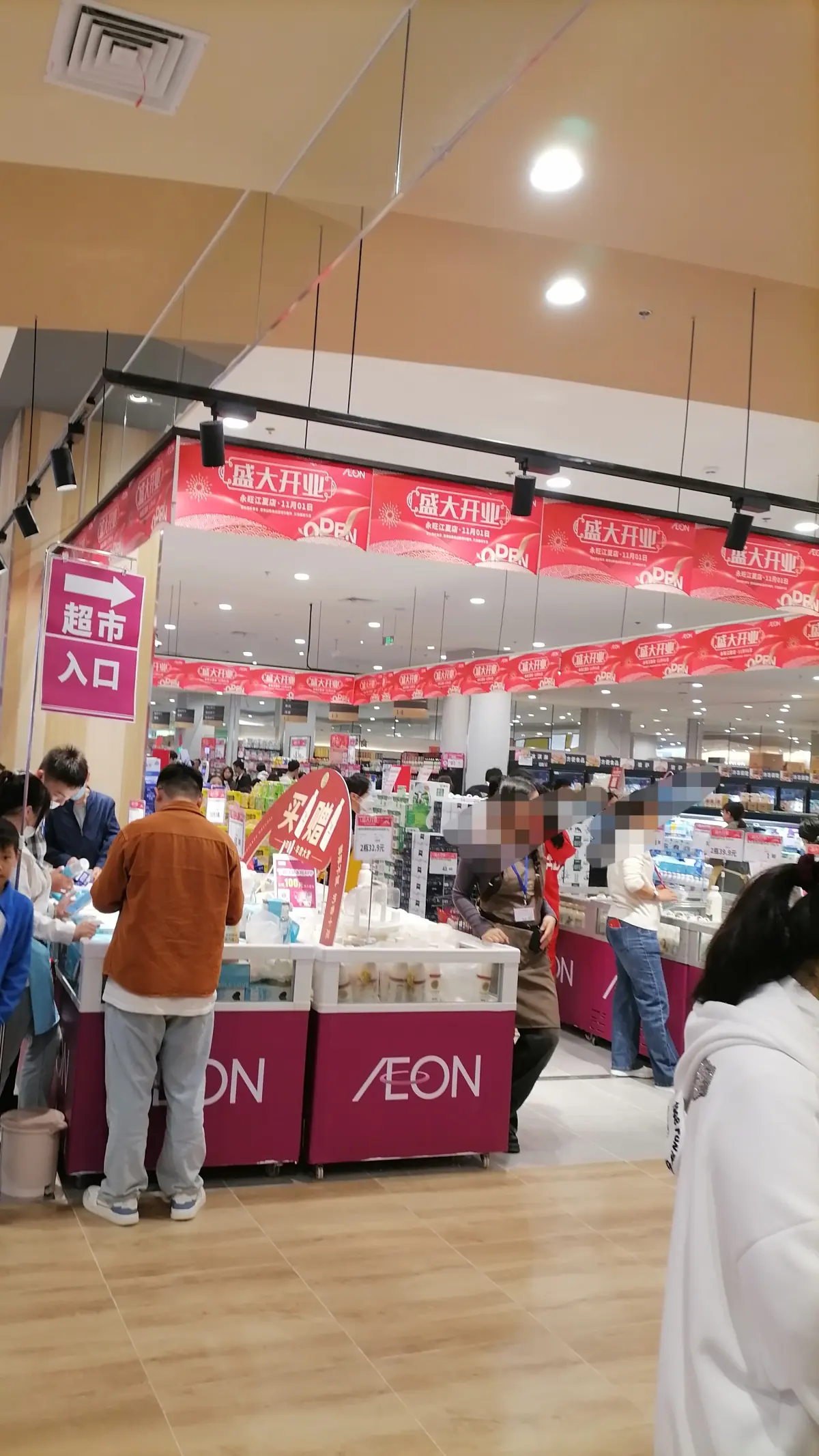
Hanzheng Street: 400 years old, still a wholesale market, still chaotic, still cheap.
What to buy
Tea (茶叶)
Hubei was one of China’s major tea-producing provinces, and Wuhan was the world’s largest tea export port for 40 years. The local tea is green, specifically the “Cui Jian” (翠剑) variety from the Wuling mountains in western Hubei. It’s a light, grassy green tea, not as famous as Longjing but considerably cheaper.
Where to buy: The tea market on Chongren Road (崇仁路茶市). This is a street of tea shops in Hankou, about 20 stores, all selling tea from Hubei, Hunan, and Yunnan. You can sit, taste, and buy by weight. Prices start at 60 yuan per 500g for decent green tea and go up to 500+ for premium leaves.
What to get: Cui Jian green tea (60-120 yuan per 500g) or Yichang black tea (80-150 yuan per 500g). Both are local, both travel well, both make good gifts.
Porcelain and ceramics (陶瓷)
Wuhan isn’t a porcelain city. Jingdezhen, 300 kilometers east, is where the famous kilns are. But Wuhan has been a trading hub for porcelain for centuries, and the antique markets here occasionally have genuine pieces from the Qing Dynasty and the Republic period. “Occasionally” is the key word. Most of what’s labeled “antique” is not.
Where to buy: The antique market at Maigao Temple (岱家山古玩市场), in the northeastern part of the city. About 50 stalls selling porcelain, jade, calligraphy, old books, and “old” things of uncertain provenance. Go on weekends when more vendors are present.
What to get: Decorative ceramics (50-200 yuan for modern pieces that look old). Don’t spend serious money on anything labeled “Qing Dynasty” unless you have expertise. You’re almost certainly buying a reproduction.
Local food products (特产)
The food you can take home falls into three categories:
Hot dry noodle kits (热干面礼盒). Packaged reganmian with the sesame paste included. Not as good as the fresh version, but recognizable and easy to carry. 15-25 yuan per box, available at every supermarket.
Duck necks (鸭脖). Wuhan’s night market snack, vacuum-packed for travel. The brand to look for is “Zhou Hei Ya” (周黑鸭), which started in Wuhan and is now a national chain. Spicy, savory, and an acquired taste. 30-50 yuan per pack, available at the airport.
Lotus root products (藕制品). Hubei is lake country, and lotus root is the local ingredient. You can buy dried lotus seeds (for soup) and lotus root starch (for a thick, sweet breakfast porridge) at any supermarket. 15-30 yuan per bag.
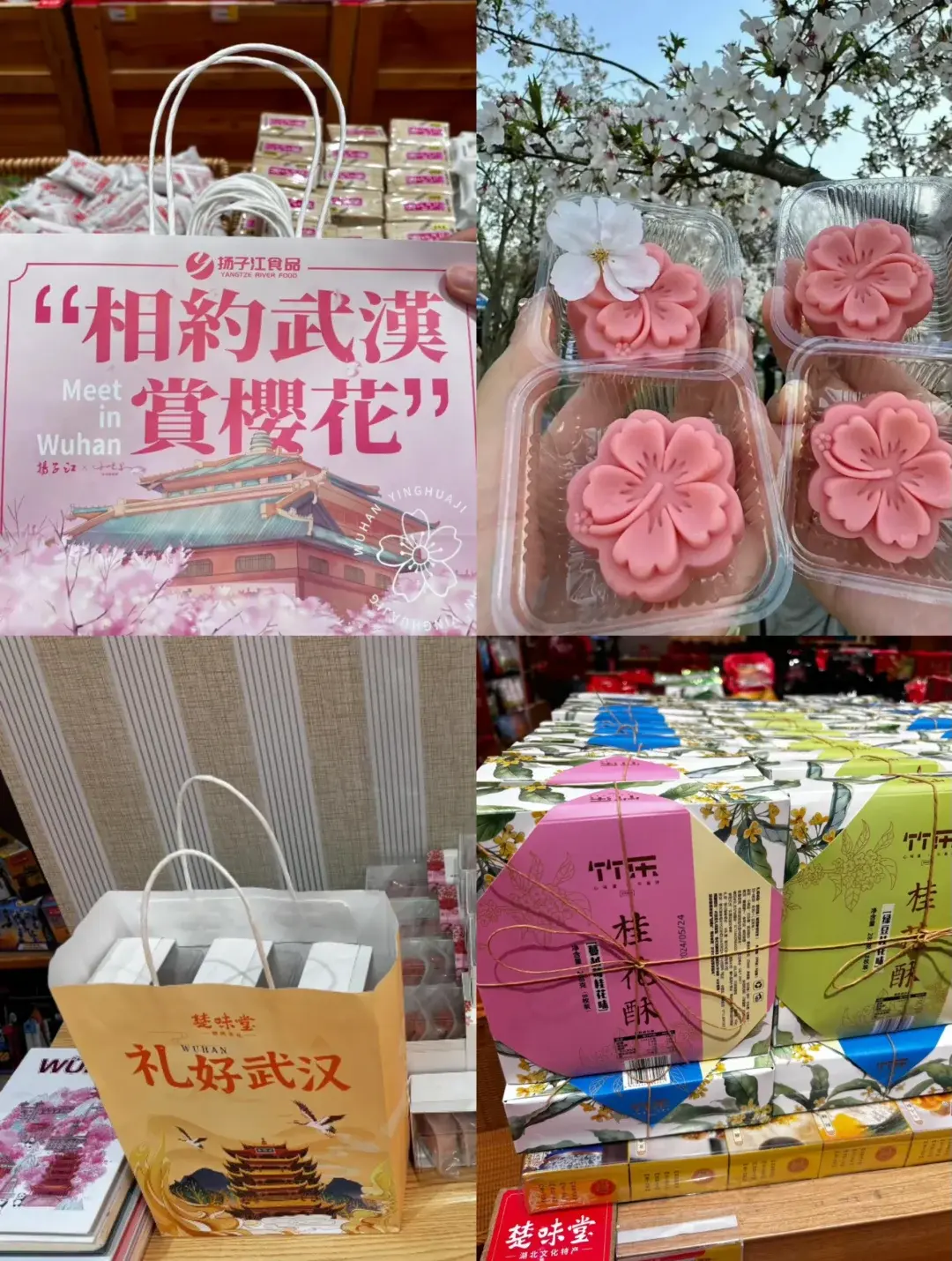
What to bring home: duck necks, noodle kits, and lotus root starch, the edible souvenirs that explain Wuhan.
The practical stuff
Payment
Every shop in Wuhan accepts WeChat Pay and Alipay. Set up both before you arrive. Cash works but is slower and sometimes unwelcome at smaller stalls. International credit cards work in malls and department stores, but not in market stalls or street vendors.
Tax refunds
China has a tax refund policy for foreign visitors. If you spend over 500 yuan at a single store that participates in the program, you can claim an 8-9% refund at the airport. Look for the “Tax Free” sign in larger department stores and malls. The refund process at Wuhan Tianhe Airport is slow, so arrive 30 minutes earlier than you normally would.
Haggling
You can haggle at markets. You cannot haggle at malls. The rule is simple: if there’s a price tag, the price is fixed. If there’s no price tag, you negotiate.
When haggling, the pattern is: the vendor quotes a price, you offer 40% of that, they act offended, you offer 50%, they come down to 80%, you settle at 60-70%. This takes about two minutes, so don’t drag it out or get aggressive. If you can’t agree, walk away. They’ll call you back if the price is workable.
Fake goods
Counterfeit luxury goods exist in Wuhan’s markets. Handbags, watches, sneakers with famous logos, all at suspiciously low prices. Buying them is technically illegal, though enforcement against buyers is zero. Quality ranges from “obviously fake” to “surprisingly convincing.” If you’re going to buy, don’t spend more than 100-200 yuan. A convincing fake that falls apart in a month is a bad deal at any price.
Shipping
If you buy too much to carry, ship it. Every mall and market has an SF Express (顺丰) counter, and they’ll pack your purchases in a box and ship internationally. Shipping to North America takes 7-14 days and costs 200-400 yuan per kilo, depending on speed. Save your receipts. You’ll need them for customs.
The honest list
If you’re leaving Wuhan and want to bring something back, here’s what I’d actually buy:
-
Tea from Chongren Road market (60-120 yuan). Genuine, local, useful.
-
Zhou Hei Ya duck necks from the airport (35 yuan). The most Wuhan souvenir possible.
-
A hot dry noodle kit (20 yuan). It’s not as good as the real thing, but it explains the city to whoever eats it.
-
A print from the antique market (50-100 yuan). Calligraphy scrolls and woodblock prints are cheap and don’t break in luggage.
-
Nothing. Sometimes the best souvenir is the memory of eating reganmian at 6 AM on a plastic stool. You can’t buy that; you can only do it.
Found a great shop I missed? Bought something amazing? Email me and I’ll add it.
Related:
-
Jianghan Road: Wuhan’s 1.6-Kilometer Open-Air Museum: the main shopping street, building by building
-
Wuhan Optics Valley: China’s Optical Tech Hub: the Guanggu area explained
-
The Tea Port: How Hankou Fueled the World’s Tea Habit: 40 years as the world’s largest tea port
-
Hot Dry Noodles: Ultimate Guide: what you’re eating when you buy that noodle kit
-
Wuhan After Dark: Night Markets: the food stalls that share the shopping streets
-
Getting Around Wuhan: Transportation Guide: metro lines to every shopping area
-
Where to Stay in Wuhan: which neighborhood puts you closest to the shops
-
Is Wuhan Safe? A Local’s Honest Guide: scams to watch for, including the “friendly stranger” tea house scam
-
3 Days in Wuhan: A Local’s Itinerary: how to fit shopping into a short trip
-
Wuhan’s Crayfish Summer: The Social Ritual: the seasonal food culture you can’t take home