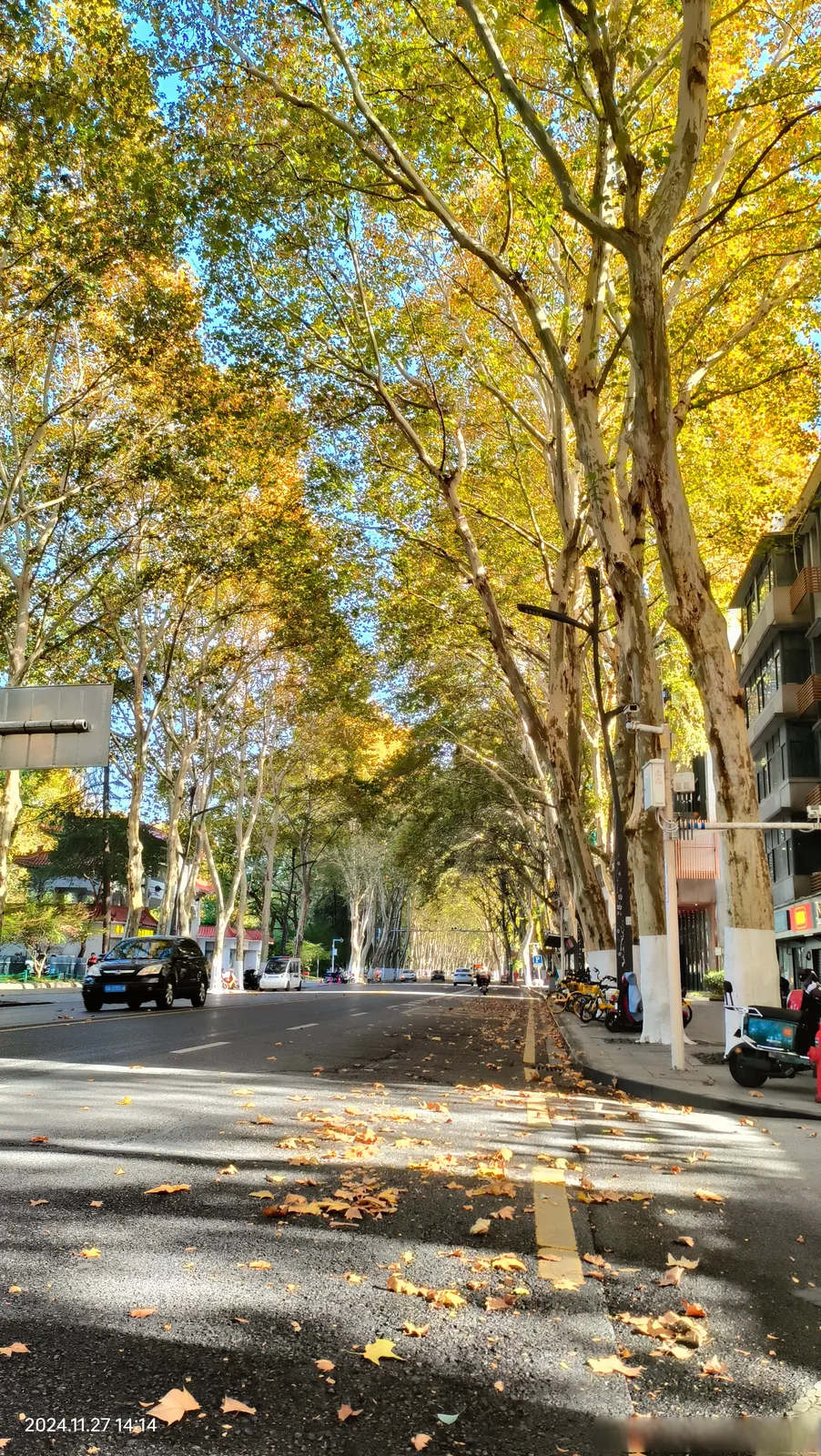
Summer doesn’t end in Wuhan. It collapses. Somewhere around mid-September, you wake up one morning and the air smells different. Not cool exactly. Just less aggressive. The brutal stretch of 38-degree days suddenly spikes downward by ten or fifteen degrees in a week, and people emerge from air-conditioned rooms blinking like moles.
This is autumn arriving, and it might be Wuhan’s best feature.
The Timeline
October is the sweet spot. The temperature hovers between 18 and 25 Celsius during the day. Nights drop to around 15, enough to need a jacket if you’re out past nine. The humidity loosens its grip for the first time since May. You can walk outside without immediately regretting your life choices.
November follows with cooler nights and the first real chill of the year. By December winter has set in, wet and cold in a way that doesn’t show up on thermometer readings.
The full good weather window is roughly October through mid-November. Six to eight weeks. Locals treat it like a limited release. If you want the month-by-month detail of what is blooming while you are here, I mapped the whole flowering year in Wuhan Flower Calendar: What’s Blooming and Where to Find It.
The smell
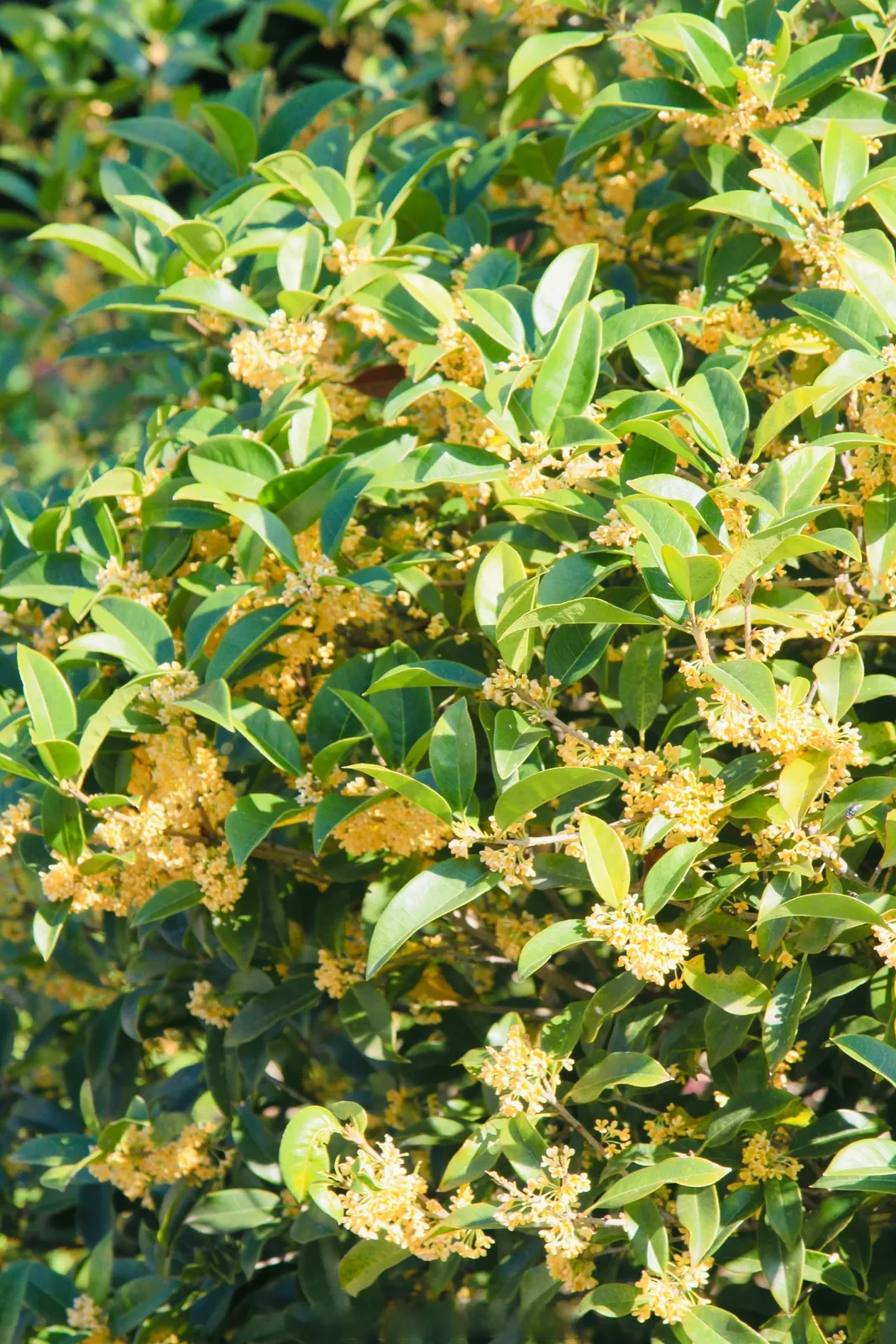
Walk through any Wuhan neighborhood in October and you’ll smell it. Sweet, heavy, almost too much. Osmanthus flowers bloom in clusters on trees along almost every street in the old city. Hankou especially: the tree cover along the side streets around Jianghan Road goes yellow-orange and the smell gets thick enough to taste.
The flowers themselves are tiny, four-petaled things you’d walk past without noticing if they didn’t announce their presence from fifty meters away. People collect them. Old aunties spread newspaper under trees, shake branches, gather the fallen flowers. They make osmanthus sugar, osmanthus tea, osmanthus cake, osmanthus everything. The process takes patience and produces desserts that taste exactly like walking through a city street in October.
You can buy osmanthus cake at most regular bakeries this time of year. Soft, sticky, amber-colored, about 5 yuan. It keeps for a week if you don’t eat it all on the first try, which you will.
What people do
Locals have two responses to autumn. One group behaves like they’ve been released from prison. Every park, every open space, every flat surface with decent light gets covered in people sitting. Sunlight without punishment. It’s addictive.
The other group panics and leaves for travel before it gets cold. October is peak domestic travel season in China, and Wuhan’s airports and train stations overflow. Huangshan, Zhangjiajie, Chongqing, anywhere with mountains that show autumn leaves. The ones who stay claim they made the smarter choice, but they’re posting their own park selfies just as much.
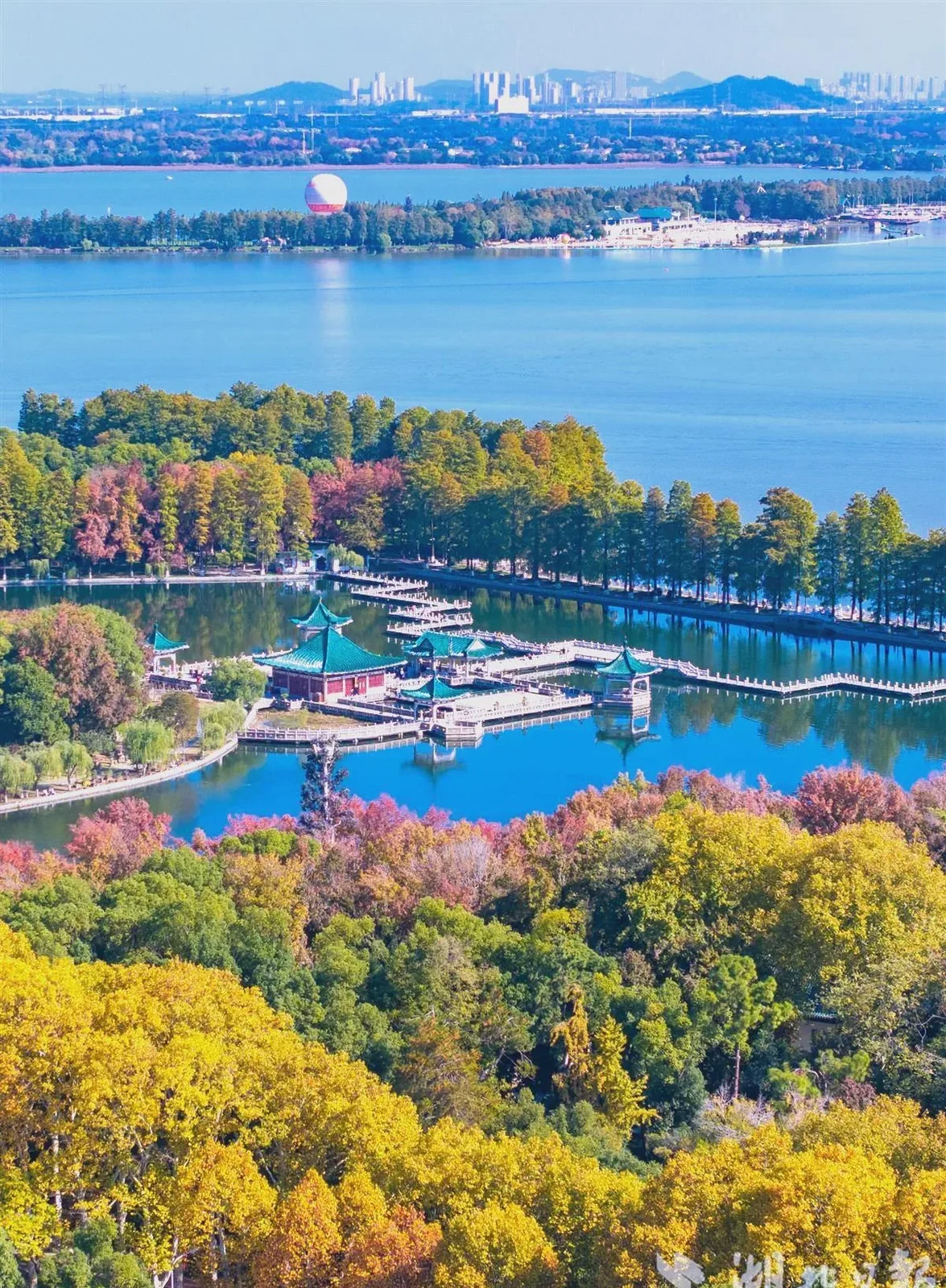
West Lake in Hangzhou gets postcards. East Lake in Wuhan gets the people who actually live here. The north shore maples turn red. The ginkgo avenue near the botanical garden goes solid yellow. Neither is famous enough to attract tourist crowds, which is sort of the point. You can actually walk without someone stepping into your frame. Most of that colour happens on the lake, which I have written about properly in East Lake: Wuhan’s Green Heart.
What gets eaten
Crab season hits in October and runs through December. Hairy crabs from Yangcheng Lake get all the premium pricing and gift-box attention. Wuhan locals eat regular river crabs, cheaper and just as good, steamed at home with ginger and vinegar. The smell fills the apartment for hours.
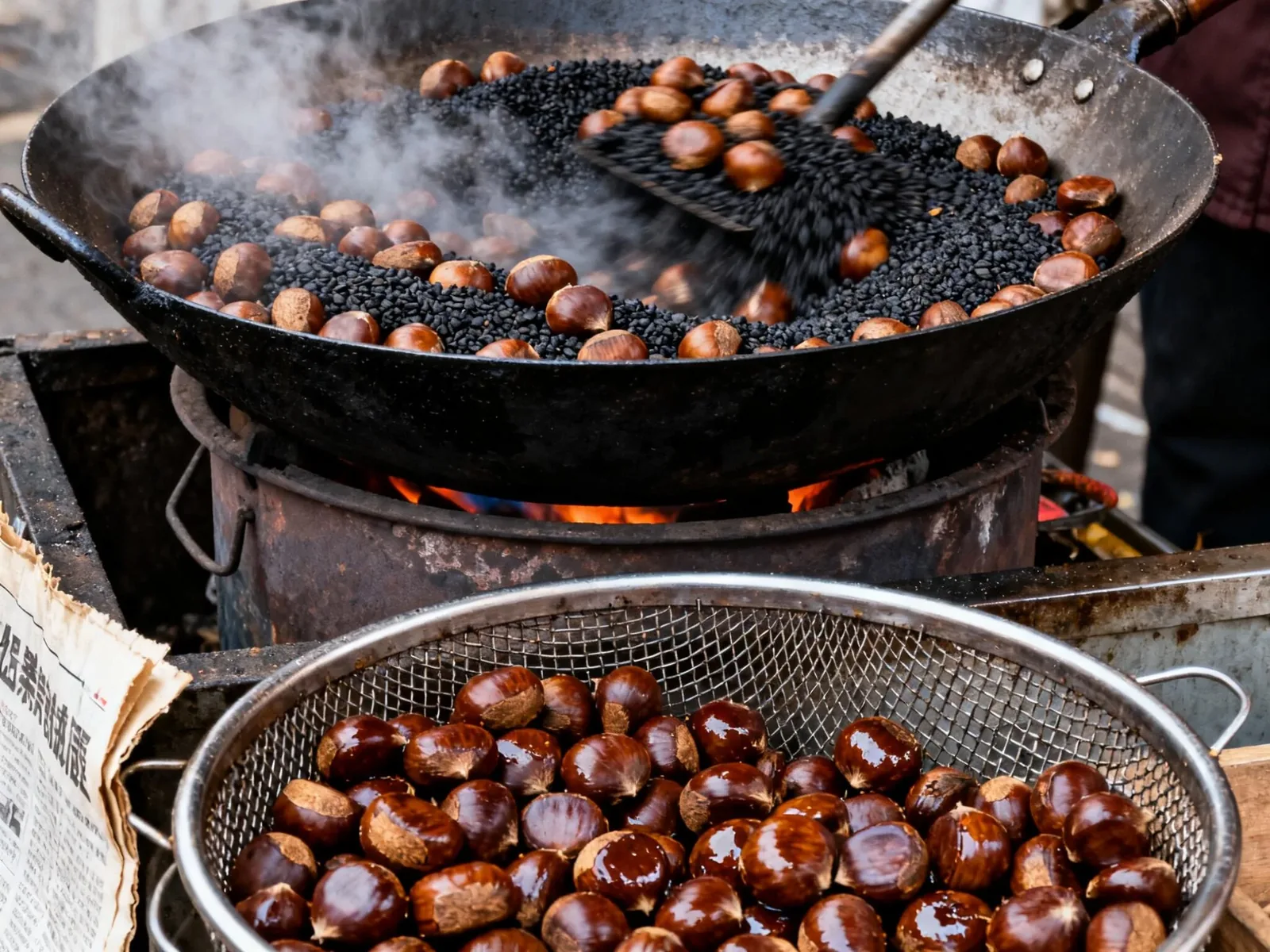
Chestnuts roasting on sidewalk corners appear overnight. Vendors set up metal drums with blackened walls and stir the roasting nuts with long-handlers. The smell carries across traffic. A bag costs ten to fifteen yuan. Hot enough to burn your fingers if you try to peel immediately. Everyone tries to peel immediately.
Fresh hawthorn berries get skewered and coated in hard sugar: tanghulu, the version that shows up when the air gets cold enough to see your breath while eating them. The crunch breaks through the sour. Street vendors cluster near schools and metro exits.
Pomegranates flood the fruit stalls. People buy them by weight and eat them by the spoonful while watching television, spitting seeds into a bowl. The whole process is messy and takes half a movie.
The Practical Details
What to bring if you visit in layers thin enough to adjust. A light jacket for mornings and evenings works. Rain still happens. Wuhan doesn’t get proper dry season. The skies stay overcast more than in summer, but when it’s sunny it’s the kind of light that makes you take photos of random buildings.
Autumn is when Wuhan earns its tourist-friendly reputation, which is funny given the city doesn’t market itself as a fall destination. Most sites stay open on regular hours. The riverside parks see more people than usual but never get crowded the way the cherry blossom season does. You can walk across the Yangtze Bridge in cool air and not pass out halfway.
Temperature swings are real though. A warm October afternoon can be followed by a cold front from the north that drops things by twelve degrees overnight. Locals dress in ridiculous layers: windbreakers over T-shirts, scarves on statues in front of building entrances. The joke is that Wuhan people own four wardrobes and use all four in a week.
The Aftertaste
Autumn ends without ceremony, and the skies grey out properly. The osmanthus trees go bare. People unpack their heavy coats, pull out the electric blankets, and resign themselves to three months of wet cold.
But for those six weeks (the smell of flowers on quiet streets, the sun that finally feels friendly, the chestnuts and crabs and the whole city sitting outside breathing fresh air), Wuhan becomes the place I tell people they should visit. Not in spring. Not in summer. Right now.