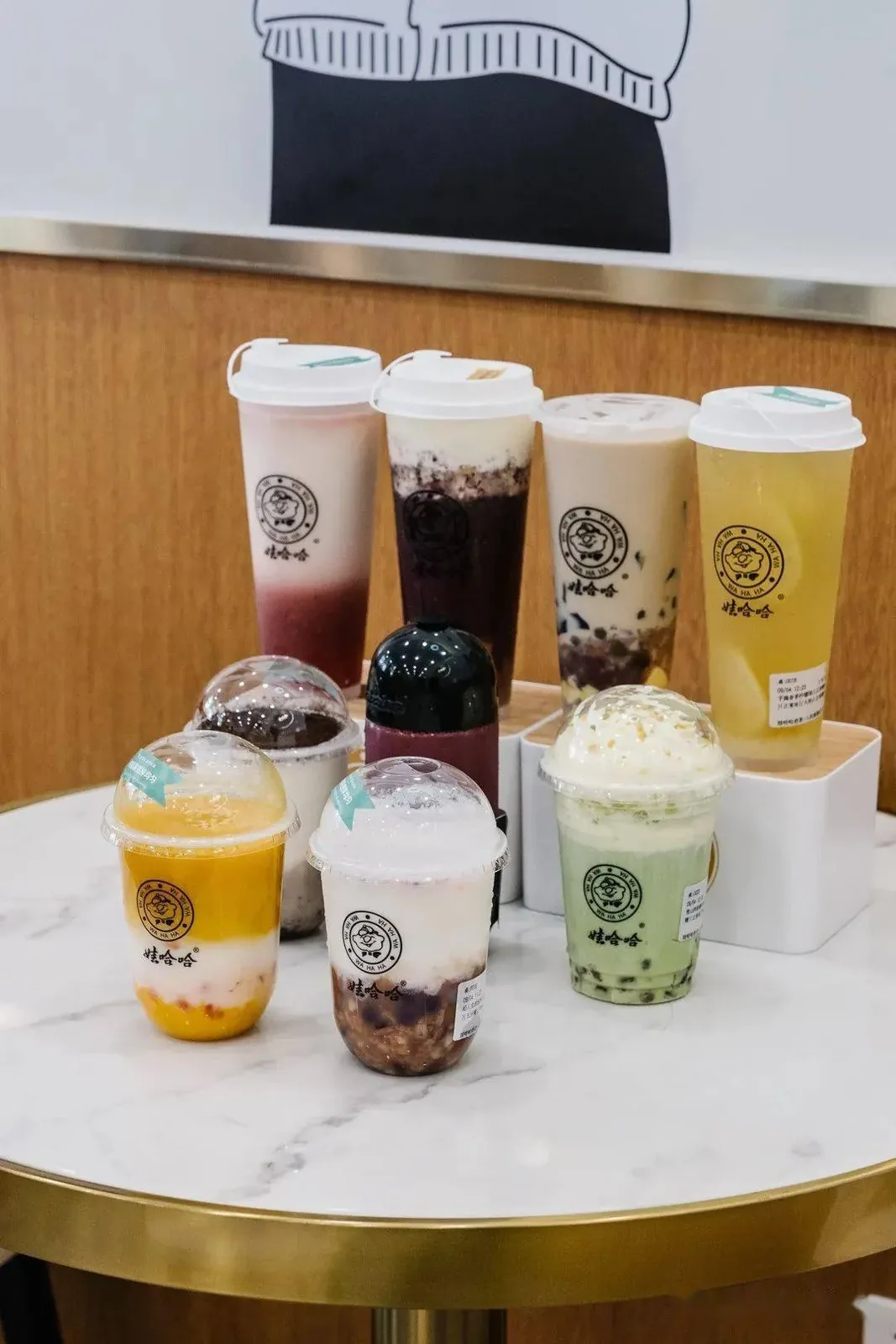
You can walk 200 meters down Jianghan Road and pass six milk tea shops. Not six chains. Six shops. Locals map their commute by which stores they can detour through without adding more than two minutes.
I asked a friend’s daughter what she drinks. She rattled off seven options like I’d asked her opinion on oxygen. When pressed for a favorite, she paused and said “depends which line was shorter.” She’s fifteen and anyone younger than her cannot remember shops needing lines because everything runs through apps now.
The four tiers
Wuhan sorts its milk tea into four price bands, and the borders between them are defended more fiercely than any international boundary.
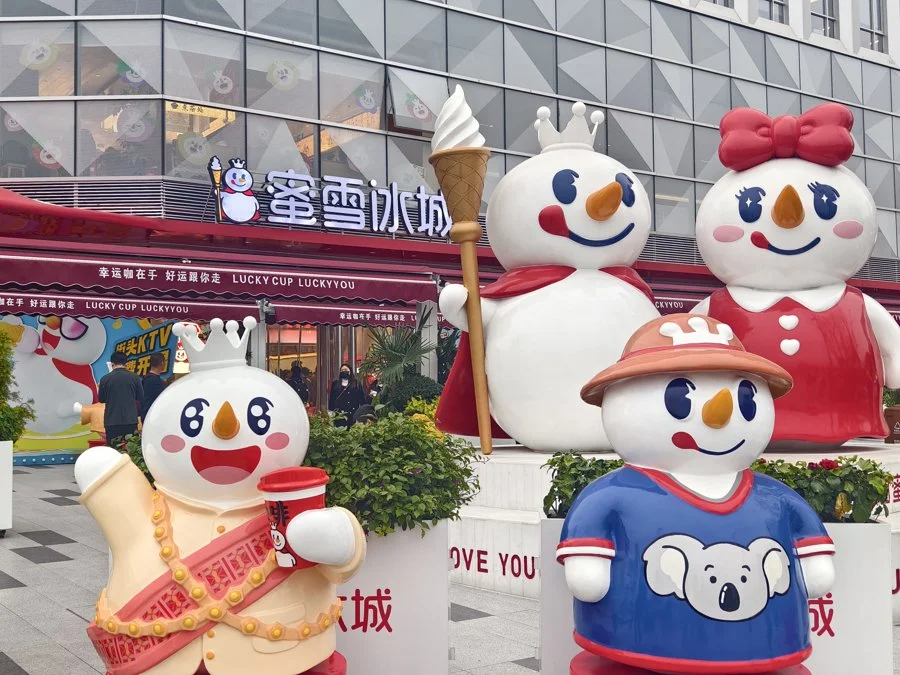
Budget tier belongs to Mixue: 蜜雪冰城. Stores outnumber some convenience chains. Milk tea starts at 4 yuan, roughly half a dollar. The shop mascot is a snowman wearing a crown who melts from the smiles of children and teenagers more than from any pop culture design. Mixue’s advertising jingle plays in every store on loop and has been described by the internet as “a curse you can’t escape.”
The drink is forgettable unless measured against the price. For 4 yuan you get cold milk-flavored liquid with tea flavor and the texture of something that exists because options existed for even less. It is a sufficient drink. A sufficient ice-cold drink on a Wuhan summer day is worth 4 yuan.
Mixue’s chief budget rival is Shinee: 书亦, the equivalent competitor under the same parent company, priced within 1-2 yuan of the same tier and distributed at similar store counts. Either option satisfies the need for cold sweet tea at minimum cost.
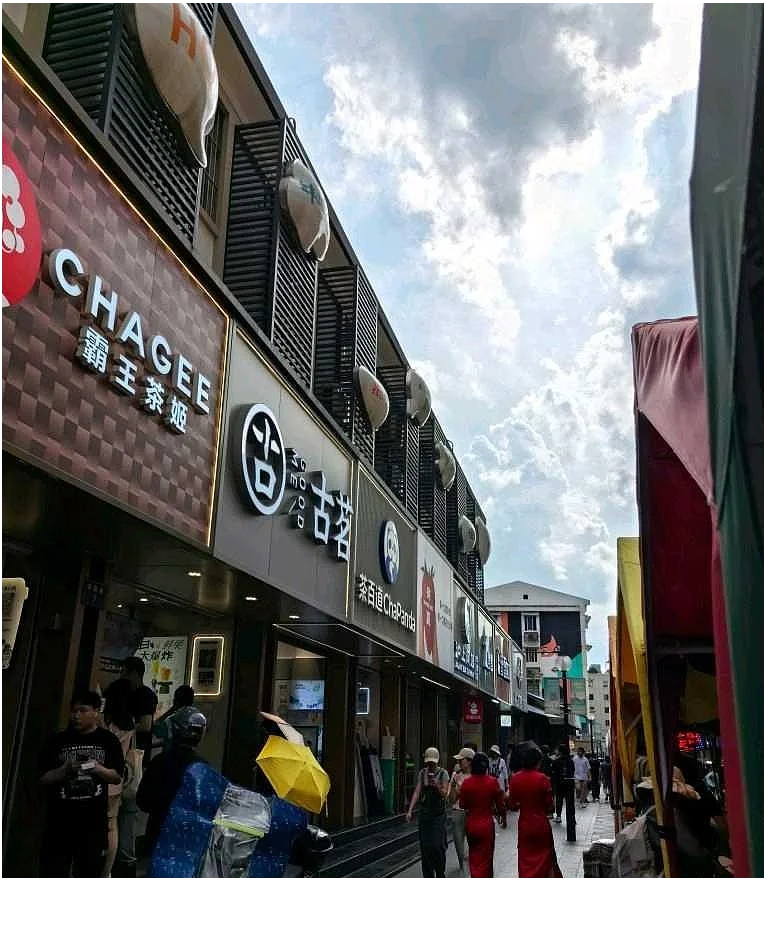
Mid-low tier belongs to Chagee and ChaBaiDao, the two giants of China’s 2020s milk tea boom. Both chains opened hundreds of stores across Wuhan simultaneously during their 2022-2024 expansion. Chagee’s branding wears classical Chinese script and references to Tang Dynasty culture. ChaBaiDao’s branding wears a cartoon pig mascot. The pig is more popular than it has any right to be.
This tier prices milk tea between 8 and 14 yuan. The quality moves from “surprising it exists” to “what you’d actually want to drink.” Fresh milk where the budget tier uses powder. Better fruit flavors. Upcharge for cheese foam or coconut jelly that improves the drink rather than extending it.
High tier belongs to Heytea and Nayuki, the premium stores in their glass-walled locations. Prices range from 18 to 30 yuan. The product is consistent with premium milk tea in any Chinese city: reliable ingredients, Instagrammable presentation, enough seating to encourage staying. People date in these stores, hold company meetings, or grade papers at the corner table.
Local tier belongs to Wuhan’s independent shops. Walk down less trafficked streets and you’ll pass a shop with hand-poured brewing, real loose leaf tea served cold, fruit drinks blended from actual fruit instead of concentrate. Prices sit between the mid tier and premium. Locals who’ve moved past chain preferences end up here.
How to actually order
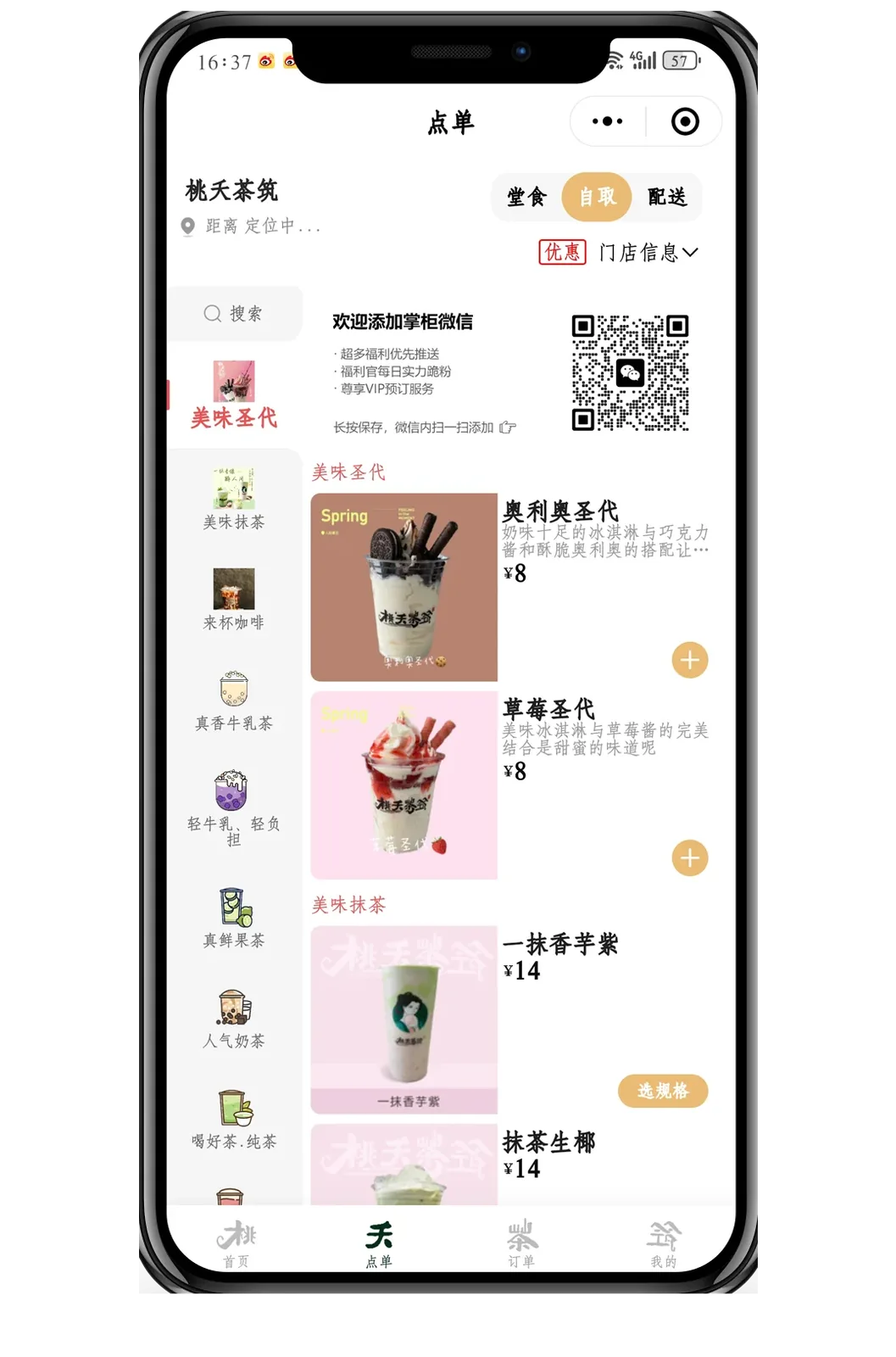
Walk in off the street and stand in line to order and you will be judged by the Wuhan locals behind you. Everyone orders through the WeChat mini-program before arriving. Show up at the shop. Grab your drink inside. Leave.
The four-step process most locals follow:
Open WeChat. Find the shop’s mini-program. Choose your drink, size, sweetness, ice level, add-ins. Pay through the mini-program. Walk to the shop at the pickup time listed. Show your order number on the scanner. Take drink. Leave.
The system works well. Any mistakes though require navigating the mini-program’s re-order screens or arguing with the staff member through the counter speaker. People who order at the physical counter in a busy store spend more time waiting than using the app.
Sweetness levels confuse newcomers. Most shops let you choose from 100%, 70%, 50%, 30%, or 0% sweet. Locals making no specification assume half-sweet. Newcomers choosing full-sweet get a sugar shock within three minutes and never repeat. 50% is standard. 30% if you actually like tea. 0% sweet if you’re my uncle who drinks “milk tea” that’s essentially cold milk with ice.
Ice levels follow a similar gradient but usually three choices: regular, less, or none. Regular ice is usually too much ice. Less ice is the practical starting point. None ice means the drink arrives room temperature which in Wuhan summer is still warm unless you drink it fast.
The City’s Obsession, Locally Contextual
Wuhan residents consume milk tea throughout the day. Morning meetings run on it. Afternoon study sessions pair with extra sugar versions. Dates walk around East Lake holding matching cups. Late night study sessions run on stronger brews with added caffeine that some shops quietly sell in university neighborhoods.
Store counts vary by neighborhood. Optics Valley has its own local chains with cult followings. University-adjacent shops run student-discounted menus. Old residential neighborhoods near Changgen Village or Wuluo Road run weekend specials that locals know about and tourists don’t.
The consumption rate has built infrastructure. Delivery arrives in fifteen minutes through Meituan or Ele.me. Too lazy to walk? App orders are delivered directly to your dorm, apartment, or office building, and Wuhan’s delivery minimums are so low that single drinks arrive regularly. The delivery bags stack up outside residential entrances each afternoon.
Locals argue about their chains with intensity disproportionate to the stakes: Heytea vs Nayuki becomes a topic of serious online debate. Chagee’s latest seasonal flavor generates line-waiting crowds. Mixue’s snowman mascot is either a cultural treasure or an intellectual health hazard depending on whom you ask and when.
The arguments repeat because the culture runs on it. Tea shops rotate seasonal specials every four to six weeks. New fruit flavors rotate in sync with what’s actually in season: strawberry in spring, mango in summer, osmanthus in autumn, sweet potato in winter. Around Mid-Autumn Festival or Spring Festival, limited-edition packaging appears. Collectors line up for the cup sleeves alone. For the full breakfast picture, including what to order if you only get one dish, see Wuhan Breakfast Culture: A Local’s Guide to ‘Guo Zao’.
For tourists: where to start
Skip the premium chains you can find in any Chinese city. Start with Mixue for the 4-yuan experience, if the budget level is something you’re sampling. Start with Chagee for a baseline of what decent mid-tier milk tea tastes like without playing sugar roulette. Start with a local shop if you want something that tastes like someone cares about tea rather than sugar content.
The app thing matters less for a tourist than understanding sweetness levels. Half-sweet keeps the drink recognizable. Ask locals for their chains instead of spending time deciding and you’ll avoid tourist-oriented lines entirely.
The mini-programs can be used by foreigners, though a Chinese payment method is still required. Chagee and Mixue accept Chinese bank cards. Heytea allows Alipay which supports foreign cards. And most staff will accept cash if you hold out the bills and look sufficiently lost. The wrapper design gets you through the first order. After that the app does.