
At 11:47 PM on a Tuesday in Hankou, a delivery rider named Lao Zhou is explaining to a building security guard, for the third time this week, that apartment 402 in Block 7 of the Jiangda Road residential compound does, in fact, exist. Even so, the gate directory lists only 401 and 403.
He knows this because in two years of delivering on Jianghan Road, he has entered this building (by scooter, foot, stairwell and once through a basement window left open by a ground-floor restaurant) three hundred and eleven times. He knows the apartment numbers skip the fourth floor entirely. He knows the 402 tenant is a regular late-night hot-and-sour noodle order who answers the door in a bathrobe and gives good tips.
This is what it means to be a delivery rider in Wuhan: one of the most logistically challenging cities in China to navigate, and one of the most interesting to watch someone master.
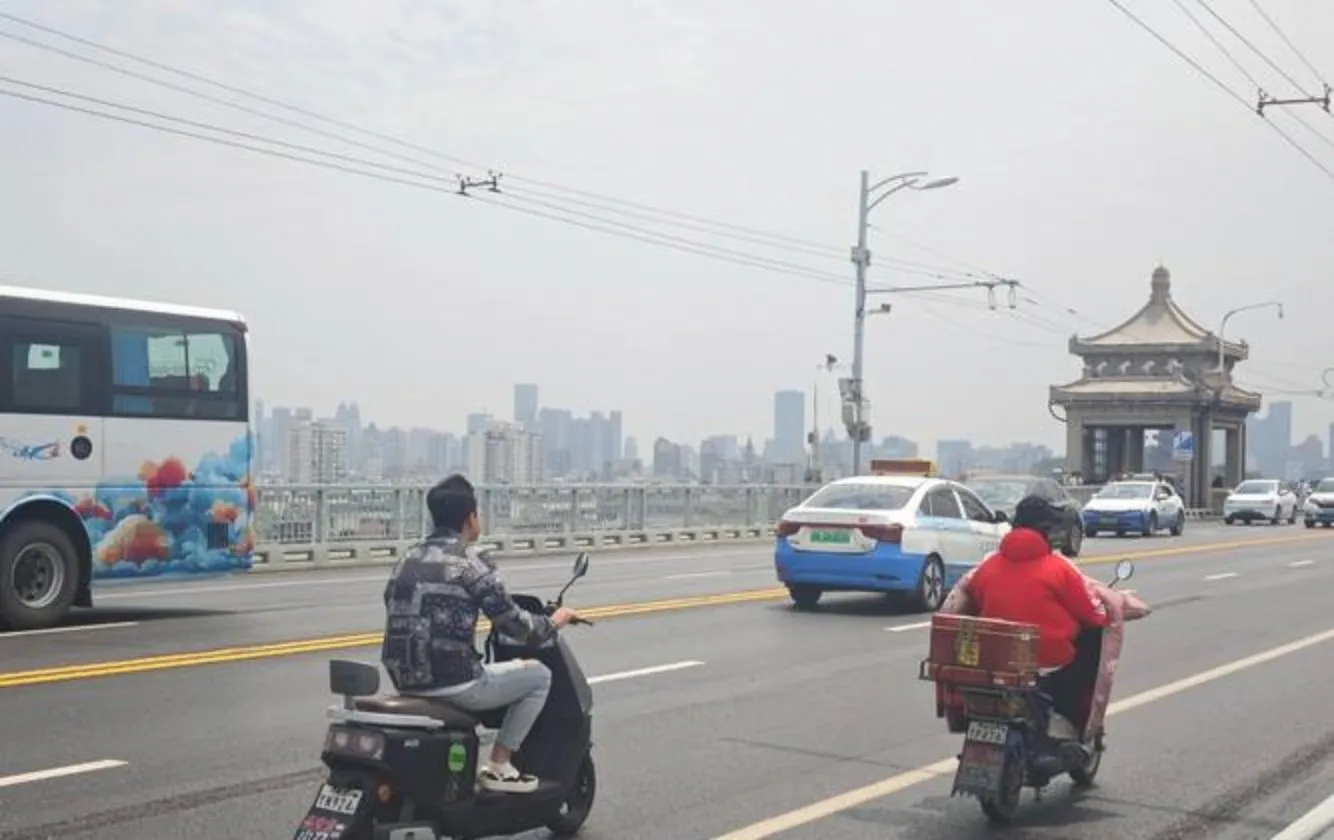
跨越长江:一座桥、一条江、几十份晚餐。武汉骑手日均跨桥 3-5 次,三镇的碎片化城市结构是骑手最大的敌人,也是最好的老师。
1. Why Wuhan is a rider’s ultimate final exam
Most Chinese cities present delivery riders with a single urban shape: a dense grid, or a ring-radial structure, or a planned new district with wide boulevards and numbered gates. Wuhan presents the rider with three different cities fused together, connected by bridges, layered over old riverbeds, and stuffed with residential compounds that were built during four different construction eras (each with its own gate logic and stairwell darkness).
The three towns of Hankou, Wuchang and Hanyang still function as separate urban cores, connected by a network of Yangtze and Han River bridges that each have their own bicycle and scooter access rules. A Hankou-based rider crossing into Wuchang via the Second Yangtze River Bridge takes a flyover ramp that changes elevation twice and dumps them into the Wuchang urban fabric twelve metres above the riverbank. At 11 PM with a full delivery bag, that descent requires precise handbrake knowledge and a good relationship with gravity.
Beyond the bridges, the logistical challenges are relentless:
小区门禁 gate systems that change monthly, with guards on night shift who may or may not accept a 5-yuan “convenience fee” to let a rider through.
Old residential compounds with no lift, no lighting and floor directories written in a cursive hand that hasn’t been legible since 1985.
Six-storey walk-ups where apartments are numbered architecturally (first floor 101-104, second 201-204) but residents have remapped them sequentially through successive renovations. So floor 3 might have apartments numbered 301, 302, 305 and 308, and the rider has to know that “304” means “around the back, through the clothes-drying area, up the exterior staircase.”
Roads that dead-end at riverbank walls, requiring a rider to scooter through a night market, between the fish tanks and the folding tables, without disturbing the dinner of forty people.
Addresses that say “next to the pharmacy” or “opposite the primary school” because the mapped road was renamed in 2008 and the pharmacy (two doors down from where it started) is the only surviving landmark.
Veteran riders build a personal map that no cartographer would recognise. It is a mental atlas of roof colours, stair smells, broken gate hinges, and which Block 7 landlords take a nap at 12:30 and which ones answer the door with a full set of house keys ready for the rider to let themselves in.
2. The riders themselves
Wuhan’s delivery rider population is a cross-section of Wuhan itself. A rough profile based on rider community chats and the unofficial gatherings at the 饿了么 and 美团 assembly points near Guanggu (光谷), Wansongyuan (万松园) and 江汉路:
Men dominate the profession: roughly 90 percent of riders visible on Wuhan streets are male. Most are between twenty-five and forty-five. Many are migrants from surrounding provinces (Hunan, Henan, Anhui, Jiangxi) who came to Wuhan for factory work, stayed for a relationship marriage or a business that didn’t quite work out, and discovered that delivery riding paid the bills while they figured out the next step.
A growing number are former small-business owners, laid-off factory workers who picked up riding as a second income alongside a daytime job, and (a significant subgroup) university graduates who use the job to support city-wide graduate exam preparation.
Pay structure: most Wuhan riders operate under a mixed model of per-order payment plus tips, averaging 5-8 yuan per order. Expenses include fuel or battery rental, a vehicle lease, insurance through the platform, and frequent fines from traffic police: riders who run red lights or use the wrong lane accumulate monthly penalties that can eat into 15-20 percent of income.
The income ceiling is real: a hard-working 武汉 rider who takes the rush-hour slots and doesn’t refuse remote orders can clear 8,000-12,000 yuan per month before expenses (enough to survive, send money home, and occasionally treat themselves to the 烧烤 they spend all night delivering to other people).
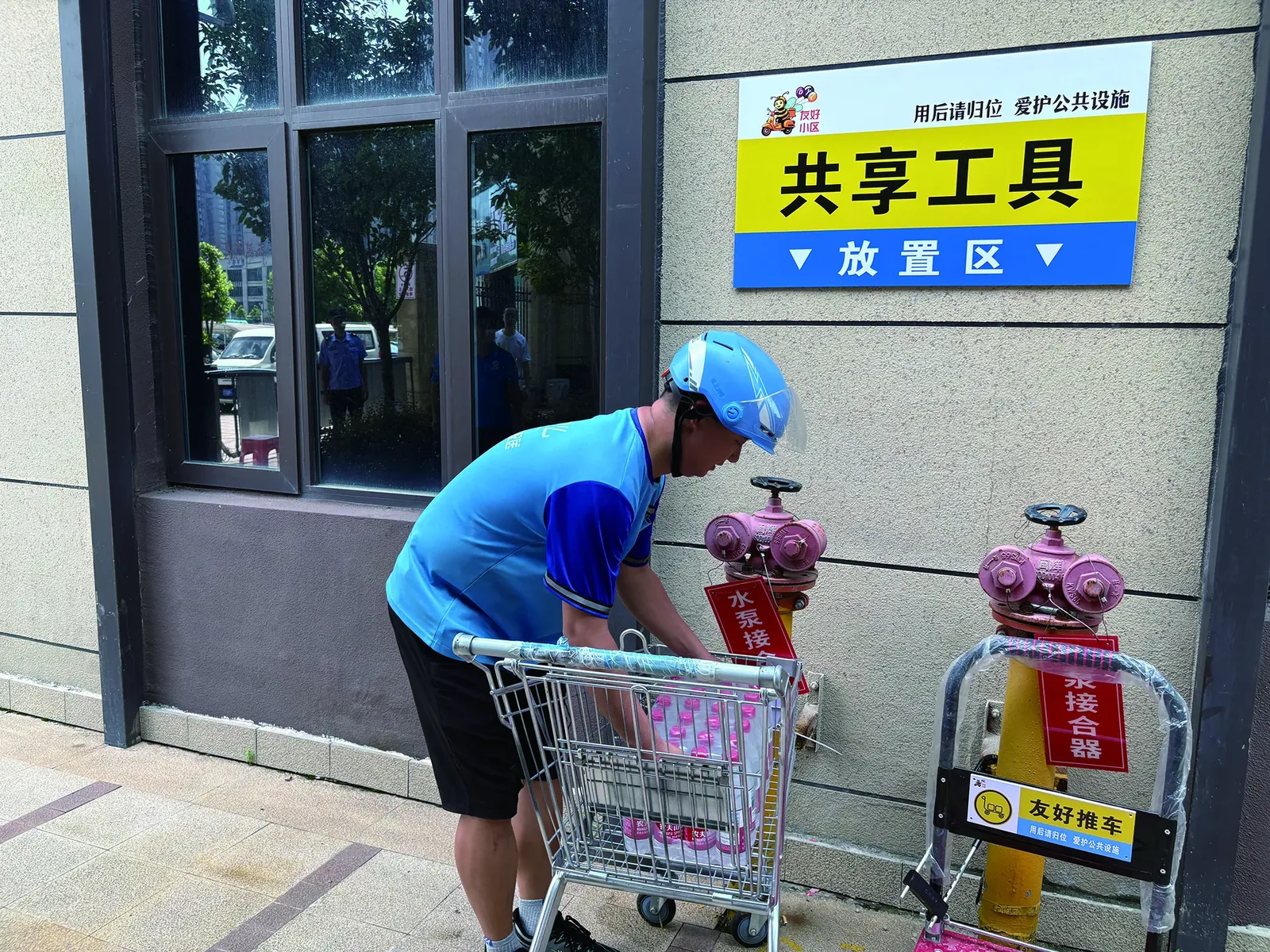
晚上十点,汉口某老旧小区门口。门卫说:“402?这栋楼没有402。” 骑手说:“有的。您看错了。“这样的对话一晚重复十几遍。
3. The order peak: how to see one shift
A typical Wuhan rider evening commute follows this rhythm:
5:30 AM-7:00 AM: Early riser slot. Orders are breakfast (热干面, doupi (豆皮), 窝子米粉) going to night-shift workers heading home and early-shift workers heading out. The city is grey and empty.
11:00 AM-1:30 PM: Lunch break. Dense orders to office buildings, schools, and government offices. Traffic is the worst of the day. Riders chain-order seven or eight deliveries within a 2-kilometre radius, scanning barcodes at building reception desks with rehearsed smiles.
5:30 PM-9:00 PM: Dinner rush. The heaviest slot. Hotpot ingredient deliveries, crayfish boxes stacked three high, late-night milk tea runs. Apartment compounds fill with the sound of intercom buzzers. This is also the slot most likely to produce arguments: missing items, cold food, wrong orders.
9:30 PM-1:00 AM: The interesting slot. Late specialty orders (someone in Wuchang wants rice noodles from a specific Hankou shop, someone in Hanyang sends out for breakfast supplies from the wholesale market). The city’s bridges empty out. The traffic lights switch patterns. The rider can finally push their scooter across the Second Yangtze River Bridge without stopping, the towers sliding past in silhouette, the city’s lights reflecting off the black water far below.
You can truly see how Wuhan works at this hour: which compounds are fully lit and which ones are pitch dark, which roads have late-night gutter oil 炒面 stalls still flipping noodles at midnight. You can also see which overpasses have security guards sleeping in the gatehouse and which ones will chase you off.
“晚上十一点后,武汉才露出原来的样子。白天是给游客看的,夜班才是自己的。”
“After 11 PM, Wuhan shows its original face. The daytime version is for tourists. The night shift is the real one.”
A rider who has been based out of Jianghan Road station for three years.
4. Rider culture and community
At the assembly points behind big commercial areas (万松园 is the biggest, a courtyard behind a row of shops where forty riders between orders share a single pack of cigarettes and trade information) an informal intelligence network operates in real time.
Gate directory updates. “Block 12 at 开达小区 changed their directory. 503 is now 304.”
Road closures. “Jianghan Second Road has a water main repair. Avoid the east side.”
Bad customer alerts. “Apartment 6 in Block 3, 五福小区, opens the door, argues about every item, watches you leave through the window. There’s nothing you can do.”
Good customer shoutouts. “4th floor, 江景大厦, leaves water bottles on the door handle in summer and ginger tea in winter. Tip is always generous.”
This system is the equivalent of an offline social network, sustained entirely by voice and memory, and it’s remarkably effective. Riders learn the city’s geography and social terrain faster than any taxi driver.
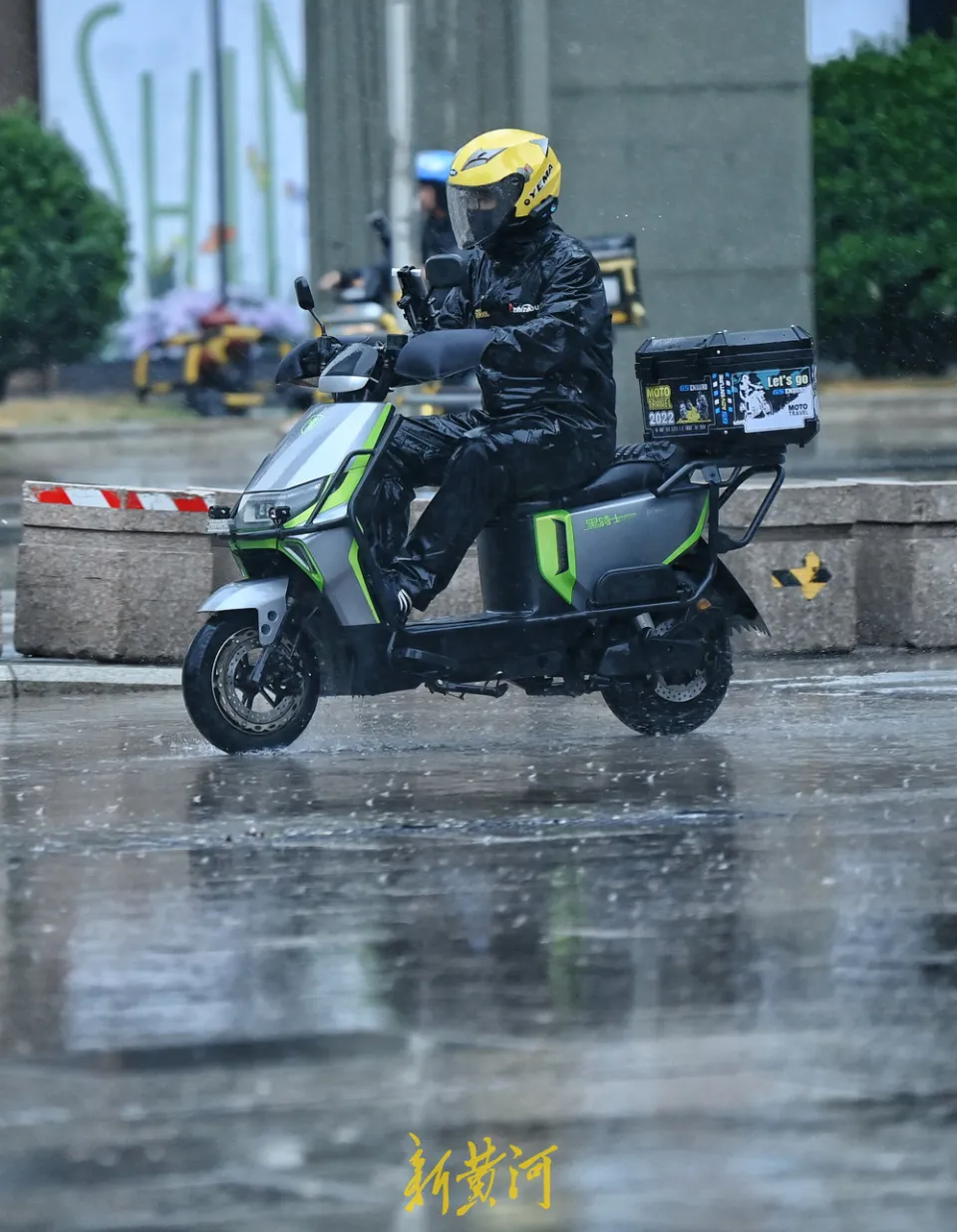
手机支架上是骑手真正的武器:一个离线保存的”私房地图”(哪栋楼 404 其实是 308,哪个门卫五点换班,哪条捷径雨天不能走)。
Rider-friend culture exists too: a rider who witnesses a motorbike breakdown will stop and spend fifteen minutes helping with a tyre change, knowing full well it will make them late on their next three orders. After every New Year, the assembly points run a collective fund for riders returning to hometowns (50 yuan a head, collected and handed out with a handshake).
5. Why ordering late teaches you Wuhan
If you want to truly learn how Wuhan works, place a delivery order somewhere improbable at 11:30 PM. Watch the acceptance notification. Watch the estimated arrival time tick.
When the rider arrives (probably through a route they improvised, negotiating a gated compound, a bridge, and a pedestrian underpass) they’ll hand over your order with no particular drama. You’ll hand over the pork soup noodles or the midnight crayfish that you couldn’t make yourself, suddenly grateful that someone else memorised the inscrutable back of Building 9 just to bring your dinner.
The rider doesn’t need your empathy, but your doorway note (“Leave at door, no intercom buzz please”) will make their night measurably easier. The building number written large on the gate: appreciation beyond money. And if you do tip, 2-5 yuan is standard; 10 is memorable; adding a bottle of water on a summer night is the mark of someone who’s also walked the streets in August.
6. Wuhan on a scooter
After enough time in Wuhan, you begin to see the city from the rider’s altitude: twelve metres per second across the bridge, passing through the smell of river water and 烧烤 smoke in the same second, navigating by light rather than sign.
For most of Wuhan’s day-trippers, the city is its monuments: the Yellow Crane Tower, the Yangtze Bridge walkway from the tourist side, East Lake’s promenades. For those who traverse it at night at forty kilometres an hour with a pork soup in the delivery box, the city is something else entirely. It is a lit-up maze of river water, bridge cables, basement kitchen exhaust vents, and residential windows (each window representing a person waiting for something, usually food, often hot).
The riders hold this city together through the night shift, and they know things about its joints and seams that even its lifelong residents have long since stopped noticing. They know which avenues flood first when the Yangtze rises, which compounds’ security guards accept tea and which ones prefer Jianlibao, and which noodle shops have a separate night menu written in marker on cardboard.
So the next time the intercom rings at midnight and your hands are full, take the delivery, say 谢谢, and watch the rider disappear into the stairwell, back into the job of stitching this sprawling river city together, one plastic bag at a time.
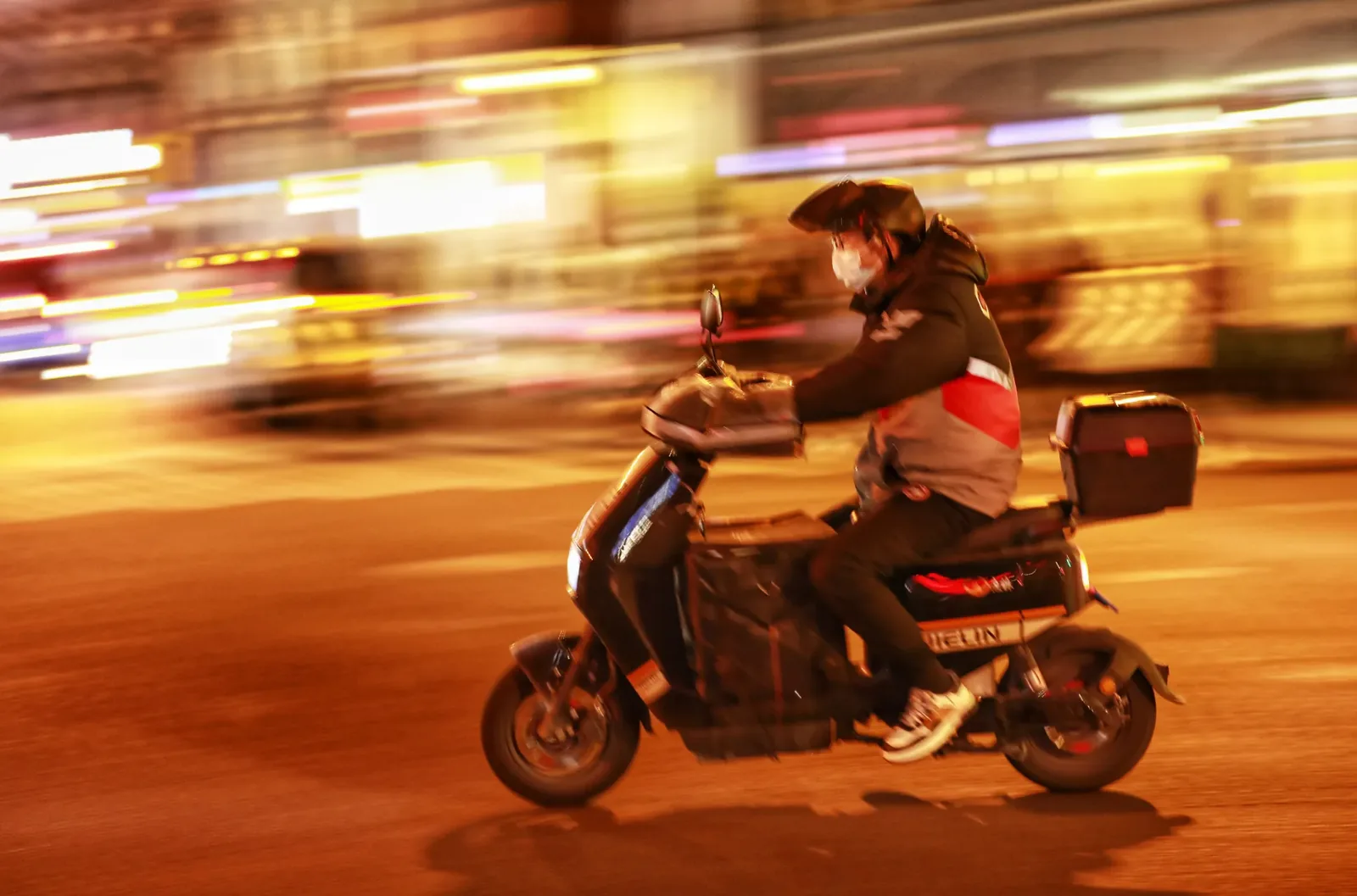
凌晨十一点的汉口:红灯变稀疏,桥面空了,骑手终于能一把电门冲过二桥,看长江两岸灯火倒映在黑水里。这是武汉给夜班的奖励。 The daily commute these riders are part of is covered in Wuhan Commute: Crossing the Yangtze Every Morning Because You Have To. If you want to truly understand Wuhan’s bones, order something hot-and-sour at 11:30 PM and watch your rider arrive. Then say 谢谢 and mean it.