
Most travel guides will tell you Wuhan is a spring-and-autumn city. That is technically true and practically useless, because it hides the thing that matters: in October this city is on its best behaviour, and in July it is actively hostile to visitors.
I have now watched four Octobers from inside this city, and I would rather save you the trial and error.
The case for October
The temperature sits between 18 and 25°C during the day. Nights drop to around 15, which is enough to want a light jacket if you are out past nine. The humidity finally loosens its grip for the first time since May.
More importantly, this is the window where you get the city locals actually like. Summer crowds thin out the moment the heat breaks. If you have been reading that Wuhan is unbearably hot in summer, that is accurate. 40°C with 90% humidity is genuinely punishing. But it describes four months, not the year.
The catch is that almost nobody books a Wuhan trip for October. The city is a three-hour flight from Bangkok, a high-speed rail stop from Shanghai, and a weekend trip from Hong Kong. But it is not on the way to anywhere else that tourists want. So the raw numbers are low and the experience is high.
If you want the mechanics of timing a trip, I have a full month-by-month breakdown in my guide to the best time to visit. This one is about what to actually do once you are here in the good stretch.
Timing: two windows, not one
Most people arrive and see the season from a single weekend. That is a mistake, because Wuhan’s autumn has two distinct peaks that do not overlap much.
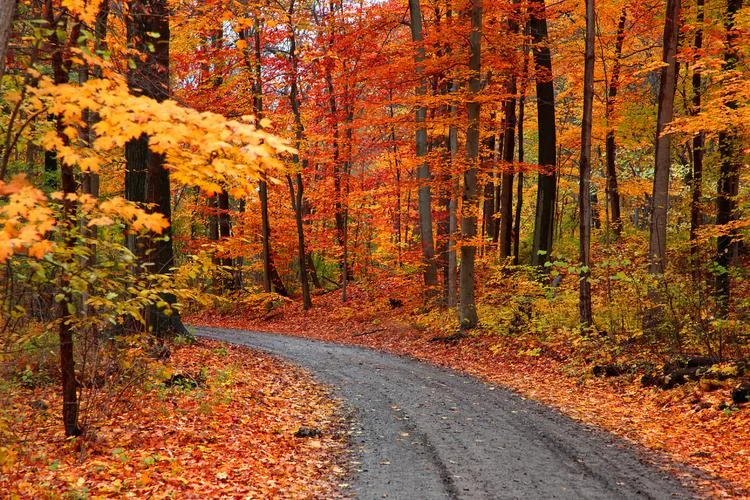
Mid-October is for colour. The maples along East Lake’s north shore turn red first, usually around the third week of October. The osmanthus flowers open in the same window, and this is the part people miss entirely: for about two weeks the whole city smells sweet and slightly warm, like honey that has nowhere to go. There is no single “osmanthus street” to find. It is a city-wide event.
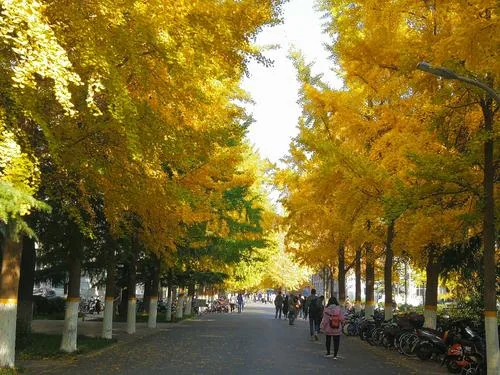
Early-to-mid November is for the ginkgo. The avenue near the East Lake botanical garden goes solid yellow, and the Yellow Crane Tower area gets a version of it that photographers like because it frames the tower. November is cooler, quieter, and the reason I tell people to extend their trip if they can.
If you can only do one, come in the second half of October. If you can stretch to three weeks, you get both, and you also watch the city transition, which is its own kind of good.
East Lake, specifically
I have written about East Lake at length in what to photograph there through the seasons, but the autumn case deserves its own note because the lake does something different in October than in March.
In spring, East Lake is a crush. The cherry blossom crowds at Wuhan University are the single largest concentration of people I have ever been inside, and I have been inside some very crowded places.
In autumn, the same lake is enormous and almost empty. The greenway, 28km of car-free path around the shoreline, is where the season is most visible if you are not chasing a single photo. Rent a bike at any of the entrances, scan the QR code with whatever app you already use, and go clockwise from the Tingtao gate. You will pass lotus seed vendors at the start, which is the last of the summer crop.
The maple path is on the north shore. The ginkgo avenue is near the botanical garden, which is on the south side. If you are cycling, plan roughly a full loop or pick one and commit to it. Trying to do both in an afternoon turns it into a slog.
The Yellow Crane Tower in October
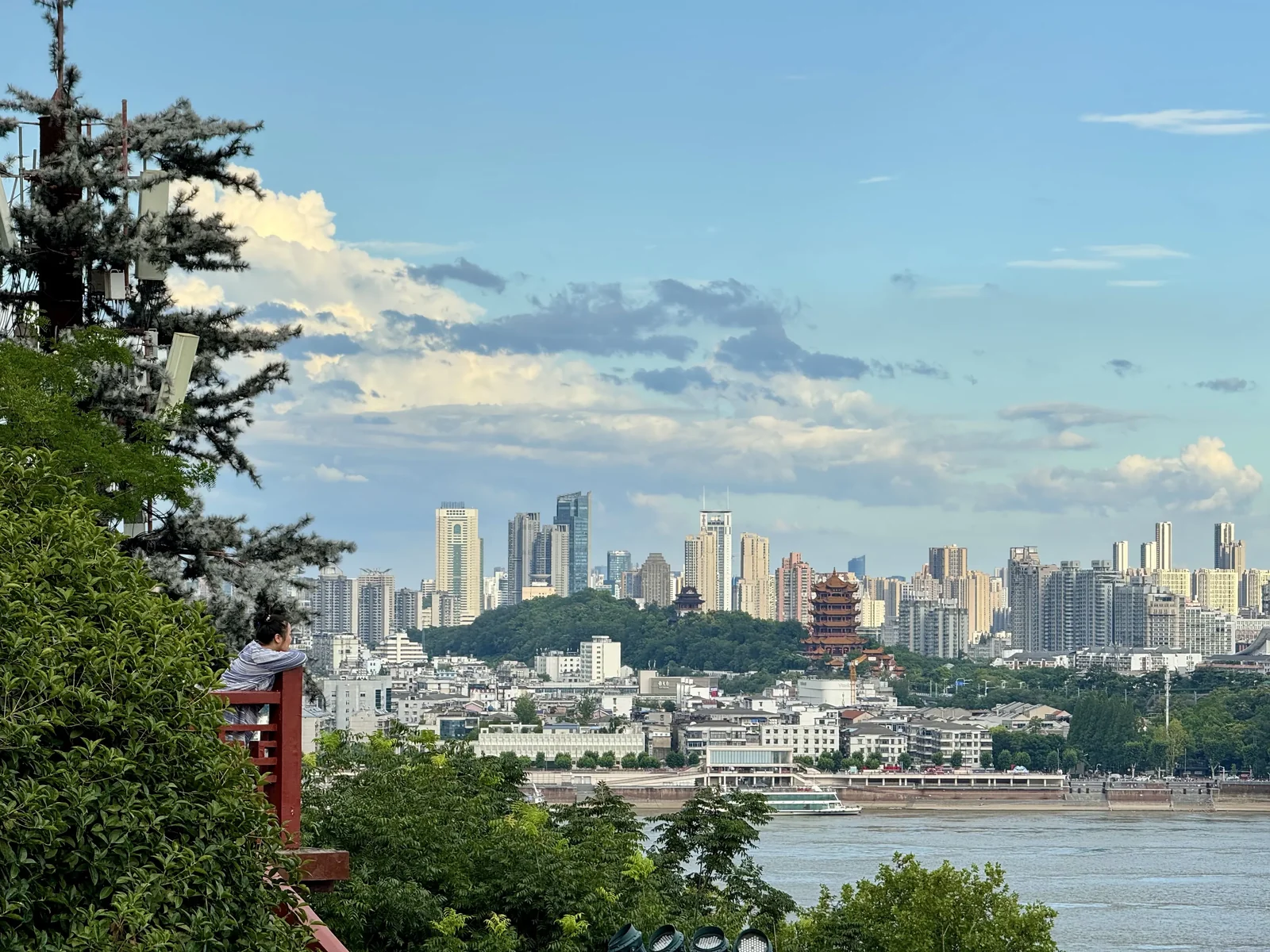
There is a piece of timing logic here that almost nobody applies: the tower’s east side faces the river, and in late afternoon in autumn the light comes across the water at a low angle. October haze is thinner than summer haze, so you can see the far bank clearly. This is the one time of year the view from the fifth floor is fully worth the ticket.
I have a longer piece on the tower’s history and its relationship with the poem everyone memorises in school, in my guide to the tower beyond the poem. The short version for autumn: go in the last two hours before closing, and go on a weekday if you can.
Snake Hill also has a better autumn tree situation than most people expect, and the riverside below it is a reasonable walk even if you skip the tower.
What to eat in autumn
The food story in autumn is not about a single festival. It is a slow shift in what is in season, and it starts before you arrive.
Osmanthus appears everywhere. Sweet osmanthus rice, osmanthus wine, osmanthus cakes sold by the handful at street stalls. It is floral rather than heavy, and it is genuinely seasonal: if you are here in October you will not find it in November.
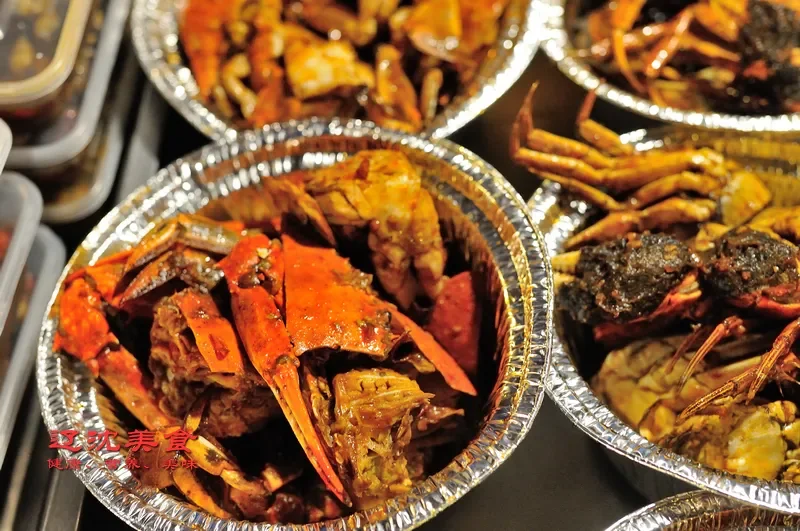
The hairy crab season runs through October, and unlike the seafood markets of coastal cities, Wuhan eats crab the way locals do: steamed, with ginger and vinegar, at a table where four people argue over which body part belongs to whom. If you have never eaten crab this way, it is worth doing once, but bring patience and a roll of toilet paper.
Hot dry noodles do not go away. If you have read my ultimate guide to reganmian you know it is the signature dish, but the seasonal detail matters: this is the end of the long summer, so the sesame paste and chili oil are still at their peak. Eat it while it is still hot and the weather is still warm enough to not be punished for it.
Sweet-soup season. Wuhan’s late-night dessert stalls fill up harder once the heat drops, because people can stand outside and eat again. I have written about where the street food moves after dark in my guide to the night markets, and autumn is the version of that scene that actually feels like a habit rather than a survival tactic.
And the lotus is finishing. If you are here in early October you can still get fresh lotus root soup, which is the closest thing this city has to a family recipe, as I argued when I wrote about it properly. By late October it is gone until next summer.
Practical notes
Dress for the change. Daytime is T-shirt weather, and after sunset you want a layer. This is the single most common mistake people make in October here: they pack for their photograph of the sunny afternoon and then get cold on the riverside at seven in the evening.
Getting around. The metro is the fastest way to reach East Lake and the tower, and I mapped all eleven lines when I wrote about the metro specifically. If you are only here a few days, the metro plus a taxi for the last mile covers almost everything on this list.
Money. October has the comfortable national holiday period early in the month, which means domestic hotels fill up. If you are booking accommodation for the first week of October, do it early. Mid-to-late October is the opposite: empty hotels, better prices.
Crowds at the university. The cherry blossom crowds do not come anywhere near October numbers, which means the campus is actually pleasant to walk even though it is famous for a different season. Go and see it anyway.
What I would skip
A few honest notes so you do not waste time.
Skip the Huanghe Tower observation deck. It is marketed as a view of the city and it is mostly glass and a reflection.
Skip any “autumn festival” that is not an osmanthus or ginkgo thing. Wuhan’s genuine seasonal moments are natural, not staged.
Skip walking the full 28 kilometres of the East Lake greenway unless you are serious about it. It is a serious ride. Pick a section. The short version I give people is the north shore, where the maples are, because the path is flat and it is easy to leave when you have had enough.
And skip trying to do East Lake, the tower, and a day trip in one day. That is a schedule I have attempted twice and regretted both times.
The honest summary
October in Wuhan is a city going quietly golden, with the crowds somewhere else, weather you can actually enjoy, and food that is at its seasonal peak for about six weeks. It is the best version of a city that is genuinely difficult to reach, and it is not well known.
Go. Just go in the second half of the month, and stay long enough to smell the osmanthus.