
On the fourteenth floor of an office building in Wuhan’s Optics Valley, the East Lake High-Tech Development Zone that locals simply call Guanggu (光谷), a twenty-six-year-old woman named Xia Chen is explaining the interior construction of a Hubei-made thermal lunch box. Twelve thousand people are watching on their phones.
She’s been talking for ninety minutes straight. Her voice hasn’t dropped. A small fan blows her hair back from her face. Behind her, a whiteboard shows the date’s top sellers from her company’s line: a university-designed desk lamp at number one, a Bamboo-fiber water bottle at three, a rain jacket stitched in Hanyang’s remaining textile workshop at five.
By the time she signs off at 1:30 AM, she’ll have moved four hundred units, answered two thousand three hundred viewer questions, and taken three phone calls from manufacturers in Shenzhen who want to collaborate on next season’s colourways.
This is the livestream economy in Wuhan, and it’s older, deeper, and more genuinely transformative than most outside coverage suggests.
1. 光谷 is not Silicon Valley: it’s something more useful
First, understand where you are. 光谷, the Optics Valley of China, stretches across roughly 518 square kilometres on Wuhan’s eastern edge: an area larger than Singapore dedicated to photonics, semiconductor manufacturing, biomedicine, and the kind of applied technology that never makes global headlines but quietly fills shopping bags.
The zone is home to over thirteen thousand tech firms and produces roughly half of China’s optical fibre. It also supports one of the largest concentrations of university graduates in the country. Huazhong University of Science and Technology (HUST), Wuhan University, and six other major universities pour roughly one hundred thousand fresh graduates into this ecosystem every academic year.
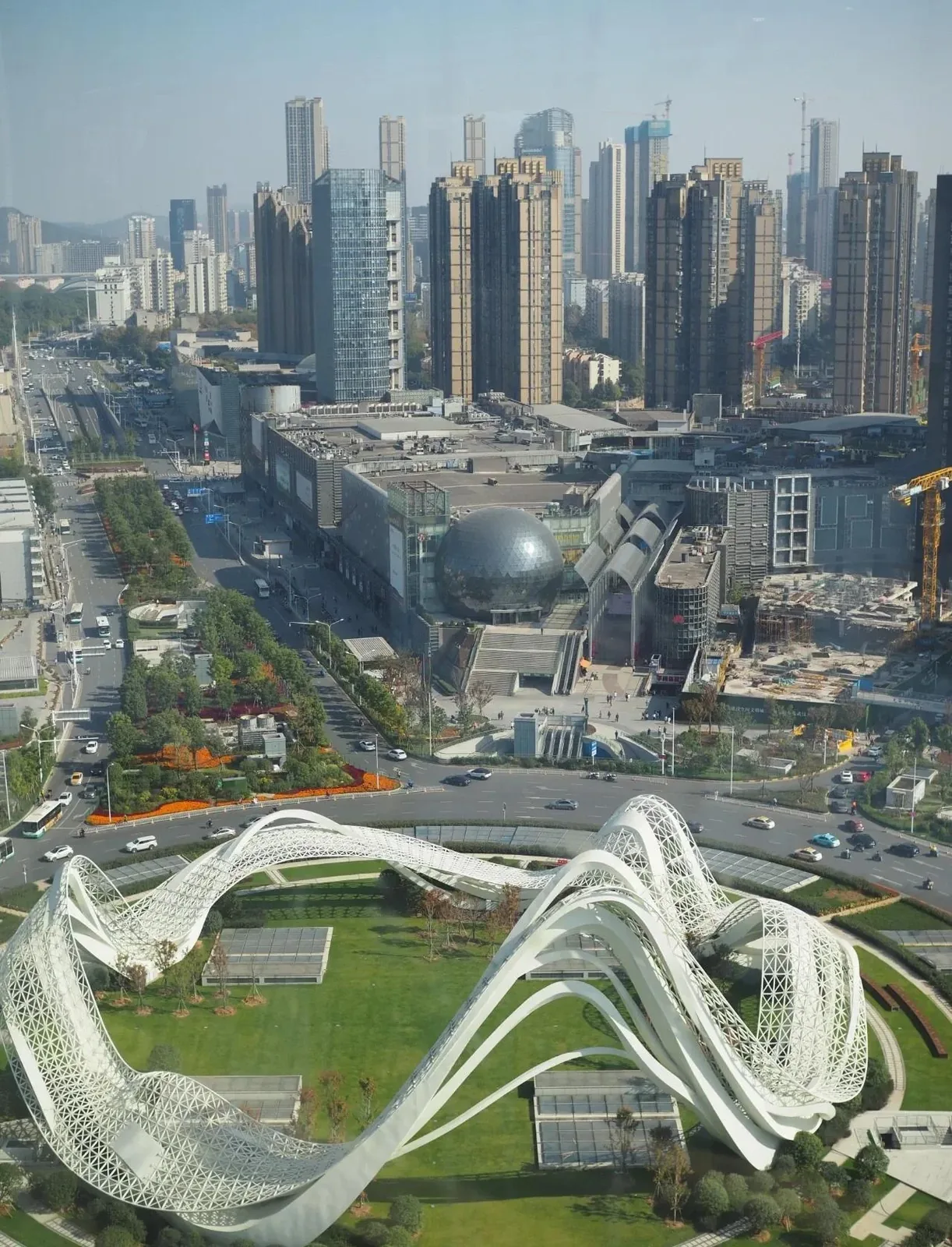
光谷 at dusk. The East Lake High-Tech Development Zone covers an area larger than Singapore, and a growing share of its office floors now host livestream studios.
Not all of them become engineers. A growing number become camera-facing entrepreneurs, and they’ve found that Wuhan’s unique industrial base gives them something most livestreaming regions don’t: direct access to high-quality, mid-price physical products that actually deliver what the broadcast promises.
2. The products are not what you think
The common image of Chinese livestream commerce from outside coverage involves cosmetics, fashion, and impulse-buy trinkets. In Wuhan, those exist, but the livestream scene has a distinctly local industrial character.
Some of the most successful 光谷 channels specialise in:
大学生科技产品: Desk lamps designed at HUST labs, noise-cancelling study earbuds sold directly from the student startup that developed them, portable document scanners pitched to remote workers.
湖北农产品 authentic origin products: Lotus root from Honghu Lake, mountain honey from the Dabie Mountains border region, hand-crafted bamboo products from Jingzhou’s remaining craft workshops, sold with full traceability back to the specific farm.
工业设计批量生产: Small-batch home goods designed by Wuhan’s architecture and industrial design studios (lamps, shelving units, kitchen tools) that would retail at three times the livestream price through traditional channels.
These are not scammy dropship channels. The factories can be visited, and the products can be returned. And the streamers who move them are, in a growing number of cases, the actual founders and designers.
3. How it actually works
Behind the bright ring lights and upbeat catchphrases, a typical 光谷 livestream operation looks like this:
One host. Two camera operators. One manager monitoring real-time analytics and viewer comments. One warehouse liaison tracking which SKUs are running low. A product table with thirty to fifty items prepared for the week’s sessions, each with a bar code that triggers automatic discount codes when scanned in-frame.
Bigger operations (the ones with one hundred thousand or more followers) run out of converted office floors in the 光谷步行街 surrounding area. The largest occupy entire buildings with live studios on multiple floors running staggered schedules: one channel from 10 AM to 2 PM, another from 4 PM to 8 PM, a third from 9 PM to 1 AM. The building’s ground floor is typically a shared dispatch centre with a staff of twenty handling same-day shipping.
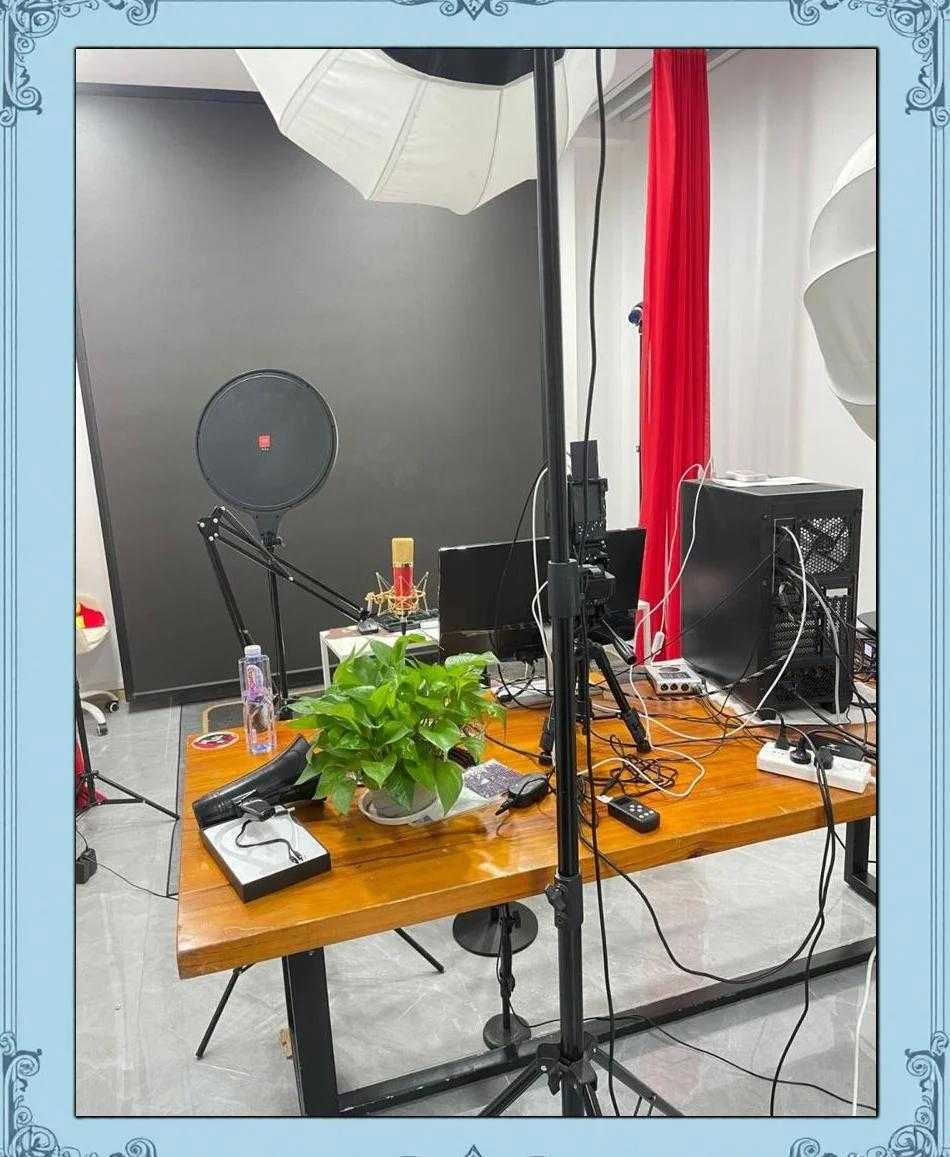
A typical 光谷 livestream setup: ring light, three-camera array, product bar-code system. A four-hour session moves between thirty and fifty items.
A typical behind-the-scenes visit to one of these buildings reveals not chaos but a surprisingly organised system. Products are arranged in a colour-coded library, and a whiteboard schedule maps which items go live on which day. A dedicated “quality room” is where unboxed items are spot-tested before going live. A small kitchen is where the night shift heats up self-heating rice for the late stream.
4. The people behind the camera
The face of Wuhan’s livestream economy is young, educated, and increasingly female. A 2023 Wuhan Chamber of Commerce survey of the local industry found that roughly 58 percent of primary streamers in the 光谷 zone are women, and over 70 percent hold at least a bachelor’s degree. Many had their first exposure to commerce through campus-based microbusinesses during university.
Two profiles illustrate the range.
A 24-year-old HUST product design graduate who now runs a combined livestream channel and small e-commerce brand selling desk accessories designed by her and her former classmates. Everything from cable management clips to weighted book ends is priced at 15 to 45 yuan, produced in batches of five thousand through a Xiamen contract manufacturer.
A 31-year-old former factory quality inspector at a Wuhan food processing plant who now operates three Douyin channels selling authentic Hubei agricultural products from verified farm partners (lotus root powder, 山区蜂蜜 honey, specialty hot dry noodle preparation kits) with combined annual gross sales exceeding 20 million yuan.
Both are neither rich nor famous by the standards of Shanghai or Hangzhou internet celebrities. But both own their apartments, employ three to ten people, and say they live better than they would in traditional employment.
A woman I interviewed at a community livestream workshop in 光谷 (a former English teacher who pivoted to selling stationery sets and desk lamps after her school’s hours were cut) said: “It might seem noisy from the outside. But for people like me with a university degree and no family business to inherit, this is the simplest way I’ve found to build something.”
5. Wuhan’s specific advantages
Why does this work in Wuhan more than in most Chinese cities?
Talent supply. Over one million university students at any given time means a constant stream of literate, camera-comfortable young graduates who can both speak well enough to hold an audience for four hours and think well enough to run the business backend.
Manufacturing access. Wuhan’s industrial base (automotive parts, steel fabrication, optical components, food processing, textiles) is easily accessible from 光谷. A streamer can visit a factory, negotiate a batch production run, and receive inventory within the same week, without dealing with Guangzhou middlemen.
Cost base. Office rentals in 光谷 are roughly a third of Shanghai’s and a fifth of Shenzhen’s. A floor that would cost 80,000 yuan per month in Shenzhen costs between 20,000 and 30,000 here. This allows new operations to survive the lean first year.
Logistics infrastructure. Wuhan’s position as China’s geometric centre means next-day delivery coverage feeds deeply into every major domestic market: the kind of logistics reach that took Hangzhou years to build but comes naturally in a yangtze River rail junction.
6. How Wuhan fits into the global picture
The phenomenon is not unique to Wuhan. Livestream commerce (known in Chinese as 直播带货, literally “livestreaming carrying goods”) has become a major pillar of Chinese retail. National estimates place total annual livestream GMV at over 4.9 trillion yuan as of 2023, driven largely through platforms including 抖音 (Douyin, the Chinese version of TikTok), 快手 (Kuaishou), and 淘宝直播 (Taobao Live).
In Wuhan, the livestream economy has carved out a specific niche: authentic, traceable, mid-range products rooted in the region’s industrial and agricultural competences. It is less flashier than Hangzhou’s fashion channels or Guangzhou’s cosmetics powerhouses, but also less volatile: the products earn their margins through real manufacturing value rather than brand hype alone.
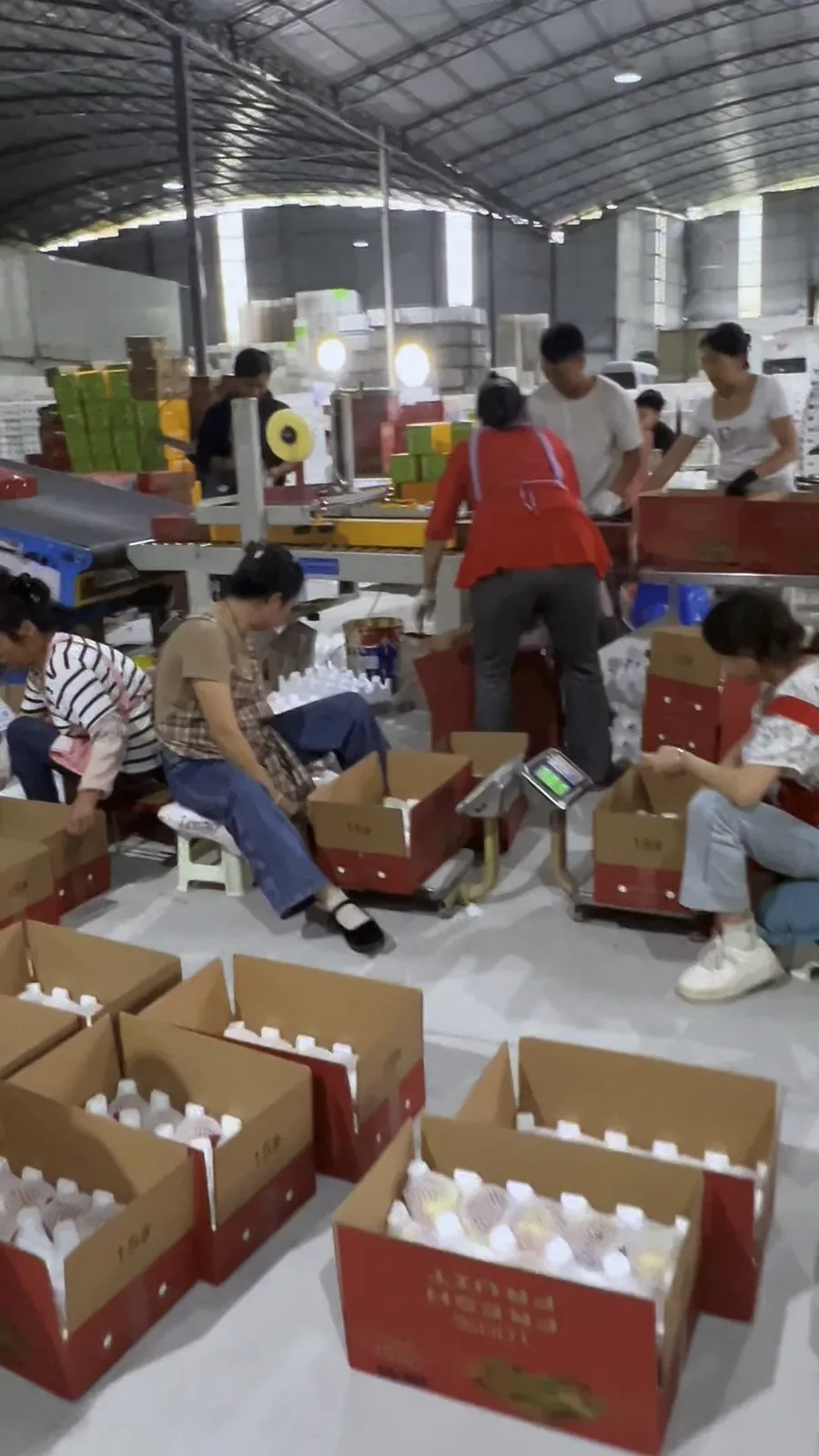
The ground floor of a shared dispatch centre: twenty staff handle same-day shipping for multiple livestream channels running staggered schedules through the night.
A 光谷 streamer selling a 39-yuan designer desk lamp made in an adjacent factory is generating the same downstream effect as a Hangzhou streamer selling a 39-yuan cosmetic. A factory gets an order, a delivery rider brings the package to someone in Shenyang, a worker somewhere earns a wage. The difference is that Wuhan’s version often involves the streamer having visited the actual production line.
7. Where you can see it
光谷 itself is worth a visit as much for understanding Wuhan’s livestream economy as for its better-known attractions: the 光谷步行街 walking street, the Future Technology City exhibition zone, the cluster of university research parks around the East Lake laser laboratory complex.
Around the 步行街 side streets, converted office buildings operate livestream studios open to parents in their broad-bright windows. You can walk past on a weekday after 8 PM and see ring-lit faces talking to unseen audiences from behind glass: dozens of them, on every floor of certain buildings.
光谷 also runs a 直播电商公共服务中心 where you can attend open training sessions, startup exhibitions, and professional development events. Visitors curious about how it works can pay the centre a visit, staff used to accommodating tech journalists and industry tourists.
8. Why it matters
For Wuhan specifically, the livestream economy fills a structural gap. Wuhan sits at China’s geographic centre, with the talent of one of its biggest university hubs and the industrial backbone of a factory giant, but without the marketing reach of Beijing or the fashion ecosystem of the Pearl River Delta. The livestream economy connects its factories to its audiences without requiring permission from any of the traditional gatekeepers.
The economic contribution is real: official 光谷 data suggests that livestream commerce accounted for over 20 billion yuan in combined local revenue in 2023, supporting an estimated 40,000 direct livelihoods. Those livelihoods are warehousing workers, packaging engineers, camera operators, data analysts, customer service staff, and the thousands of young graduates who chose a microphone over the civil service exam.
Perhaps more importantly, for a city that spent most of the twentieth century defined by its steel mills and heavy industry, livestream commerce has become one of the economic re-inventions that young Wuhanites can point to and say: “This too is from here. This, I chose to build.”

HUST-designed desk lamp: 39 yuan on the livestream channel, 120 yuan through traditional retail. Wuhan’s specific advantage: the designer and the factory are both within a thirty-minute metro ride.
If you want to understand why Wuhan’s future stops being just its bridges and its universities, tip your gaze south onto the east lake and listen. Below the highway noise, behind the university walls, off the thirteenth floor of an unremarkable office building, a twenty-six-year-old is talking about desk lamps. She’s serious about it, and she’s selling four hundred every night.
光谷 is where the university meets the factory floor, and someone who just graduated from both is now the one running the show.
--- How the valley became what it is, industrially, is in From Iron to Light: How Wuhan’s Optics Valley Replaced Its Factories. Have you tried any Huazhong University-designed products or 光谷 livestream channels? Tell us in the comments, and if you visit 光谷步行街 on a weekday evening, look up: the ring-lit faces behind those thirteenth-floor windows are the new face of Wuhan commerce.