
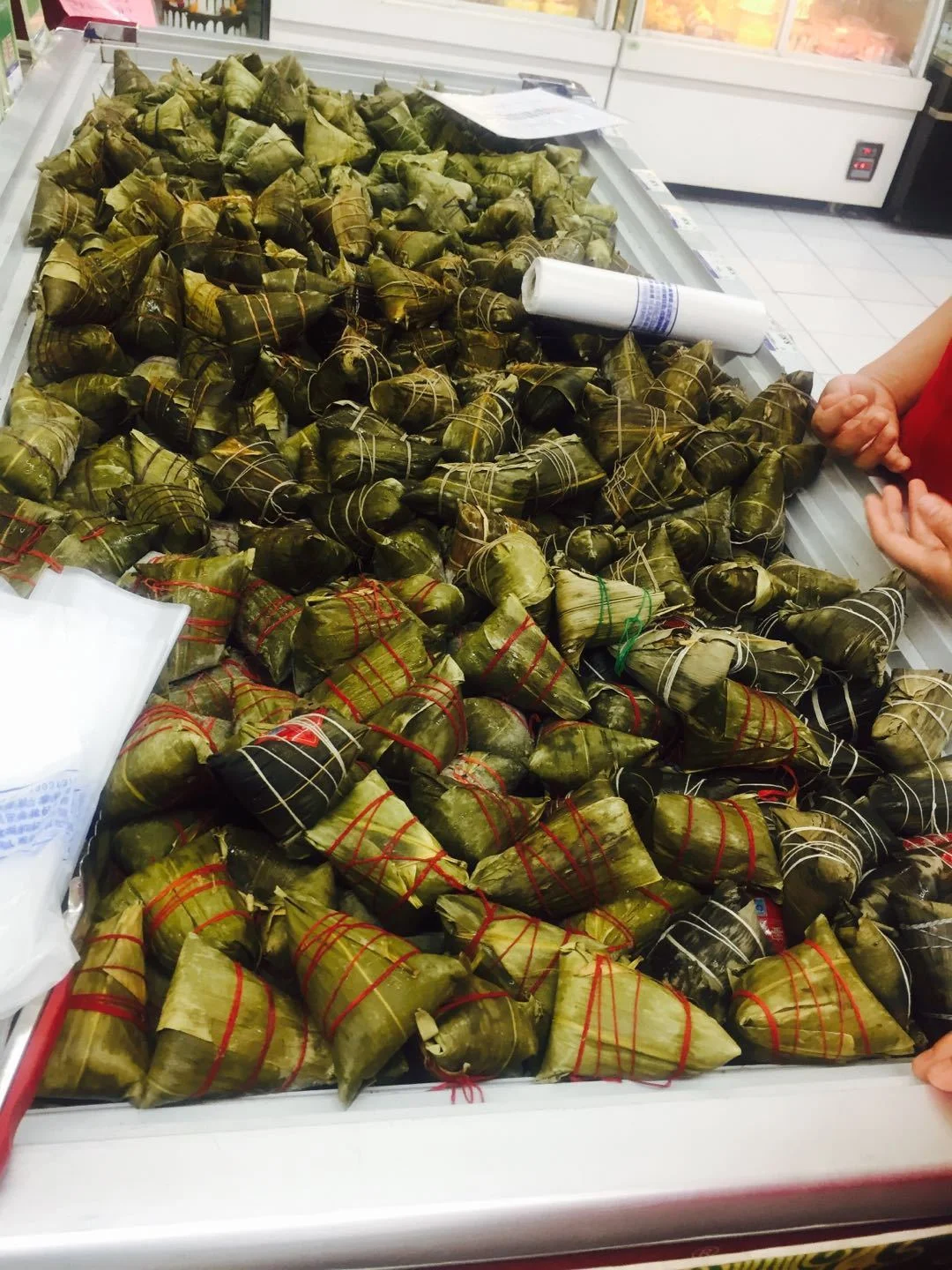
There is a moment in early June when every family in Wuhan enters a quiet state of zongzi emergency. Not because they’ve run out. Because they haven’t acquired enough. The logic of Dragon Boat Festival (端午节, usually pronounced Duanwu) operates on principles that would make a logistics professor weep. You must eat specific sticky-rice parcels for exactly three-to-five days. They must range across a minimum of four filling categories. At least two kilograms must come from a source that one-upped what your neighbor also brought home.
This is the Wuhan Dragon Boat Festival. It is simultaneously more festive and more stressful than whatever holiday proximity it has in your home calendar.
The civil war in every kitchen
In most of China, zongzi are sweet or savory, and the argument about which is better stays polite and brief. In Wuhan, the argument stays everything but brief.
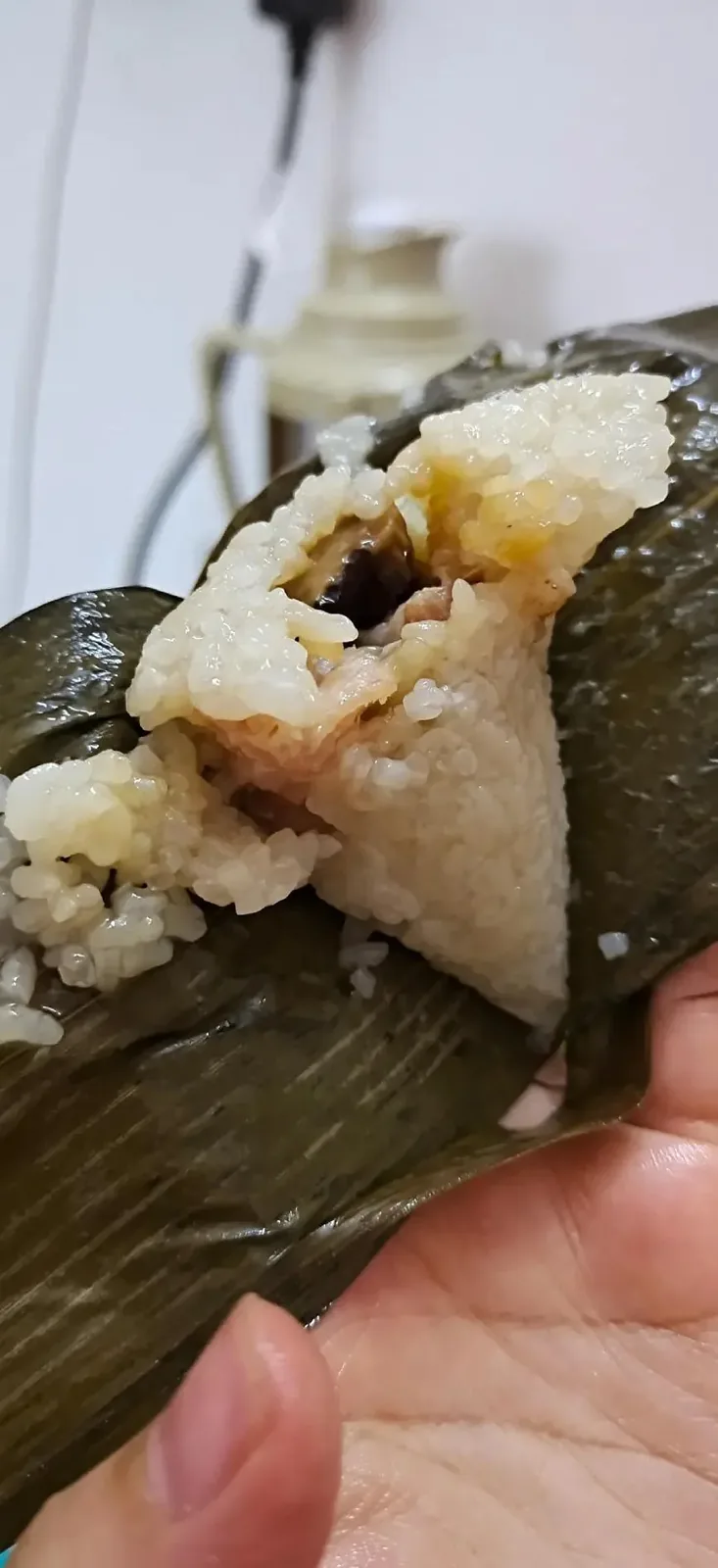
The 武汉 zongzi camp breaks into three main factions. There are the sweet traditionalists who insist that plain white sticky rice wrapped in bamboo leaf, eaten plain or with a dip of white sugar, is the only authentic version. There are the savory realists who demand a core of pork belly, sometimes salted egg yolk buried in the marinated rice: fatty, salty, and essentially a self-contained meal package. And there are the modernists, a loose confederation who argue for everything from chestnut and chicken to yam and mushroom, and are treated by the other two camps the way a wine snob sees boxed wine.
Where it gets Wuhan-specific is the texture preference. Southern zongzi across China tend to be hand-formed into tight triangles and boiled until they reach a dense almost-chewy consistency. Wuhan zongzi are often slightly looser, the rice less compacted, the leaf more prominent in the eating experience. It’s a small difference that locals can detect instantly, and they will tell you about it, and they will not be modest in their insistence that the Wuhan way is correct.
The proper Wuhan Dragon Boat Festival breakfast protocol: three zongzi minimum. One sweet to start. One savory to anchor. A third of whatever your mother made, because refusing her zongzi is not technically illegal but will have consequences that outlast the festival. The full festival calendar is in Wuhan’s Year: A Calendar of Festivals, Floods, and Stubborn Celebration.
Racing that actually happens
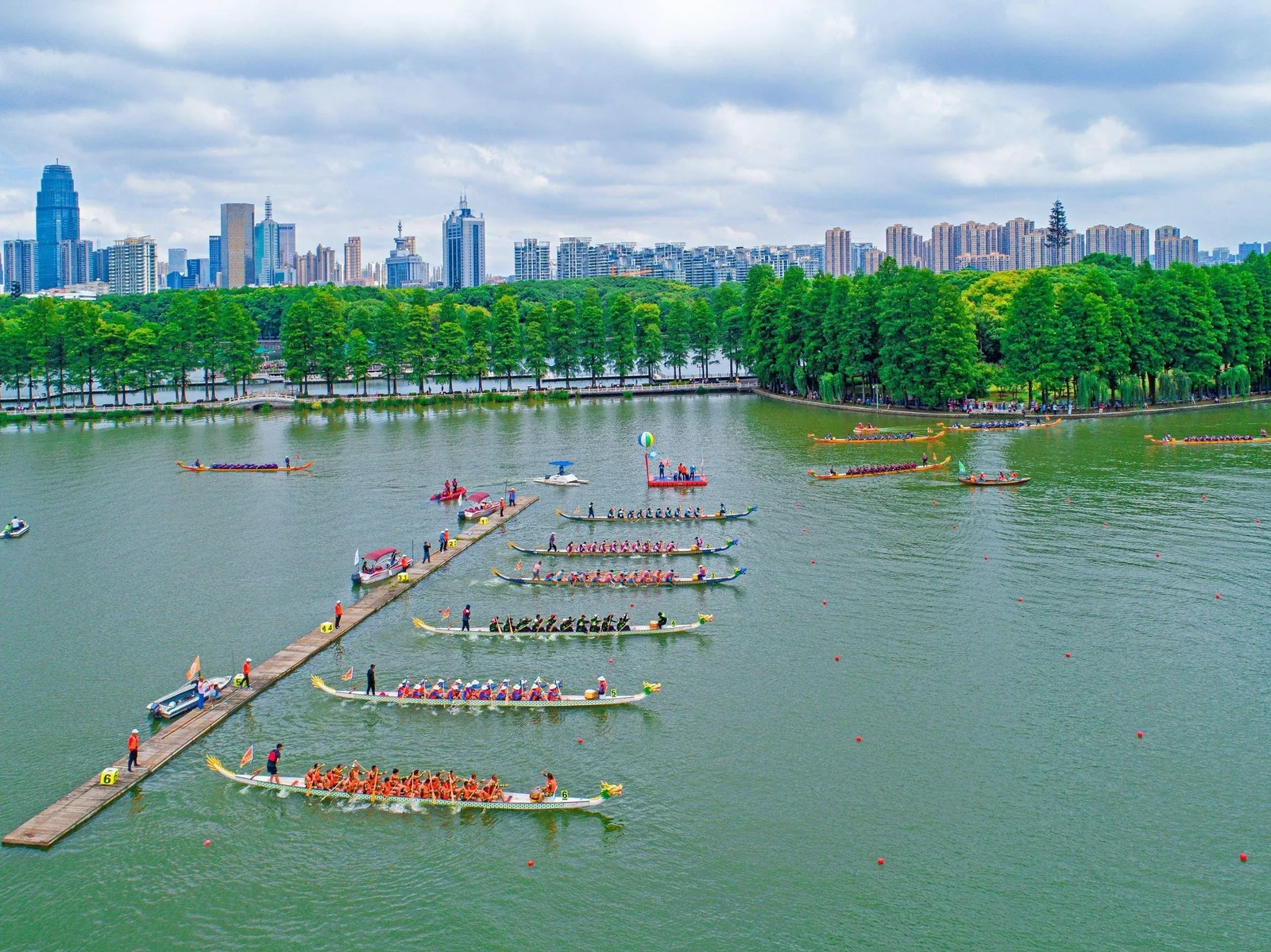
Wuhan’s relationship with dragon boat racing is not hypothetical. The city sits at the confluence of two major rivers and has been running races since the festival existed. In recent years, the Yangtze section between the First and Second Bridges has hosted crew races ranging from corporate teams in matching polo shirts to district-level teams whose members genuinely show up to practice three mornings a week from April onward.
The racing on the Yangtze is not a gentle paddle. The current is real. The boats are 20+ meters long. Teams that train on East Lake find the river entirely different when competition day arrives; the water is darker, the wake from passing cargo ships drifts across lanes, and the crowd on both banks sometimes outnumbers the rowers themselves. Victory at a Wuhan river race means something. The winning team gets bragging rights until next June and usually a modest trophy that sits in the company lobby gathering dust until someone’s mother dusts it in autumn.
Foreigners who want to actually watch a race in Wuhan should follow the university rowing schedules. Wuhan University and Hubei University crews train on the Yangtze portions near campus, and their inter-department competitions during the week before Duanwu are often more spirited than the official city-wide event. For the official event, the Yangtze riverside park near the Second Bridge is the standing-room area; arrive early, bring a folding stool, and prepare for the crowd to be loud in a way that is exclusively celebratory rather than threatening.
The rest of the festival
Between zongzi consumption and race-watching, a few other traditions deserve mention.
Hanging mugwort and calamus. Wuhan families follow this tradition more than you’d expect from a modern city. Bunches of long-leafed herbs appear on the outside of apartment doors in the days before Duanwu, the smell sharp and green and unmistakably… herby. The stated purpose is keeping evil forces away. The practical purpose might be keeping mosquitoes away, which in a Wuhan June is actually not a bad secondary benefit. Buying the herbs is typically handled by the elderly relatives, who regard this task as unskippable regardless of whether they live on the thirty-second floor of a high-rise.
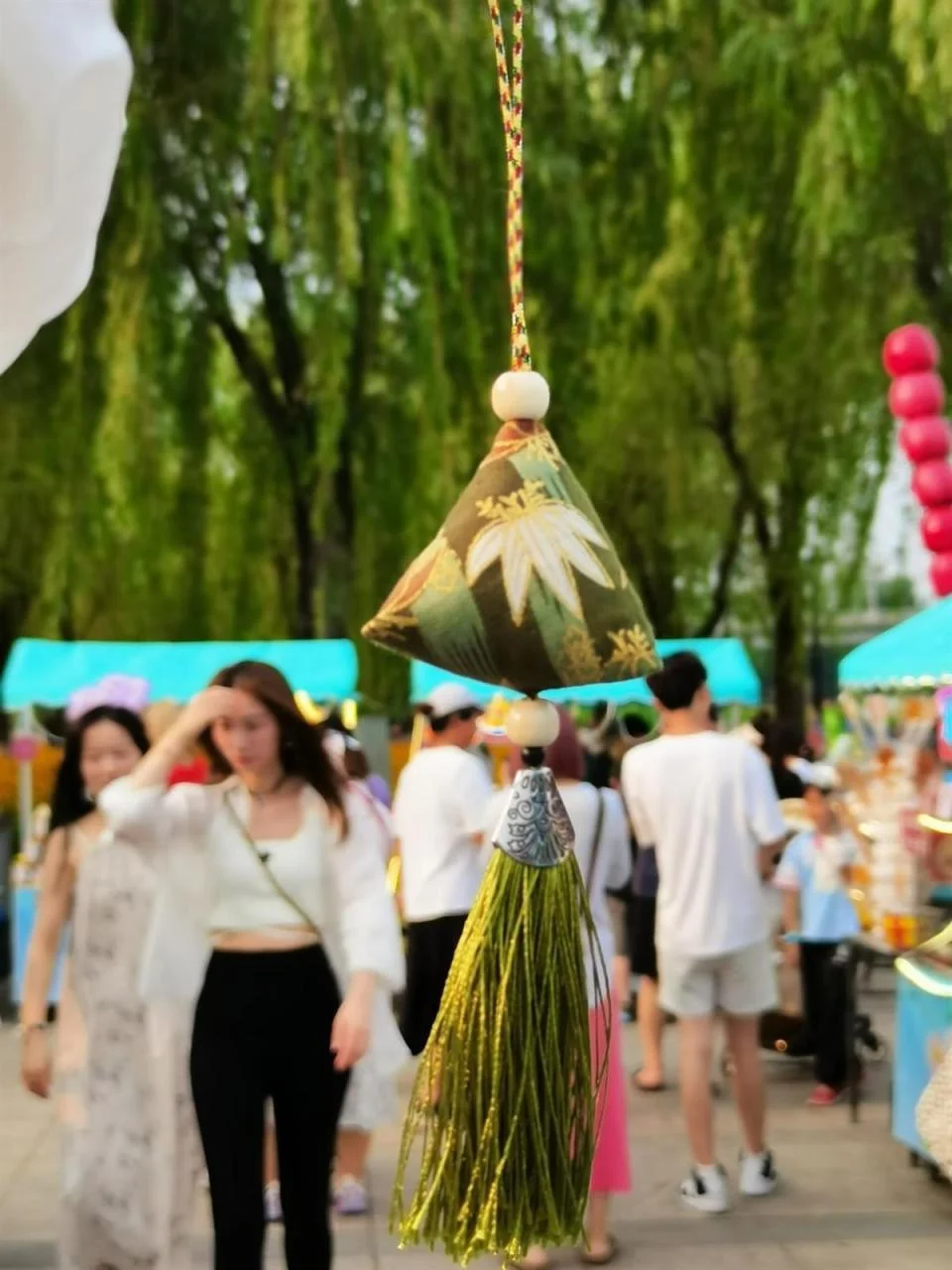
Five-color thread. Thin ribbons braided into bracelets, worn by children or pinned to their clothing. Yellow, red, blue, white, and black woven together. A Wuhan grandmother will tie one onto a grandchild’s wrist with the same ritualistic gravity as if she were performing surgery. You do not remove it until the first rainfall after Duanwu. Or so the grandmothers say. Plenty of kids pull theirs off within a day and develop a conspicuous guilty conscience about it.
Realgar wine. To be clear: do not drink this one casually. Realgar wine contains arsenic sulfide. It is used in small quantities during Duanwu, splashed on doorframes, dabbed on children’s foreheads in the shape of the character for “king.” If actual drinking happens, it is the kind of performative sipping you do for relatives and put down after one symbolic taste. Foreigners are neither expected nor encouraged to participate. The Wuhan June sun will catch you anyway on the riverside; vodka from the convenience store is adequate.
What foreigners actually need to know
Expect a three-day weekend and mild paranoia about zongzi. Your local grocery store will have vacuum-packed versions of wildly decreasing quality in the refrigerated aisle. The ones marked “现包” (freshly wrapped) at small shops outside residential neighborhoods are usually worth the 5-yuan price and three-day zongzi break you’ll take from your weekday routine.
If a colleague brings zongzi from home and offers you one, this is one of the highest compliments casual Wuhan social currency allows. Accept. Eat. Ask which grandmother made the filling and you will receive a seven-minute answer you did not request but won’t regret hearing.
Don’t attempt to navigate the Yangtze riverside on race day using your usual commute route. Bus lines diverge. The subway stations near the bridges announce that they are full and direct passengers elsewhere. Sidewalk traffic moves at the speed of someone who has seven things in their hands and no intention of dropping any.
The Dragon Boat Festival is the last big traditional holiday before Wuhan enters its four-month stretch of unbroken summer heat. The city celebrates accordingly: sticky rice everywhere, rivers churned with oars, and a shared temporary conviction that if you eat enough zongzi the humidity won’t get you. It will get you. But the zongzi worth fighting for.