
The reputation precedes them
Every foreigner who moves to Wuhan gets the same warning: “Careful, Wuhan people are very loud.” Or: “They have terrible tempers there.” Or my favorite: “They’ll just start yelling at you for no reason.”
After 18 years, I can tell you this: every one of those warnings is built on something real, and every one of them misses the point.
Yes, Wuhan people are loud. They do have sharp tempers. They will, on occasion, scream at a waitress because the hot dry noodles came out lukewarm. But here’s what the stereotypes never capture: the same person who just yelled at the noodle shop owner will, ten minutes later, help an old woman carry groceries up three flights of stairs. And the noodle shop owner won’t remember the yelling by tomorrow. That’s Wuhan. The rage is real, the warmth is real, and the two don’t cancel each other out. They exist side by side, sometimes in the same five minutes.
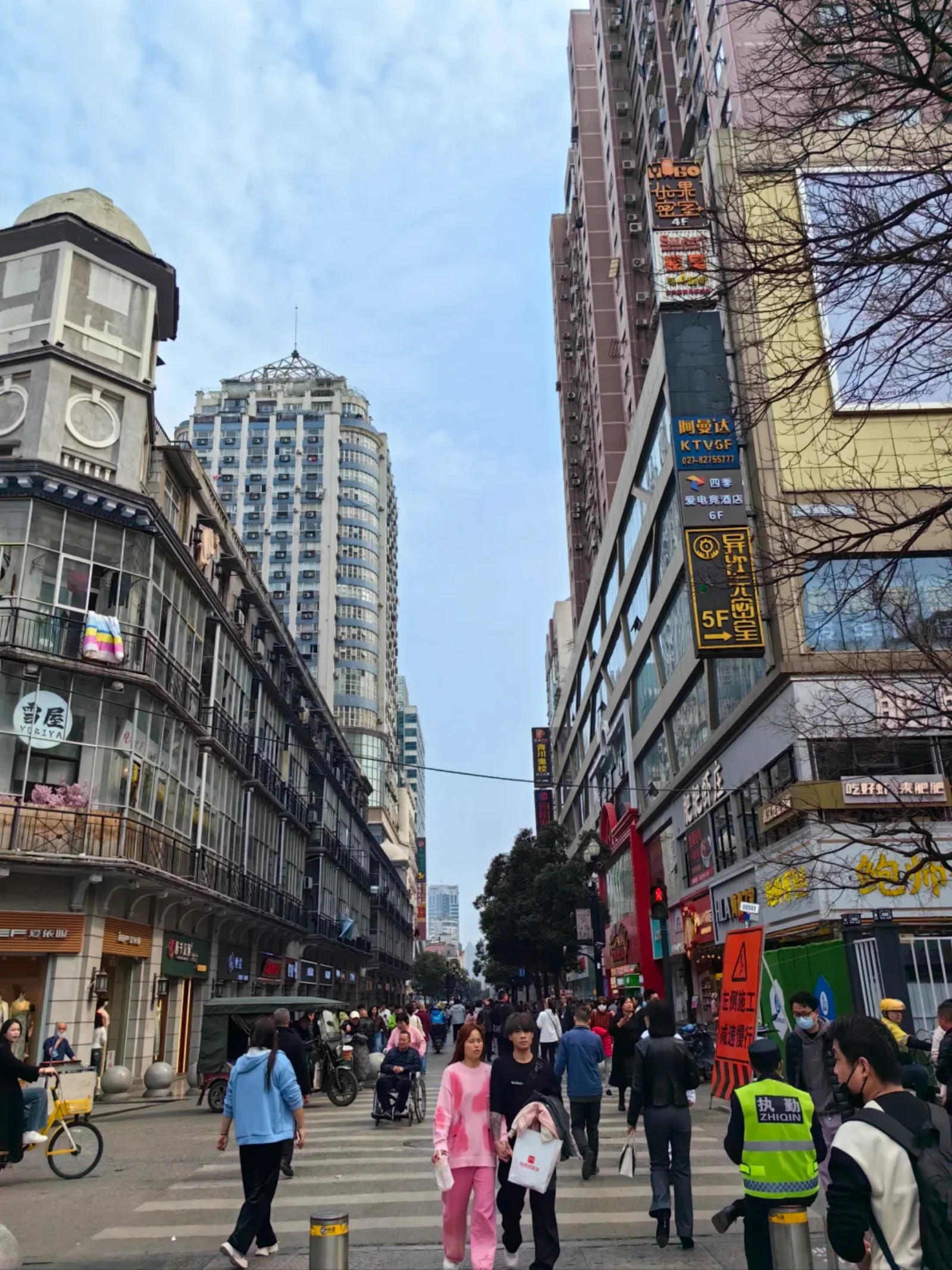
Morning rush on a Wuhan side street. The noise level tells you everything you need to know.
The nine-headed bird
If you spend any time in Wuhan, you’ll hear the phrase “天上九头鸟,地上湖北佬”: “Nine-headed bird in the sky, Hubei people on the ground.” It’s often used as an insult by outsiders: Hubei people are clever to the point of cunning, argumentative, hard to deal with.
Wuhan people took the insult and turned it into a badge of honor. You’ll see “九头鸟” on restaurant signs, company logos, even tourist merchandise. And the characteristics that supposedly make the nine-headed bird dangerous (fierce intelligence, persistence, vicious loyalty to one’s own flock) are exactly the traits Wuhan people admire most.
“Nine heads: three for talking back, three for getting the job done, three for watching your back.” That’s how a friend in Hankou explained it to me over beers. He was half joking. The other half wasn’t.
I’ve seen it work in real life. A Hanyang businessman who tore apart a contract negotiation so thoroughly that the other side’s lawyer complained to me afterwards, then hired the same guy two months later because he respected the skill. A taxi driver who screamed at a pedestrian for blocking the road, then spent ten minutes giving me directions to a place I’d only half-mentioned. The sharp edges are real, and so is the intelligence behind them. Visitors find the combination confusing. It’s not, once you learn to read it.
What “loud” actually means
Let’s talk about the noise, because that’s what foreigners notice first.
When Wuhan people speak at full volume, it usually doesn’t mean anger. It means engagement. They’re into the conversation, the argument, the moment. I’ve had exchanges I thought were perfectly friendly, only to have a local friend tell me afterwards: “Ha, you two were really fighting!” I had no idea.
The baseline volume of a normal Wuhan chat is roughly the volume of an argument in Beijing, and roughly double what counts as lively conversation in Guangzhou. I actually measured this once with a decibel app, out of pure curiosity: Wuhan street conversations sit around 75-80 dB. Beijing office arguments are about the same. Tokyo polite conversation is closer to 55-60.
But here’s what took me years to figure out: the volume drops sharply when it actually matters. When a Wuhan person is angry at you (genuinely, personally angry), they often get quieter. The loudness is social currency, theatrical, expected. The quiet stuff is what you should actually watch for, because that is where the real content sits.
Early on, I thought every raised voice was a problem. Now I can read the tonal markers well enough to know when to worry and when to just turn up my own volume and join in.
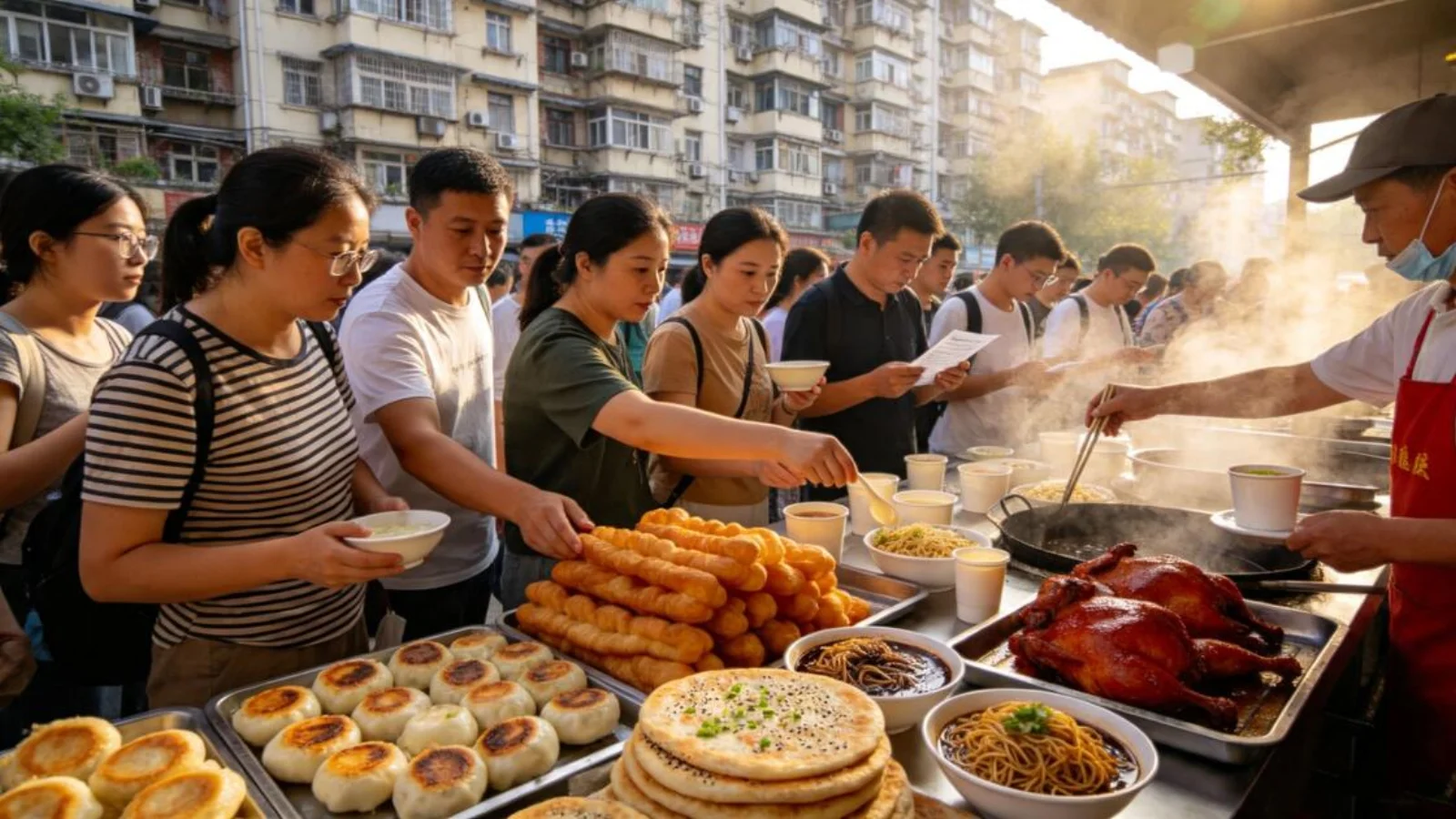
Breakfast in Wuhan is not a quiet affair. You shout your order, the vendor shouts it back, everyone around you is shouting something.
The “guaizi” code
In Wuhan, you’ll be called “拐子” (guaizi). It means “older brother,” but it’s more complicated than that.
The literal meaning is “club” or “cane”: something you lean on, something sturdy. In Wuhan slang, “拐子” is a term of respect and solidarity: you address a man slightly older or higher in status as “拐子.” A woman who carries herself with authority can be “女拐子.” Shopkeepers call you “拐子” to make you feel welcome, and friends call each other “拐子” to mark closeness.
But the word has an edge. When a stranger calls you “拐子” in a certain tone, it means: I’m not afraid of you, and we both know it. There’s an assumption of equality baked into the word that doesn’t exist in more polite forms of address. You can’t defer to power when everyone’s a 拐子.
I remember the first time a Wuhan taxi driver called me “拐子.” He was complaining about traffic, gesturing wildly, then turned to me: “拐子, you see what I mean?” I was a foreigner, obviously new, and he folded me into the same blunt egalitarianism he’d use with any Wuhan native. That’s 拐子. It pulls you in by refusing to coddle you.
The 拐子 code extends beyond language, and it’s a stance toward the world. Don’t put on airs. Don’t take yourself too seriously. If you can’t handle being called 拐子 and meaning it, this city will eat you alive.
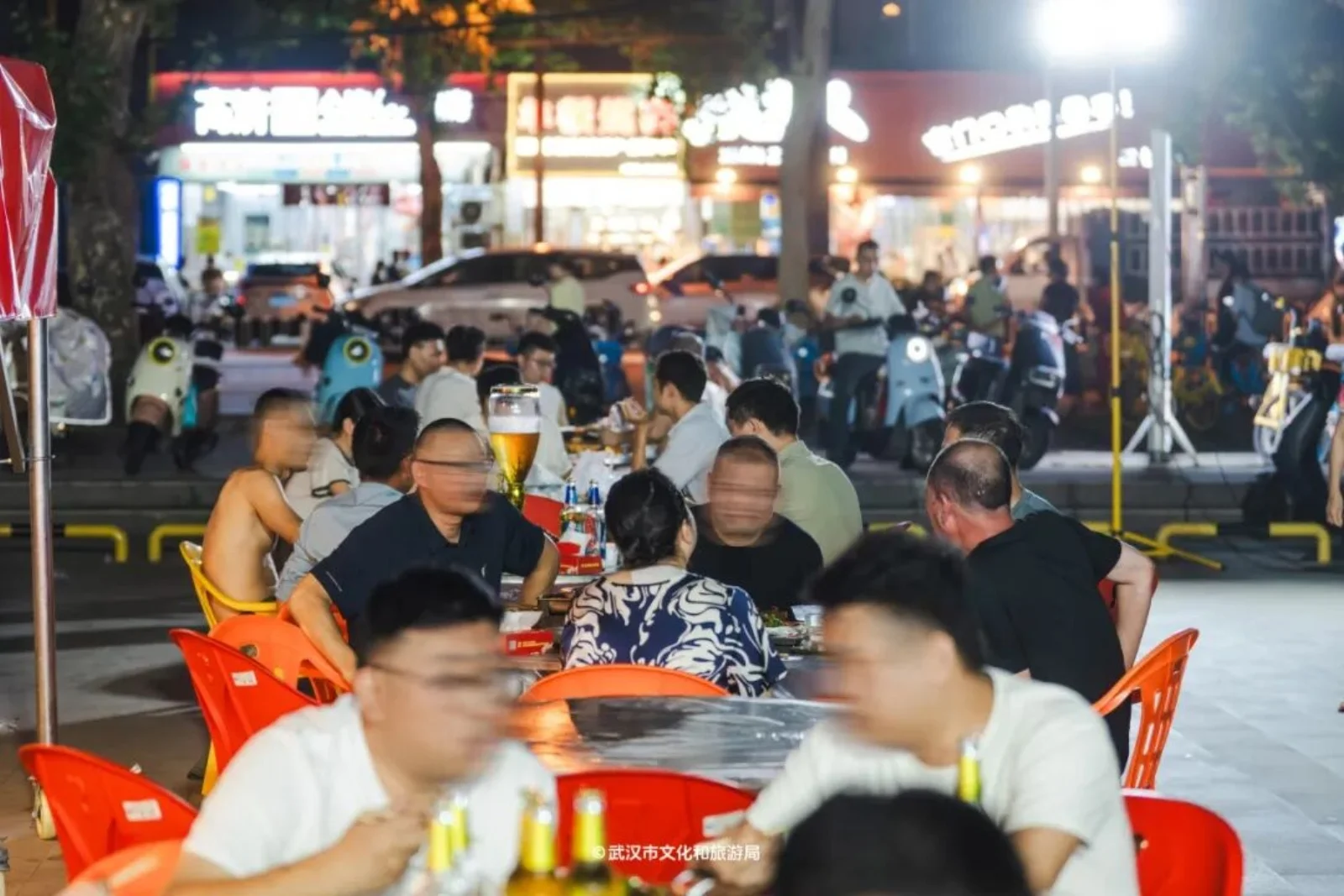
The 拐子 relationship: an argument and a beer, happening simultaneously. Both are affection.
The real rudeness test
I want to talk about something that took me a long time to understand: most of what sounds like rudeness in Wuhan isn’t personal.
When a Wuhan cashier hands you change without making eye contact, she’s not being rude. She’s being efficient. When a stranger on the bus doesn’t say “excuse me” as they push past, it’s not aggression. It’s a city of 13 million people moving fast and assuming you’re moving fast too. The baseline assumption is: you’re a capable adult who doesn’t need hand-holding.
This took getting used to. I come from Shanxi, where politeness rituals are elaborate and expected. Moving to Wuhan felt like stepping into a social world where someone had removed all the lubricant but the machinery ran faster without it.
Here’s what I eventually figured out: rudeness in Wuhan is often a form of inclusion. If a Wuhan person stays genuinely polite with you (formal, careful, keeping space), there’s a good chance they’re holding you at arm’s length. The moment they get casual, curse freely in front of you, call you 拐子 without thinking about it, that’s when they’ve decided you’re fine. The rudeness is the acceptance.
I’ve seen it play out consistently. Foreigners who stay a few months and stick with expat circles always tell me how rude Wuhan people are. The ones who stay a few years, learn some of the dialect, eat at the same breakfast stall every morning: they tell me Wuhan people are the warmest they’ve found in China.
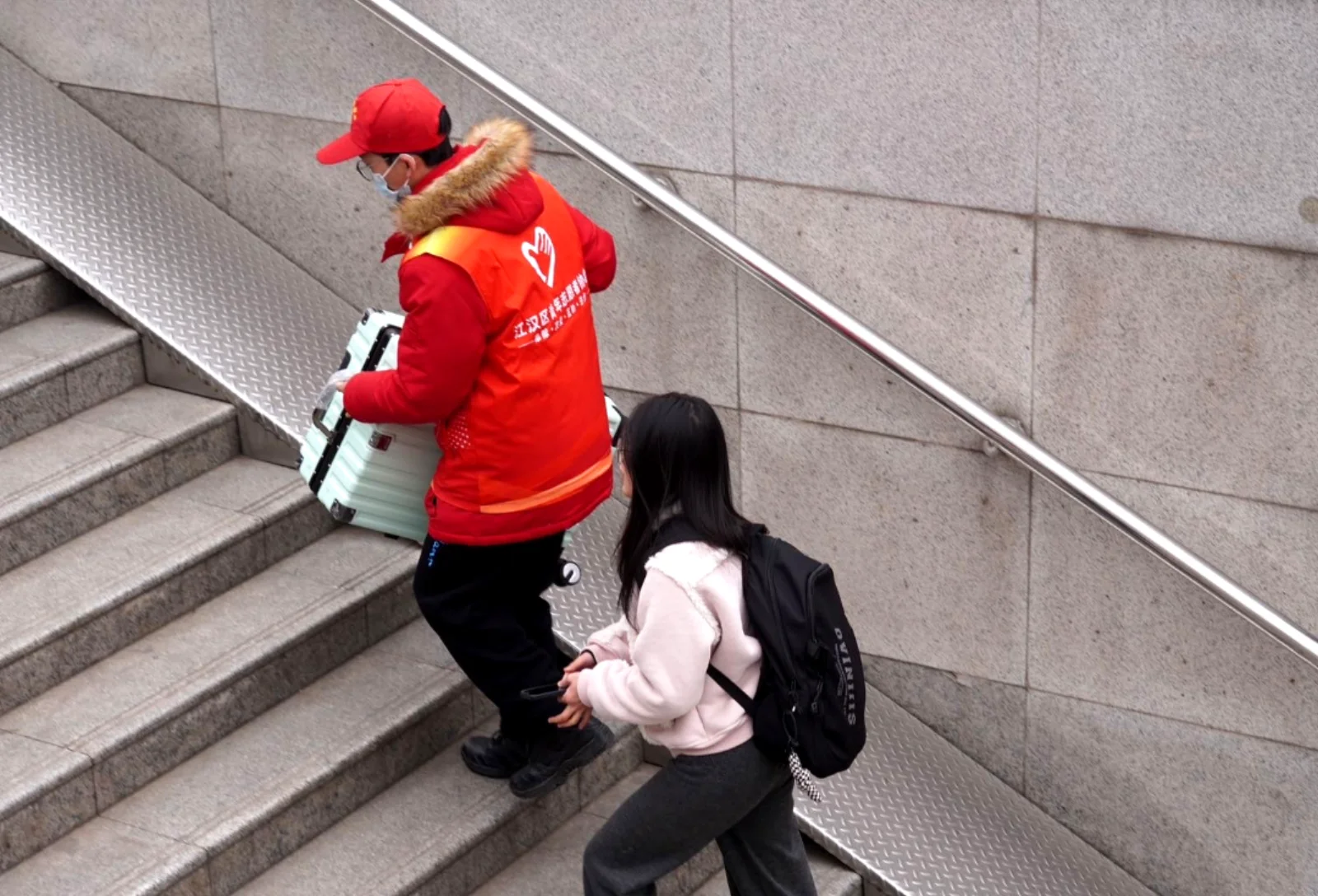
The help comes without ceremony, and they won’t wait for your thanks. They’re already three steps away.
Wuhan loyalty: the kind that scares people
I’ve seen Wuhan loyalty show up in ways that surprised me the first few times.
A friend’s mother, a retired Wuchang factory worker who’d never left Hubei, spent three months learning a Sichuan dish because her son’s new wife missed home. A circle of 拐子 pooled money so fast that a stranger’s medical bill got paid overnight, no questions asked. A couple I know took in their friend’s teenage daughter when he went to prison, raised her as their own for two years, handed her back without a trace of resentment.
This is the side Wuhan’s stereotypes never capture, and the nine-headed bird isn’t just sharp and persistent. It’s fiercely loyal, sometimes stupidly so. The same energy behind a bar fight fuels a total refusal to abandon someone inside the circle.
Getting in is the hard part. Loyalty doesn’t come free. You earn it by handling the noise, accepting the 拐子 equality, being willing to yell and eat and drink alongside everyone else without flinching. Once you’re in, you’re in deeper here than in most Chinese cities.
What 18 years taught me
Long enough to have been wrong about it more than once. The short version:
Wuhan people aren’t angry. They’re intense. I know that sounds like a semantic dodge, but it isn’t. Anger has a target; intensity just has energy. Half the time when someone screams into their phone on a Wuhan street, they’re arguing with their mother about what to have for dinner.
Forget the volume. It’s not the message. Foreigners fixate on the noise and miss everything under it. Listen to the content, not the decibel level, and you’ll find people who are more direct, more honest, and funnier than in most Chinese cities.
The 拐子 code isn’t just slang. It runs Wuhan social life. Accept the title, skip the fake politeness, treat people as equals, and the city opens up faster than you thought possible.
Love shows up as action, and nobody’s going to tell you they care. They show up with soup when you’re sick. They lend you money without asking when you’ll pay it back. They scream at anyone who disrespects you, even if they were screaming at you an hour ago.
You get what you give here: put out bluff, blunt, full-volume honesty and get it back tenfold.

Late night, faces lit by warm yellow light, raising beer cans. This is how Wuhan people love you: loud, close, and without a single kind word.
Disagree with something here? Email me. Accuse me of being too romantic about the yelling. I’ve heard it before. But I’m 拐子 here, and 拐子 don’t lie about their city.
Related:
-
Wuhan Dialect: A Survival Guide: the language behind the character
-
Wuhan Breakfast: Why Guo Zao Is a City-Wide Obsession: where the 拐子 culture goes in the morning
-
Walking the Yangtze Bridge at Night: the infrastructure the city was built on
-
Two Rivers, Three Towns: How Geography Built Wuhan: the geography that shaped the people
-
Wuhan Safety: What Foreigners Actually Need to Know: first impressions and how to read the city