
The meme that isn’t a meme
If you’ve spent any time on Chinese social media, you’ve seen the joke: 武汉公交,下一站,飞机场. “Wuhan bus, next stop: the airport.” The punchline is that the bus moves so fast it’s basically taking off. There are compilation videos. There are t-shirts. There’s an entire genre of short-form content dedicated to the phenomenon of Wuhan’s bus drivers treating urban streets like a qualifying lap.
Most foreigners assume this is internet exaggeration. It’s not. I’ve lived in Wuhan for 18 years and I’ve ridden buses here since before the metro existed. The meme is a documentary.
Here’s what I want to explain: why they drive like that, what it tells you about the city, which routes to brace yourself for, and (because this is Real Wuhan) why the bus might be the most honest window into Wuhanese character you’ll find anywhere in China.
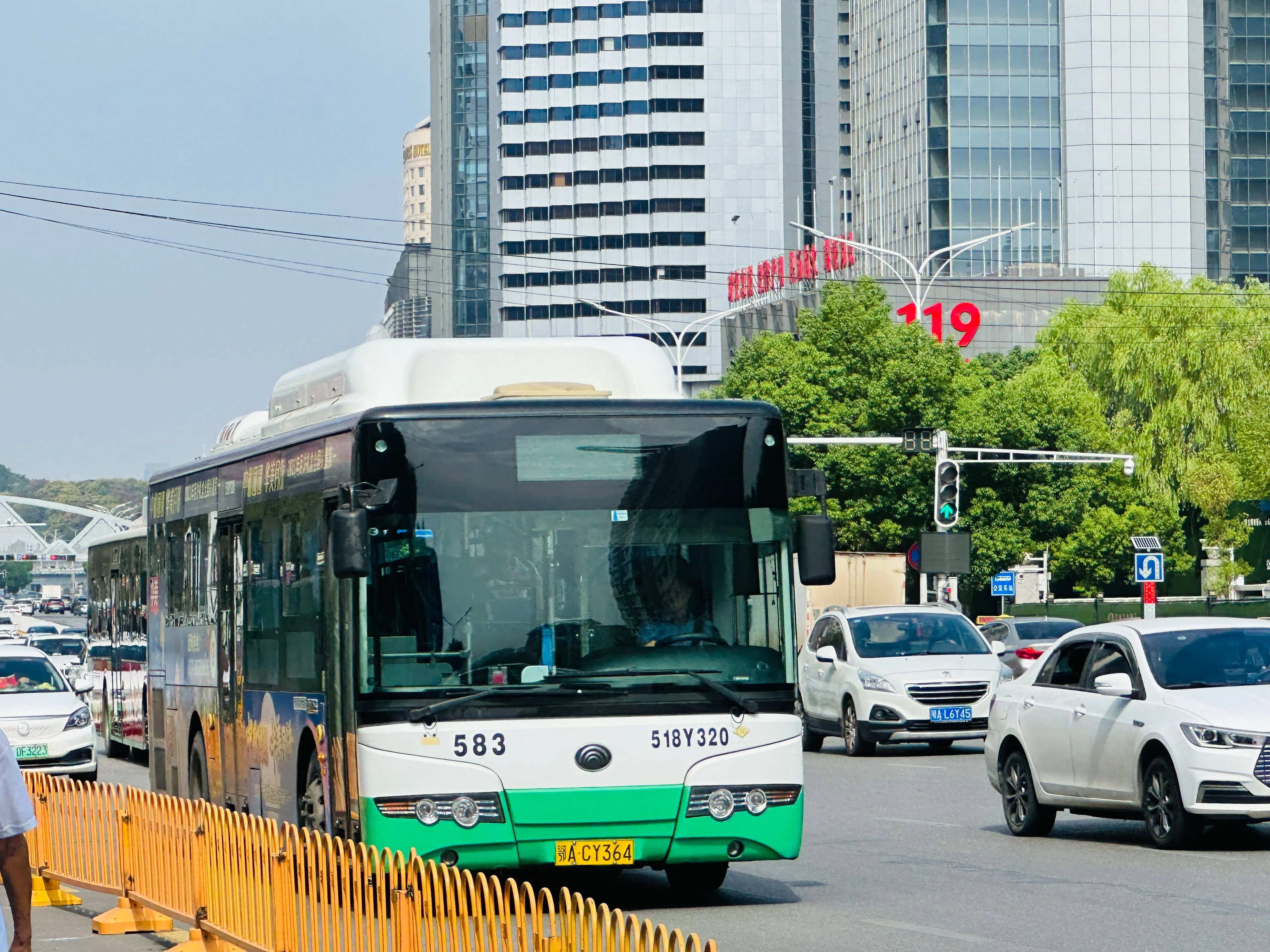
A Wuhan bus in its natural habitat. The lean you see here is real physics, not camera angle.
Why they drive like that
Let’s start with the obvious question: is it legal? Is it safe? Are the drivers just reckless?
Mostly no, mostly yes, and mostly no, in that order.
The short version: Wuhan’s buses operate on tight schedules in heavy traffic, with experienced drivers who know their routes down to the second. A driver who runs Route 604 twice a day, six days a week, for eight years knows exactly where the bottlenecks are, where the traffic lights cycle slowly, where the gaps in traffic appear at specific times of day. The driving looks aggressive from the outside; from the driver’s seat, it’s precision.
The bus company has schedules to keep. If a bus is late, it creates a cascade: the next bus catches up, then they’re both full, then the one behind is empty, and passengers are angry. The timing pressure is real and constant. Drivers are evaluated on their adherence to schedule, and the schedules are tight.
Then there’s the traffic itself. Wuhan is a city of 13 million people with some of the most aggressive driving culture in China. The streets are contested. Taxis, delivery scooters, private cars, e-bikes, pedestrians: everyone is negotiating for space at all times. A bus driver who hesitates loses the gap. The confident driving you see is partly a defense mechanism: the driver who claims space decisively gets respected. The driver who waits politely gets cut off by every scooter in a two-block radius.
I’m not saying it’s good urban planning. I’m saying it makes sense once you’ve been here long enough.
The physics of a Wuhan bus turn
There’s a specific maneuver that every Wuhan bus rider knows: the lean.
The bus approaches a turn at a speed that seems reasonable on a straight road. The driver takes the turn. The bus leans, and passengers grab the overhead handles. Someone’s shopping bag slides six feet down the aisle. A grandmother in the front row does not move, because she has the technique down and has been doing this for thirty years.
The lean is not a mistake. It’s what happens when a vehicle with a high center of gravity takes a turn at 40 kilometers per hour instead of 20. The physics are real. So is the skill required to do it a hundred times a day without tipping anything over.
I’ve talked to drivers about this. The technique, they explain, is to take the turn wide and late: start on the outside of the lane, swing in at the last moment. It’s the racing line. They learned it from years of doing this and from watching each other. The good drivers make it look effortless. The less good drivers make it look like a stunt show.
Either way, hold onto something. The overhead handles exist for a reason.
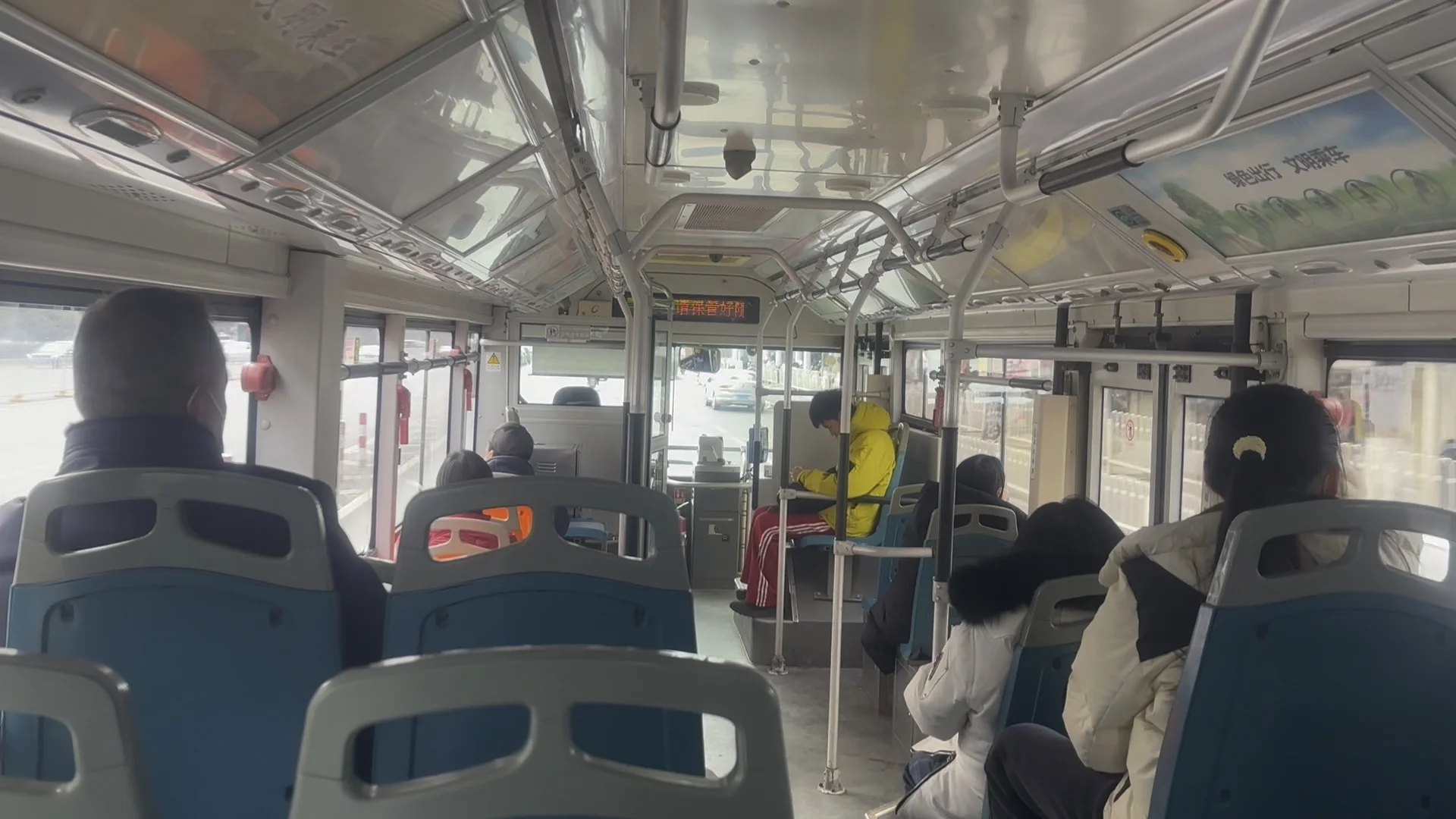
Rush hour interior. Notice the grandmother in front, completely unbothered. She’s seen worse.
Routes to know (and routes to fear)
Not all Wuhan bus routes are created equal, so after 18 years, here’s my honest breakdown.
Routes 538 and 604 are the legends. 538 runs from Wuchang railway station through the city’s most congested corridors, and its drivers have the aggressive confidence of surgeons. 604 crosses the Yangtze via the Second Bridge, and the approach to the bridge ramp is where the famous acceleration happens. Both routes are a rite of passage.
Visitors sometimes take the bus from Hankou railway station to the Yellow Crane Tower because it’s cheap and direct. Fine, except the route passes through some of Wuhan’s densest neighborhoods, which means it’s packed at all hours and the driver is negotiating for space with delivery trucks and e-bikes the entire way. Do it if you want the authentic experience; take the metro if you want to arrive relaxed.
The East Lake loop routes (401, 402) are genuinely pleasant. They wind along the lake, the traffic is lighter, the pace is slower. You can actually look out the window on these instead of white-knuckling the seat in front of you. Tourists should start here.
The night bus network is thinner than the daytime one, but the drivers who work those routes are a different breed. Less traffic, more speed. The 11:30 PM bus down Jiefang Avenue is not for the faint of heart.
The social contract of a Wuhan bus
Here’s something that surprises foreigners: the bus is where Wuhan’s social norms show up most clearly. The unwritten rules:
Seats for the elderly are not optional. I’ve seen teenage boys get up and offer their seats to someone in their fifties. Age commands respect on Wuhan buses in a way that’s almost formal.
The back of the bus is for the regulars. People who ride the same route every day stake out territory. The back seats, the spots near the doors, the standing positions that get you off fastest, are claimed, understood, and defended.
Loud conversations are normal. Phone calls, arguments, gossip: everything happens at full volume. Nobody cares. If you’re quiet on a Wuhan bus, people assume something’s wrong.
Strangers help each other. I’ve watched a woman’s phone fall on the floor and three people reach for it simultaneously. I’ve seen an old man stumble and the whole bus lean to catch him. The same people who won’t make eye contact on the platform will catch you if you fall.
The driver is a public figure. Drivers talk to passengers, passengers talk back. Arguments about stops, about fare disputes, about the traffic: it’s all public, all loud, all part of the show. If a driver is having a bad day, the whole bus knows.
The character behind the wheel
I’ve been riding the same bus route in Wuchang for years, and I’ve noticed something about the drivers that outsiders miss: they’re a cross-section of Wuhan’s working class, and they’re proud of what they do in a way that’s specific to this city.
Bus driving in Wuhan isn’t a prestige job. The pay is modest, the hours are long, the schedule is unforgiving. But the drivers I’ve talked to take genuine pride in their skill. They know they’re good at something hard. They know that a passenger who’s been riding for years recognizes the difference between a driver who can handle a wet road in rush hour and one who can’t.
One driver told me, without any hint of irony: “Anyone can drive a car. Not everyone can drive a bus in Wuhan.” He was right, and the fact that he knew it (publicly, loudly, without apology) is very Wuhan.
This is where the bus connects back to everything I wrote about Wuhan people’s character. The driving isn’t recklessness. It’s a public performance of competence, done at speed, in front of an audience: same as the volume, same as the arguments, same as the 拐子 code. Wuhan doesn’t do modesty.
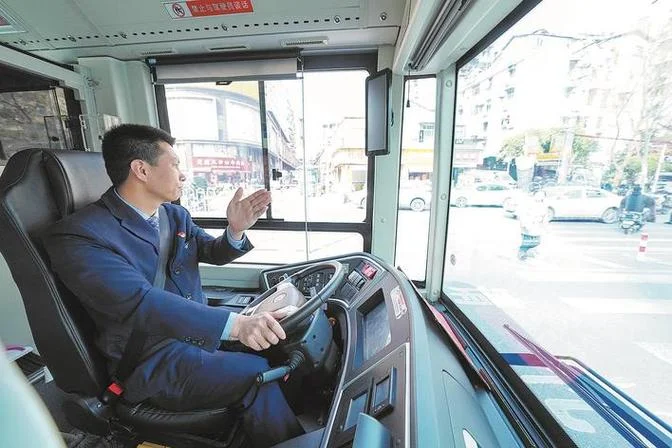
Portrait of concentration. The reflected city in the windshield is the one he’s navigating at 40 km/h.
A practical guide for foreigners
If you’re going to ride a Wuhan bus, here’s what to know:
Payment: Bus fare is ¥2 for most routes. Tap your phone (Alipay/WeChat transit code) or a transportation card at the entry reader. Cash is accepted but exact change only.
Timing: Rush hour is 7:30-9:00 AM and 5:00-7:00 PM. Expect standing room only and the driving to be more aggressive, not less. Off-peak is calmer.
Reading the route: Stops have electronic signs showing incoming buses and estimated arrival times, usually in Chinese and English. The local equivalent of Google Maps is Amap (高德地图), which has real-time bus tracking. Set it up before you ride.
Announcements: Buses announce stops in Mandarin and often in Wuhan dialect. The dialect announcements are faster and less clear. Watch the electronic display inside the bus instead of relying on your ears.
Safety: Hold on. I mean this sincerely. The overhead handles and vertical poles exist for a reason. If you’re standing, brace before intersections. If seated, hold the seat in front of you.
For sightseeing: Route 402 circles East Lake and passes the main scenic areas. Route 605 goes along the Yangtze riverfront. Both are cheap ways to see the city, and both are calmer than the cross-city routes.
When to skip the bus: If you’re carrying luggage, take the metro. If you’re in a hurry, take the metro. If you’re prone to motion sickness, take the metro. The bus is a cultural experience first and a transportation method second.
Why the meme matters
I want to end with a small observation about why the Wuhan bus driver meme exists in the first place, because I think it says something about how China talks about itself.
Wuhan is not Shanghai or Beijing. It doesn’t have the international profile, the glossy magazine coverage. What it has is character (loud, aggressive, warm) and the bus driver is the perfect symbol of that. The meme isn’t mocking Wuhan. It’s celebrating something other Chinese cities don’t have: a public institution that refuses to be boring.
Every city in China has buses; only in Wuhan do they have a reputation.
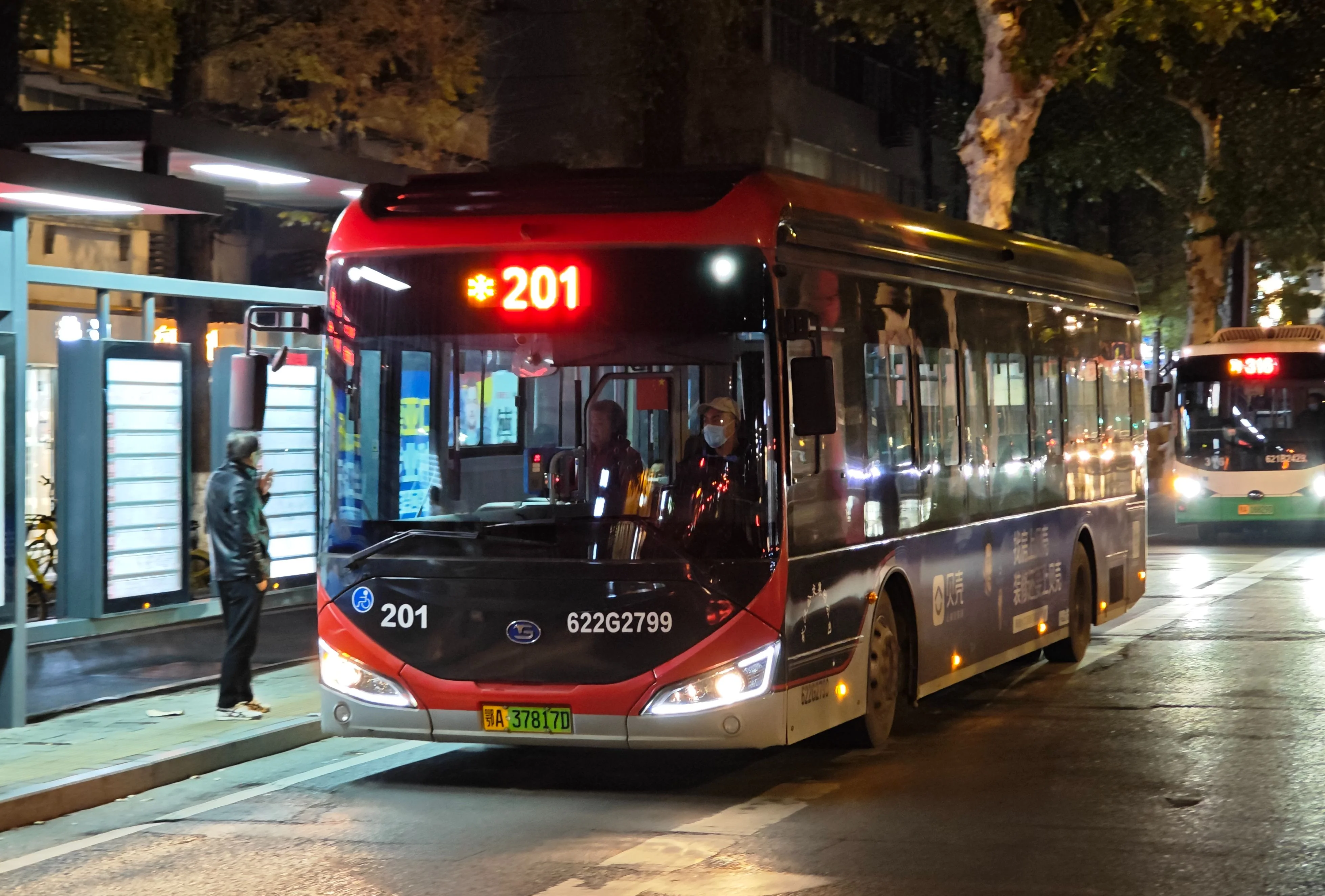
The 11:30 PM bus down Jiefang Avenue. Hold on.
Have a Wuhan bus story that tops mine? Email me. I once saw a driver parallel park a 12-meter bus into a spot I wouldn’t have attempted with a hatchback. The applause from the passengers was spontaneous.
Related:
-
Wuhan People: A Foreigner’s Guide to China’s Most Misunderstood City: the personality behind the driving
-
Wuhan Transportation Guide: metro, buses, taxis, and everything practical
-
Walking the Yangtze Bridge at Night: what the bus crosses at 40 km/h
-
Wuhan Ferry: Crossing the Yangtze the Slow Way: the opposite speed of Wuhan transit
-
Wuhan Survival Language Guide: the dialect you’ll hear from the driver’s seat