
The stigma, addressed first
Let’s deal with the elephant in the room. If you’re a foreigner who remembers 2020, the phrase “wet market” probably carries a weight that has nothing to do with grocery shopping. I understand that. I lived through it here.
So let me say this clearly, before anything else: the wet markets of Wuhan are not what a decade of headlines made them sound like. They are neighborhood institutions: cleaner than their reputation, more regulated than you’d expect, and about as threatening as a farmer’s market in Provence. The market near my apartment has a glass display case for the poultry. There’s a sign listing which vendor was inspected on which day. The fish tanks have filters.
If you came to Wuhan and skipped the wet markets because of what you read in 2020, you skipped the best part of the city. This article is my attempt to fix that.
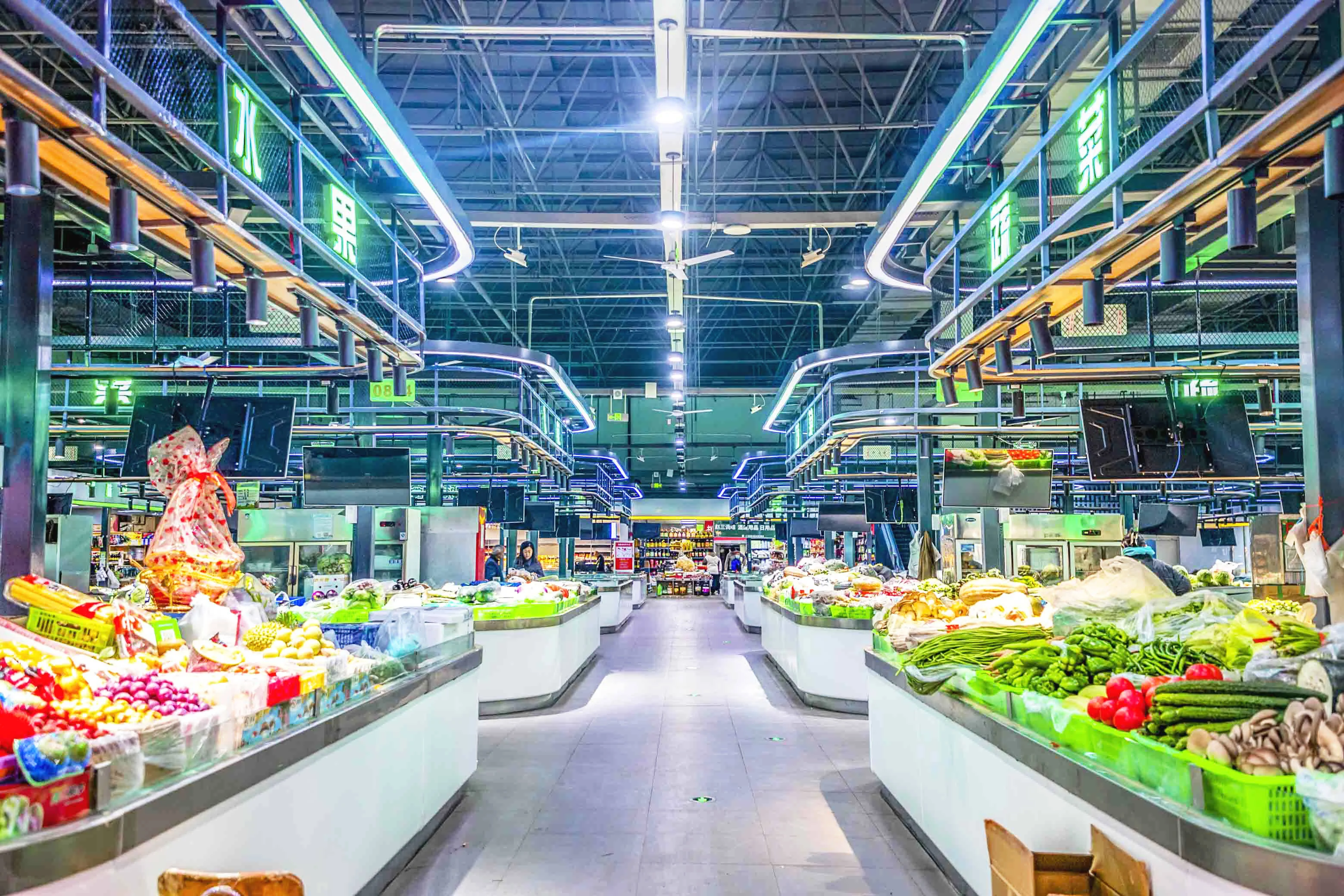
7:30 AM at a Wuchang neighborhood market, with the greens cut at 5 AM.
What a wet market actually is
A wet market (菜市场, caichang) is an indoor or covered market where individual vendors rent stalls and sell fresh produce, meat, fish, tofu, and dry goods. The word “wet” comes from the fact that floors get hosed down regularly: fish stalls, meat stalls, and vegetable washing create water everywhere, and the market staff mop continuously.
Each market has dozens of independent vendors. One woman sells only greens. The man next to her sells only pork: specific cuts, specific butchering. Two stalls down, a fish seller keeps live carp and shrimp in aerated tanks and nets your choice out of the water while you watch. In the back corner, a couple sells dried mushrooms, preserved eggs, and fermented bean curd. There’s usually a tofu person, an egg person, someone selling fresh noodles, and a stall that only sells chili sauce.
You don’t buy everything from one vendor. You walk the circuit. Greens from one, pork from the second, fish from the third. Each transaction takes thirty seconds. Each vendor knows their regulars by sight and remembers their preferences: the woman who always wants the pork sliced thin, the man who only buys fish on Fridays.
This isn’t nostalgia. Hema supermarkets and community group-buy apps exist, and plenty of young Wuhan families use them. The caichang persists because it does something the apps can’t: it puts you in a room with people who are proud of what they sell, and it lets you touch what you’re buying before you commit.
The bargaining, demystified
Foreigners are terrified of bargaining at Chinese markets. They shouldn’t be. Wet market bargaining is nothing like the souvenir-market haggling you see in tourist cities. Here’s how it actually works:
There’s often no bargaining at all. Prices at wet markets are posted or announced, and for vegetables and standard goods, the price is the price. The margin on a bundle of greens is a few mao. Nobody’s scamming you for an extra yuan on bok choy.
Bargaining exists, but it’s social, not adversarial. You ask “能便宜一点吗?” (can it be a bit cheaper) and the vendor might throw in an extra scallion, round down from 12.5 to 12, or add a handful of cilantro to the bag. It’s a relationship gesture, not a negotiation. You’re not winning. You’re establishing that you’re a person they’ll see again.
The real discounts come from volume and loyalty. Buy pork from the same stall every week for two months and watch what happens: better cuts, first pick of the fresh batch, the bone you need for soup set aside before you ask. This is the 拐子 economy in action: the same loyalty code that governs everything else in this city.
What you should not do is aggressively bargain over small amounts. It marks you as an outsider and it’s poor manners. The vendor who would have given you a free scallion now gives you a flat price and no extras.
The best hours
Timing matters at a wet market more than almost anywhere else in Wuhan.
6:00-8:00 AM is peak. The vegetables arrived at 4 or 5 AM from the wholesale market. The fish is freshest. The pork was butchered that morning. This is also when the market is loudest and fullest: retirees doing their daily shopping, restaurant buyers picking up for lunch service, young parents grabbing breakfast ingredients. If you want the market at full energy, come now. If you want to take photos without fighting for space, come at 6:30.
10:30 AM-12:00 PM is the quiet window. The morning rush is over. Vendors are more relaxed, more willing to chat, more likely to cut you a deal on whatever didn’t sell. Selection is reduced but quality is still good.
4:00-6:00 PM is the second wind of the day. People shopping for dinner ingredients. The market revives for two hours and then winds down. By 6:30, vegetable vendors are discounting the last of their stock, which is when you can buy a week’s worth of greens for almost nothing, if you don’t mind eating them in the next two days.
Never come at noon. The market is half-shuttered, vendors are eating lunch at their stalls, and the floors are being mopped. It’s the dead zone.
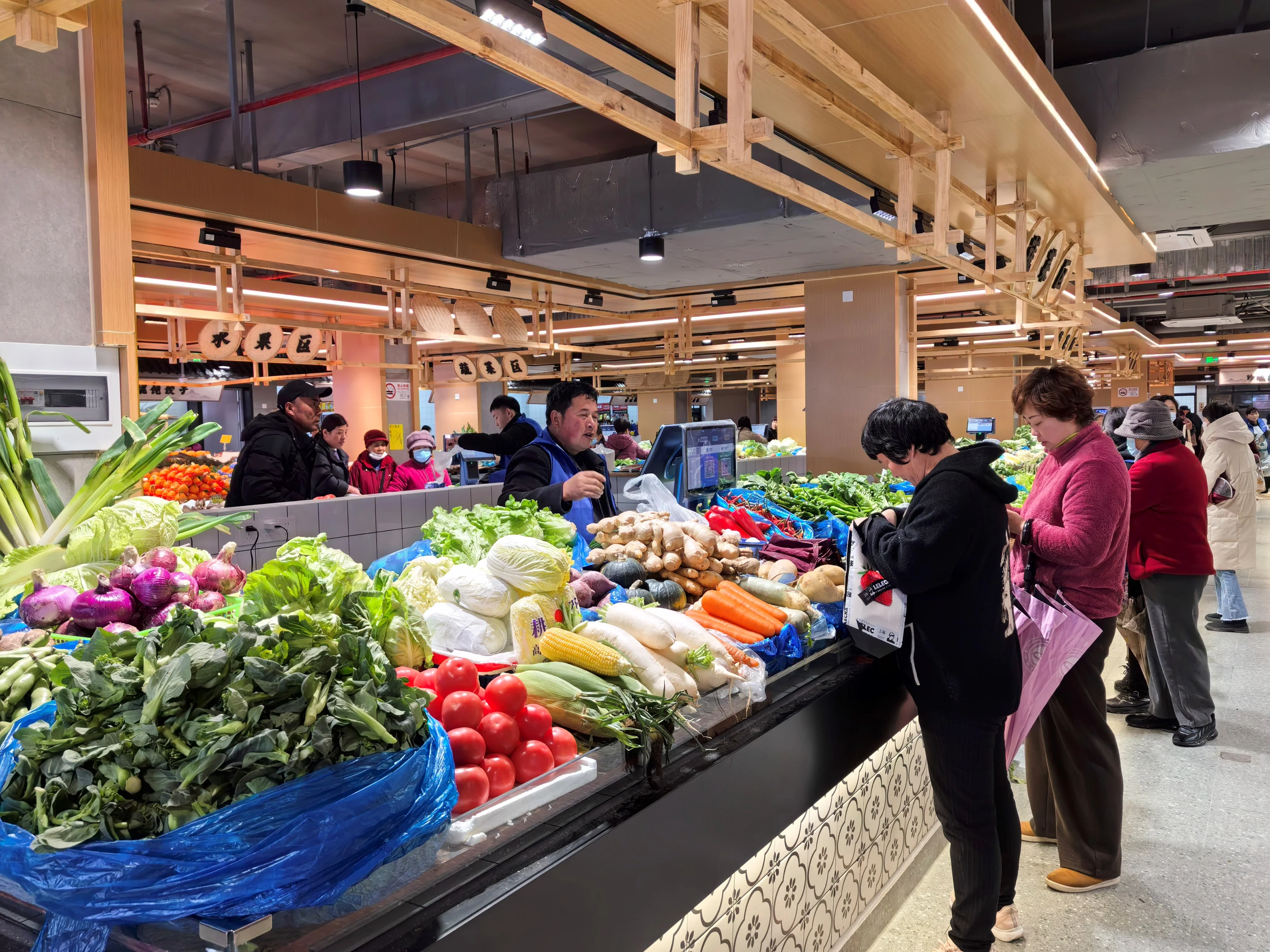
The morning light comes through the roof panels around 7 AM. Vendors have been here since 4:30.
The vendors you’ll meet
After 18 years, I can tell you that wet market vendors are a specific type of Wuhan person. They’re up before dawn, they stand for ten hours, they handle money and produce and fish water with the same two hands, and they will remember your face after two visits.
The vegetable women are the anchors. Usually middle-aged or older, they sit behind pyramids of greens arranged with real care: the bok choy stacked stem-out, the tomatoes sorted by ripeness. They will tell you, unasked, which vegetable is good today and which you should skip. The advice is honest, and their reputation depends on it.
The pork guys are showmen. The cleaver work is real skill: they break down a half pig with a few cuts, and the good ones can slice pork for hot pot thin enough to read a newspaper through. They’ll shout across the market to the vegetable stalls, joke with the fish guy, and give a kid a slice of braised pork skin to keep him quiet while his mother shops.
The fish sellers run the wettest, most chaotic stalls. Live fish in tanks, shrimp in buckets, eels in shallow pans with nothing but a mesh lid. They’ll kill and clean your fish while you wait: gutted, scaled, cut to your specification, wrapped in a plastic bag with the blood still running. It’s efficient and it’s not for the squeamish.
The tofu couple runs the quietest stall. Fresh tofu, dried tofu skin, tofu puffs, fermented black beans. They never shout. They never bargain. The line at their stall is quieter than everywhere else and just as long.
What to buy
If it’s your first time at a Wuhan wet market and you have a kitchen, here’s what’s worth buying:
Vegetables: 藜蒿 (artemisia stems, a Wuhan specialty, in season December-March), 红菜苔 (red cabbage moss, winter), fresh water chestnuts (autumn), and any of the leafy greens. Much of this was harvested the same morning. The difference from supermarket produce is immediate.
Pork: Get pork ribs cut for lotus root soup (排骨, the cuts for the classic Wuhan soup). Ask for 肋排. Watch them cut it. Buy the pork bones separately for the broth.
Fish: Live carp from the Yangtze-adjacent fish farms, or 鳊鱼 (Wuchang bream, the fish the district is named after). Have it cleaned. Steam it that night with ginger and scallion. It will be the best fish you eat in China.
Breakfast supplies: Fresh noodles, dumpling wrappers, and 豆丝 (dou si, the dried tofu skin sheets). If you’re ambitious, buy the ingredients for reganmian (热干面) and make your own version at home.
Condiments: The chili sauce stall, if the market has one, will change your cooking. Wuhan-style fermented black beans, sesame paste, and pickled radish for congee.
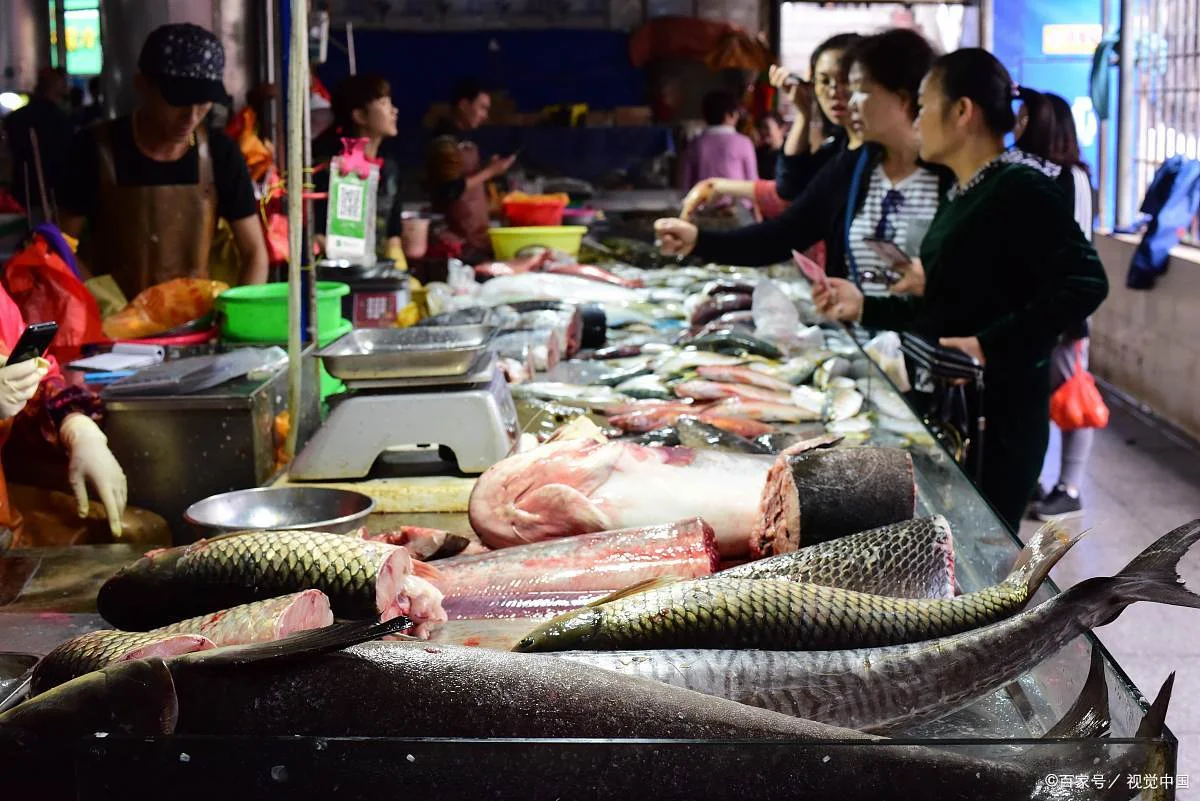
Live fish, killed and cleaned while you wait. The whole process takes ninety seconds.
Which markets to visit
You don’t need to hunt for a special market. Every Wuhan neighborhood has at least one caichang, and the residential ones are the most authentic. Three kinds are worth knowing:
For the full experience: Any market in the old Wuchang or Hankou residential blocks, the areas behind Jianghan Road, or the lanes near the Hubu Alley tourist strip in Wuchang. These are working markets that happen to be near tourist areas, so you get authenticity plus accessibility.
For photography: The larger markets with skylights. The light in the early morning slants through the roof panels and hits the vegetable stalls. Bring a fast lens. The light is dim but directional.
For seafood: Markets near the river have better fish selection. The Hankou riverside markets stock river fish you won’t find anywhere else inland.
A note on cameras: Wet markets are working spaces, not tourist attractions. Ask before you photograph a vendor’s face. Most will say yes: some will pose, some will ignore you, one or two will wave you off because they’re busy. The produce is fair game. The people deserve a nod first.
Why it matters
What the food blogs miss: wet markets are not primarily about food. They’re about the last remaining space in urban China where strangers interact as neighbors rather than as transactions behind screens.
The delivery app economy is extraordinary: I use it, you use it, everyone uses it. But it removes every point of human contact from the act of eating. The wet market is the opposite. You touch what you buy. You talk to the person who sold it to you. You come back next week and they remember your order without you saying it.
There’s a version of modernity where this disappears. I don’t think it’s inevitable. But if you’re visiting Wuhan and you want to see the city as it actually lives (not as it presents itself in museums and tourist streets), spend an hour at a wet market at 7 AM. Watch. Buy something small. Let a vegetable woman tell you the bok choy is good today.
The market is the city with the volume turned down and the warmth turned up. It’s worth your morning.
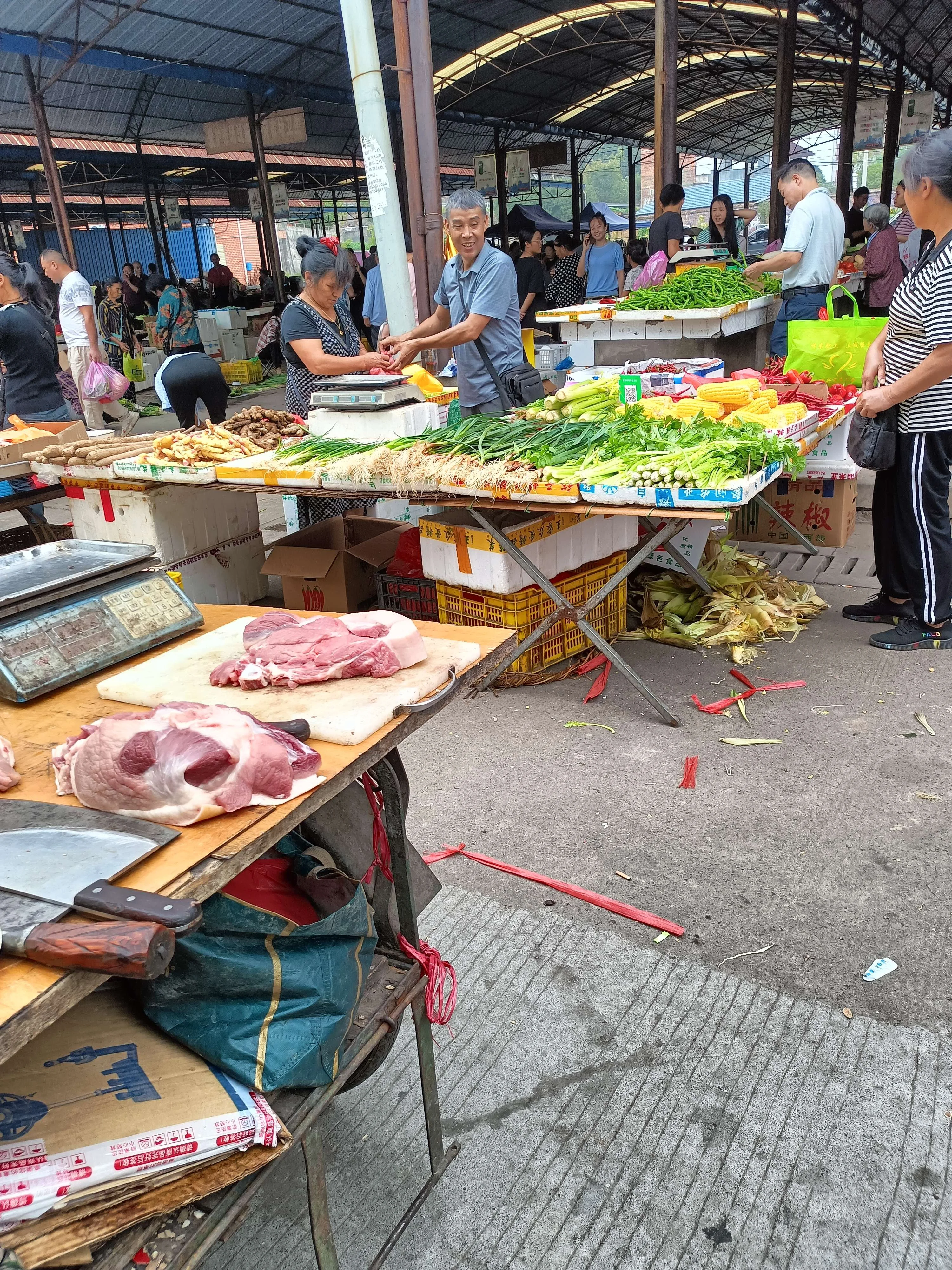
6 PM, the last hour. Vendors from neighboring stalls catch up on the day. The discounting has begun.
Bought something good at a Wuhan market? Email me. I’m still looking for a reliable source for good 藜蒿 in the off-season, and I’ll trade a market tip for a market tip.
Related:
-
Lotus Root and Pork Rib Soup: Wuhan’s Home Cooking: what to cook with what you buy
-
Hot Dry Noodles: The Ultimate Guide: Wuhan’s breakfast institution
-
Wuhan Food Beyond Breakfast: the rest of the culinary map
-
Wuhan People: A Foreigner’s Guide: the people you’ll meet at the stalls
-
Wuhan Ferry: Crossing the Yangtze: another slow, human way to experience the city