
In Wuhan you do not order breakfast. You assemble it, one stall at a time, and every stall sells one thing properly rather than six things adequately. That system is why a local can eat a full morning meal for less than a latte, and also why a visitor can quietly pay four times what the person beside them paid and still walk away satisfied.
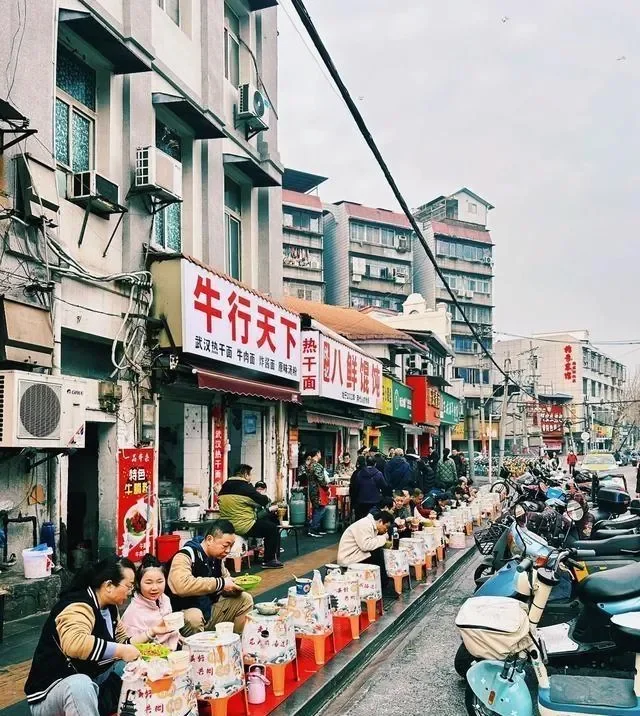
I’ve watched both happen on the same street inside the same week.
How the assembly works
The word is 过早 (guo zao), and it sits closer to “I’ve already done my morning” than to breakfast in the sense an English speaker means it. You ask someone 你过早了吗 as a greeting around eight in the morning, and the answer is never yes or no. It is which stall you went to.
The mechanics are simple. You walk a street where breakfast shops sit shoulder to shoulder, each with its own queue. You stand in the line for the thing you want, you pay cash, you eat it standing up or on a plastic stool, and you move on to the next stall for the next thing. A typical local breakfast is two or three items. Not one dish.
Three vendors is the usual shape. Hot dry noodles from one stall, a 面窝 from the next, a bowl of 蛋酒 from a third. Nobody assembles all of it at a single counter, because no single counter sells all of it.
Timing matters more than visitors expect. Most stalls open around 5:30 and the good ones thin out by eight. The hour between six and half seven is the only window where everything is available and nothing is reheated.
The cheap end
The bottom of the price list is fried dough and egg, and it is genuinely cheap rather than discount-cheap.
A fried bun (煎包) runs about 2.5 yuan at the counters that get quoted most often. A 汽水包, the same idea with soda in the middle, is a couple of yuan. These are what you buy when you want to eat something and do not want to think about money.
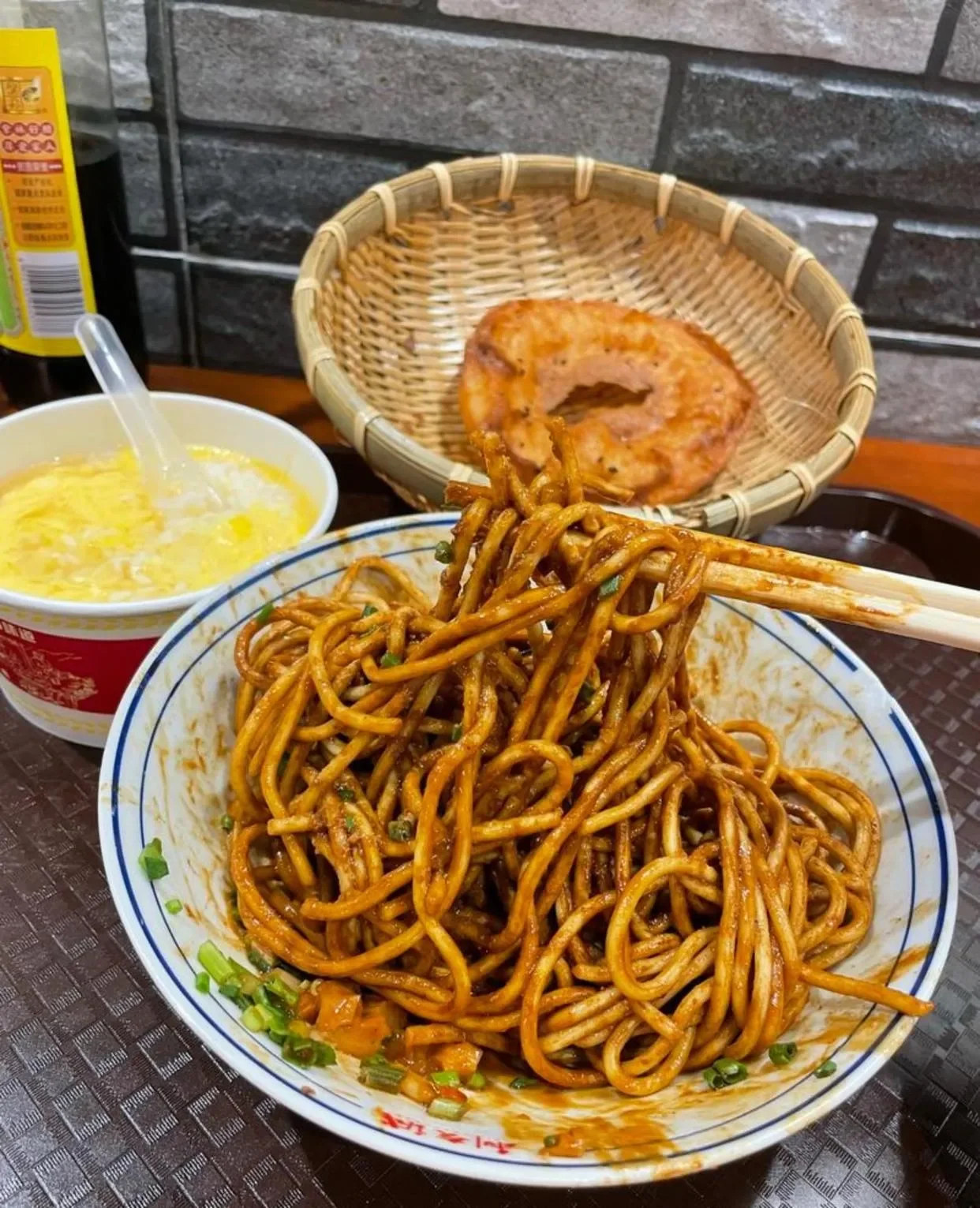
The 面窝 is the one worth knowing. It is a ring of rice batter fried pale gold with a depression in the middle, and it costs very little. Reporting from the late 2010s put a single one between one and one and a half yuan, and a paper bag of them at five. A cart near the north end of the Jianghan Road pedestrian section charges five for a bag of 糖油馐, the caramel-coated cousin, and the pricing works the same way.
What keeps these cheap is not cleverness. It is that the batter costs almost nothing and the oil in the pan has been going since five in the morning.
The middle of the list
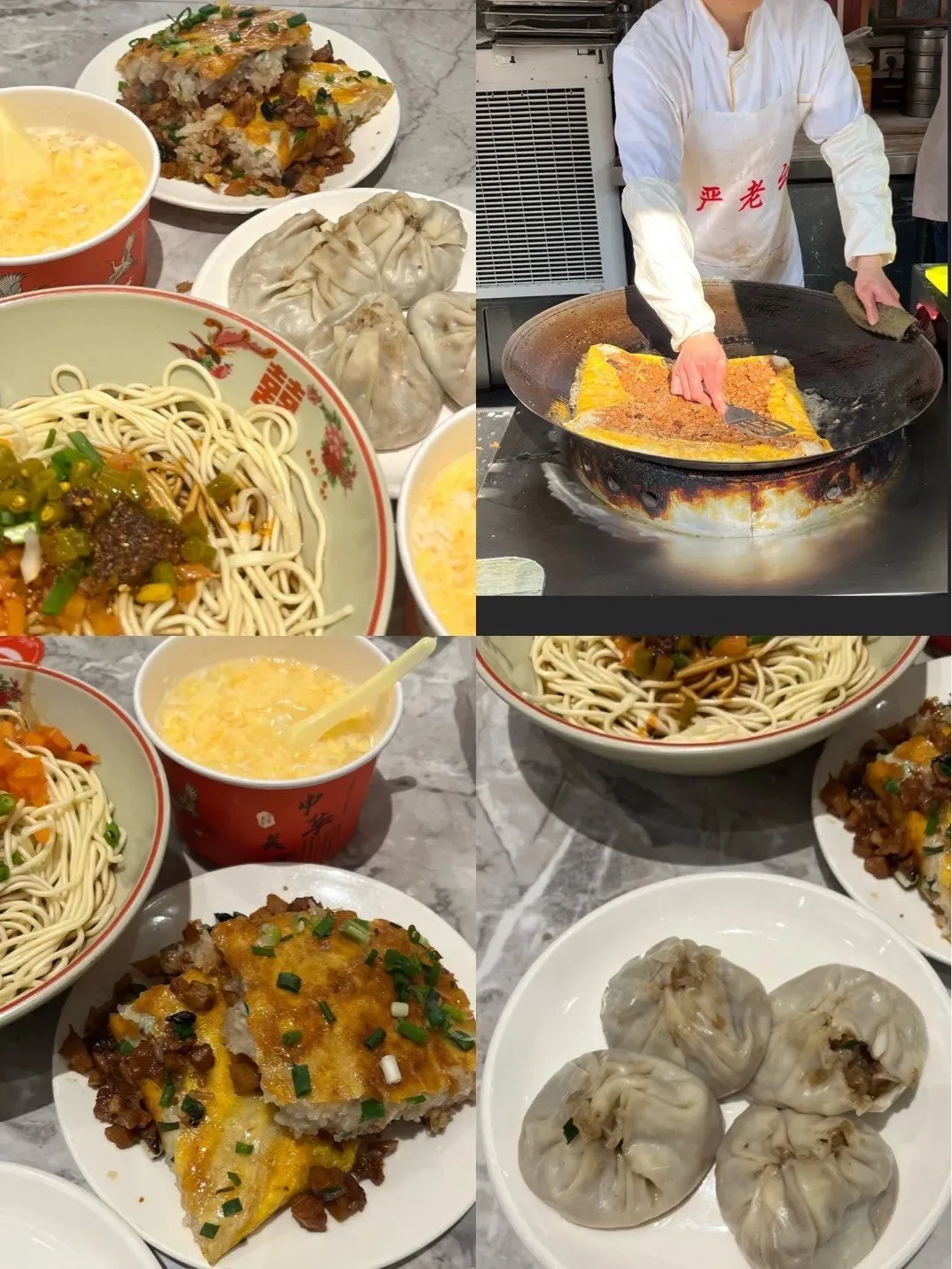
烧梅, the steamed dumpling of minced pork and rice, is about five yuan. 豆皮, the mung bean and rice roll layered with egg and fillings, is four at some counters and six at others. The spread across shops is real rather than a misprint, though the cheap version and the fish one are not interchangeable, so a 4 yuan roll is not a 6 yuan roll.
Hot dry noodles are the flagship, and there is a separate guide to ordering them because the bowl is mostly a sequence of decisions. Counters charge from four at the cheapest to ten for the fuller versions, with six to eight the common band. Recognised chains such as 蔡林记 sit in that range and do nothing wrong.
The expensive end
Beef is where the money goes, and it is the only place the price list runs away.
A bowl of beef noodles at a neighbourhood shop runs about twelve yuan, a figure that keeps getting described as the most expensive item on an ordinary Wuhan breakfast table. The 生烫 version, raw beef blanched in the broth instead of pre-cooked, at a more central shop, runs to about twenty-six.
Four 粉蒸肉生煎, steamed buns filled with pork belly, go for fifteen to sixteen. Steamed soup dumplings come to about twelve for a plate of twenty, which works out under a yuan each, and there is a full piece on those if you want the ordering rules.
The gap between the cheap end and the expensive end is roughly ten to one. It is not a quality gradient. It is a choice of ingredient.
Putting a breakfast together
Here is what an actual morning costs, using the figures above.
Hot dry noodles at four, taken at the bottom of that range, plus a 面窝 at one and a half and a bowl of 蛋酒 at three. That comes to eight and a half yuan, which a local would call a finished breakfast.
Add a 烧梅 and you are at thirteen and a half, which is roughly where the person behind you in the queue decides the day has properly started.
The rule locals apply is 干湿搭配, dry and wet in balance. Noodles and fried dough on their own leave you thirsty and heavy. The soup item is not decoration on the side. It is what makes the rest of it go down.
If you want the lowest honest total, buy the three cheap items and skip the beef. If you want the version a Wuhan person would recognise as generous, you are ordering the twelve yuan noodle and nothing else.
Where the cheap ones are
Two streets get named more than any others, and they are not the same kind of place.
户部巷 is the visitor-facing one. It is well known, easy to find, and not the cheapest option in the city. The stalls are good and the queues run longer than they need to.
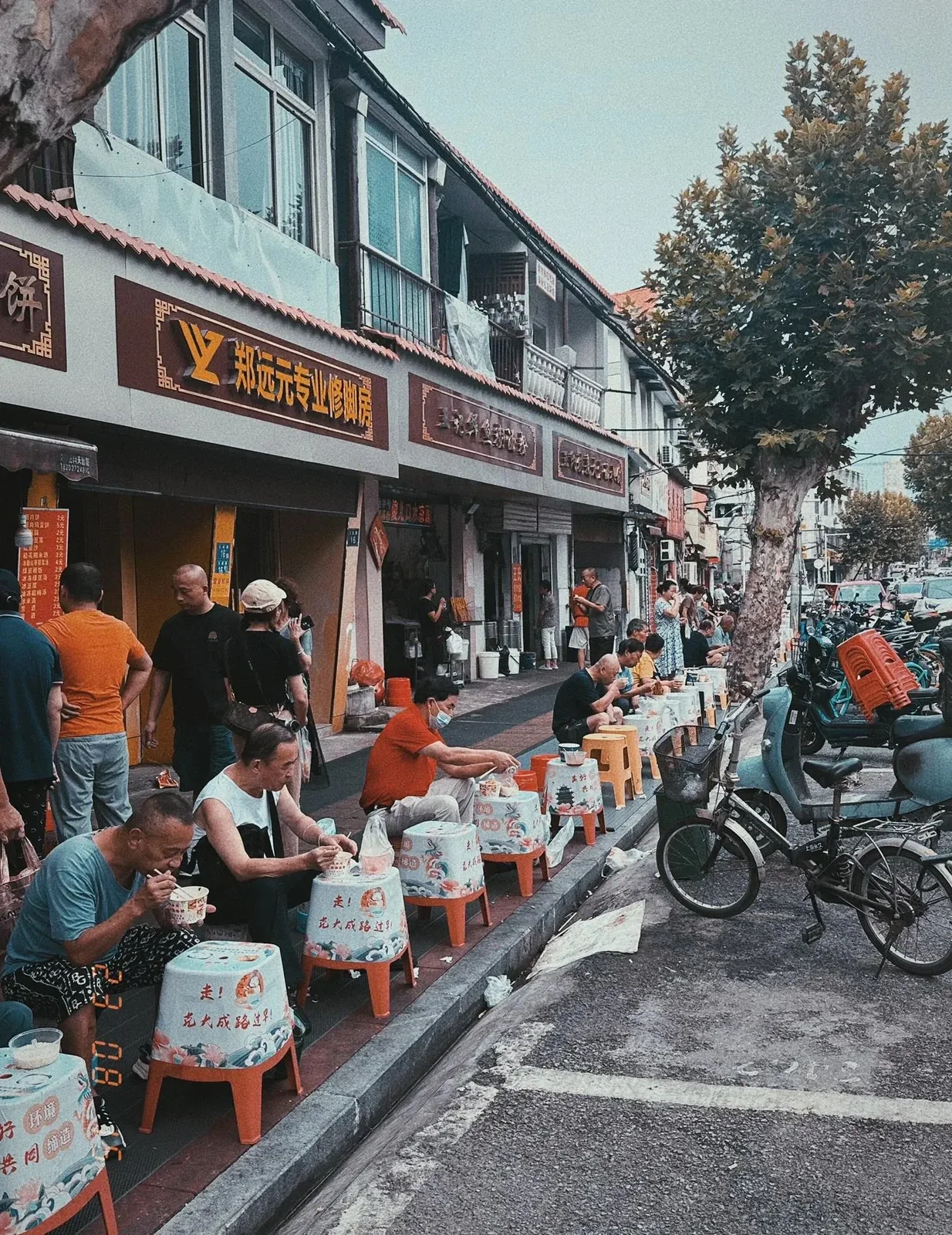
粮道街 is the local one. The hot dry noodle shops on it are the ones Wuhan residents argue about, and several have been trading on the same stretch for decades.
The Hubei provincial commerce office published a survey late last year of a street roughly 400 metres long holding more than twenty breakfast vendors, and named several of them, among them 徐氏糯米包油条 and 雷氏鸡冠饺 and 卢记热干面. Twenty vendors on one short street is the density the assembly system actually needs, and it is not the density you find on a tourist list.
For the sweet end of the meal, 三镇民生甜食馆 on 胜利街 is an established name, known for 鸡冠饺 and an osmanthus version of its signature. The breakfast culture piece covers where the better-known stalls sit, and how breakfast has changed covers what got replaced.
Three things to watch for
The first mistake is assuming one breakfast is one purchase. It is not. Standing at a single counter expecting a full meal is how people end up paying fifteen yuan for something a local assembled for six.
The second is ordering 面窝 and 豆皮 from the same stall and assuming both are at their best. They are both fresh, but they are cooked at different speeds, and a stall that does both properly is uncommon.
The third is arriving at nine. Everything is still open and all of it is second-wave.
The honest version
The cheapest complete Wuhan breakfast is around seven yuan. A generous one is around fifteen. Nobody is going to hand you a four yuan meal, and that is not because anyone is overcharging you. It is what the ingredients cost.
The reason people remember Wuhan breakfast as cheap is not one number in a list. It is that the city lets you buy six different things from six different stalls and the whole morning still costs less than a single entree would in most other Chinese cities.