
There’s a window in Wuhan, roughly from 5:30 to 8:30 AM, during which the city practices a religion that has no name but deep devotion. The ritual surface is breakfast: 具体来说是过早. The word implies “passing through the morning meal quickly,” which is the opposite of what actually happens. Wuhan people don’t rush breakfast. They perform it somewhere between sprint and liturgy, consuming complex dishes while standing at street counters, perched on tiny plastic stools, or walking toward the metro with a disposable bowl balanced in one hand.
The city that official China calls 江城 has a second unofficial title, one that locals would fight to defend if anyone tried to take it away: 早餐之都. The breakfast capital. It’s not a title they gave themselves, and it’s not a marketing campaign. It’s simply what happens when three million people cross two rivers every morning and need to eat before they do it.
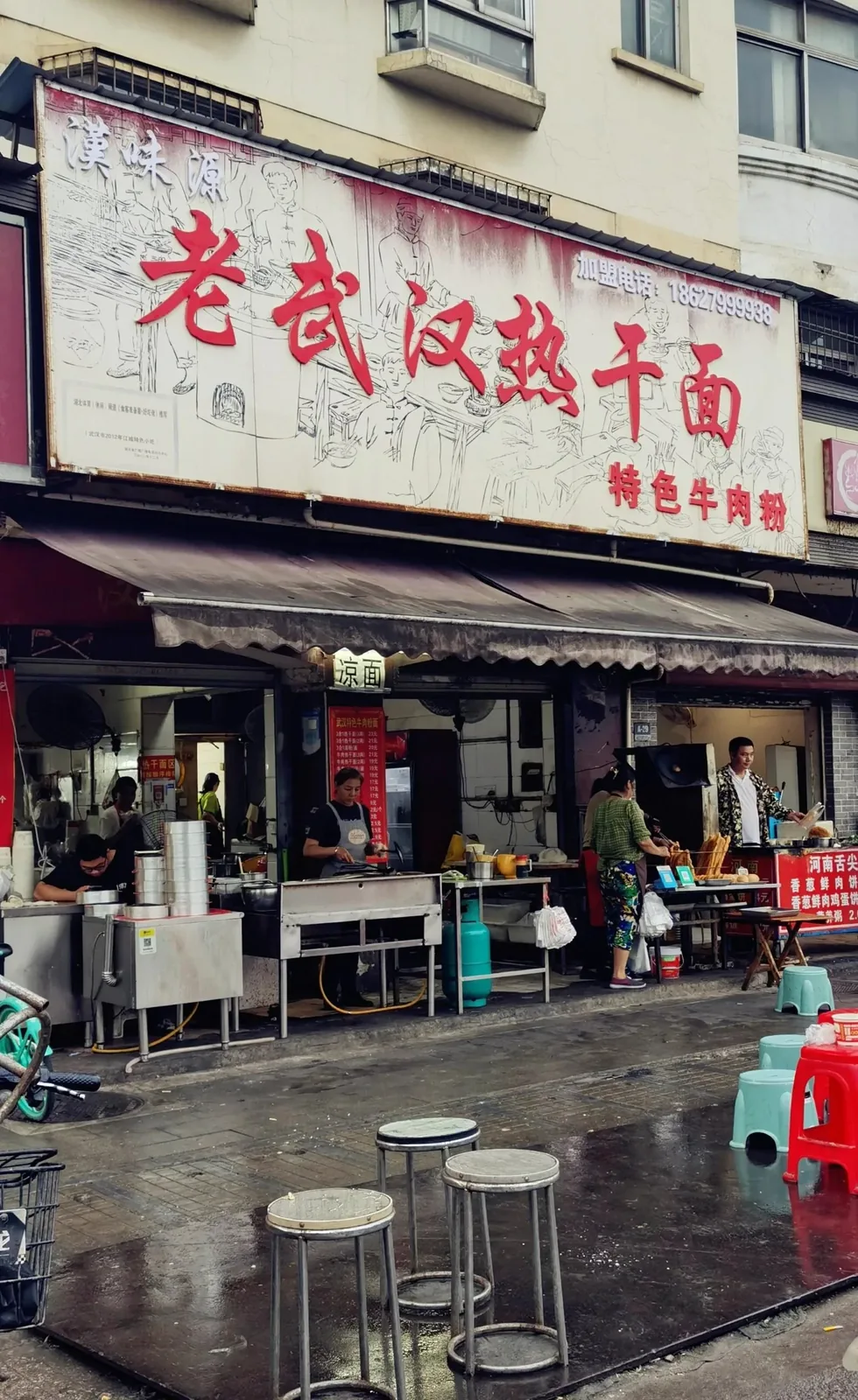
热干面: the one they already know about
You’ve heard of hot dry noodles. Everyone has. So let’s put them in their proper place: they’re not the king of Wuhan breakfast. They’re the default, the easy answer, the thing people choose when they don’t have the energy to think. A genuinely executed bowl of reganmian (热干面) is genuinely excellent: the sesame paste has a specific nutty bitter-alcohol tang that comes from fermented sesame, the alkaline noodles must be cooked to a specific chewiness that locals detect immediately and foreigners learn to feel in about three visits. The skill is balancing while you eat it. Properly mixed, each noodle carries an even coating of sauce. Most first-timers get uneven distribution and a dry patch halfway through, which locals can spot at a distance.
What foreigners rarely realize: the 热干面 you eat in Beijing airports is to real 热干面 what a theme-park version of a city is to the city. You need to eat it at a place with a line of relatives outside at 6 AM, with a cook who’s been doing the same twirl-drain-mix motion for twenty years. The dish doesn’t forgive mediocre execution. It’s also the Chevy of breakfasts: reliable, everywhere, and you can do better if you tried. The full guide to ordering breakfast here, including what each dish actually contains, is in Wuhan Breakfast Culture: A Local’s Guide to ‘Guo Zao’.
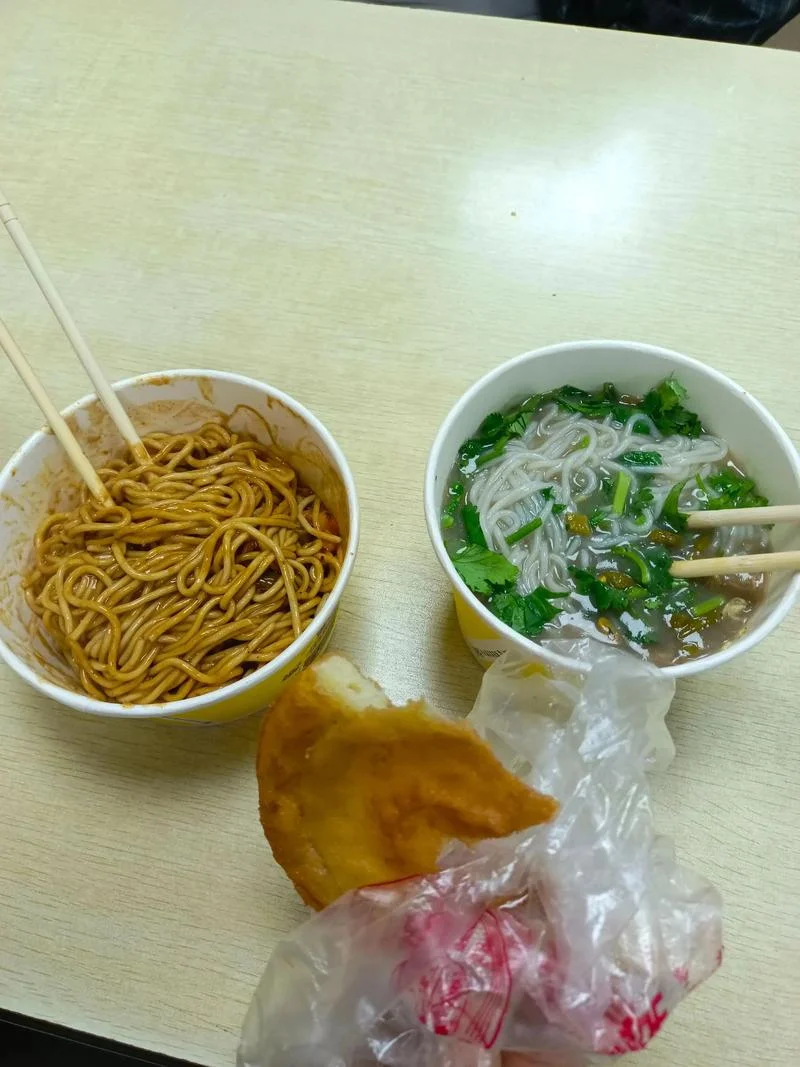
The real cast: what Wuhan people actually eat
豆皮 (doupi): If 热干面 is the face Wuhan shows to outsiders, 豆皮 is the dish Wuhan locals put in their wills. A 豆皮 master fills an enormous flat pan with a layer of mung-bean-and-rice batter, lays a sheet of egg on top, and flips the whole thing. That motion requires wrist strength that takes years to develop. The master then fills the surface with sticky rice, sliced mushroom, bamboo shoots, and some form of pork or beef depending on the shop’s theology. The result is a thick, crispy-topped, soft-filled square cut into portions and served as a savory breakfast brick. A good 豆皮 is a good morning. A bad 豆皮 will make you angry enough to start over again somewhere else.
面窝 (mianwo): Deep-fried rings of rice-and-mung-bean batter that arrive golden-brown with a crisp edge and a thin chewy center. Cheap (often one yuan each), designed to be eaten in two to three bites while walking. The vendor has a specific tool, a round mold with a handle, that lifts a perfect ring directly into the oil. Street vendors often sell them alongside hot dry noodles as the crunch counterpart to the slurp. No one talks about 面窝 as a landmark food. That’s what makes it feel like a secret, even though you can get it on roughly forty percent of Wuhan street corners.
烧麦 (shaomai): Wuhan 烧麦 is nothing like the Cantonese dim sum item you might know. It’s heavy: a thin skin wrapped around a dense filling of glutinous rice, meat, mushroom, and lard, steamed under a loose open top so you can see the pepper-flecked sticking-out edges. The texture is somewhere between sticky rice and dumpling filling, the flavor heavy enough to slow down your morning in a way that feels like the city is telling you to take a break. Two pieces is a meal, three pieces is a commitment, and four is a dare.
糊汤粉 (hutangfen): Rice noodles in a thick milky broth that’s been described as everything from “tiny noodles in fish soup” to “a hug made of liquid.” The broth is meant to be genuinely fish-based: made with small freshwater fish that have been simmered until they dissolve into the liquid. Add a portion of deep-fried 油条 (youtiao, the classic breakfast cruller), crack it into chunks, and you have a combination. The combination is served in the old quarters of Wuchang and Hankou where people remember breakfast being something that prepared you physically for a day of actual physical labor, not just a commute to a desk.
蛋酒 (danjiu): A raw egg cracked into a bowl, doused with sugar and then boiling-hot rice wine or 醪糟, stirring into a sweet silky egg-drop soup-alcohol hybrid. Favored by older residents, often consumed with 油条. The nutty alcohol warmth at 6 AM is explained by Wuhan breakfast logic: you start your morning at a moderate simmer and maintain it through the day.
过早 geography: follow the lines
Wuhan doesn’t assign breakfast districts. The geography emerges from three factors: which neighborhoods have old communities with morning habits, which streets have a critical mass of stalls forming a walkable cluster, and which metro stops serve as collection points for office workers grabbing something before the last push to the desk.
The 硚口区 Qiaokou district in Hankou is the deep country of Wuhan breakfast. Old residential streets here have guozao (过早) strips with vendors who’ve been serving the same three items from the same corner for thirty years. The lines form early (around 6 AM) and thin out by 8 AM, and the dishes are unpretentious, cheap at 5-8 yuan, and sometimes the only breakfast option on the block.
粮道街 Liangdao Street in Wuchang is the pilgrimage site. A single street with roughly fifteen notable breakfast shops packed into a 500-meter stretch, it’s been written up in every Chinese food-media feature about Wuhan 过早 at least once since 2016. The density means you can sample three or four specialties in a single walk, which is exactly what Wuhan families do on weekends. Expect crowds on Sunday morning. That’s when everyone from the outer districts shows up to eat their way down the street.
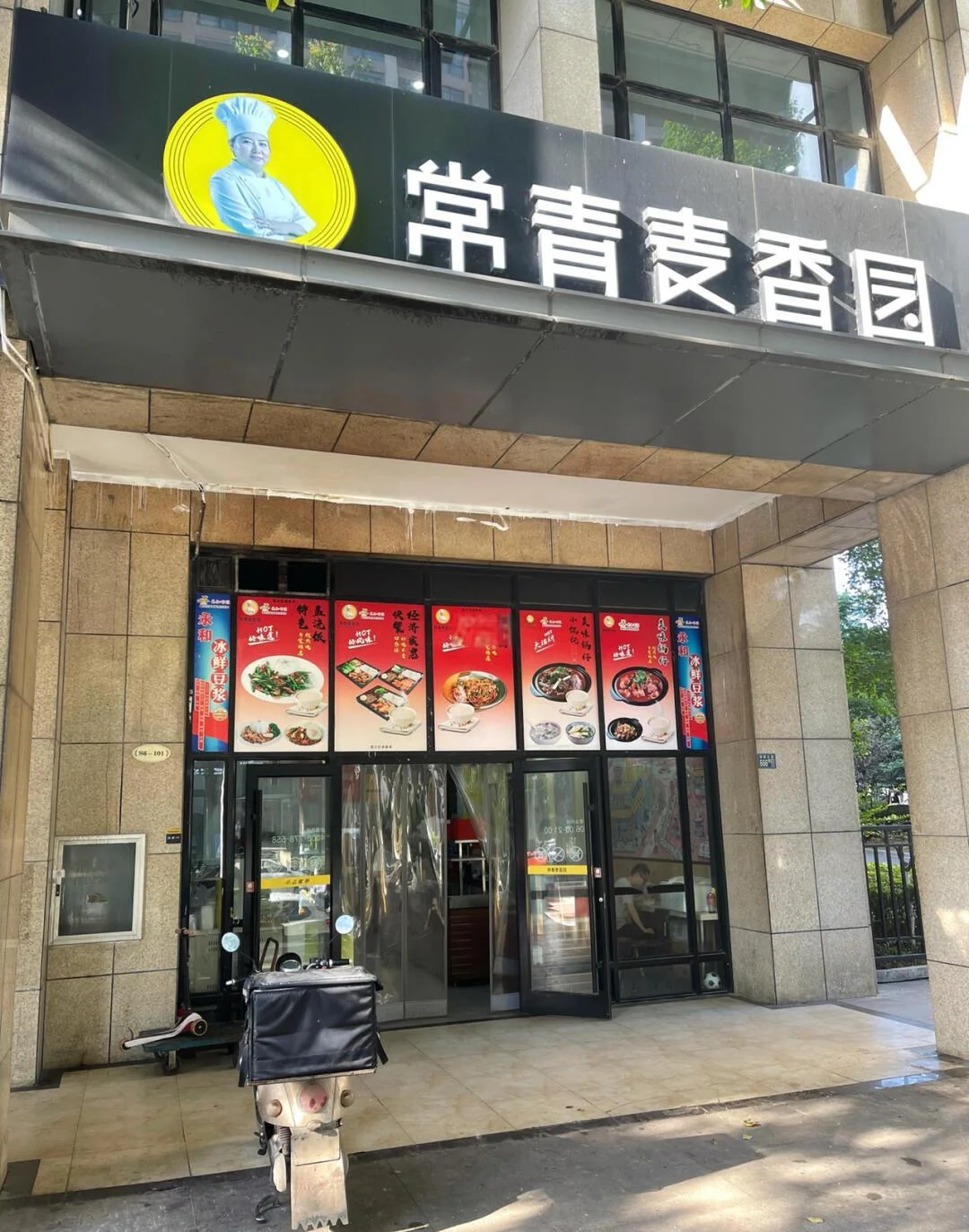
The newer zones (Guanggu (光谷), 街道口周边) have the branded chains and clean indoor spaces. The breakfast here is more likely to be 蔡林记 or 麦香园 (recognized chains that do competent hot dry noodles) than the obscure wood-fired doupi master. Good enough, but the 过早 density per block drops sharply the further from the old city you get.
The political economy
Wuhan breakfast has always been priced for people who need to eat cheap before work. Five to eight yuan is normal. Above twelve yuan and locals question whether you’re paying for food or rent. This has created an economy where vendors survive on volume (often 150-300 servings per morning per stall) and where a stall that gets the recipe right can endure for decades with minimal changes.
The economic logic has preserved a style of eating elsewhere in China has been replaced by delivery apps and digital payment counters. Wuhan breakfast still runs on proximity. You eat at the stall because it’s close, and you go back because the doupi lady knows your order. You tip by showing up at the same time every morning and not asking for extra sauce, which they’ll give you anyway once they know your face.
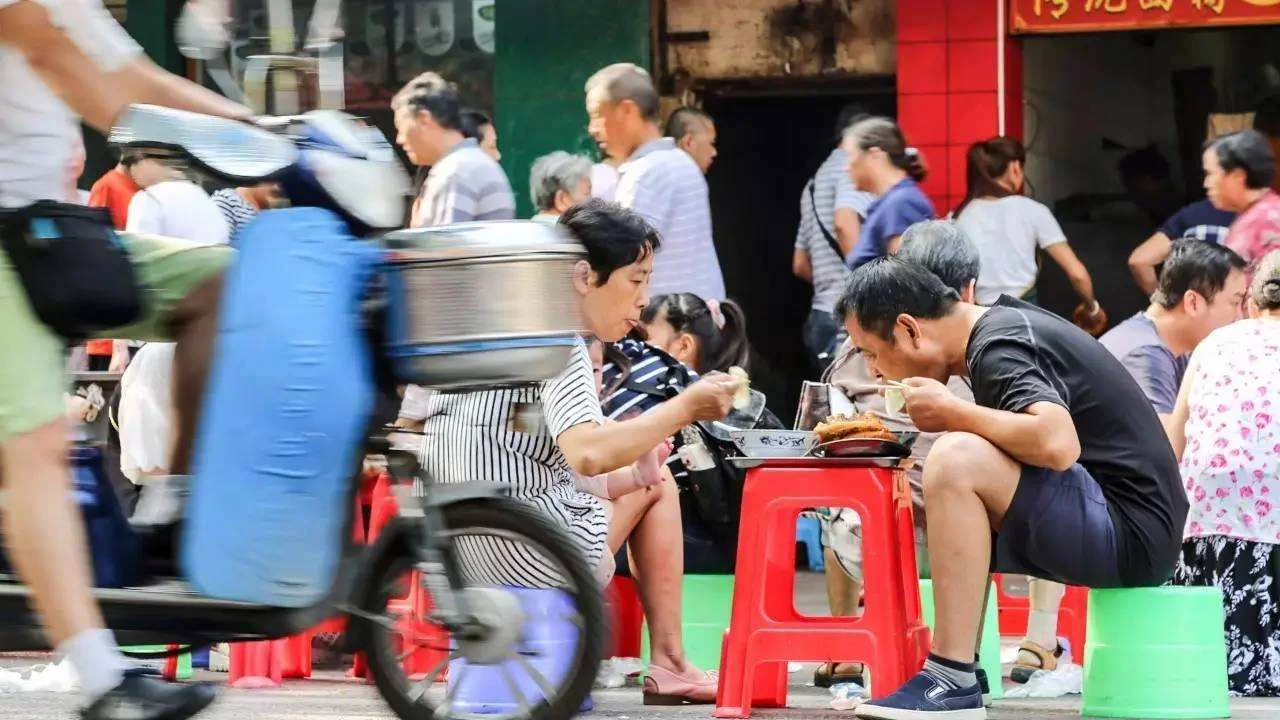
The evolution: what’s actually changing
Three things are currently reshaping Wuhan breakfast, and locals disagree about whether any of them are improvements:
The chain invasion. 蔡林记 (Cailinji) took 热干面 national. 麦香园 local-branded the experience. Convenience stores started selling pre-packaged 热干面 with microwave instructions. The quality floor has risen, you’re less likely to get sick, but the quality ceiling has lowered. The weird exception: a few modern cafes are trying to “elevate” 过早 into a brunch concept. The results divide opinion sharply.
The timing creep. The old pattern was: people woke early, ate breakfast at a street stall by 7 AM, then worked. The new pattern: metro commutes eat later, often closer to 8-9 AM, and sometimes replace 过早 with coffee and a pastry from a convenience-store chain. This is treated by older Wuhan residents the way retired Romans talked about the fall of the republic.
The generational replacement. Young professionals who grew up ordering delivery grew up watching their parents eat 过早 at stalls they never joined. Some become converts at college, going to 粮道街 for the first time and wondering why they missed this. Some never do. The generational gap in breakfast habits mirrors larger questions about who Wuhan is for and whether a hyper-local food tradition can survive hyper-modernization.
Where to actually go
For foreigners starting out: go to 粮道街 on a weekend morning around 7:30 AM. Walk the street without a plan. Get in line for whatever has the longest line. Eat three things. Take photos if you want, locals will have seen worse. Then take the metro home and try to explain what doupi actually is to someone who’s never had it.
After a month, you’ll have your own neighborhood stall, your own preferred vendor for when you’re alone and fast-eating on a work morning. The city doesn’t tell this to you. You earn it by showing up.