
There’s a joke Wuhan parents tell their unmarried kids that visitors present as humor but is not actually humor. It goes roughly: “Your cousin got married last month. Your younger cousin is engaged. Your high school classmate’s kid can talk. Are you even trying?” This is a country-wide parental anxiety. In Wuhan it has the volume turned up an extra notch because the city’s social circles overlap so tightly that a family’s wedding performance becomes the story that travels at light-speed through three separate networks.
The currency is not money
A Wuhan marriage negotiation runs on three separate currencies, and understanding which one is being used in any conversation is what separates the observant outsider from the confused one.
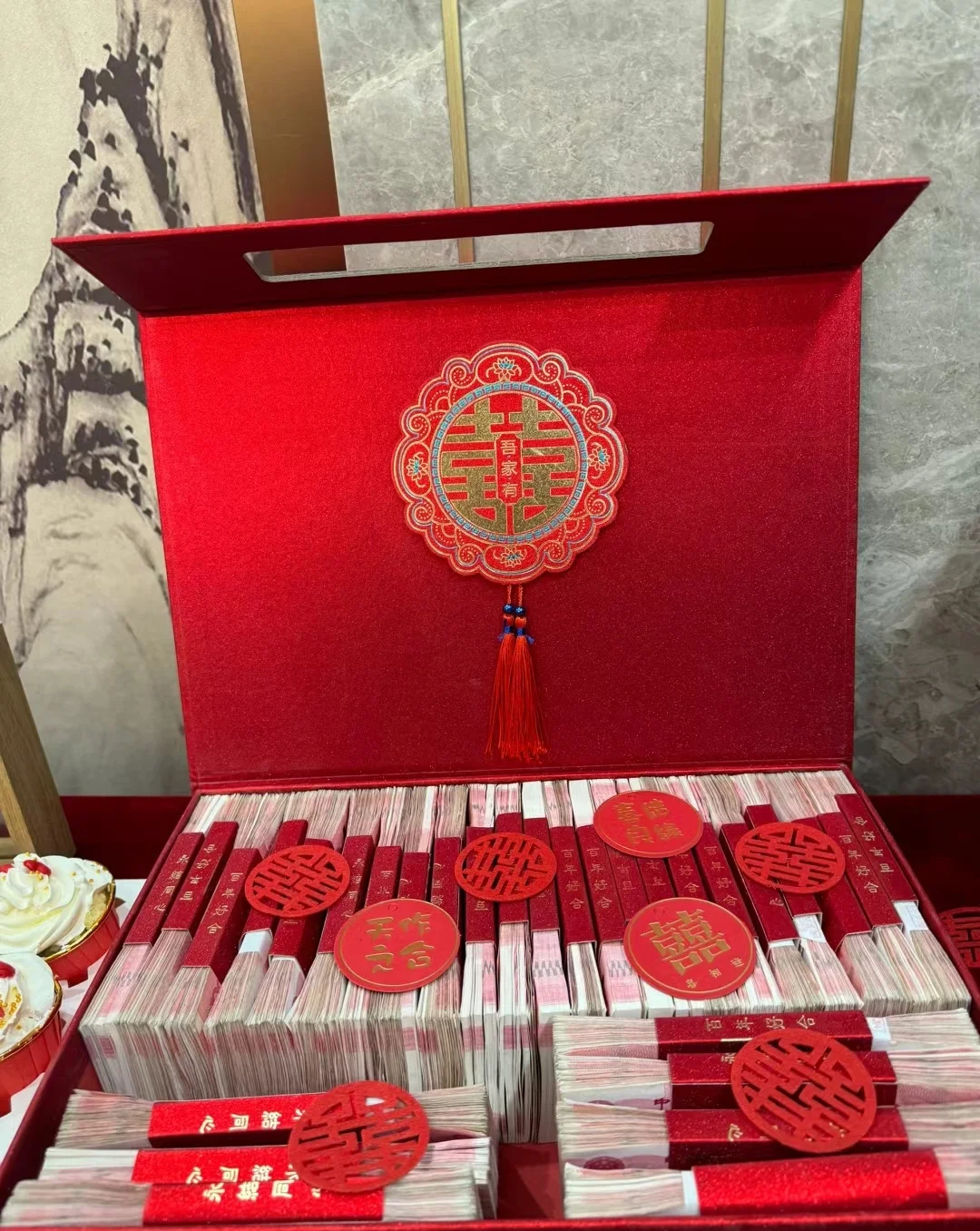
The first currency is 彩礼, betrothal gifts. The baseline shifts with each generation but in current Wuhan practice, the headline number for middle-to-upper middle-class families commonly floats between 60,000 and 200,000 yuan depending on how many zeroes the families agreed to negotiate about. That’s the public-facing number. The actual negotiation includes supplemental demands: a car or equivalent in assets, a gift paid for by the groom’s family toward the bride’s new apartment downpayment, and “four-piece” material gifts that the bride’s family expects.
The phrase most commonly used for these 彩礼 amounts in Wuhan is “看情况” (depends on the situation). Translation: things are about to get extremely specific and you’d better be seated.
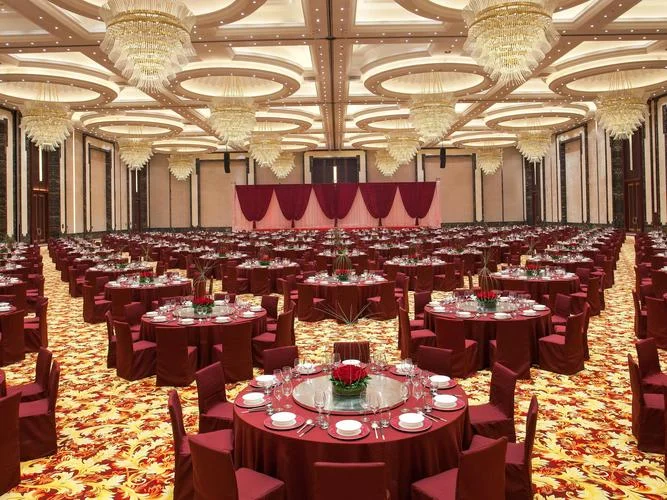
The second currency is 面子, face. No number of yuan compensates clearly enough for a loss of face. A wedding banquet with 20 tables says something about the families; with 40 tables, it says something louder. The number of VIP tables occupied by business associates of the father is a running scorecard. And then the small but essential humiliations: serving “good” cigarettes (软中华, not the medium pack) at the toast trays; the quality of the alcohol on the VIP tables being visible different from the regular tables; the bride’s dress budget being knowable by the bridal suite’s guest count.
The third currency is networks. A Wuhan wedding is social inventory software. Who sits at which table is determined by complex calculations of reciprocity. Everyone who has ever given this family a red envelope at some previous significant life event is owed a seat at roughly equivalent rank to the amount of the gift given. The failure to invite someone or the wrong seating assignment can terminate a fifteen-year professional relationship. The belief system behind the auspicious dates is in Wuhan’s Hidden Temples: The Spiritual Underground Beneath the Red Face City.
What foreigners actually see at a Wuhan wedding
If a foreigner is ever invited to a Wuhan wedding, the experience typically runs as follows. Arrive at the hotel or banquet center at the appointed hour (often 11:18 AM or 11:28 AM, the 18 or 28 mapping to prosperity and fortune numerology). Register at the table just inside the entrance where four to six family friends of the bride or groom collect red envelopes and record who gave what. You hand over your envelope. They record it on a ledger that exists for the eventuality (which never actually stops existing) where they will one day attend your event and return the favor precisely, without interest for inflation.
Move to your assigned table. It will be labeled with a table number, possibly a group name. You sit among strangers united by the fact that they sit at this table. Toast rounds begin. The couple moves table to table with a small glass. You drink. You eat. The food is banquet food: generous, traditional, heavy on symbols (fish for abundance, whole chicken for prosperity, long noodles for longevity) and light on modern refinement. No one is here for the food, not even the foodies.
The ceremony itself is short. The couple changes clothes at least once during the evening. Every change brings a fresh toast round. Speeches happen. Speeches are often given by a family elder who is not always sober enough to finish his sentence in the same register it started.
Gifts from guests to the couple are almost exclusively cash in the red envelope. Physical wedding gifts do happen but increasingly the money is the thing. A foreigner attending a Wuhan wedding can follow the same protocol: somewhere between 500 and 800 yuan is a decent friend amount. Odd numbers are avoided (even numbers = harmony). Ask a Wuhan friend nearby for the exact calibrations if you are unsure. They will already know without you asking.
Matchmakers and the modern dating paradox
Every Wuhan parent network contains at least one semi-official matchmaker, usually a retired woman who knows every unmarried person between 25 and 40 in a moving radius of several 行政村 or residential communities. She operates on information asymmetry: she knows what family needs what and trades introductions for a connection fee (usually a gift of 2,000 to 5,000 yuan when the match results in marriage, plus a red envelope on Chinese New Year as long as the match stands). Matchmaking is explicitly commission-based. Literally: no result, no payment. The result is defined as marriage, not relationship. This is a pure results-only industry.
城市公园 have evolved into parent-driven matchmaking corners where on weekends mothers and fathers sit next to laminated CV sheets of their unmarried adult children. The sheets name age, height, income, property ownership status, and hopes. Older singles who want to be left alone often do not go to parks their parents frequent for recreation anymore. The matchmaking sections have become too efficient.
If you’ve spent any amount of time in a Wuhan park on a Sunday morning you’ve walked past this scene while thinking it was a career fair. It is, in a sense.
What this actually means for foreigners
A foreigner in Wuhan who gets serious about a local partner will eventually hit the wedding negotiation wall. On one side sits the foreign set of expectations: either just the two of you decide, or maybe with modest family input. On the other side sits the Wuhan family system in which a marriage is a remittance event, a face event, a reciprocal ledger event, and a data point in the extended social network that all happening simultaneously and with real consequences for ignoring.
The foreign partner of a Wuhan resident will learn quickly the difference between what is expected in Western wedding event and what is required in a Wuhan one. You can ask for simplicity. You may get something less complex than a traditional full banquet. But enough of these expectations will surface at the negotiation stage that a couple who doesn’t understand the underlying currencies find themselves indebted to both families long after the honeymoon.
If you’re a foreigner who’s been invited to a Wuhan wedding, do two things: bring a red envelope with your best estimate of the right amount and arrive exactly when you were told to arrive. The rest of the ceremony will take care of itself. You will eat too much. You will drink too little for the hosts’ liking but more than is reasonable. And somewhere between the eighth and twelfth toast you will discover that the couple is glowing with a truth that no amount of social mathematics (no number of tables, no count of bills) can completely explain or explain away.